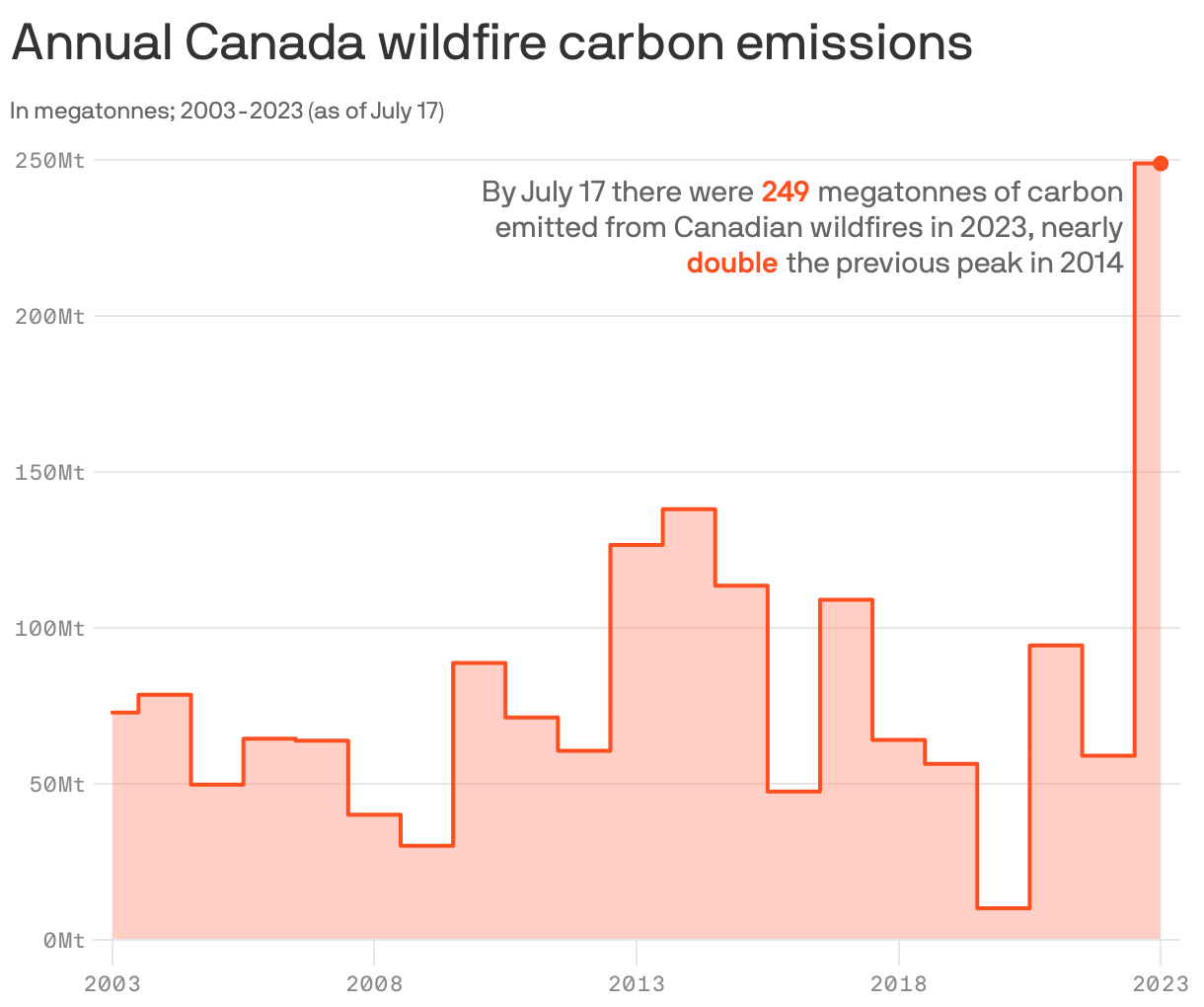
The simultaneous, record-shattering heat in the U.S., Europe and Asia may be getting all the headlines (more on these events below), but hotter and drier-than-average conditions are fueling the disaster unfolding in Canada.
Why it matters: As residents of the Midwest and East Coast have repeatedly learned this summer, Canada's devastating fires affect conditions elsewhere.
Record highs were set in the U.S., Europe and parts of Asia on Tuesday, in an example of simultaneous, compounding extreme weather and climate events — which scientists have been warning of for some time.
Why it matters: The heat waves pose an immediate risk to public health and economic output, and signal that climate change impacts are escalating faster than expected in some parts of the globe.
The Sun's activity is defying forecasts and highlighting how difficult it is to predict the machinations of Earth's nearest star.
Why it matters: Space weather, which is largely driven by the Sun,can shorten the lifespans of satellites, cause radio blackouts and, in extreme solar storms, bring down power grids.
The weeks-long heat wave affecting a vast swath of the U.S. has been particularly noteworthy in one city that was not the subject of many extreme weather headlines this past week: Miami.
The big picture: The city is typically hot in June and July, but this spring and summer has been a different level of South Florida heat.
A "relentless" and historic heat wave continues to bring potentially deadly temperatures from the West and Southwest across the South Central states, with more records forecast to fall.
The big picture: Over 104 million people were under heat alerts on Tuesday morning, stretching across a dozen states from Nevada to Florida, according to heat.gov.



/2023/07/18/1689643069698.gif?w=3840)