The Atlantic hurricane season to date has been unusually quiet, with not a single named storm since July 2, a feat that last occurred in 1982. However, our luck is likely to run outsoon, scientists tell Axios.
Why it matters: Nature's strongest storms typically are the most costly weather-related disasters in a given year.
The annual Burning Man bacchanal in the Nevada desert returns Sunday after a two-year COVID-19 hiatus — this time with a team of Massachusetts Institute of Technology researchers conducting a science experiment with implications for online social networks.
Why it matters: The arrival of about 80,000 whimsically costumed revelers at a makeshift encampment called Black Rock City marks some sort of reassuring-yet-ironic return to normalcy.
The White House on Thursday issued a new policy that will require all federally funded research to be immediately — and freely — available to the public upon publication starting no later than 2026.
Why it matters: The memorandum, issued by the Office of Science and Technology Policy (OSTP), will end journals' abilities to put the results from federally funded research behind paywalls for up to one year and will increase the public's immediate access to such research.
Public health messaging on both COVID and monkeypox has been too disjointed, confusing Americans on what steps they need to take to mitigate their risks.
Between the lines: Viruses often have multiple routes of transmission, and educating the public on the likeliest route to infection can be a balancing act for officials who want to cover all their bases and have to account for unknowns and public mistrust, several experts tell Axios.
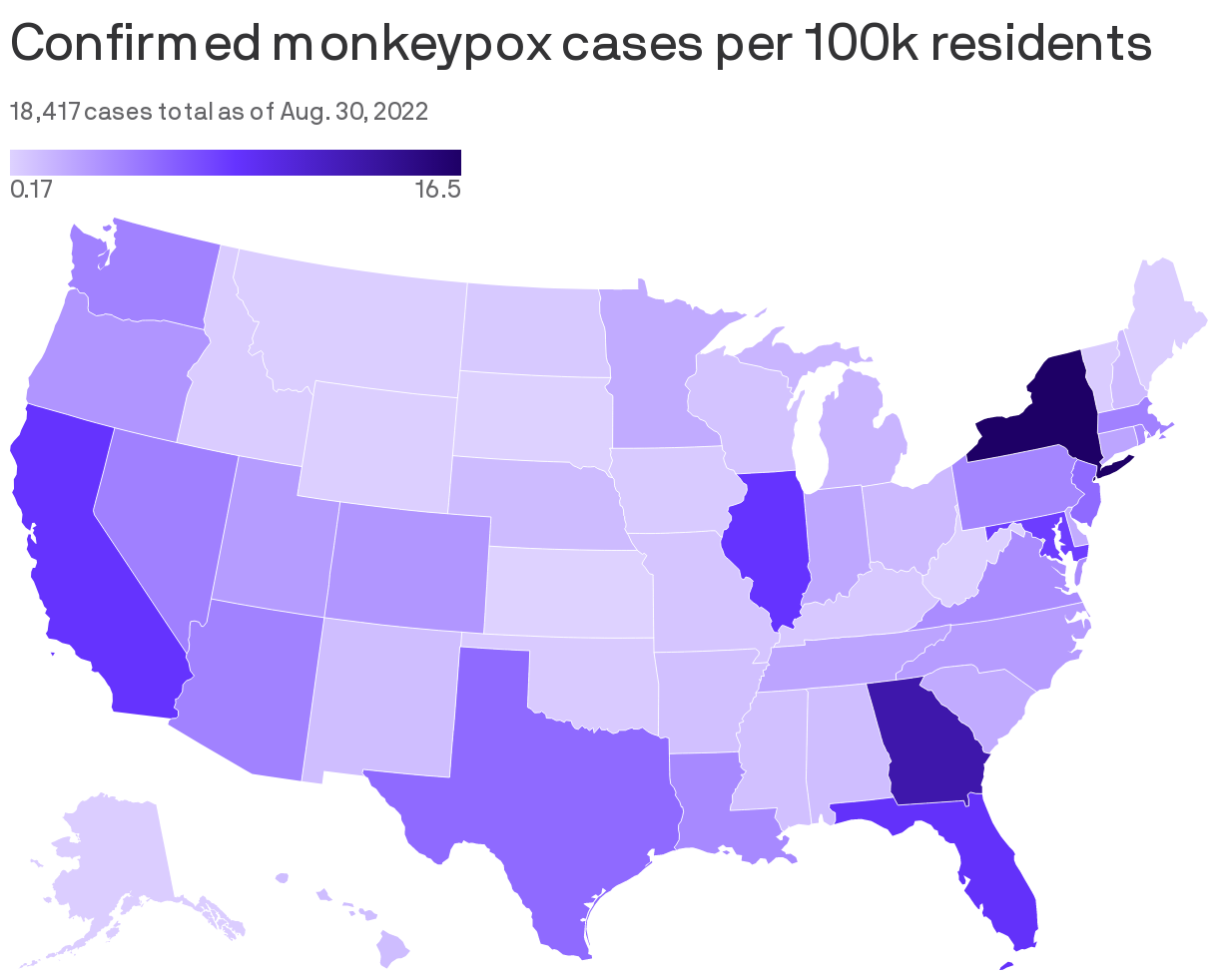
Data: CDC, U.S. Census; Chart: Erin Davis/Axios Visuals
Public health messaging around how monkeypox is and can be transmitted needs to greatly improve so that individuals can assess their own risks, several experts tell Axios.
Why it matters: There are multiple transmission routes for a virus that's now in every state and has become a public health emergency. These include close body contact, air and surfaces — but the primary route currently appears to be personal, often skin-to-skin contact.
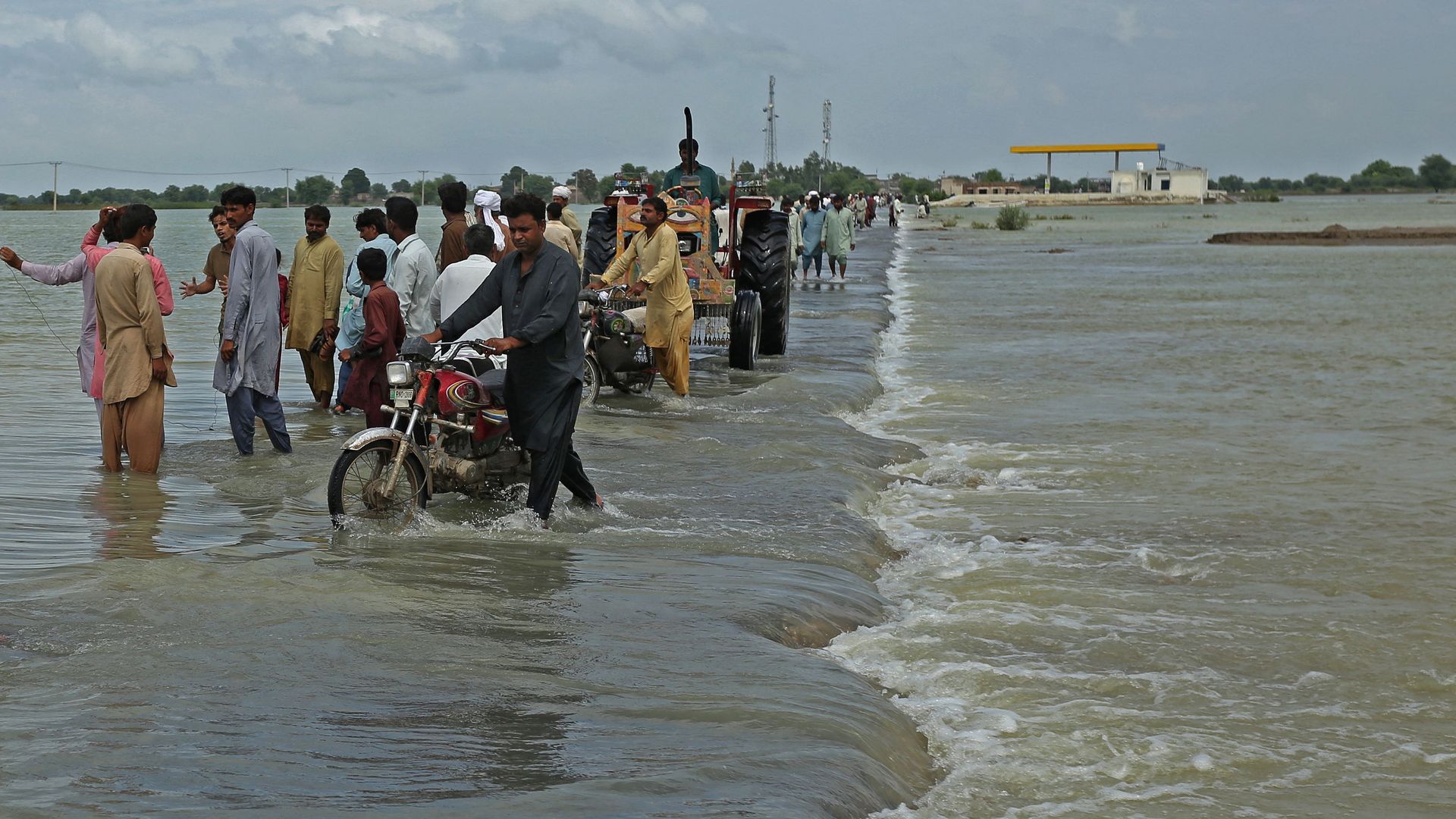
Heavy monsoon rains that triggered flooding and landslides in Pakistan this summer have killed over 900 people, including 326 children, and displaced tens of thousands, Pakistani officials say.
The big picture: Millions have been affected by the rains and flooding, which have destroyed more than 95,000 homes and damaged hundreds of thousands more, according to the UN. It's one of the worst monsoon seasons Pakistan has seen in recent years, with last month being the wettest July since 1961, per Reuters.