Congress is mulling a number of proposals aimed at investing in technology and traditional scientific research and development that could make huge strides on racial diversity in science.
Why it matters: The proposals come as science institutions face pressure to hire and cultivate more teachers of color, diversify research fields and ensure that there is greater diversity in the STEM workforce overall.
The representation gap in STEM jobs is largest among Hispanic workers, according to data from Pew Research Center, and that could consign them to lower paying jobs.
The big picture: STEM occupations, which tend to be higher-paying, are projected to grow in the next decade, especially in computer science and information security. Black and Hispanic people, especially women, may not benefit from that job growth because, as the Pew authors write, education trends "appear unlikely to substantially narrow these gaps."
Chanda Prescod-Weinstein, a theoretical physicist at the University of New Hampshire, is one of about 100 Black American women physicists, but she nearly left the field in her first semester in college. She isn't the only scientist of color who thought of giving up before her career began.
Why it matters: Scientists and institutions have stepped up efforts in the year since George Floyd's murder to redress the underrepresentation of people like Prescod-Weinstein and other scientists of color among their ranks. That marginalization affects not only who pursues science as a career but the problems scientists address.
The yearslong fight to stop the construction of the Thirty Meter Telescope atop Mauna Kea in Hawaii has laid bare the fractured relationships between researchers and the communities they rely on for science.
Why it matters: At almost 14,000 feet, the dormant volcano is a coveted location for astronomers looking to answer deep questions about the universe. But for many Native Hawaiians, it's a sacred place that has already been desecrated by past telescopes.
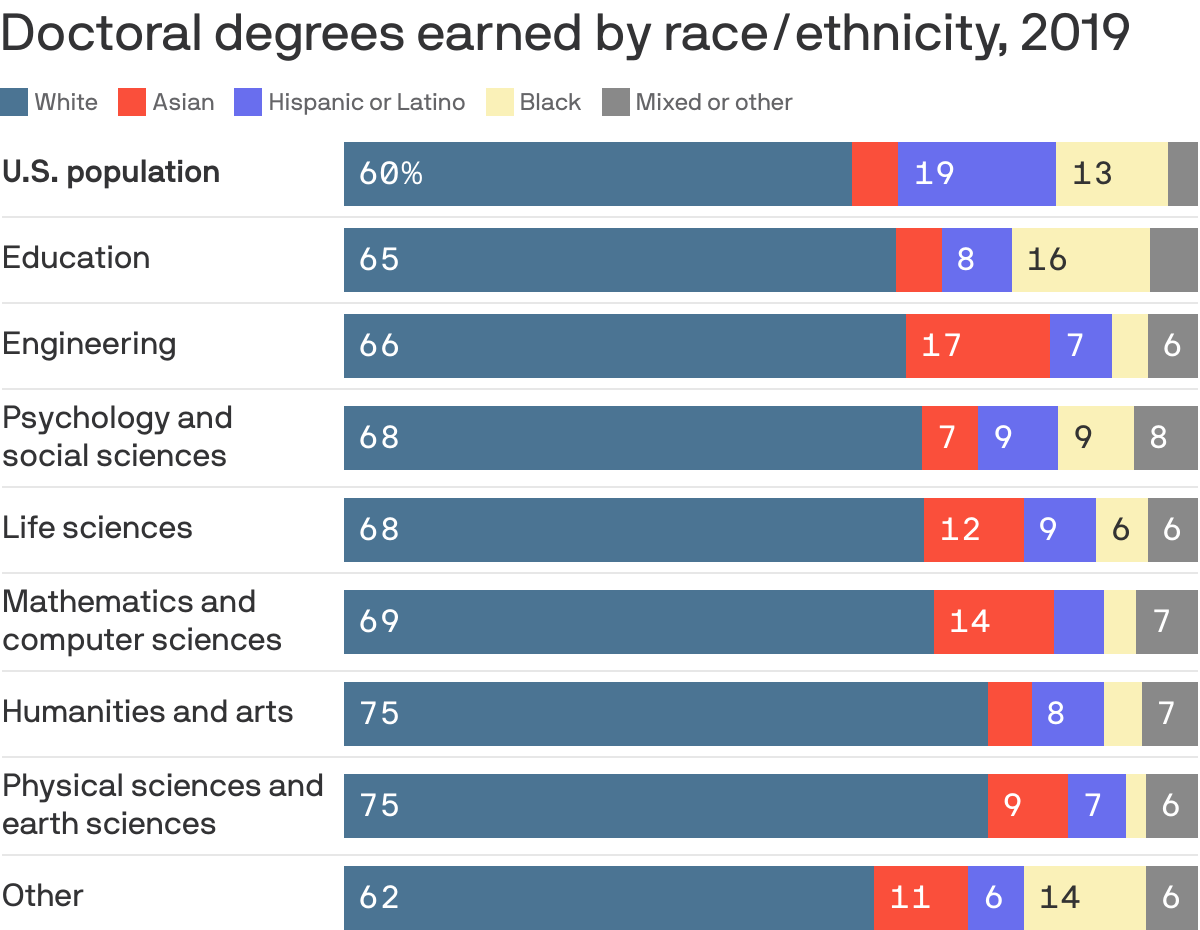
Data: NSF Survey of Earned Doctorates, U.S. Census Bureau; Chart: Connor Rothschild/Axios
Students from underrepresented communities are earning more Ph.D.s, yet doctoral degrees in science and engineering are still overwhelmingly conferred on white students, according to an analysis from the National Science Foundation.
Why it matters: Today's doctoral candidates are tomorrow's teachers, mentors and researchers who can help the next generation of students see themselves as scientists and guide the areas they explore.
By the numbers: In 2019, nearly 70% of doctorate recipients who were U.S. citizens or permanent residents were white.
10% were Asian, 8% were Latino, 7% were Black and 3% identified as more than one race.
Blacks, Latinos and Native Americans earned about 5,500 doctorates in 2019, a 6.7% jump from 2018.
Black, Latino and Native American students are least likely to have a parent with a bachelor's degree or higher, and often enter programs with an immense lack of diversity — two major factors that block the pipeline to higher education.
About 75% of doctorate recipients who were Asian or white came from families with at least one parent with some type of degree in higher education, compared with between 49% and 59% of doctorate recipients who were Black, Latino or Native American.
The pandemic mantra has been to "trust the science" — but many people of color don't and won't. The reasons range from the abuses of eugenics to historic hurdles to getting care.
Why it matters: Science that supports medical breakthroughs has long taken advantage of people of color. Overcoming the resulting suspicion could take generations.
“Trust the science” are this year’s buzzwords. But from astronomy to zoology, systemic racism keeps people of color from practicing science or from benefiting from its findings.
Approximately 7% of humans' genome is uniquely shared with other humans, and not by other early ancestors, according to a study published Friday in Science Advances.
Context: "That’s a pretty small percentage," Nathan Schaefer, a University of California computational biologist and co-author of the paper, told AP.
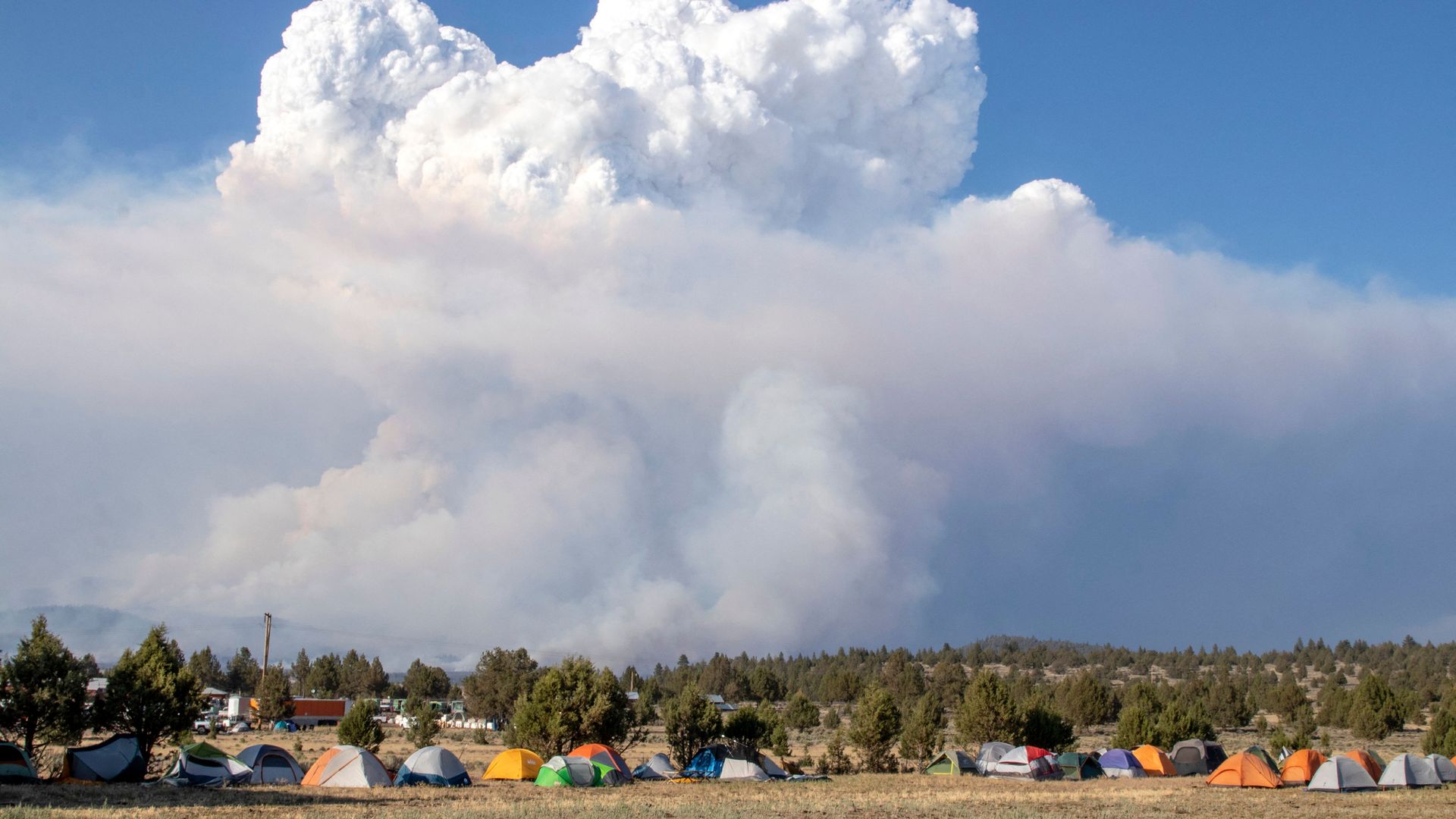
A total of 70 large wildfires are burning across the U.S., according to the National Interagency Fire Center, and this number is likely to grow as yet another powerful heat dome is set to build across the West, sending temperatures skyrocketing.
Why it matters: States across the northern Rockies and parts of the Pacific Northwest are set to see another searing heat wave from Saturday through at least Wednesday, with temperatures hitting 20 to 30 degrees Fahrenheit above average. This could significantly exacerbate the wildfires that are already ravaging the territory.
The unprecedented heat wave in the Pacific Northwest led to a major spike in emergency room visits for heat-related illnesses, according to a report published Friday by the Centers for Disease Control and Prevention.
Why it matters: Extreme heat is the deadliest weather-related hazard in the U.S. during a typical year, and climate change is dramatically raising the risk of such events. Multiple all-time temperature records were shattered during the late June into early July heat wave in the Pacific Northwest.
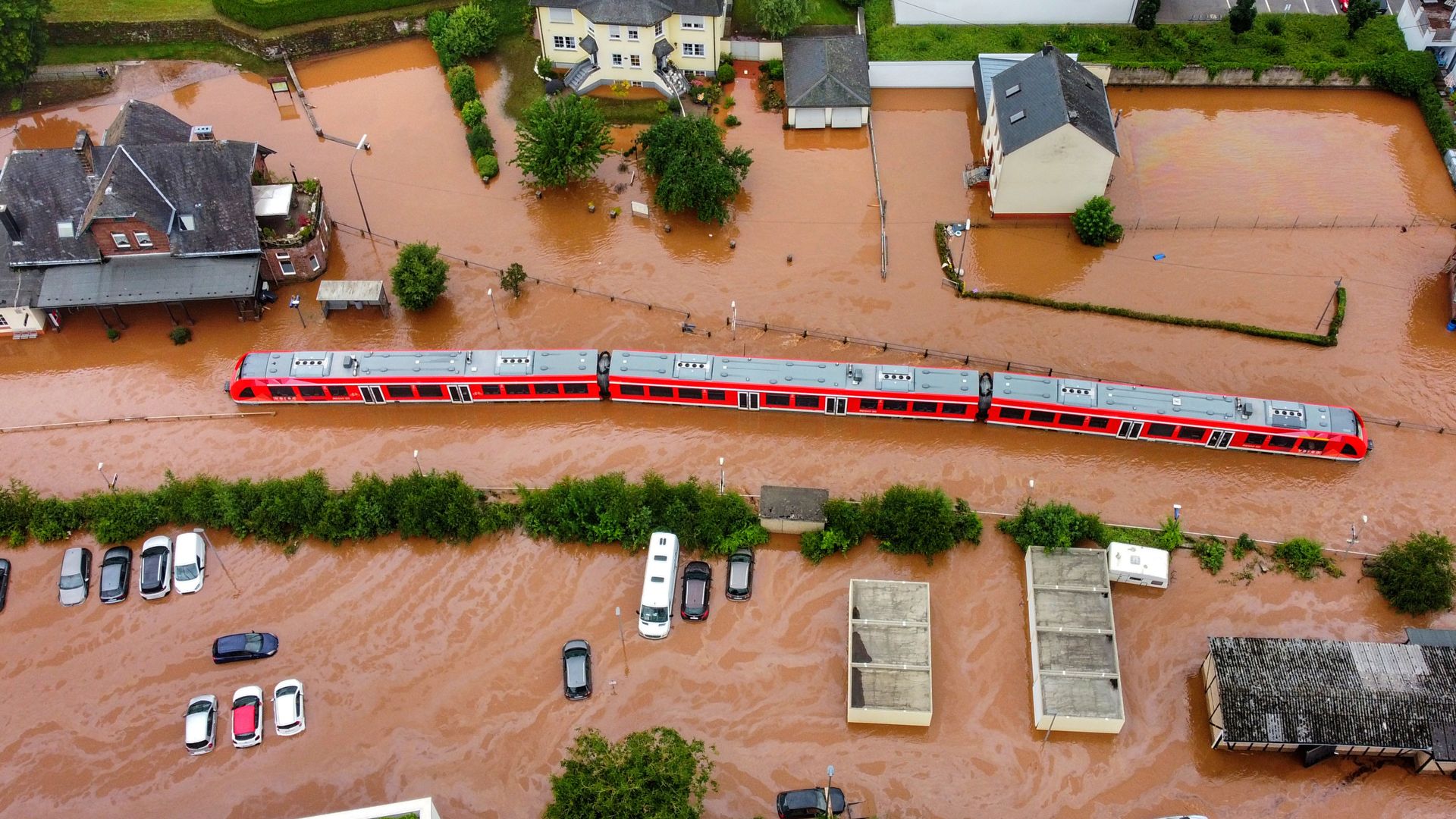
At least 69 people have died and 1,300 are assumed missing in Germany and Belgium after heavy rainfall caused water to overtake streets, sweeping up cars and bringing down buildings, the New York Times reports.
Driving the news: Storms across parts of western Europe caused rivers and reservoirs to burst through their banks, triggering flash floods overnight.