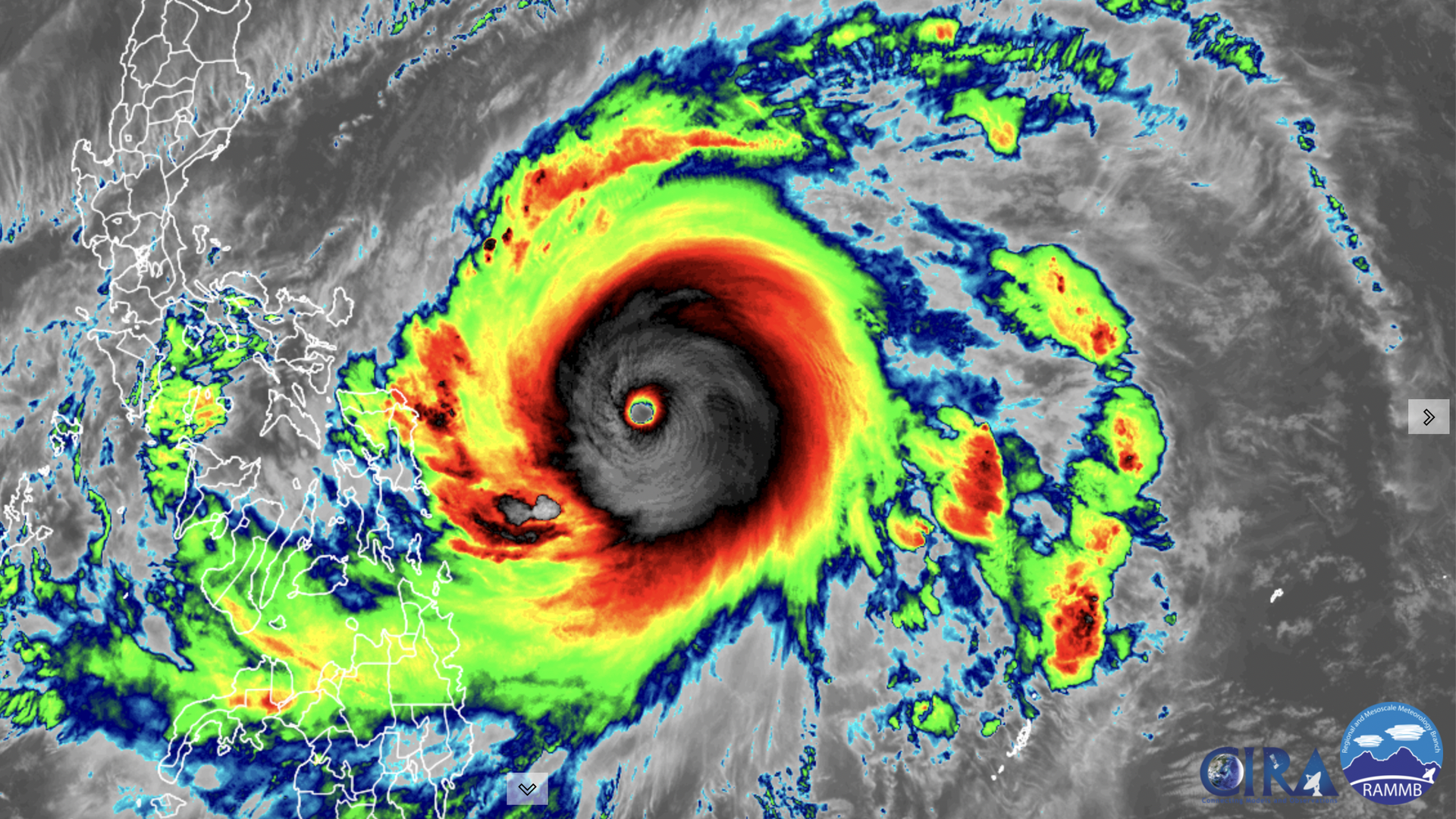
Super Typhoon Surigae surged in intensity from a Category 1 storm on Friday to a beastly Category 5 monster on Saturday, with maximum sustained winds estimated at 190 mph with higher gusts.
Why it matters: This storm — known as Typhoon Bising in the Philippines — is just the latest of many tropical cyclones to undergo a process known as rapid intensification, a feat that studies show is becoming more common due to climate change. It weakened slightly, to the equivalent of a strong Category 4 storm, on Sunday.
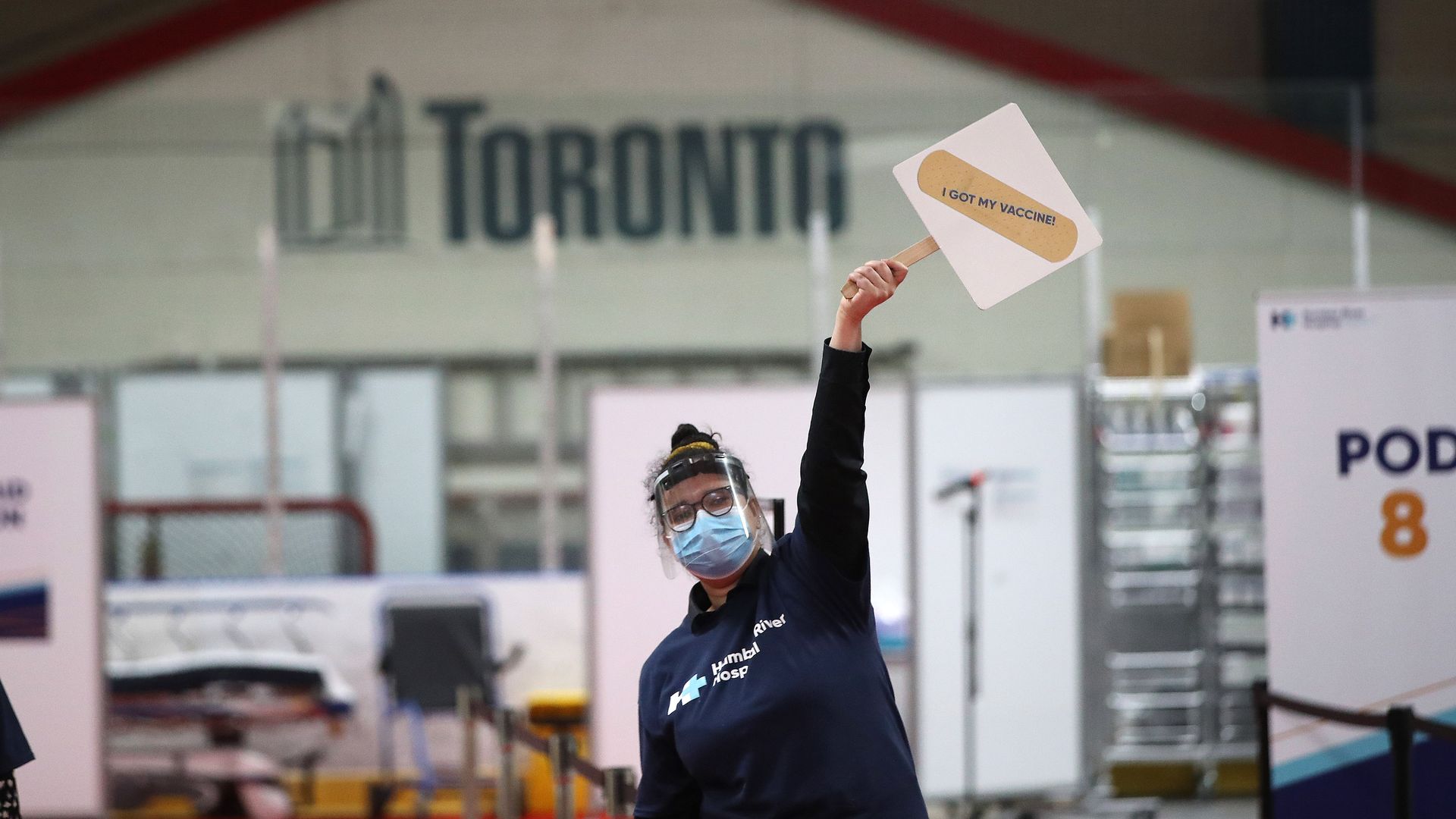
Ontario officials reversed new pandemic restrictions Saturday that bolstered police powers to enforce a stay-at-home order and banned playgrounds in Canada's most populous province, one day after Premier Doug Ford announced them to curb surging COVID-19 cases.
Why it matters: There was widespread criticism of the ban and a measure authorizing officers from 12:01 a.m. Saturday to require anyone not at home to provide them with "their home address and purpose for not being at their residence." Several police forces pushed back on the direction.
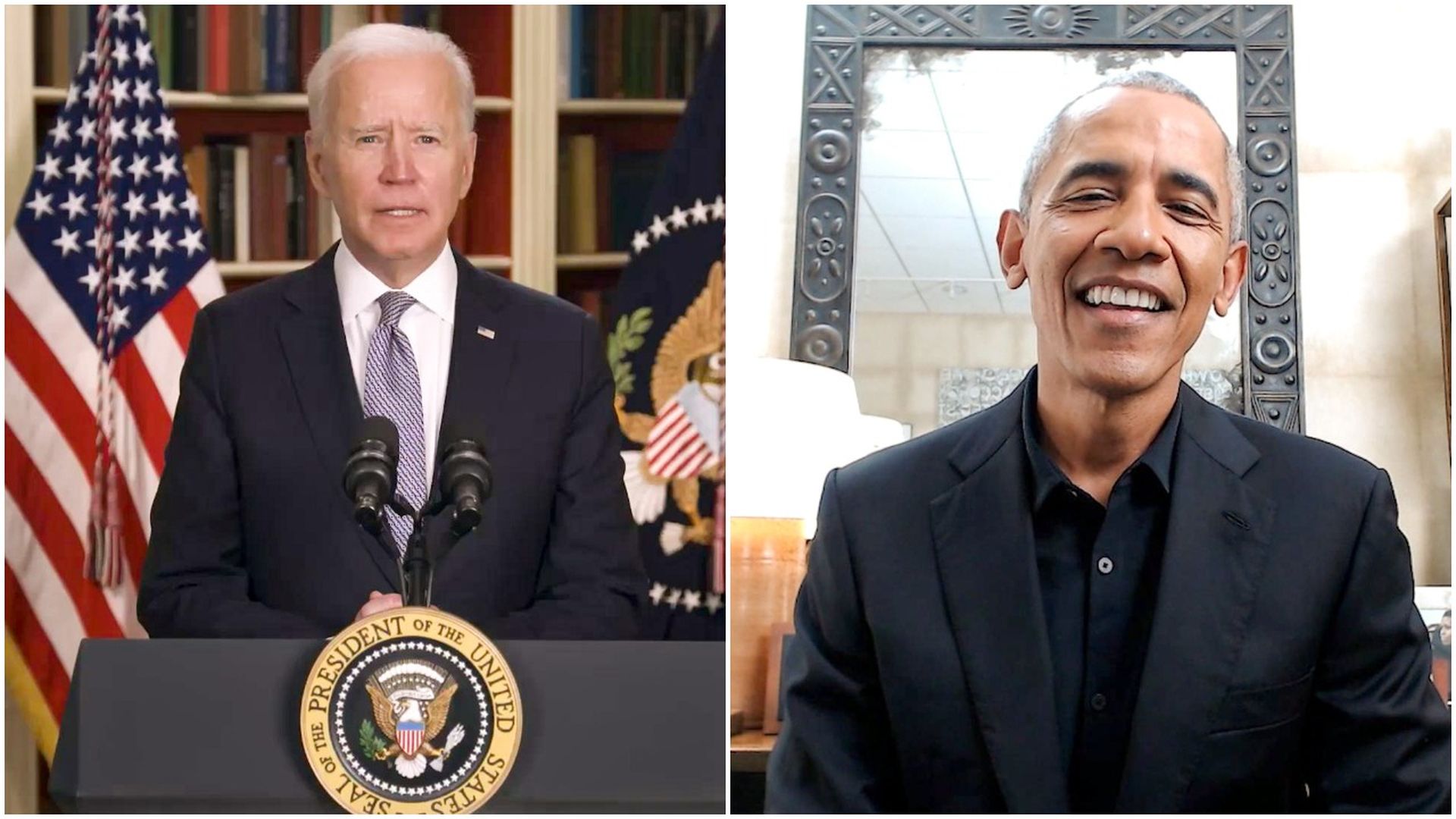
President Biden, former President Obama and Michelle Obama are joining a slew of stars for an NBC special this weekend that aims to raise awareness of COVID-19 vaccines, dispel myths and boost inoculation rates.
What to expect: In Sunday's "Roll Up Your Sleeves" special, hosted by NFL quarterback Russell Wilson and actor-singer Ciara,Biden will urge Americans to "beat the pandemic, protect loved ones and continue the road to recovery," according to a statement from NBC.
Human screams can signal more than just fear — and we're actually more alert to positive screams than alarming ones, researchers have found.
Why it matters: The fact that a simple scream can connote such a variety of emotions shows the complexity of nonverbal human communication and may indicate we're more alert to joy than terror.
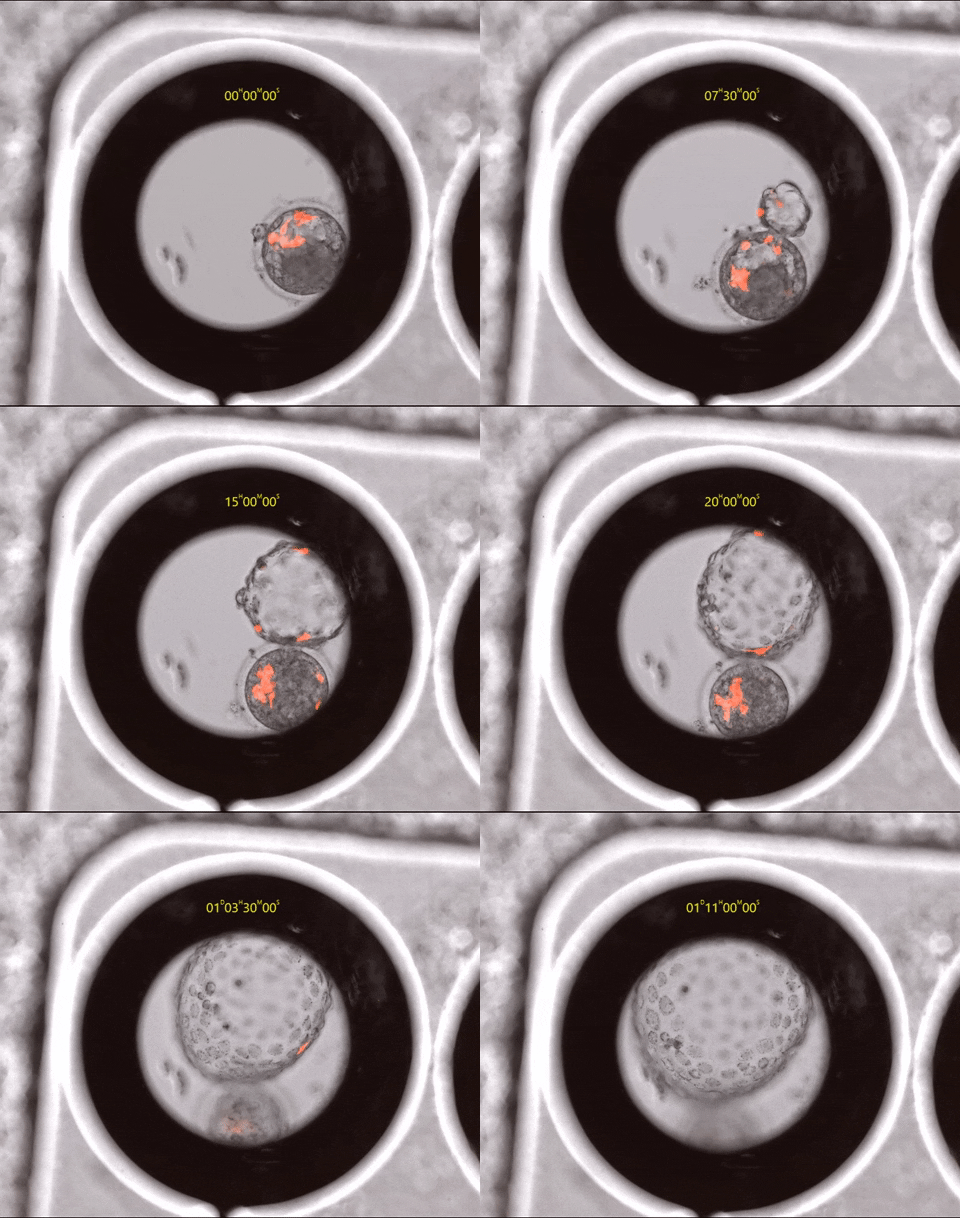
Researchers for the first time have created embryos in the lab that contain both human and monkey cells.
Why it matters: So-called chimeric embryos could help scientists produce organs for people desperately in need of transplants, but the very act of mixing human and animal cells raises major ethical questions.
Faster and cheaper genetic sequencing can give us the ability to test for almost any infectious pathogen — provided we use it.
Why it matters: Doctors never identify the causative agents of many infections, leading them to misdiagnose patients and even miss the early emergence of new diseases, but wider use of genetic sequencing promises a future in which no virus will be left behind.