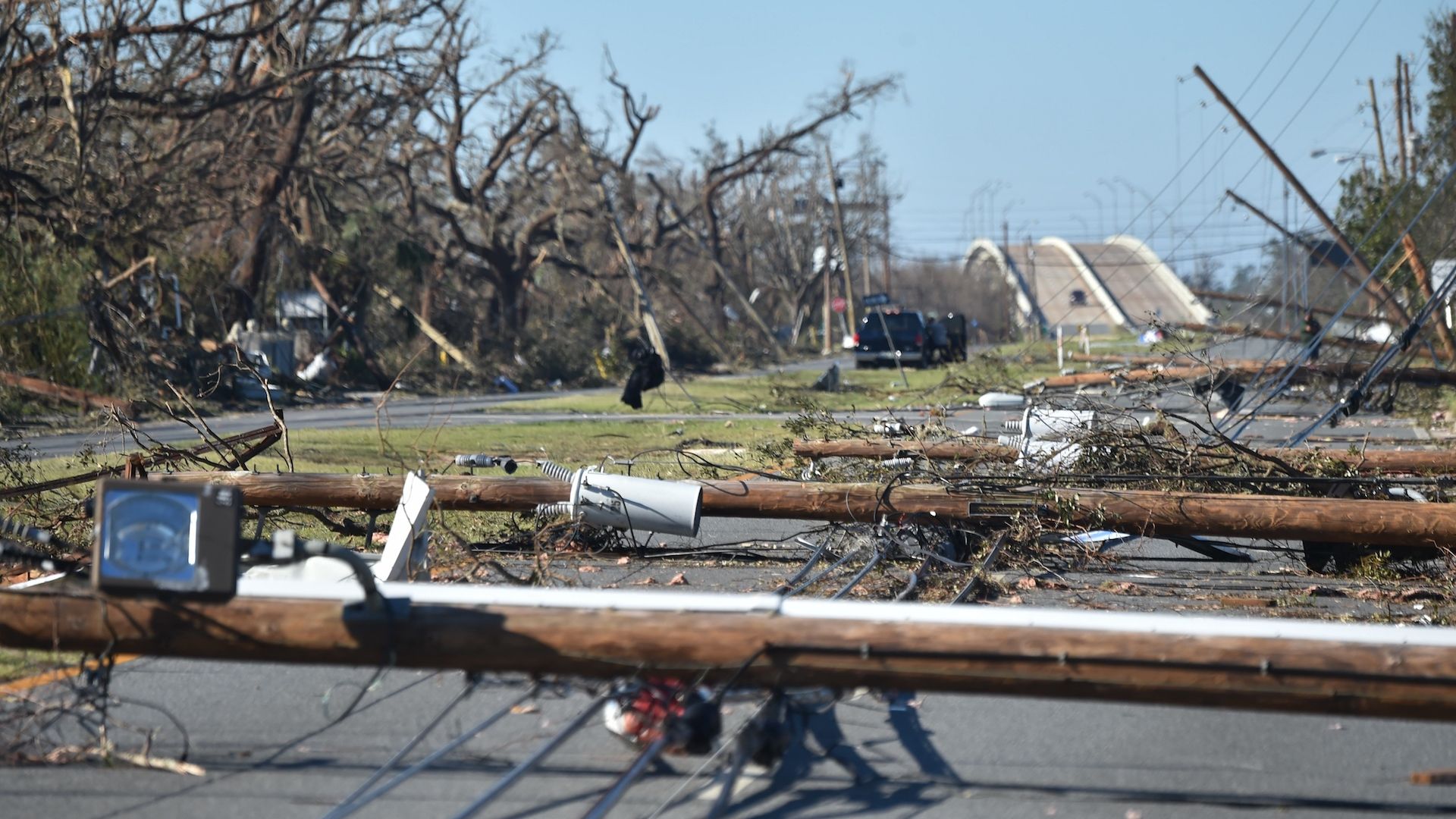
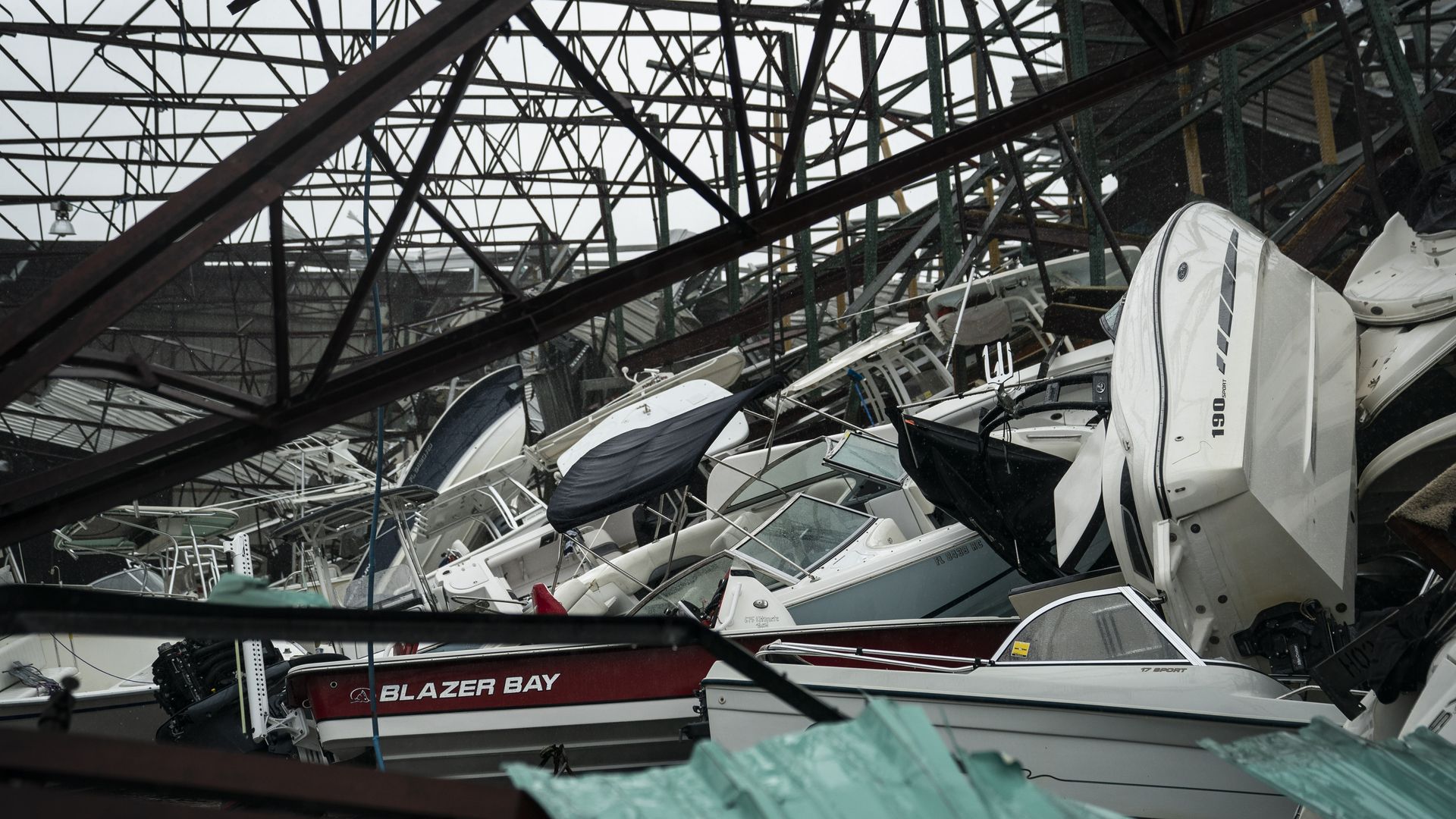
Florida's Tyndall Air Force Base took a direct hit from Hurricane Michael, causing catastrophic damage to its hangars and buildings — and there are reports of damage to some of the Air Force's newest fighter planes.
Why it matters: Tyndall is one of the largest F-22 bases in the country. Gen. Joseph Lengyel, chief of the National Guard Bureau, told reporters he's heard direct comparisons between Tyndall's destruction and the devastation sustained by Homestead Air Force Base by Hurricane Andrew in 1992 — which was ultimately decimated and turned into a reserve base.
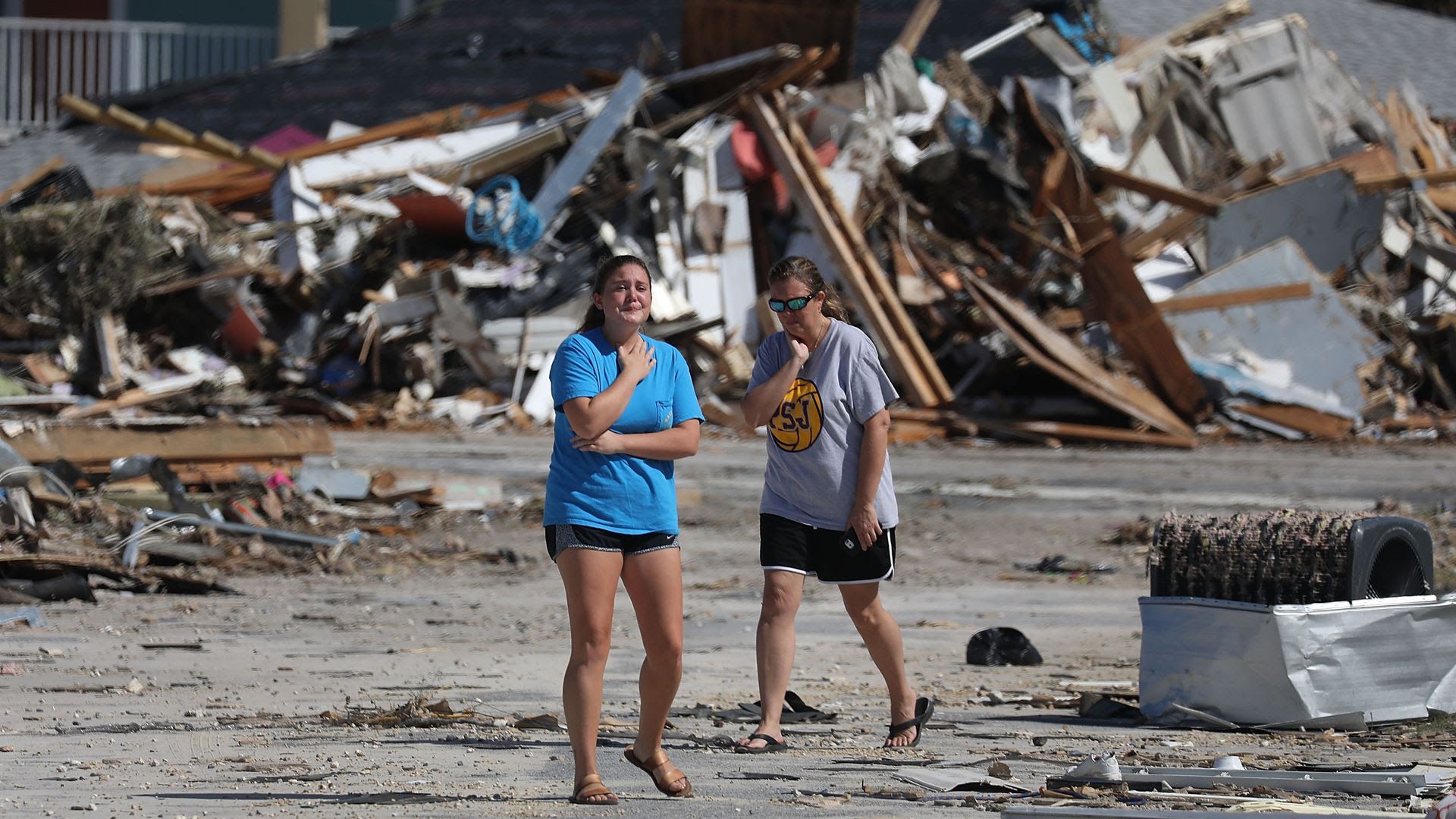
Hurricane Michael hit with such ferocity that parts of the Florida Panhandle resemble the site of a nuclear blast, rather than a weather event. The storm's full fury was reserved for a narrow strip of land between Panama City and Apalachicola, particularly the area in and around Mexico Beach.
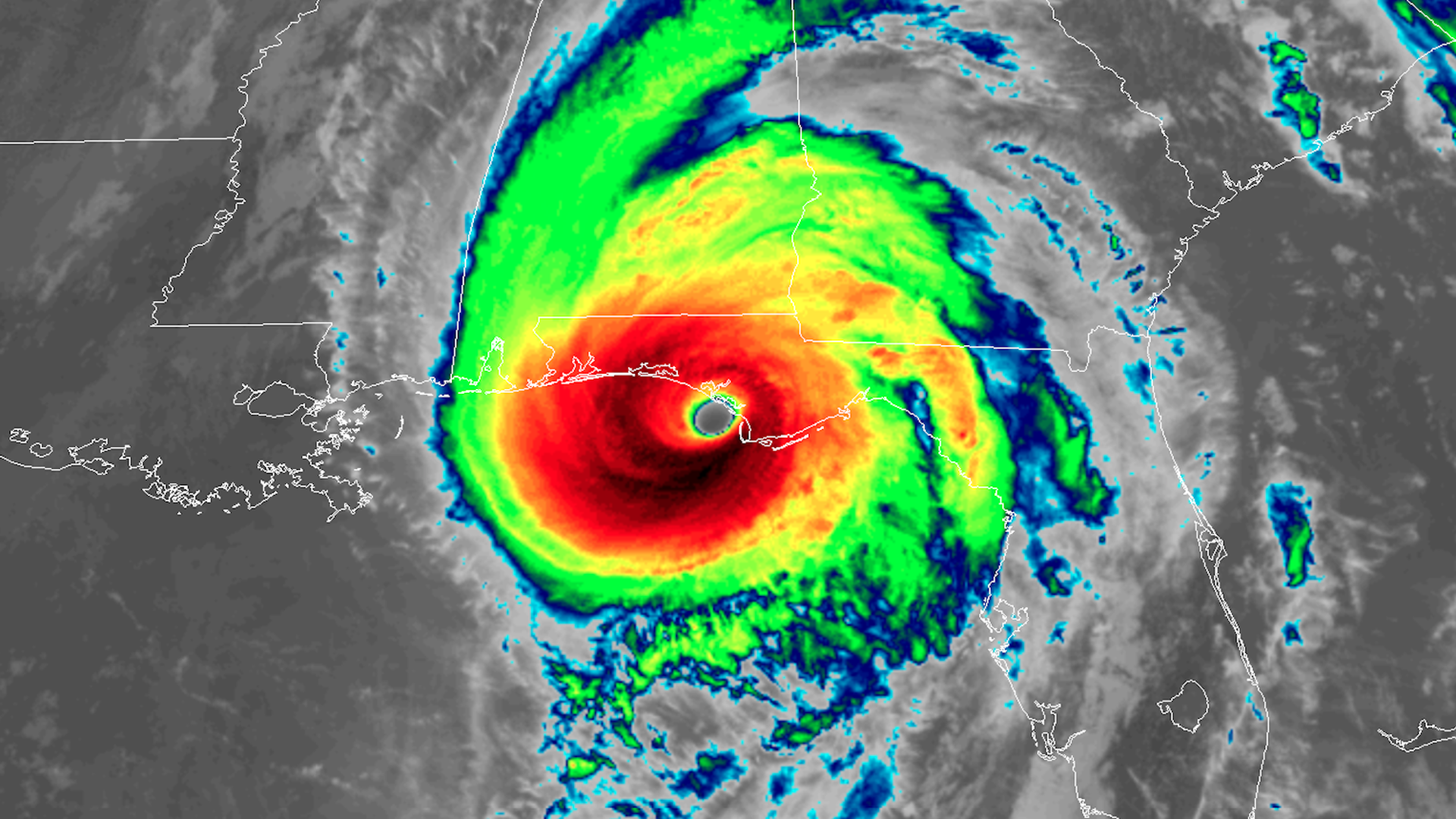
The impact: Michael wreaked havoc in the region where the menacing, 12-mile-wide eye came ashore. As seen in satellite images, the storm's winds and surge were potent enough to create a new island, destroy an entire beach town and lay waste to a strategically valuable Tyndall Air Force Base.
Hospitals and nursing homes in Florida and Georgia have been ravaged by Hurricane Michael, and some are now evacuating their patients, the New York Times reports.
The big picture: 4 hospitals and 11 nursing homes in Florida are closed. In Georgia, 35 hospitals or nursing homes are without power and using generators.
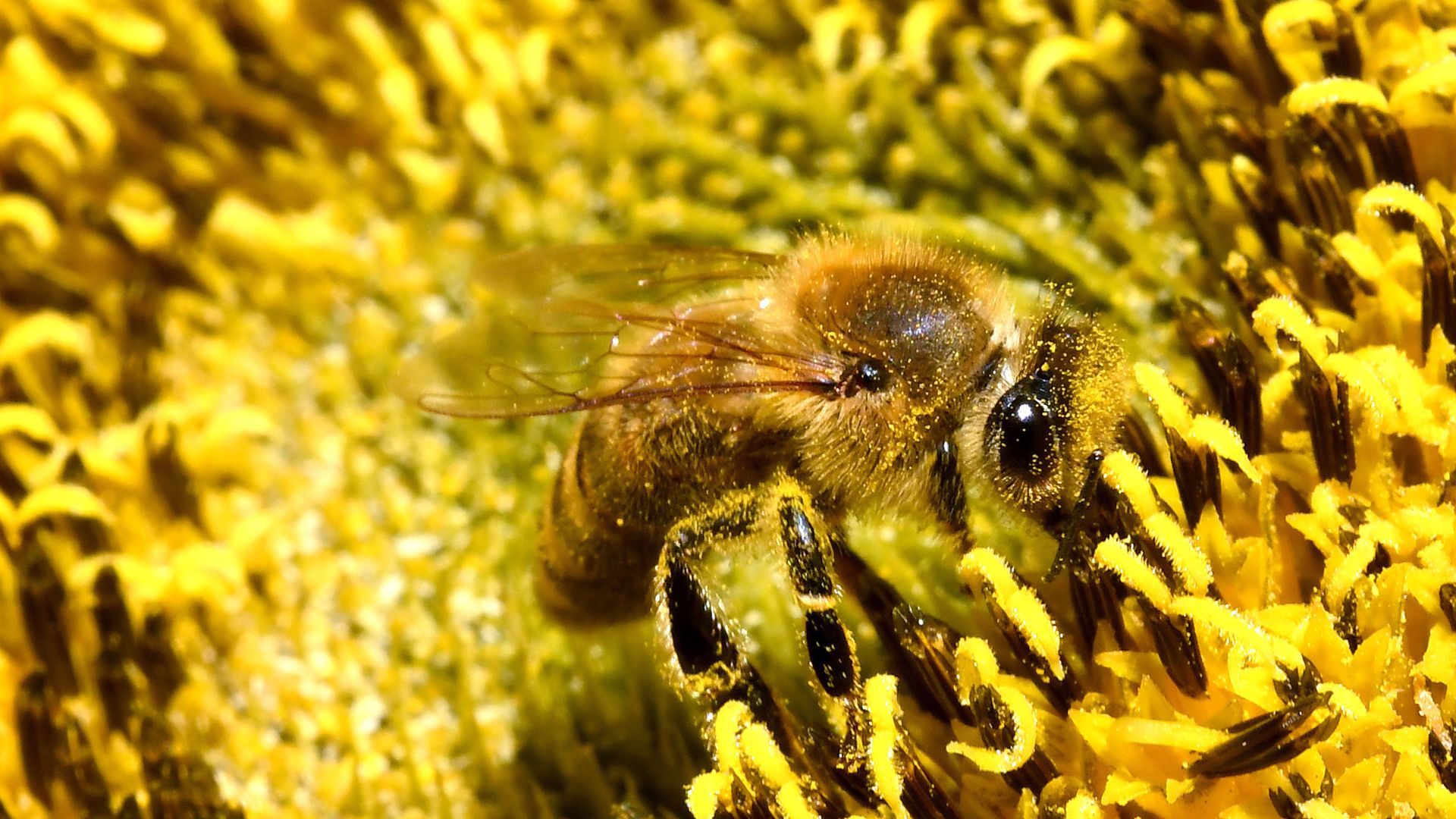
Solar eclipses are viewed as must-see phenomena, but bees don't treat them that way, a study in the Annals of the Entomological Society of America says.
What we're hearing: Nothing. During the 2017 solar eclipse, bees were completely silent. As the full shadow of the moon covered up sunlight, bees stopped buzzing. They resumed activity shortly after the moon's alignment between the Earth and the sun shifted and daylight returned.
Drone footage released Thursday shows the devastation left by Hurricane Michael in Mexico Beach, Florida, which slammed the Florida Panhandle as a near-Category 5 hurricane, packing sustained winds of 155 mph.
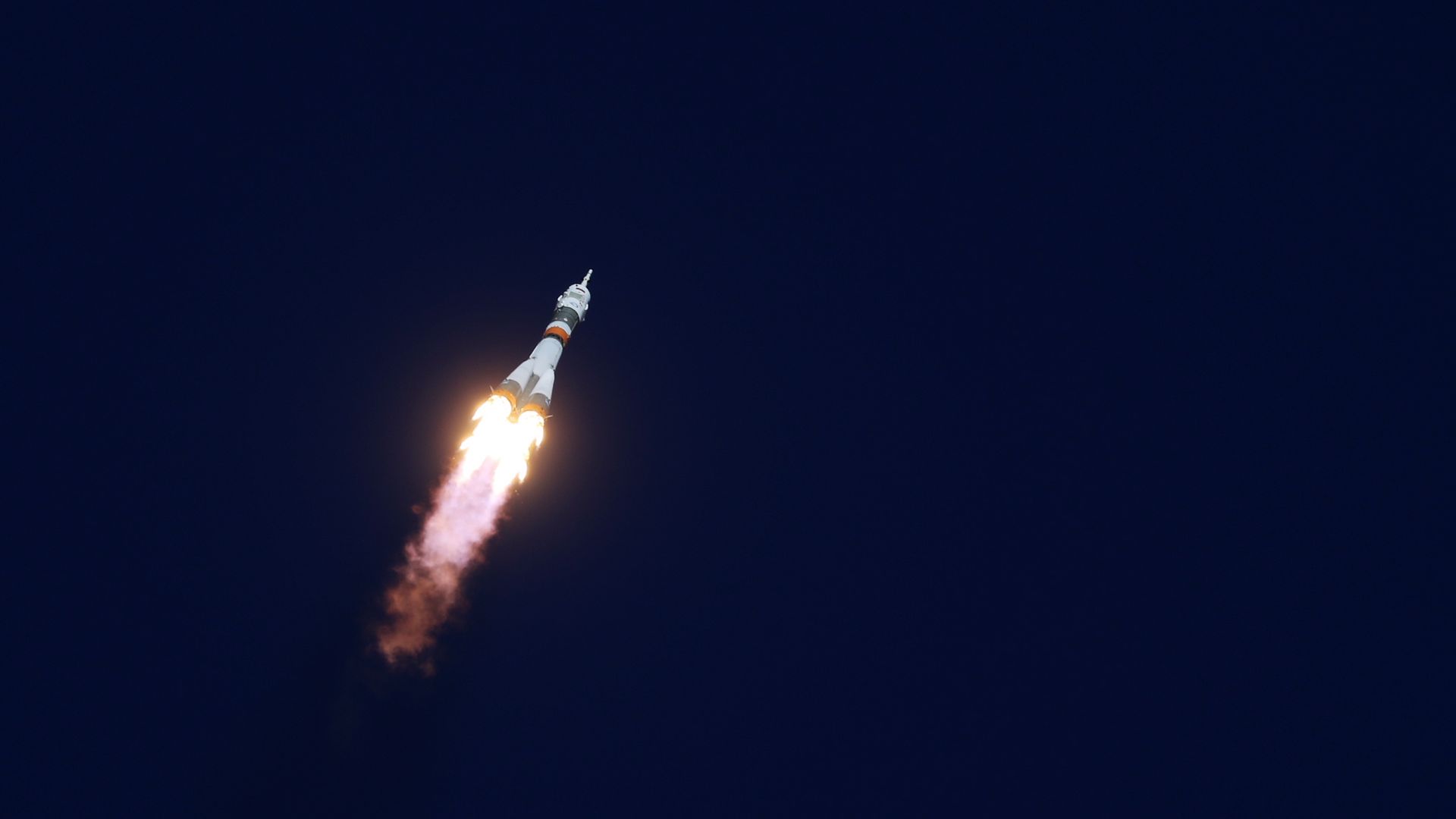
NASA is citing an issue with a Russian Soyuz booster rocket as the cause of the aborted launch of a rocket carrying NASA astronaut Nick Hague and Russian cosmonaut Alexey Ovchinin, two minutes after takeoff from Russia Thursday morning.
Details: The rocket reached about 31 miles in altitude — just below the boundary of space — when the failure occurred, Deputy Chief Astronaut Reid Wiseman said during a press conference Thursday. The crew landed approximately 11 miles outside of Zhezqazghan, a small city in central Kazakhstan. NASA officials praised Russian rescue efforts for retrieving both crews safely.
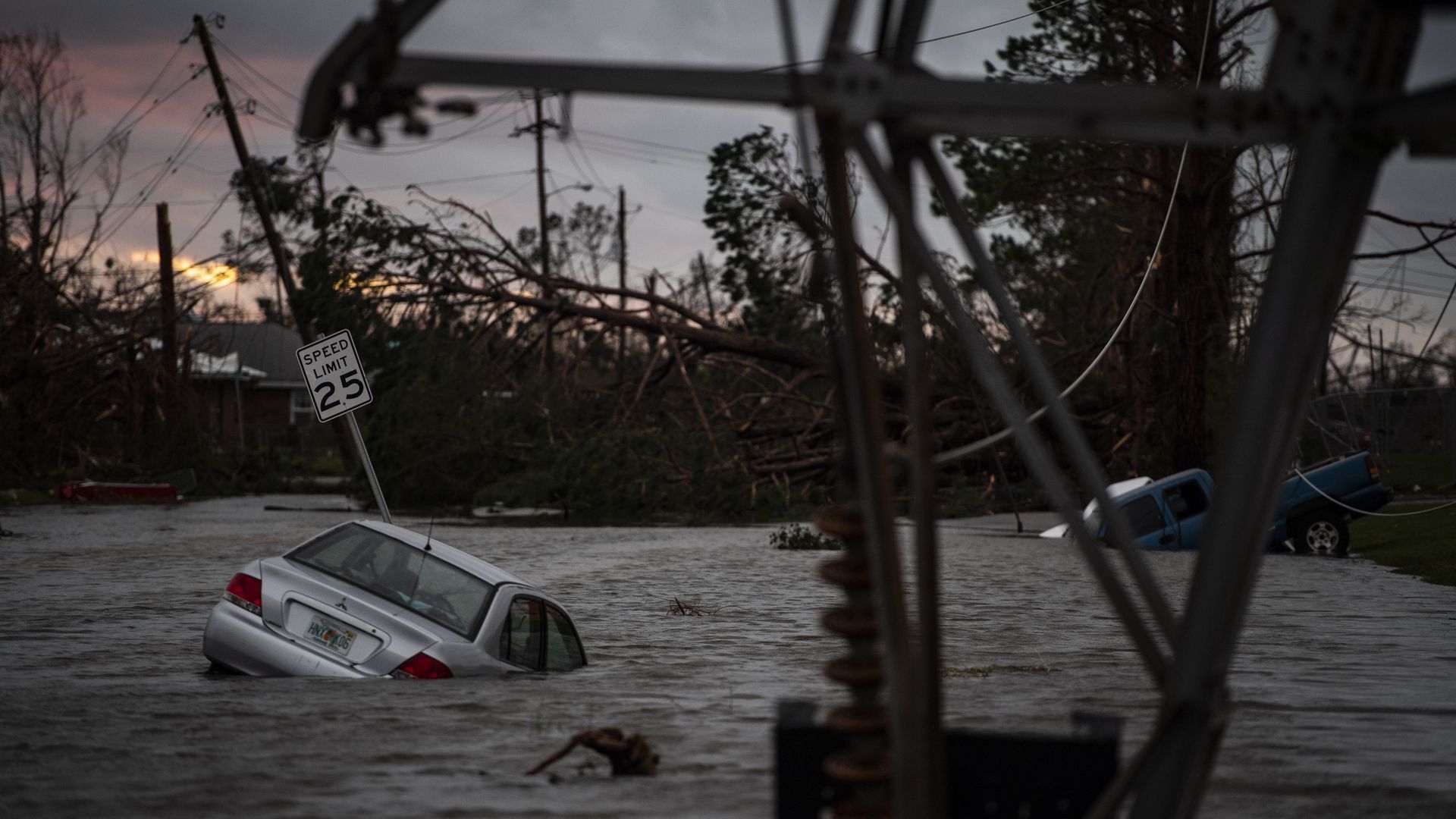
Hurricane Michael has wreaked havoc in the Florida Panhandle since making landfall as a Category 4 storm Wednesday afternoon, killing at least two people and creating "catastrophic" damage in the region.
The big picture: Hurricane Michael exploded from a tropical storm to a near-Category 5 hurricane in just four days, making it one of the strongest hurricanes ever to strike the continental U.S.
Hurricane Michael intensified at an extraordinarily rapid pace, growing from a tropical storm on Sunday to a borderline Category 5 storm featuring one of the lowest air pressure readings ever observed in a landfalling hurricane in the U.S. by Wednesday.
Why it matters: Hurricane Michael is occurring just days after the United Nations released a major report on climate change, concluding that potentially irreversible and major consequences, including extreme weather events, will grow far worse much earlier than previously thought.
Hurricane Michael made landfall in Mexico Beach, Fla., as a high-end Category 4 storm early Wednesday afternoon, killing at least two people and causing catastrophic damage.
The big picture: It's the strongest such storm on record to hit the Florida Panhandle and one of the strongest ever to strike the continental U.S. — and it severely impacted Florida's electricity grid and oil production in the Gulf of Mexico.
An American astronaut and Russian cosmonaut are safe after an emergency landing occurred when their launch from Russia's Baikonur cosmodrome in Kazakhstan to the International Space Station failed, per the AP.
The big picture: The failed launch, which had NASA Administrator Jim Bridenstine on hand in an attempt to improve U.S.-Russia relations, caused Russia to temporarily suspend further manned space launches. The U.S. relies on Russian Soyuz booster rockets to ferry American astronauts to the ISS after NASA retired the Space Shuttle in 2011.
This chart shows every Atlantic storm tracked by the National Oceanic and Atmospheric Administration since 1987, including Hurricane Michael. The higher the line within each year, the higher the recorded wind speed.
By the numbers: Hurricane Michael exploded from a tropical storm to a near-Category 5 hurricane in just four days — that's why the chart shows such a rapid increase in wind speed. It hit the Florida panhandle with the third-lowest atmospheric pressure of any storm ever to hit the continental United States (919 millibars), and was among the five strongest by sustained winds at landfall (155 mph).
Hurricane Michael made landfall in Mexico Beach, Florida as a high-end Category 4 storm early Wednesday afternoon — the strongest such storm on record to hit the Florida Panhandle and one of the strongest ever to strike the continental U.S.
Why it matters: This storm has caused catastrophic damage in parts of the Florida Panhandle where the core of the storm first moved ashore. Hurricane Michael will continue to cause damage overnight as it moves through Georgia and into South Carolina, with hundreds of thousands likely losing power. The storm has set milestones even as it moved further inland, becoming the first Category 3 storm to hit Georgia in 120 years (and doing so after it passed through another state, no less).