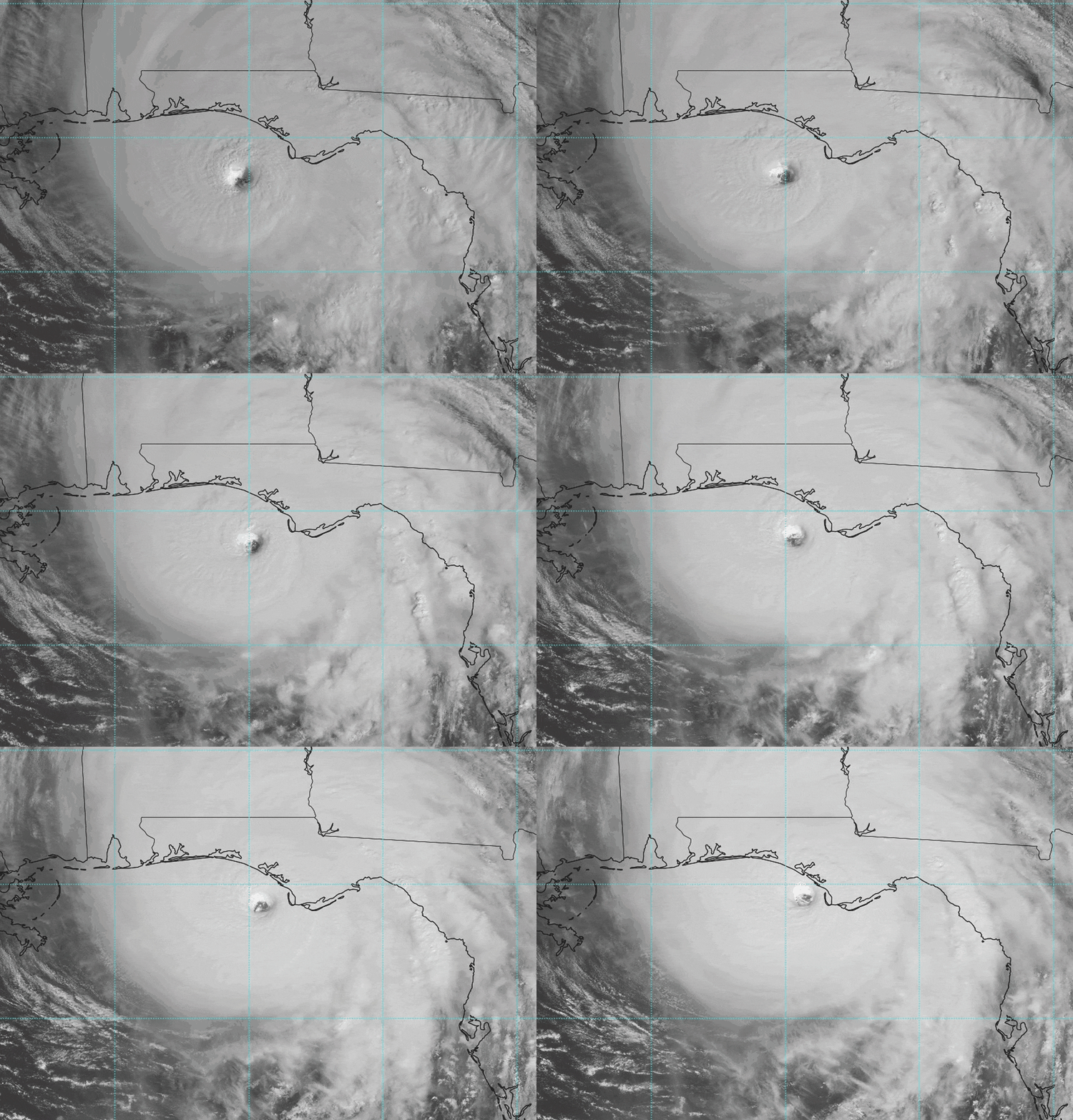
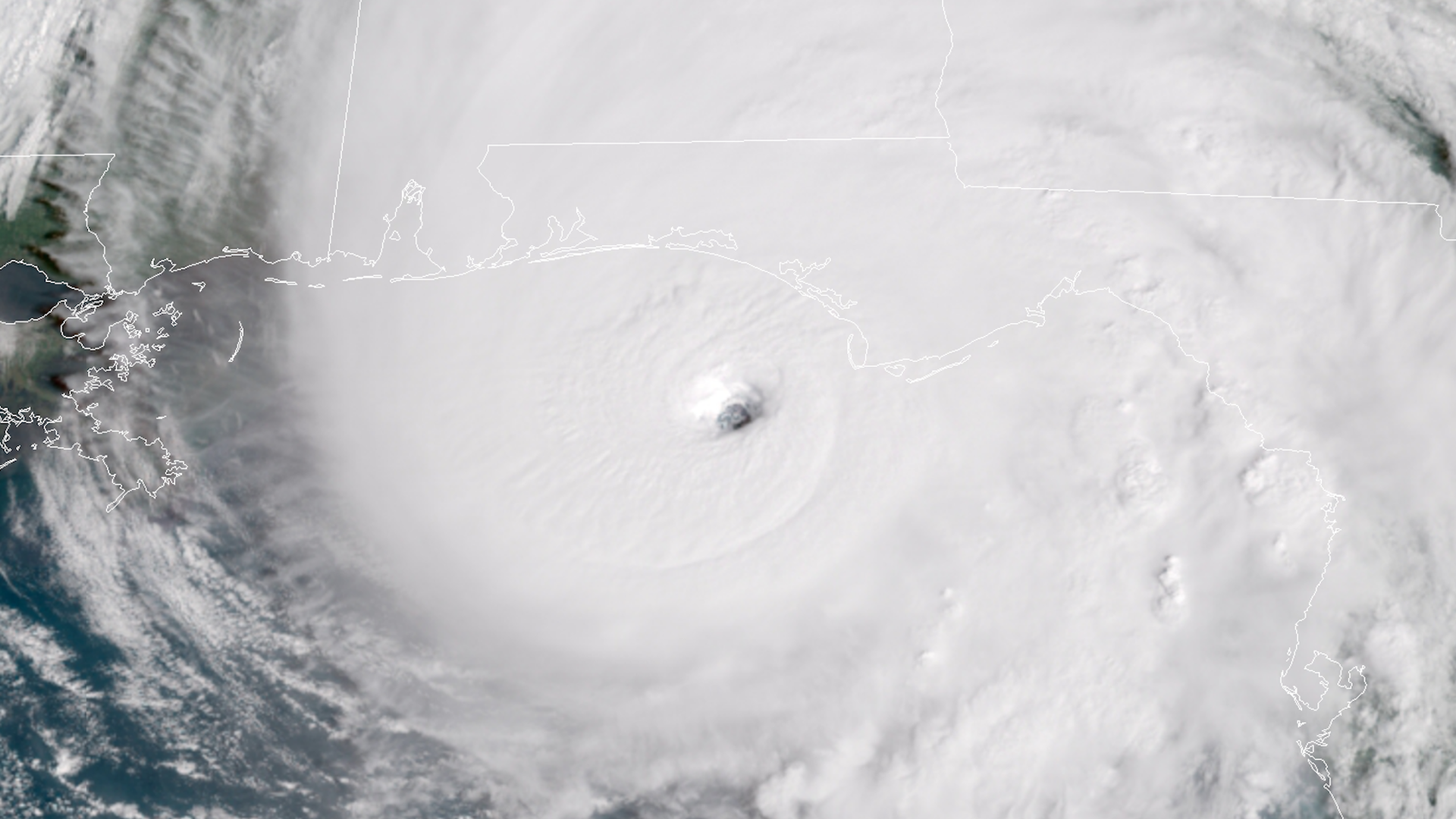
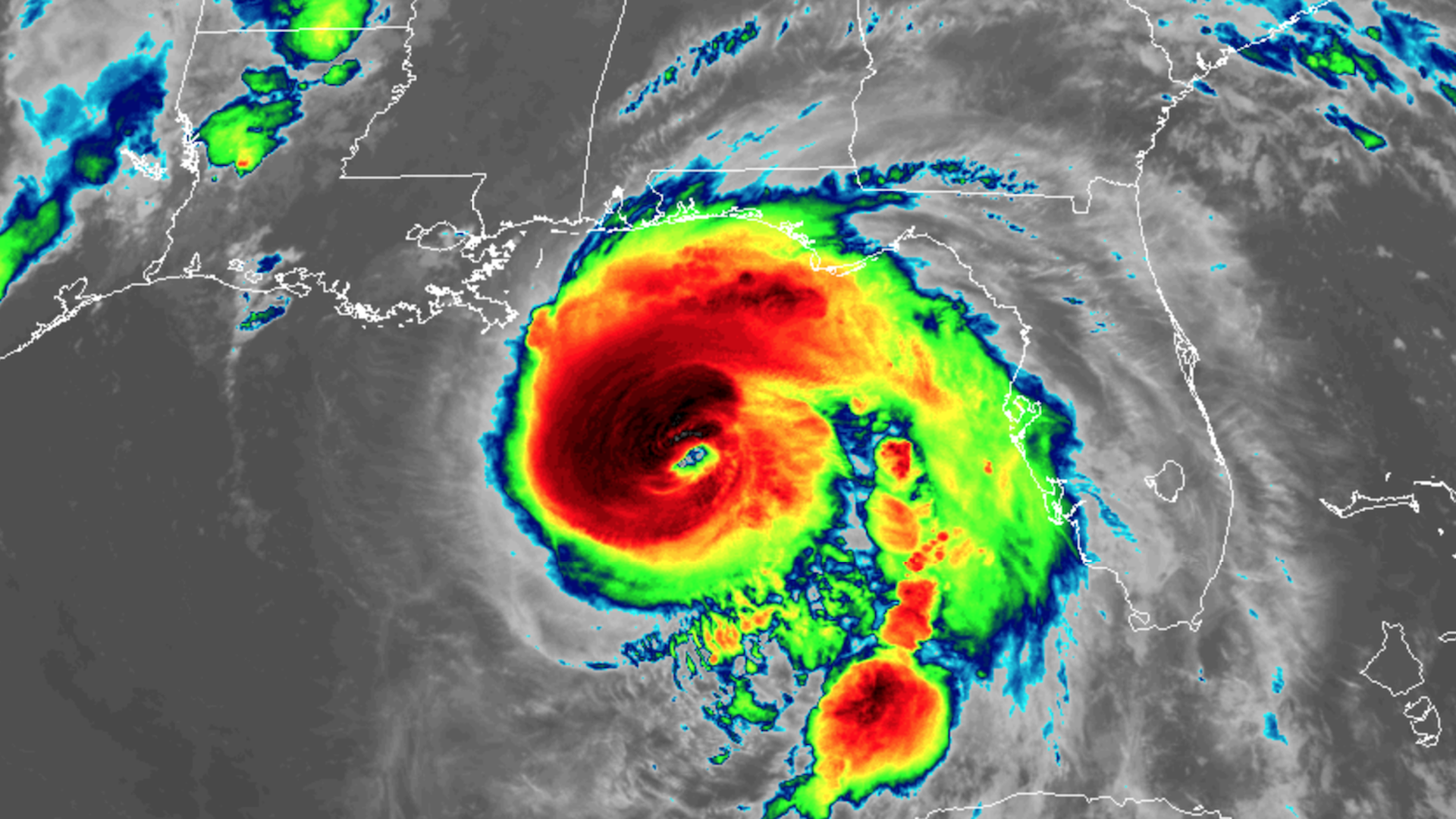
Hurricane Michael made landfall near Mexico Beach, Florida, at 1:40 pm ET, as a powerful Category 4 storm. Professional storm chasers and journalists are capturing the massive storm and the damage it is causing to the Florida Panhandle, packing 155 mph sustained winds as of 1:30 pm ET.
Hurricane Michael's eye, as viewed from space. GIF: NASA
Hurricane Michael has made landfall near Mexico Beach, Florida, at 1:40 p.m., as a powerful Category 4 storm. Its minimum central air pressure of 919 millibars and maximum sustained winds of 155 miles per hour put it on the cusp of Category 5 status.
The big picture: The storm ranks as one of the strongest hurricanes ever to hit the U.S., with a minimum air pressure comparable to Hurricanes Camille, Andrew and Katrina. It is the most powerful hurricane ever to hit the Florida Panhandle, and catastrophic damage is expected near the landfall zone. Wind damage and power outages will extend inland to Tallahassee and southern Georgia.
Florida Democrats have filed an injunction calling for a registration extension of at least a week as Hurricane Michael hits Florida as one of the strongest U.S. hurricanes ever.
The big picture: Florida Governor Rick Scott, who is running against Democrat Sen. Bill Nelson for a Senate seat, has extended the voter registration deadline for areas impacted by Hurricane Michael to one day after offices are able to re-open. Democrats want the deadline, which was originally October 9, extended to October 16, per USA Today.
The Weather Channel's Mike Bettes tried to evacuate his crew from near the landfall location of an intensifying Hurricane Michael, but the meteorologist — who was injured in 2013 while chasing tornadoes for the network — was forced to turn back.
Why it matters: TV networks may have placed reporters in harms' way, near the water and where the core of the storm's strongest winds could cause "catastrophic" damage. The Weather Channel has some of the most experienced weather experts in the business, so for them to try to evacuate as the storm approached is a sign of the storm's fury.
Hurricane Michael explosively intensified on Tuesday night into a powerful Category 3 storm, and is now forecast to road ashore Wednesday as a Category 4 hurricane in the central Florida Panhandle. Barring a last-minute weakening trend, this would put the storm into the history books as one of the most intense hurricanes ever to strike the Florida Panhandle, with the worst of the storm hitting between Pensacola and Apalachicola.
The big picture: Michael has the potential to cause "catastrophic damage" from strong winds and a potentially huge storm surge that will be pushed into the state's Panhandle and Big Bend region, the National Weather Service says. The storm is moving steadily northward toward the Florida Panhandle, with time having run out for residents to prepare. It is forecast to continue intensifying through the time of landfall sometime Wednesday.