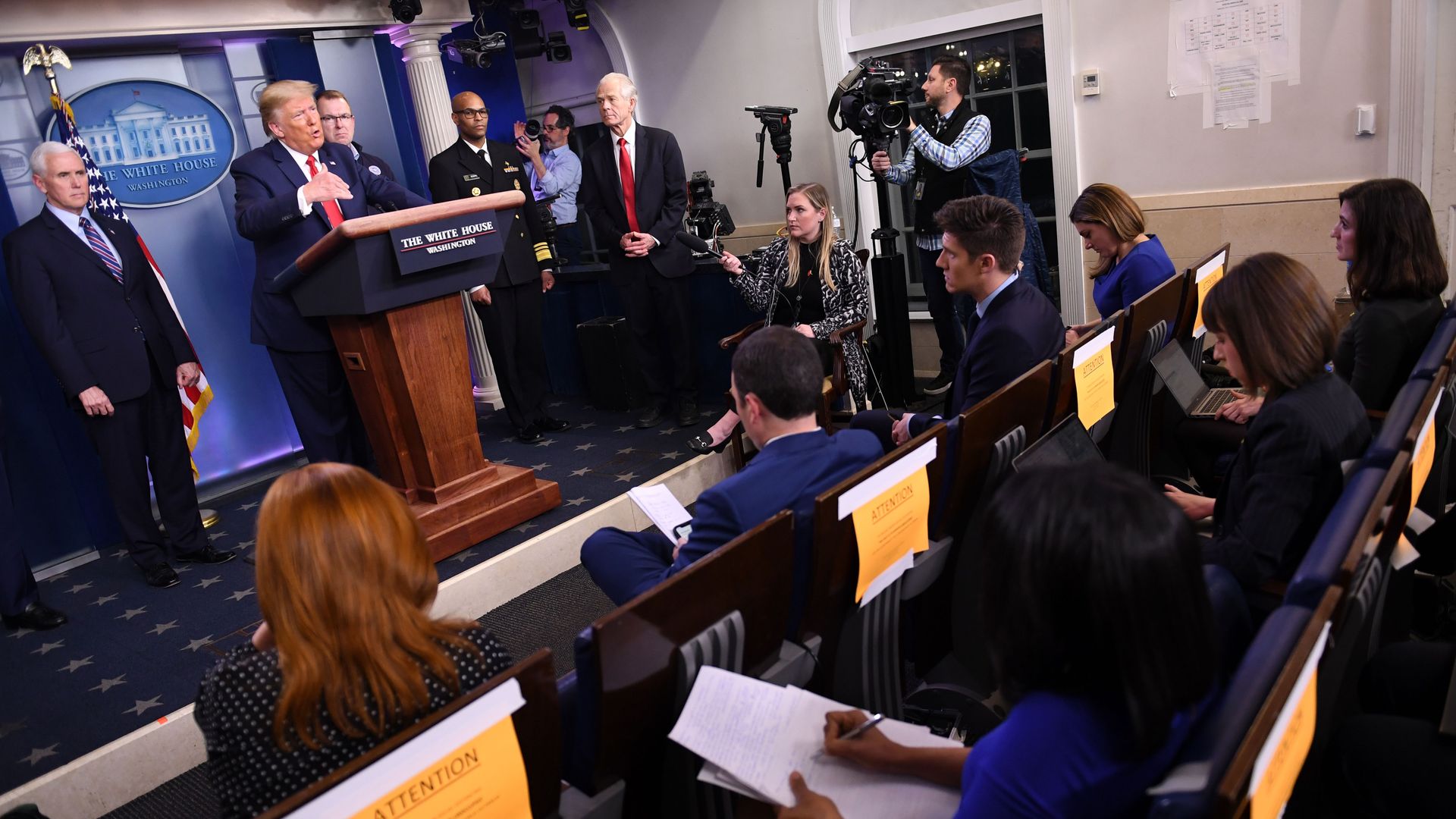
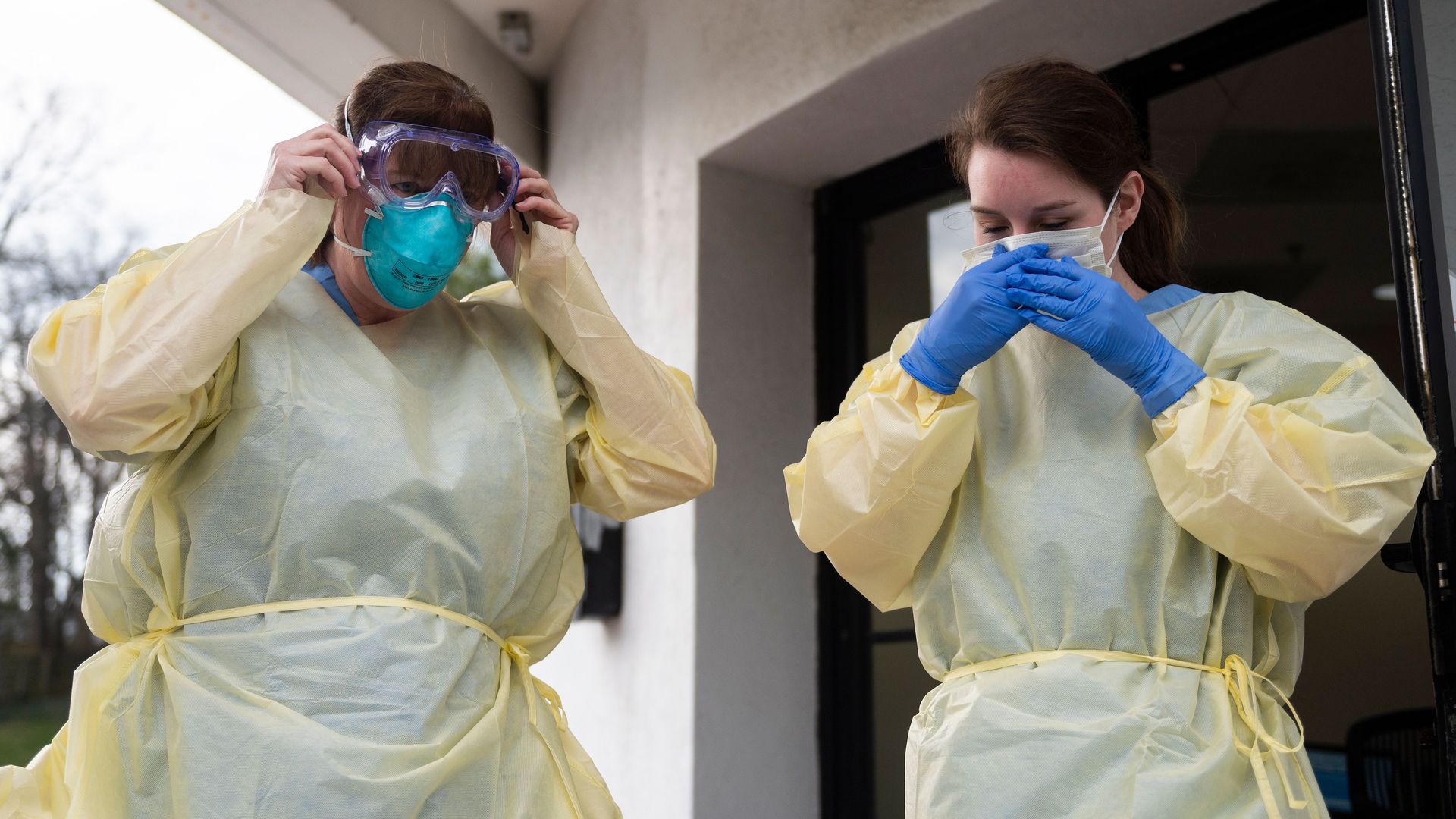
In the coming months, the decisions world leaders make — and their ability to communicate them effectively — could determine whether millions live or die, and whether the global economy stays afloat.
What to watch: Nations are judging their leaders on a daily basis. They may ultimately be revered or reviled based on the decisions they make now. Some may emerge with new powers that last well beyond the outbreak.
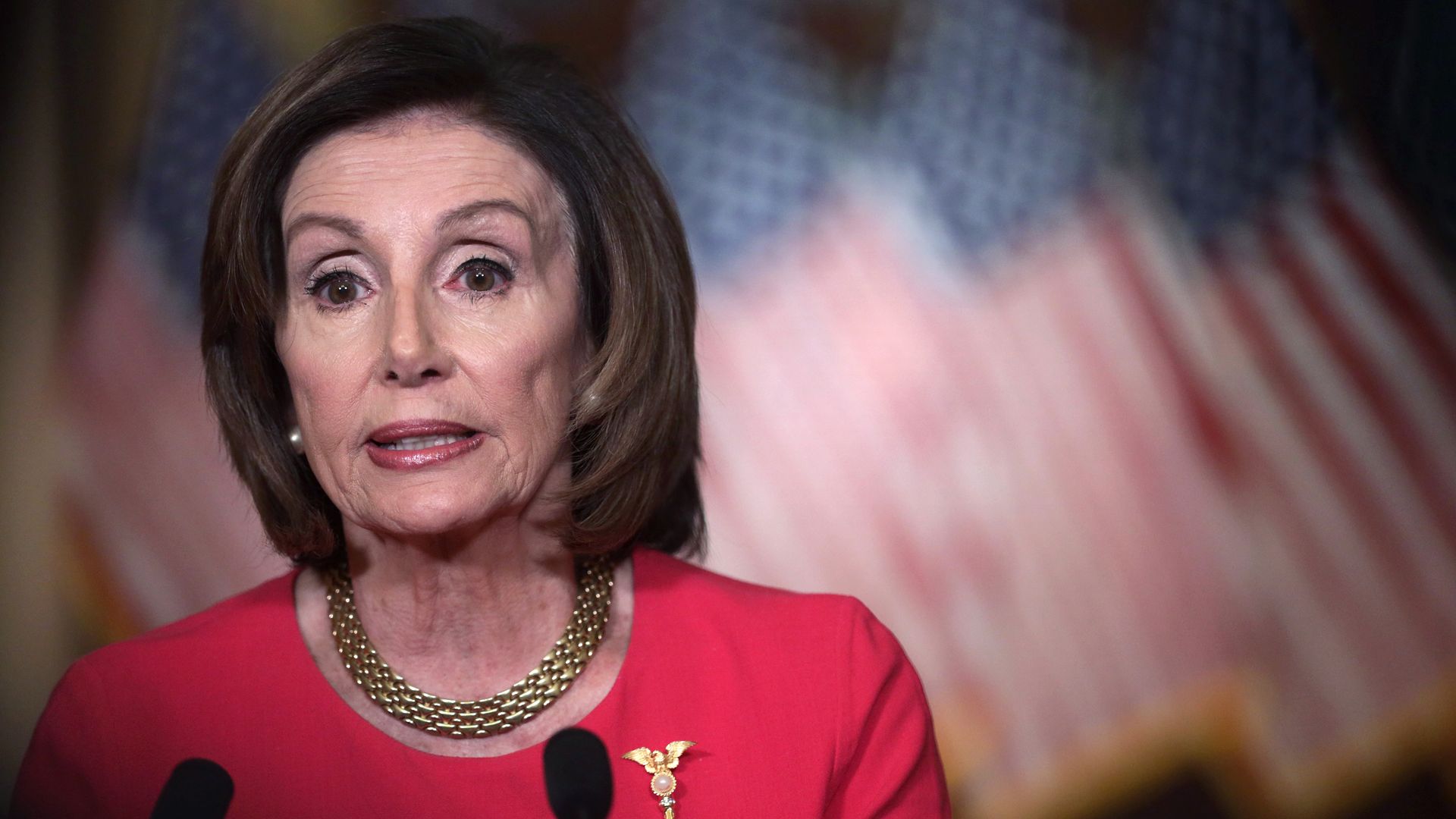
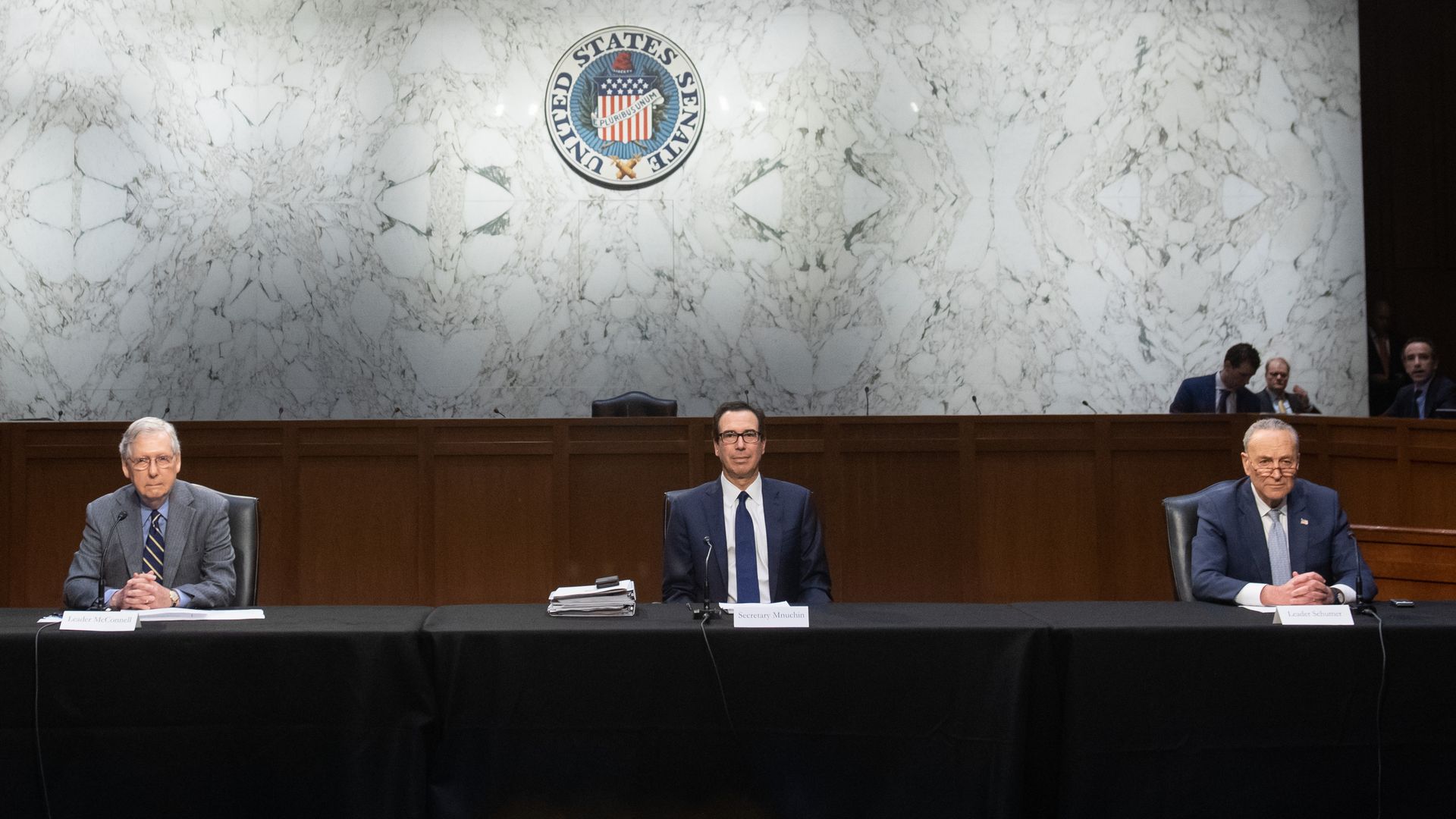
Why it matters: House Democrats' legislation — which comes with a $2.5 trillion price tag — comes after negotiations between Capitol Hill leaders and the White House broke down over the weekend, culminating in two failed procedural votes that have left the Senate Republicans' bill in limbo.
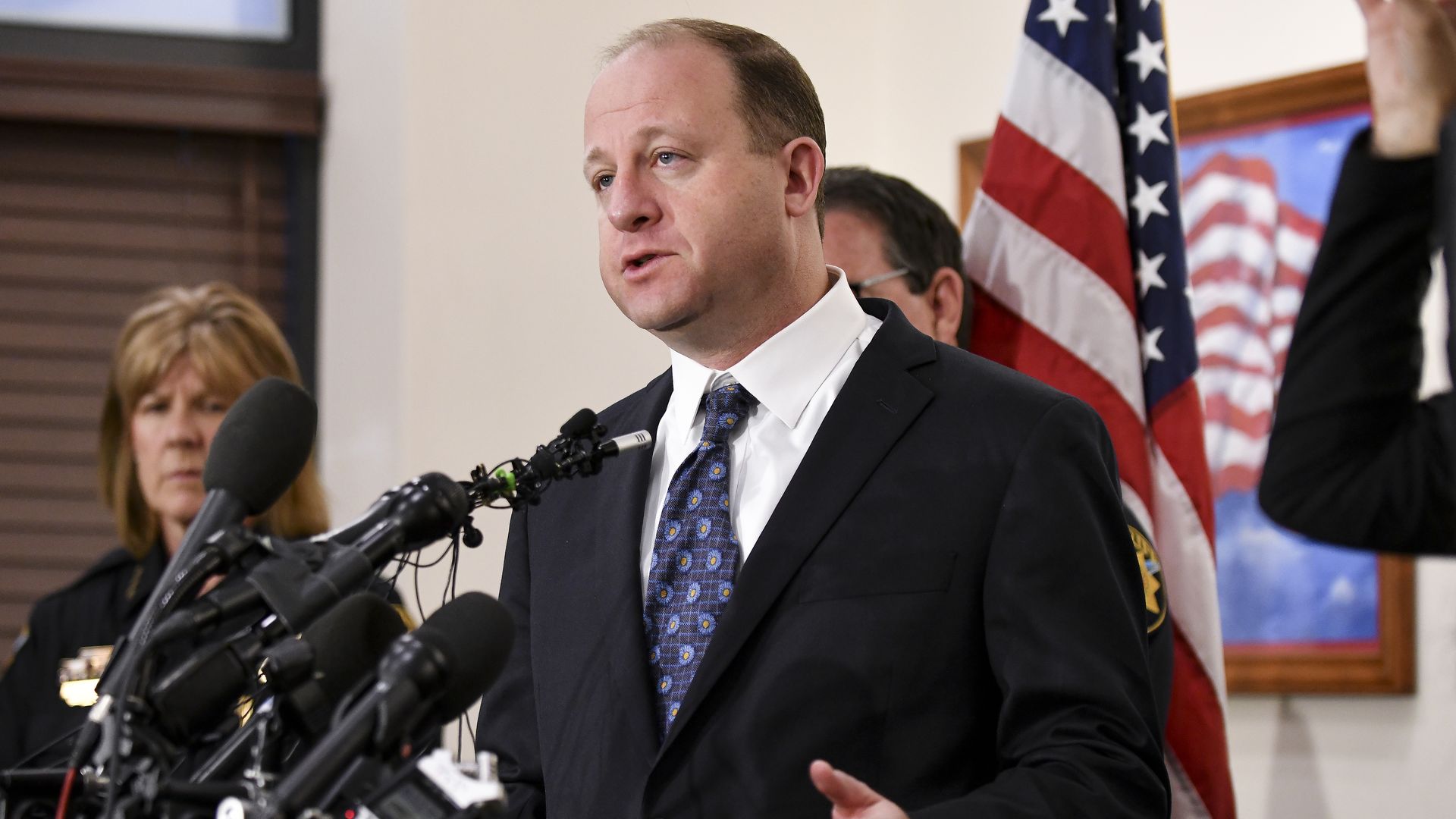
Colorado Gov. Jared Polis signed a bill on Monday abolishing the death penalty in the state.
Why it matters: This makes Colorado the 22nd state to abolish the death penalty, per the Colorado Sun. Polis also commuted the sentences of the only three inmates on the state's death row, who will instead serve life sentences with no parole.
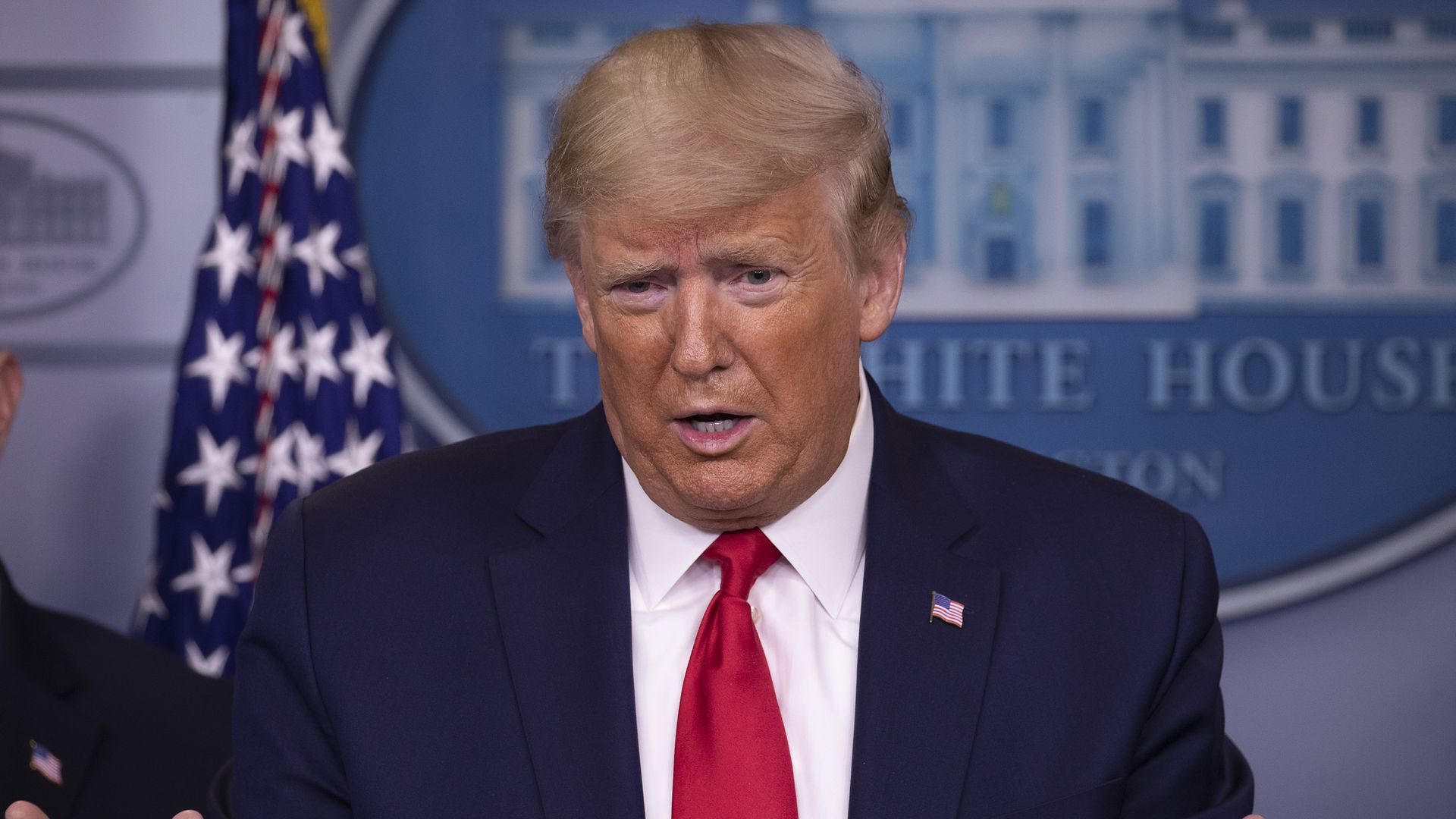
President Trump wrote in a tweet Monday that the U.S. must "totally protect" Asian Americans from being blamed for the coronavirus outbreak amid allegations that his use of the term "Chinese virus" has led to discrimination.
"It is very important that we totally protect our Asian American community in the United States, and all around the world. They are amazing people, and the spreading of the Virus is NOT their fault in any way, shape, or form. They are working closely with us to get rid of it. WE WILL PREVAIL TOGETHER!"
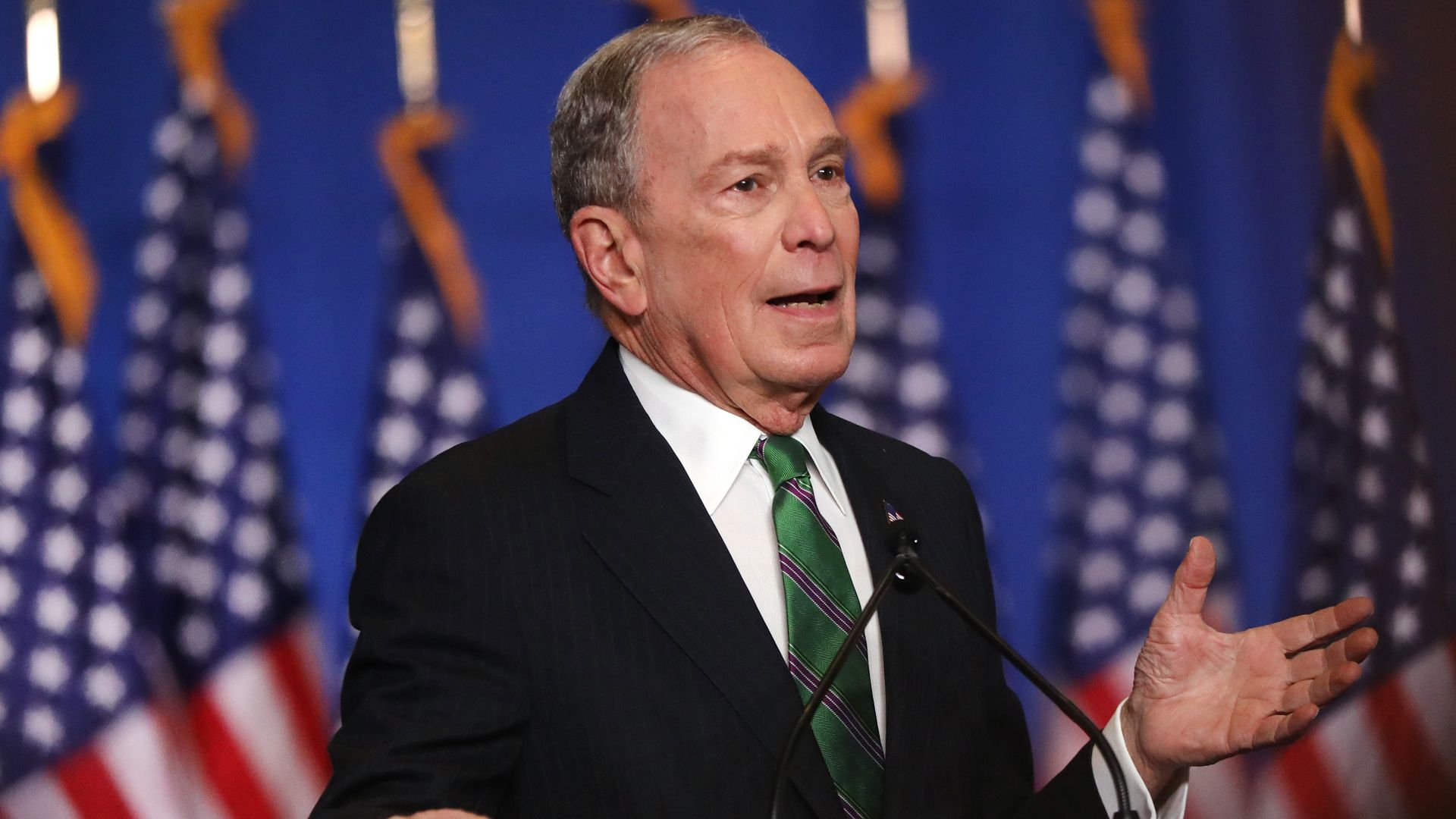
Former campaign staffers for billionaire Michael Bloomberg's 2020 bid have filed a class-action lawsuit after the former candidate reneged on a promise to pay them through November, even if he were not the nominee.
The big picture: Bloomberg, who dropped out and endorsed Joe Biden earlier this month, fired staffers on Friday and reversed his plans to form a super PAC for the 2020 race, instead transferring $18 million of his own money to the Democratic National Committee. His campaign staff is now being encouraged to apply for jobs with the party.
A procedural vote on Senate Republicans' $1.8 trillion Phase 3 stimulus package failed on Monday for the second time in less than 24 hours.
The big picture: Patience is wearing thin on Capitol Hill as talks over providing desperately needed aid to Americans and businesses continue to stall.
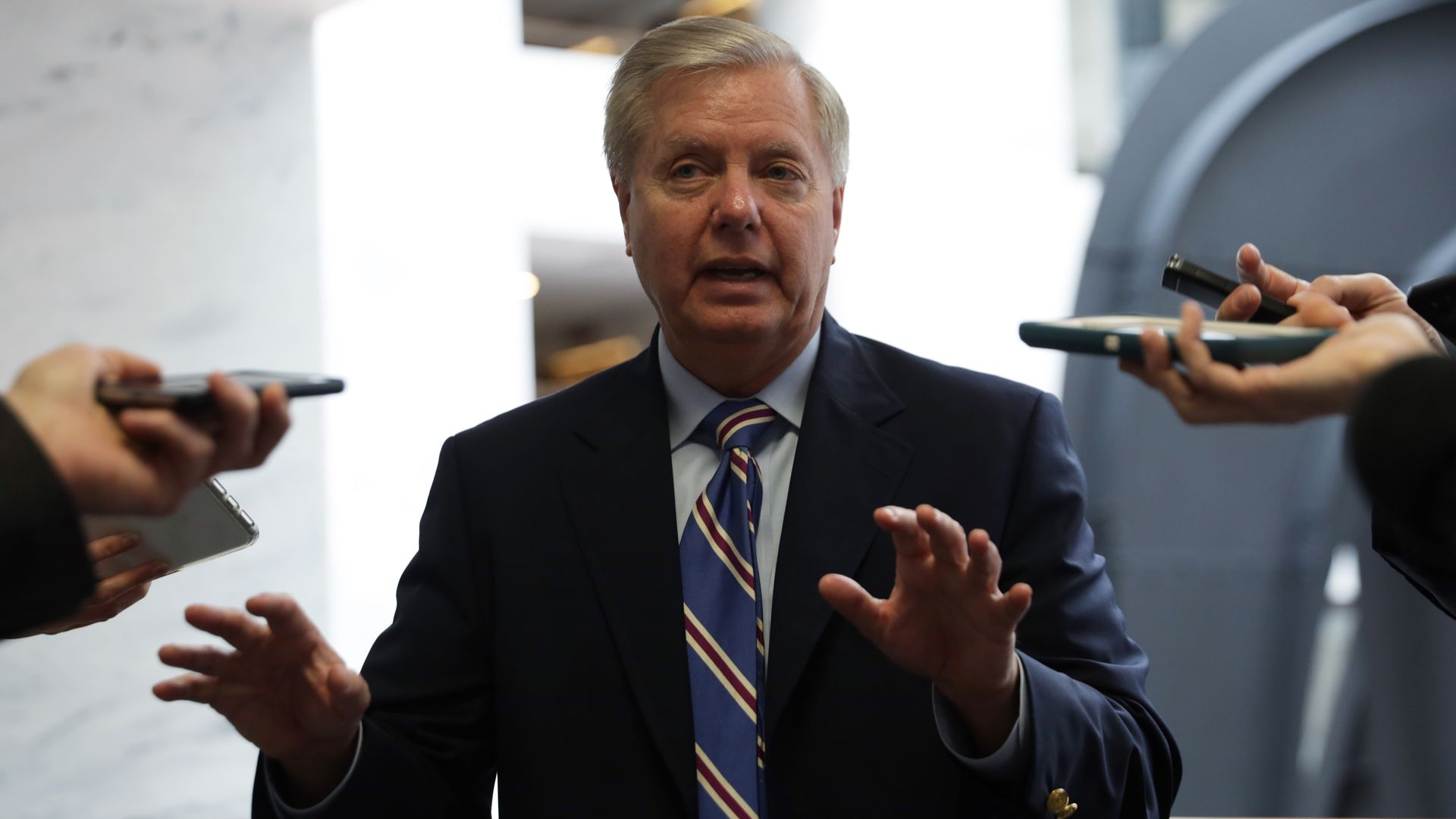
Sen. Lindsey Graham (R-S.C.) tweeted Monday that he is basing his decisions for coronavirus policy on information from "healthcare professionals like Dr. Fauci and others, not political punditry."
Why it matters: In an apparent public rebuke, Graham added a link to a Washington Post article about the Trump administration's signals that it might move to loosen restrictions on businesses at the end of the White House's 15-day social distancing period as an economic salve, as reported by Axios' Jonathan Swan. "There is no functioning economy unless we control the virus," he said.
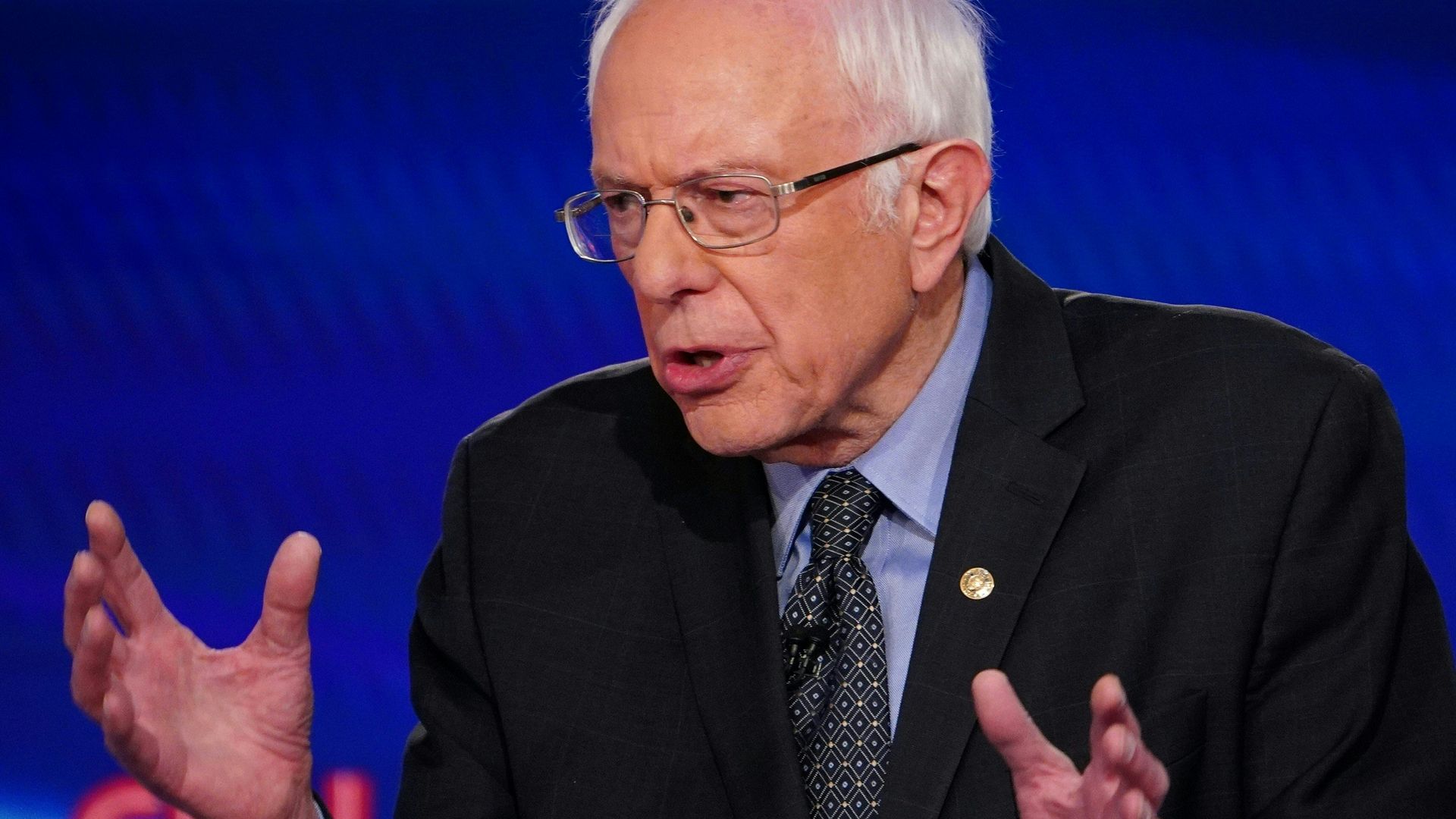
Sen. Bernie Sanders has won nine delegates after securing a victory in the Democrats Abroad primary, the Democratic Party's international arm announced Monday.
The state of play: Sanders got 57.9% of the vote compared to former Vice President Joe Biden, who got 22.7% and four delegates. This years' primary saw the group's highest turnout with 39,984 voters in 180 countries taking part, up more than 15% from 2016.
5,689 voted in the U.K., which had the highest turnout. Germany and Canada followed, with 5,268 and 4,691 voters, respectively.
Sen. Ron Johnson (R-Wis.) was one of several senators who came under fire last week after disclosing that they had sold large amounts of stock just before large swaths of the American economy shut down due to the coronavirus outbreak.
The big picture: Many of Johnson's colleagues should indeed be scrutinized by the SEC and/or the Department of Justice, but Johnson himself hasn't done anything worthy of investigation.
Senate Republicans' version of the "phase 3" coronavirus stimulus, which stalled in a procedural vote last night, would provide $3 billion for the White House plan to buy 77 million barrels of oil for the Strategic Petroleum Reserve.
What we're watching: Whether Capitol Hill negotiations on this or subsequent bills will address the renewable power sectors' push — backed by some Democrats — to modify and extend availability of tax incentives.
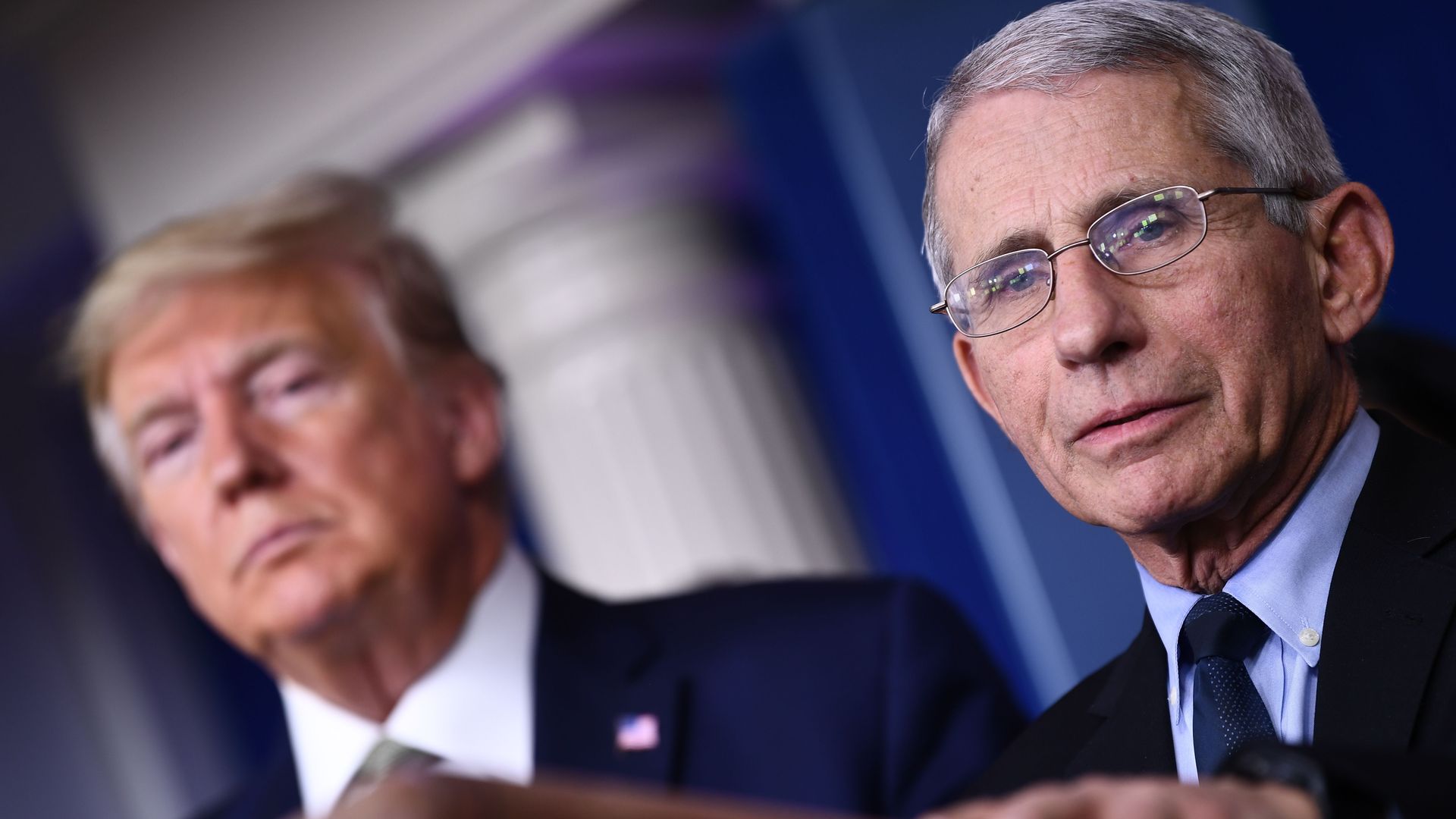
Anthony Fauci, the director of the National Institute of Allergy and Infectious Diseases, told Science magazinethat he "can't jump in front of the microphone" if President Trump says something incorrect during the White House's coronavirus briefings.
Behind the scenes: "The next time they sit down with him and talk about what he’s going to say, they will say, by the way, Mr. President, be careful about this and don't say that," Fauci said.
"I want America to understand: This week, it's going to get bad," Surgeon General Jerome Adams said Monday on NBC's "Today," referring to the coronavirus outbreak in the United States.
Why it matters: The U.S. has reported more than 35,000 coronavirus cases and 371 deaths from the virus, making it the third-largest outbreak in the world, according to data from Johns Hopkins University.
President Trump and some of his senior officials are losing patience with the doctors’ orders.
The state of play: Amid dire predictions for jobs and the economy, the White House is beginning to send signals to business that there's light at the end of the tunnel — that the squeeze from nationwide social distancing won't be endless.
County officials are urging Congress to make their governments eligible to directly receive coronavirus relief funds to offset the ballooning costs of responding to the crisis.
Why it matters: The country's 1,900 public health departments are run by counties, which also manage roughly 1,000 U.S. hospitals. More than 500 counties have already declared a state of emergency to trigger additional funding and resources.