Most of the vetting files had a section called "red flags," where the vetting team noted concerns about potential top officials. Axios categorized them all — for the nearly 100 people whose vetting documents we received.
Trump started his presidency on the back foot when it came to personnel. Now, he has confirmed fewer senior administration officials at this stage of his presidency than any of the previous four presidents, according to analysis provided to Axios by the nonpartisan Partnership for Public Service.
Note: Data exclude non-civilian and judiciary positions; Data: Partnership for Public Service; Chart: Chris Canipe/Axios
The documents are the product of a hasty, dysfunctional, thrown-together effort to put together a presidential administration. Chris Christie helmed a traditional transition effort during the campaign. Then, after Trump won, Steve Bannon fired him and tossed most of his work.
Why it matters: Trump's original Cabinet, by most counts, was a mess and many are now gone.
Rep. Michael McCaul (R-Texas) said on CBS' "Face the Nation" Sunday that the conditions of immigrant detention centers in his state are the "worst" he's ever seen them, and he called on Congress to pass humanitarian aid to "take care of these children."
"We have to pass humanitarian aid to take care of these children. That is the nation we are. We have to take care of these kids. ... I've lived in that state, I've been down there throughout my 15 years in Congress and before that as a federal prosecutor. This is the worst I've ever seen it, and it has to be taken care of."
Why it matters: Immigrant detention facilities have drawn heightened scrutiny in the wake of recent reports that suggest the government is failing to provide adequate living conditions and sanitary products for immigrant children being detained.
According to the New Yorker, children in facilities have been suffering from flu and lice outbreaks, sleeping on concrete floors and left virtually uncared for by staff. Four toddlers were hospitalized after lawyers discovered them in medically dire states at a U.S. Border Patrol facility in McAllen, Texas.
A bipartisan push to resolve the situation has yet to materialize.
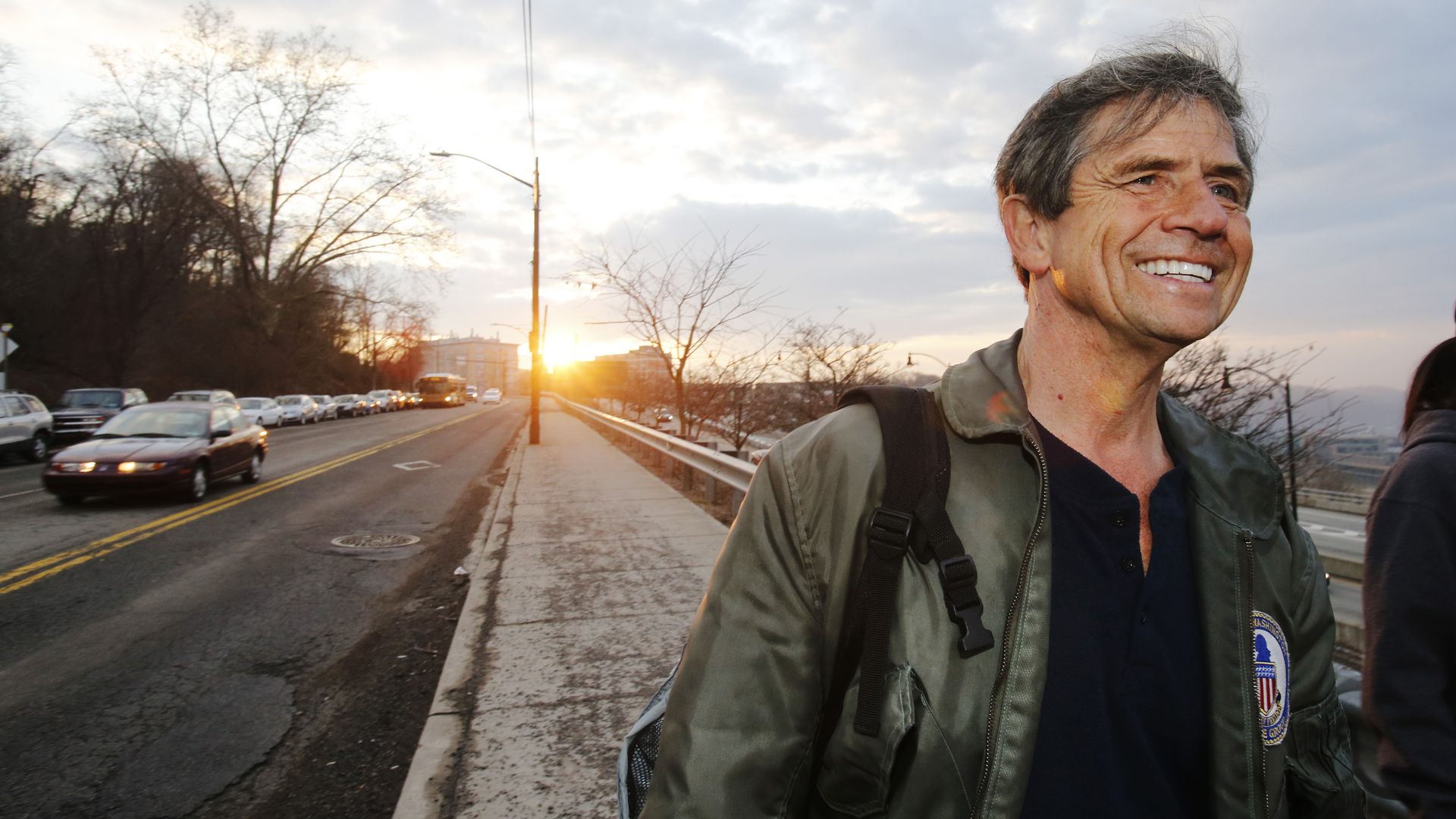
Former Pennsylvania Rep. Joe Sestak announced on Sunday that he is running for president, becoming the 25th Democrat to join the race.
Catch up quick: The 67-year-old Sestak is a former 3-star admiral and and was the "highest ranking military officer ever elected to Congress" from 2007 to 2010. Sestak graduated from the U.S. Naval Academy and has a Master's and a PhD from Harvard. He made two failed bids for Senate in 2010 and 2016, earning the Democratic nomination in his first run but falling short in his second.
In an interview on ABC's "This Week," 2020 candidate Sen. Cory Booker said former Vice President Joe Biden "showed a lack of understanding or insensitivity by invoking this idea that he was called 'son' by white segregationists," but added that the two had a "constructive conversation" in a phone call last week.
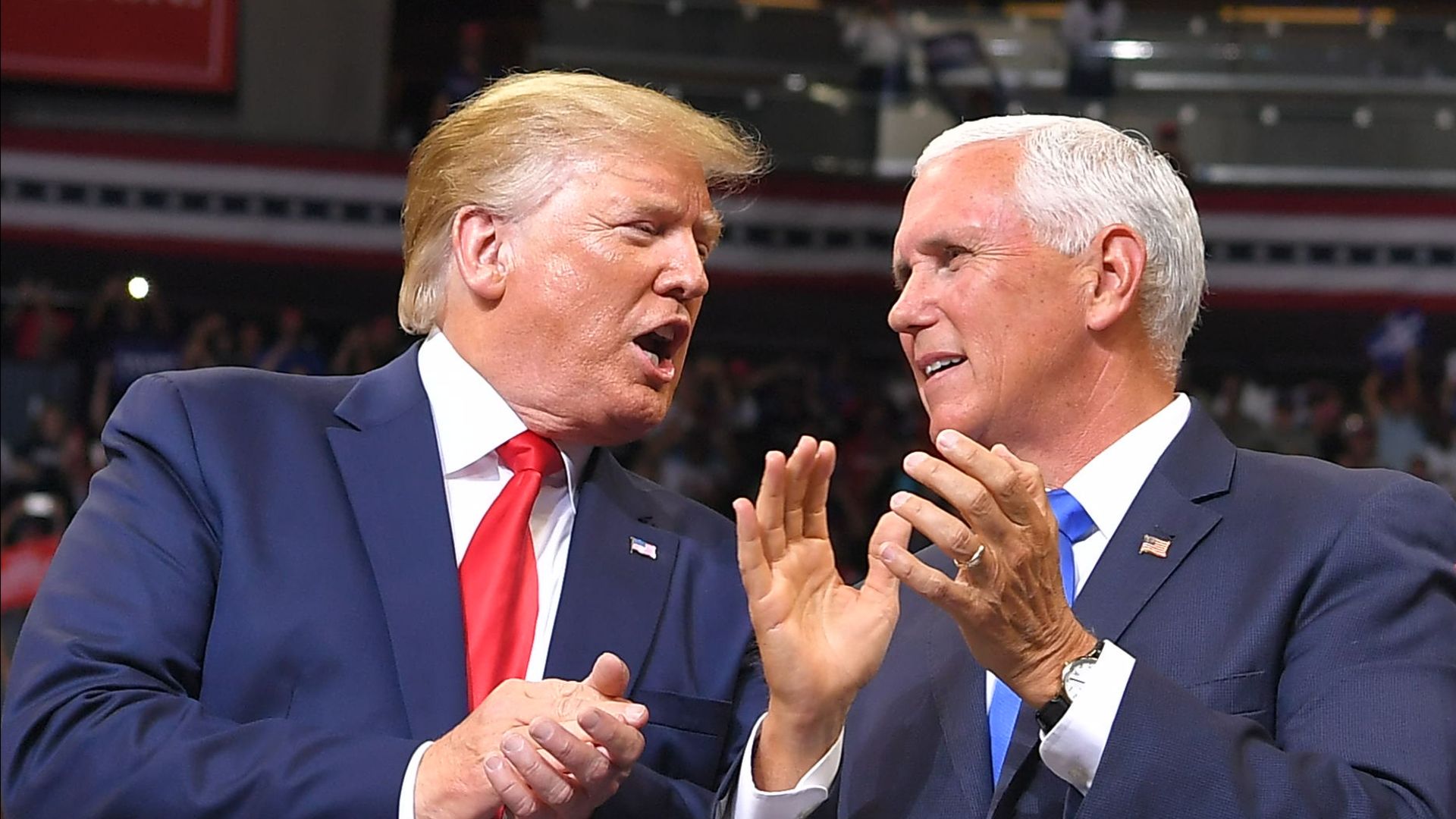
President Trump confirmed on NBC's "Meet the Press" Sunday that Vice President Mike Pence will "100%" be on his ticket again in 2020.
Why it matters: In an interview with "Fox & Friends" last week, Trump made headlines by declining to directly endorse Pence as his successor in 2024, telling the hosts: "You can't put me in that position." Trump explained to NBC's Chuck Todd that he hesitated to answer because "it was a surprise question" and the election is "so far out."
Pollsters spent a lot of time figuring out why Donald Trump's win was such a surprise in 2016 — but the reality is that there isn't going to be a radical change in most election polling for 2020.
Why it matters: Everyone should be more cautious in 2020 about what the polls can tell us and what they can't. There will be some improvements in state polls, which is what really mattered in 2016. But polling experts warn that state surveys in general are still a weak spot, and other aspects of election polling are still a challenge.
The U.S. isn't the first country to debate reparation payments for its citizens; nations have a long record of doling out compensatory payment to right their historic wrongs.
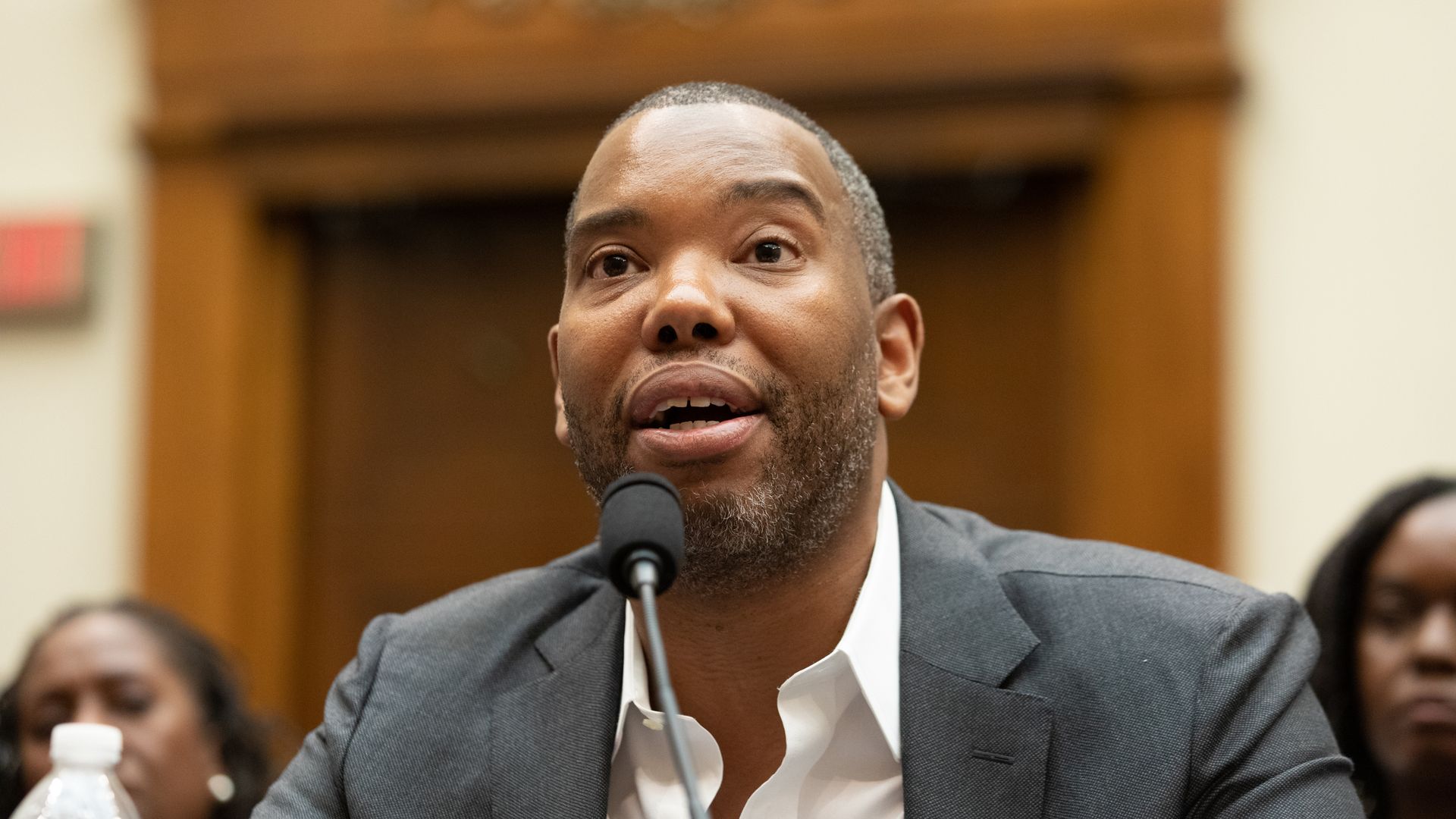
Driving the news: The debate over reparations, specifically for black Americans, has ramped back up recently. This past week, Congress held its first hearing on the issue since 2007. Author Ta-Nehisi Coates offered a passionate speech about the importance of repayment for the descendants of slaves in the U.S.
President Trump said he will issue a 2-week delay on what he called the "Illegal Immigration Removal Process," referencing planned mass ICE raids scheduled for Sunday morning in 10 U.S. cities.
Why it matters: The 10-city Immigration and Customs Enforcement roundup aimed to deport around 2,000 undocumented families, targeting those with final orders of removal.
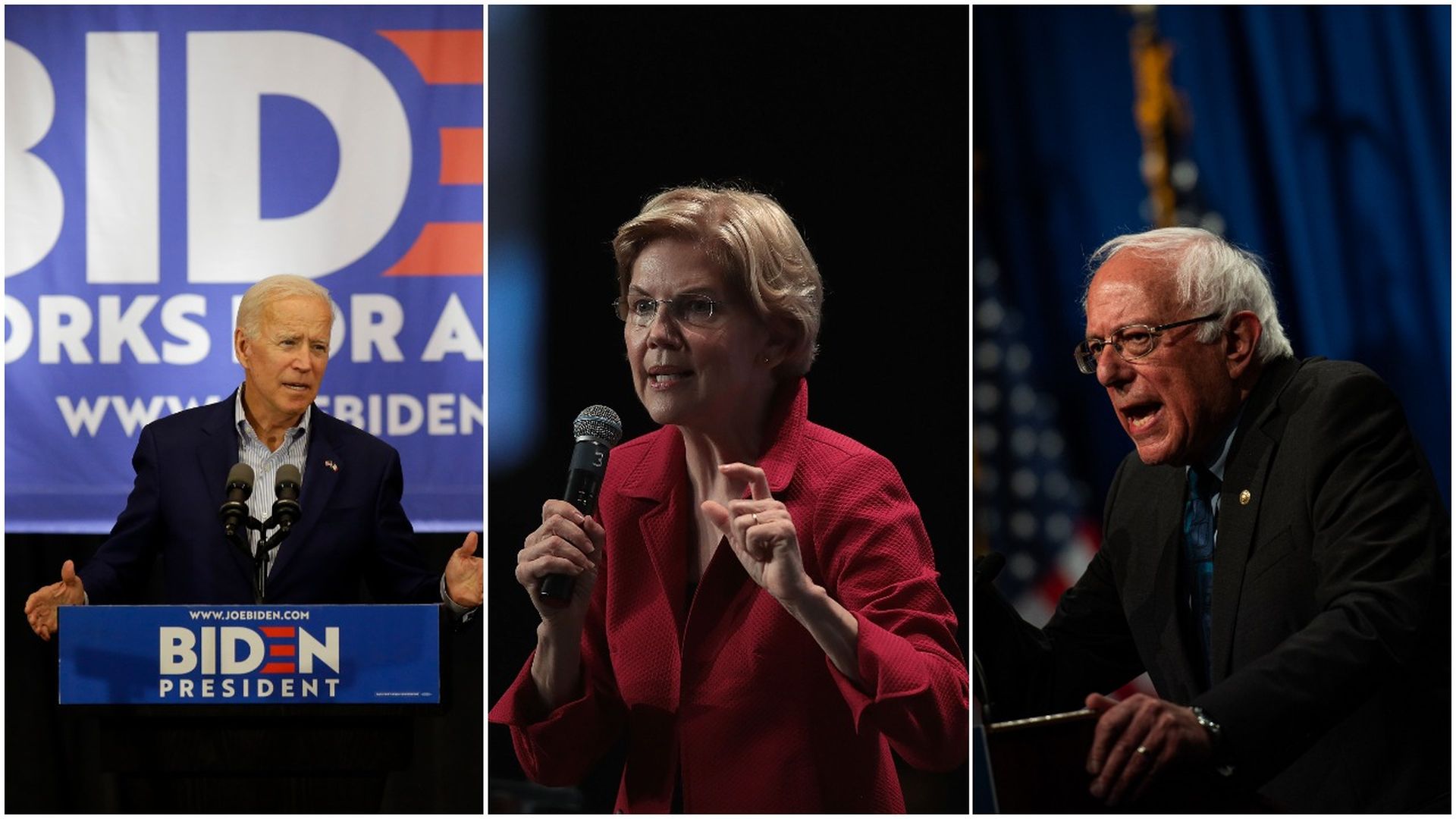
Democrats are toying with a number of ideas to address economic inequality in the U.S., with candidates such as Sens. Bernie Sanders (I-Vt.) and Elizabeth Warren (D-Mass.) making it an integral part of their campaign messaging.
The big picture: Addressing economic inequality means different things to different candidates. There's a push to address tax cuts for the rich, affordable housing, minimum wage, income inequality, labor and unions.
CHARLESTON, S.C. — As President Trump fixates on former Vice President Joe Biden as his opponent in the 2020 general election, some moderate Democrats are more afraid of Bernie Sanders becoming the eventual nominee.
Driving the news: A two-day conference hosted here by the centrist Democratic group Third Way focused on helping Democrats figure out "the way to win" in 2020 — and they're sick of economic messages that focus on "free stuff" rather than opportunity, as former North Dakota Sen. Heidi Heitkamp put it.
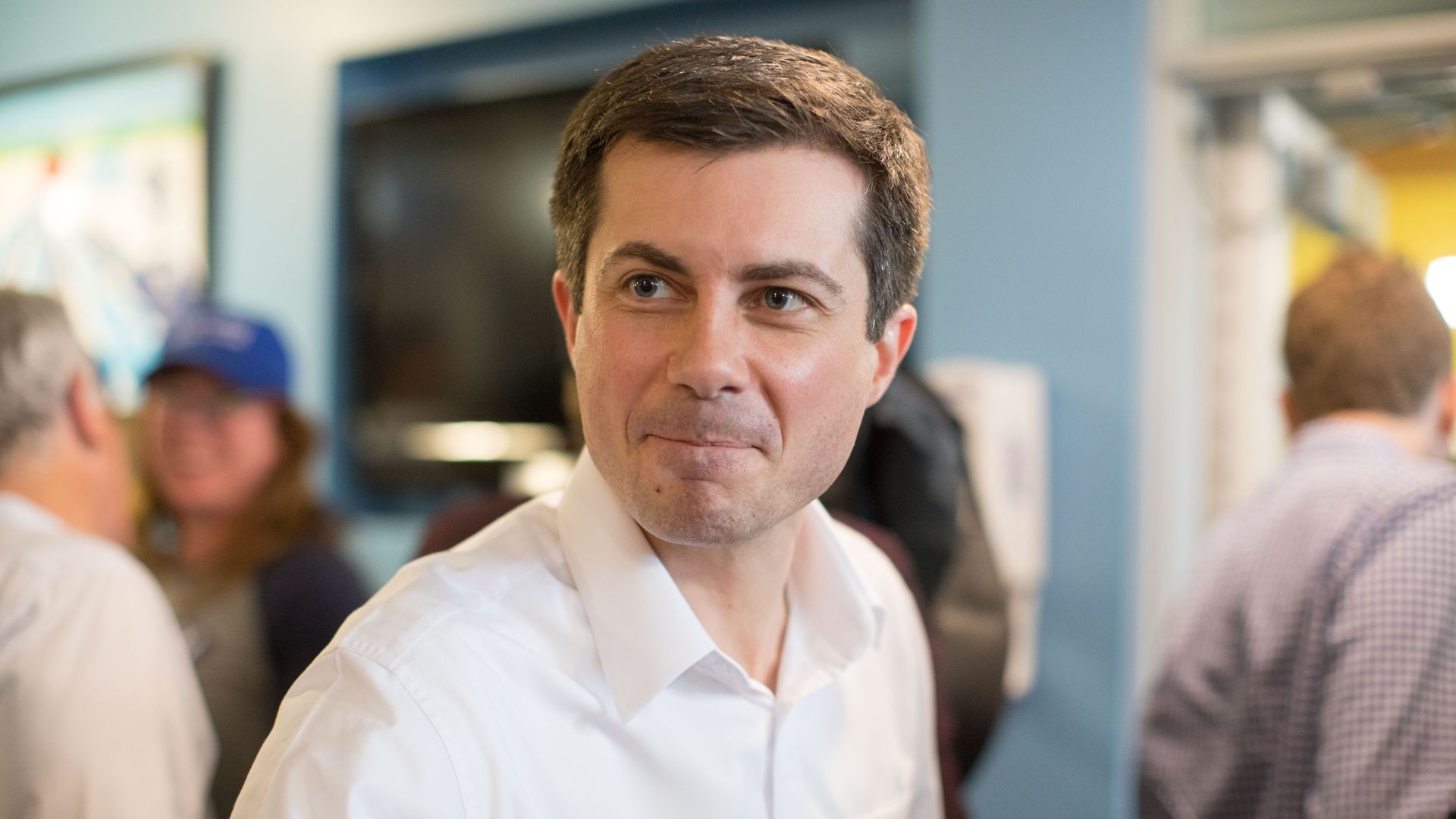
Mayor Pete Buttigieg returned home to Indiana on Friday from the 2020 campaign trail in an effort to "promote healing" after a white police officer fatally shot a black man on June 16, reports NBC News.
Why it matters: Some critics have suggested Buttigieg has a history of alienating minorities in South Bend. In 2011, Newsweek described the Midwestern community as a "dying city," after the population dropped by 3.9% two years prior. Buttigieg ran for mayor on a platform to revitalize his hometown, but some of those progressive plans have since been characterized as gentrification.