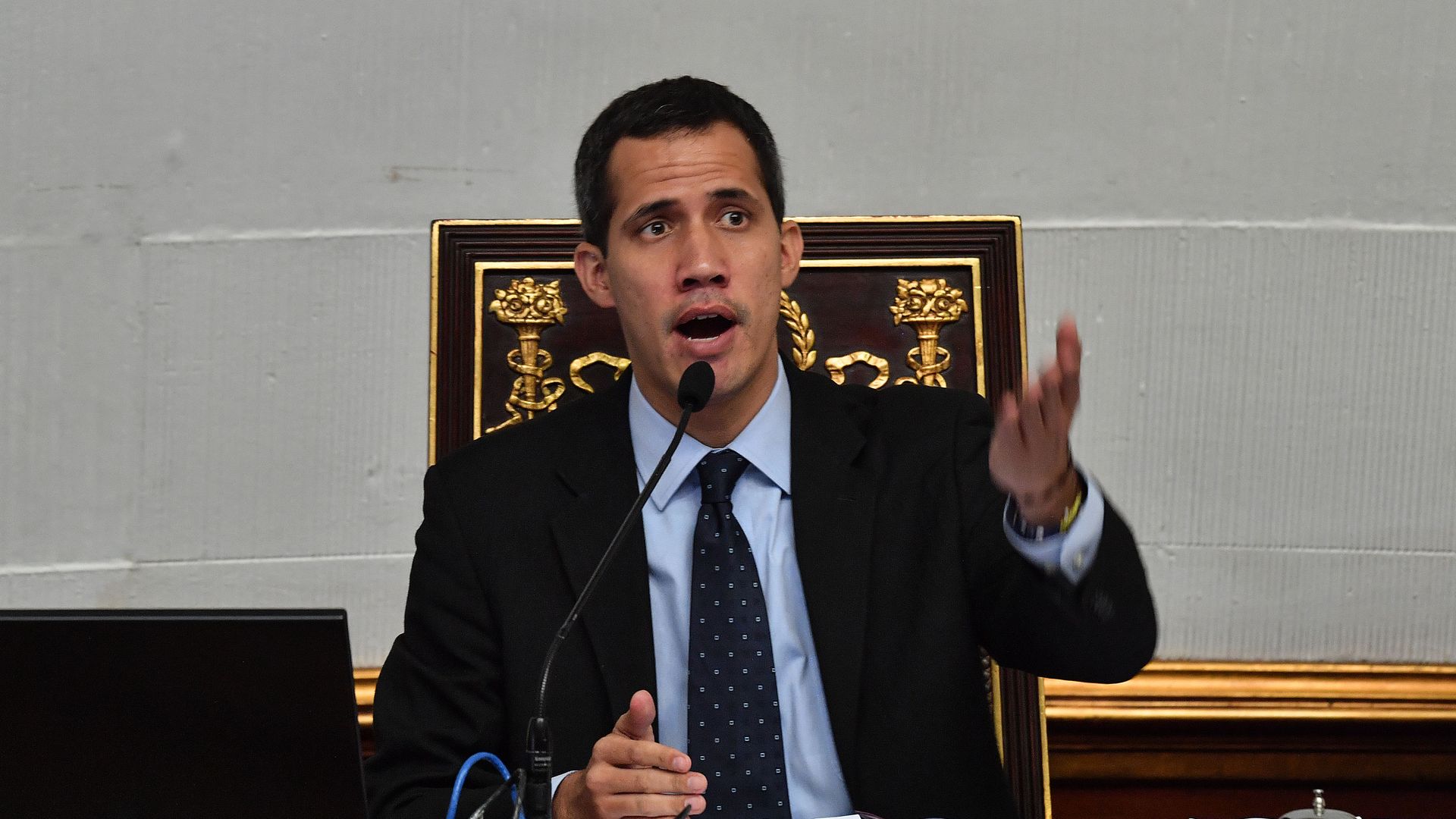
Venezuela’s government-stacked Supreme Court issued an order Tuesday prohibiting National Assembly leader Juan Guaidó from leaving the country, just hours after Attorney General Tarek William Saab requested that the court restrict Guaidó's travel and freeze his financial accounts, the AP reports.
Details: The chief prosecutor announced a criminal probe into Guaidó has been launched, but did not explain what for crimes the opposition leader — who has been recognized by the U.S. and more than a dozen other countries as Venezuela's interim president — is being investigated. U.S. national security adviser John Bolton denounced Saab's threats and vowed that "there will be serious consequences for those who attempt to subvert democracy and harm Guaido."
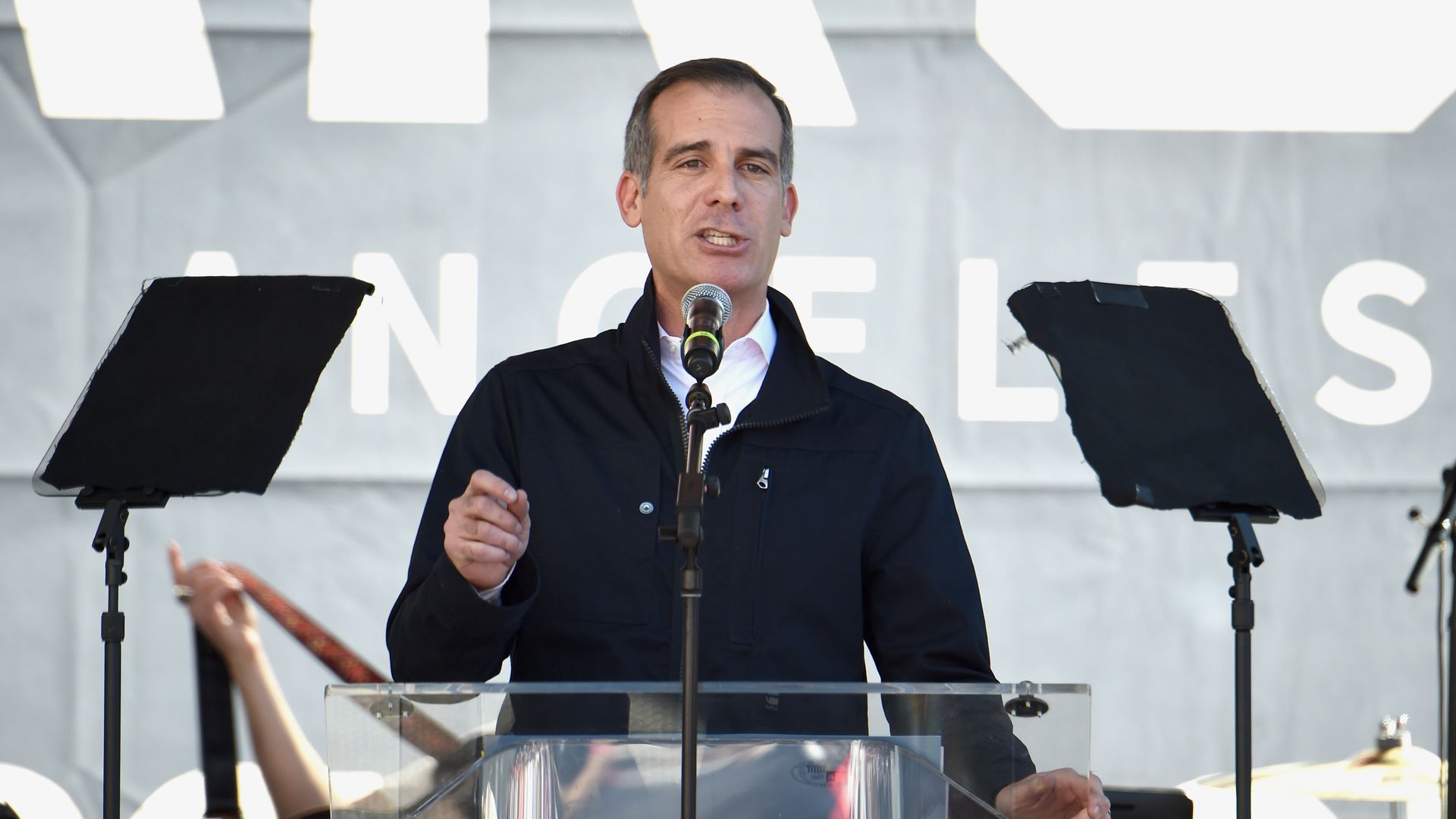
Los Angeles Mayor Eric Garcetti, widely expected to be a Democratic presidential candidate in 2020, announced Tuesday night that he will not be running this cycle.
If the future is female, as the slogan dating back to the '70s suggests, the current state of the Democratic Party is well on its way.
Why it matters: This is the first time in history that being a woman, particularly for Democrats running in 2020, "is probably more a political asset than a liability," per the LA Times.
The Democratic chairs of the House Intelligence Committee, Financial Services Committee and Foreign Affairs Committee have asked the Treasury Department to hand over documents related to the Trump administration's decision to ease sanctions on companies linked to Russian oligarch Oleg Deripaska.
The backdrop: Treasury lifted sanctions Sunday on three companies linked to Deripaska, who once employed former Trump campaign chairman Paul Manafort and is under scrutiny for his possible involvement in Russian interference in the 2016 election. When Treasury Secretary Steve Mnuchin briefed lawmakers on the decision to lift sanctions, House Speaker Nancy Pelosi called it "one of the worst classified briefings" she'd ever received.
Jared Kushner ran a white board planning session last week at the White House with the Koch network and other people who worked with him on criminal justice reform. The purpose: to see if the administration can replicate the approach they took to pass criminal justice reform to overhaul America’s immigration system.
“They would like to try and replicate at some level a bipartisan coalition on immigration issues, something paired with border security as well,” said Koch Industries senior vice president Mark Holden, who attended the meeting.
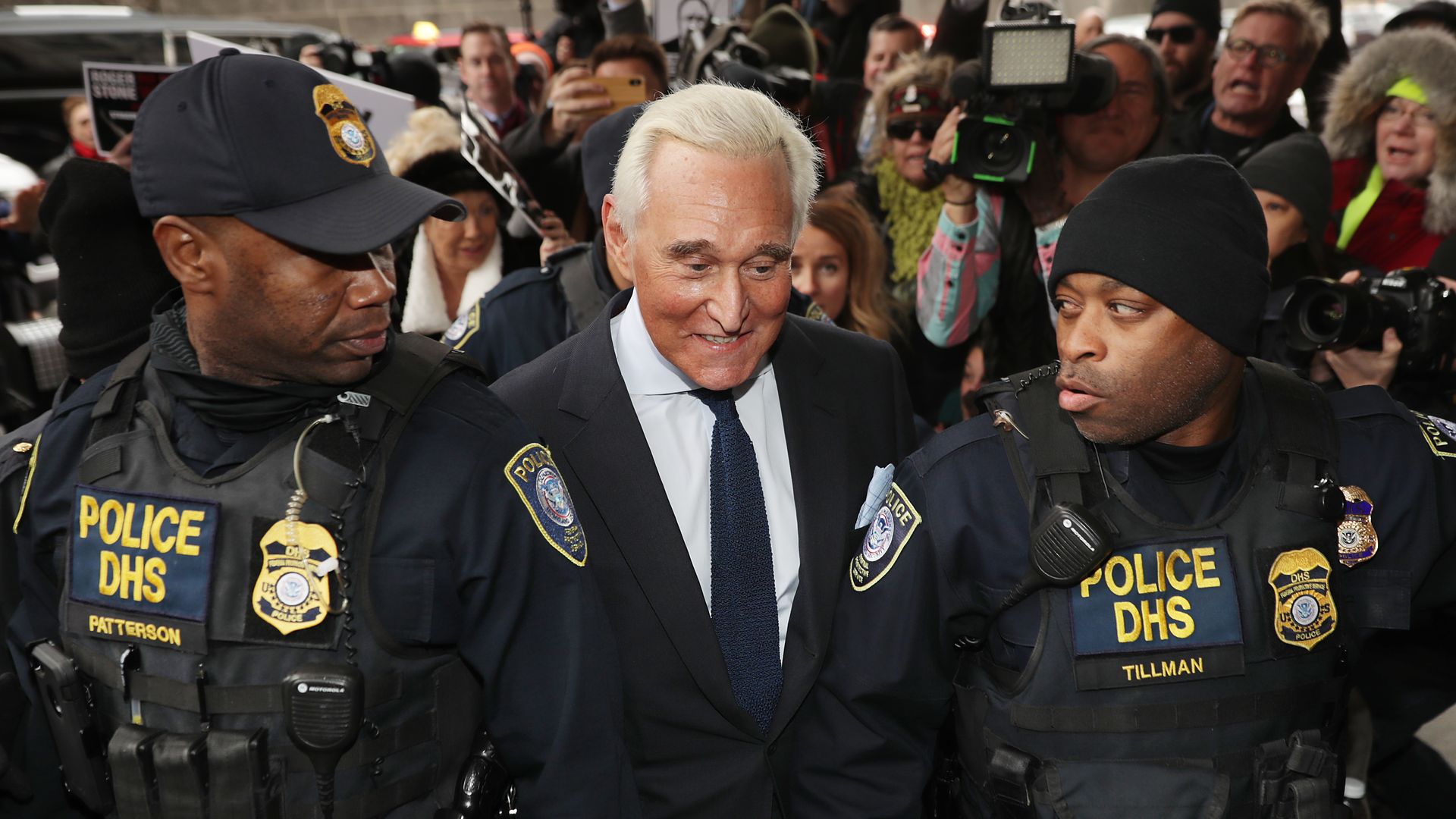
Former Trump aide Roger Stone pleaded not guilty Tuesday in federal court to charges from special counsel Robert Mueller's office that he lied to Congress about communications with the Trump campaign about hacked emails possessed by WikiLeaks.
The big picture: Stone's plea isn't a surprise. He said last week after his arrest that he looked "forward to being fully and completely vindicated" and stated that he'd never testify against President Trump.
Tom Steyer announced Tuesday he's launching "Operation Accountability," a grassroots campaign putting some of his 7.1 million impeachment supporters on the ground in districts represented by Democratic Reps. Richard Neal of Massachusetts, Jerrold Nadler of New York, and Elijah Cummings of Maryland.
Why it matters: Steyer decided he doesn't need to run for president to try to bring about political change. He's investing $40 million to impeach President Trump, some of which will go toward this campaign. The 3 House members were selected because of their leadership on crucial committees, "giving them the power to investigate the president and begin the process towards impeachment," his campaign wrote in a statement.
Former Sen. Jeff Flake announced on "CBS This Morning" on Tuesday he will not run for president in 2020 against President Trump.
Details: “I have always said that I do hope that there is a Republican who challenges the president in the primary. I still hope that somebody does, but that somebody won't be me. I will not be a candidate,” Flake said. The former Arizona senator will join CBS News as a contributor in a new series called "Common Ground."
"A low level staffer that I hardly knew named Cliff Sims wrote yet another boring book based on made up stories and fiction. He pretended to be an insider when in fact he was nothing more than a gofer. He signed a non-disclosure agreement. He is a mess!"
Behind the scenes: Trump has been toying with attacking Sims on Twitter for the best part of a week. Some staff have counseled him against tweeting about Sims — arguing it would only elevate him and help sell his book — but, as ever, Trump couldn't help himself. One issue for Trump: there are numerous photographs showing that Sims was in many of the meetings he describes in the book. And one of the chief complaints about Sims from former White House colleagues who loathe him is that he "was in rooms he wasn’t supposed to be in."
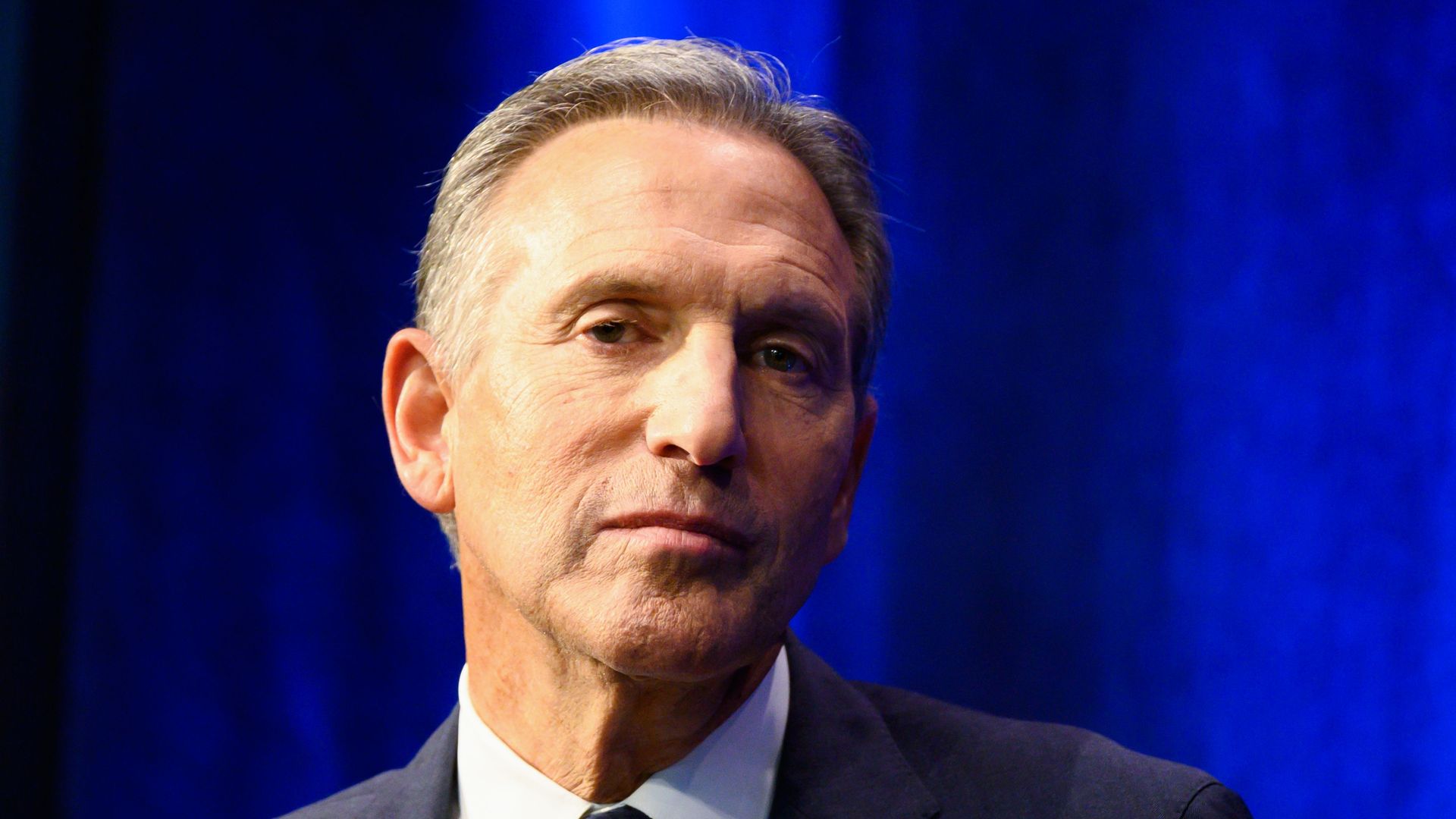
Former Starbucks CEO and potential 2020 presidential contender Howard Schultz blasted some of the Democratic Party's biggest 2020 candidates during a Tuesday media blitz, calling Sen. Kamala Harris' support for Medicare for All "not American" and Sen. Elizabeth Warren's "wealth tax" proposal "ridiculous."
The big picture: The billionaire told Axios' Mike Allen this week that he was "unfazed" by criticism from the left as he flirts with launching a "centrist independent" bid for the White House.
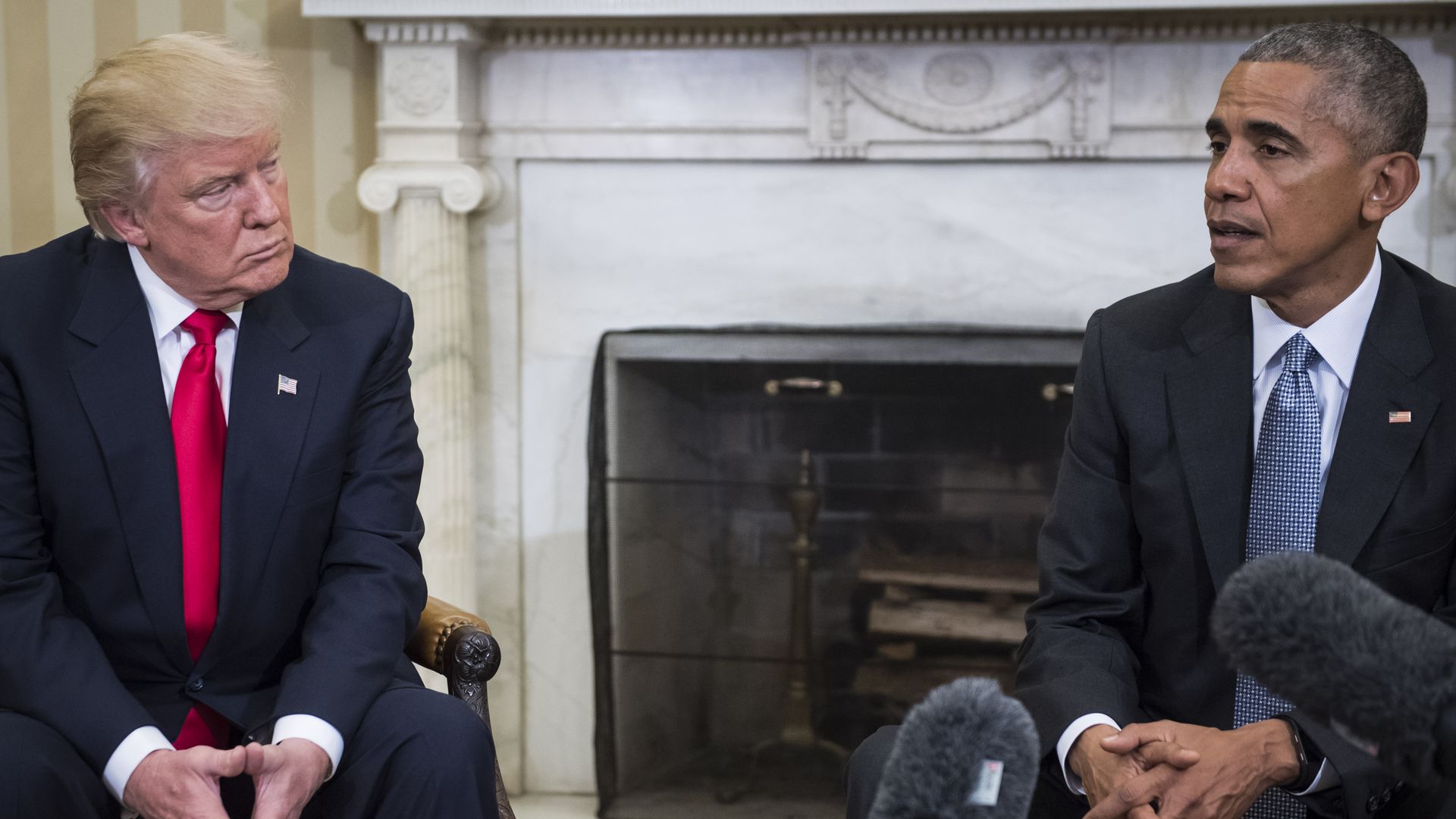
Voter opposition to a second term for President Trump is significantly higher than the opposition former president Barack Obama encountered in 2011, according to a new ABC News/Washington Post poll on the 2020 presidential election outlook.
By the numbers: 56% of Americans say they definitely wouldn’t vote to re-elect Trump, double the number who say they’d definitely vote for him. In 2011, 46% said they wouldn't vote for Obama.
Starbucks chairman emeritus Howard Schultz is a long shot to win the White House, but he's a sure bet to create headaches for the coffee chain he turned into a global empire.
Why it matters: Schultz's reputation and fortune come from his time as the Ray Kroc of coffee, turning a small Seattle roaster with four stores into a 28,000-store phenomenon spanning 77 countries. That means massive scrutiny of Starbucks, by both the media and political opponents, unlike anything the company has yet experienced.







/2019/01/29/1548758081991.gif?w=3840)


