The White House is considering bumping up tariffs on $200 billion in Chinese goods from 10% to 25%, reports the Wall Street Journal.
Why it matters: This latest threat comes as Treasury Secretary Steven Mnuchin and Chinese President Xi Jinping's economic adviser are reportedly restarting talks to reach a trade deal. On Monday, President Trump described the initial 10% as weak and had officials increase it to 25%. The Chinese government responded to the threats early Wednesday saying it would retaliate if the president decides to impose the hike.
President Obama released a list of 81 candidates he's endorsing ahead of the 2018 midterm election.
Why it matters: Obama is the left's answer to President Trump's continued presence in the primaries. Not only will Obama announce another round of endorsements before Nov. 6, but he also plans to campaign in several of these states throughout the fall.
President Trump called on Attorney General Jeff Sessions to put a stop to the Mueller investigation in a tweet Wednesday morning.
'This is a terrible situation and Attorney General Jeff Sessions should stop this Rigged Witch Hunt right now, before it continues to stain our country any further. Bob Mueller is totally conflicted, and his 17 Angry Democrats that are doing his dirty work are a disgrace to USA!"
Between the lines, from Axios' Jonathan Swan: This isn't a directive to Sessions, based on my last conversation with Rudy Giuliani. If Trump wanted to end the Mueller investigation, he could. He knows Congress would rise up against him.
Squint at the colorful, consequential news of the past 24 hours, and you see a preview of special counsel Robert Mueller's report(s) — plus a glimpse of the debates that will divide America through the fall, and heading into the presidential campaigns of 2020.
How it started: President Trumpset the tone for the day by tweeting at 7:58 a.m.: "Collusion is not a crime, but that doesn’t matter because there was No Collusion."
President Trump’s call for unconditional talks with Iran should not have come as a surprise, given that he has made a habit of personally engaging American adversaries. Sometimes, as with North Korea, after threatening them; other times, as with Russia, after deferring. For Trump, unconditional talks with adversarial leaders — including those whom many in the international community deem toxic — are a feature, not a bug, of his diplomacy.
The big picture: Trump’s approach creates formidable risks, but cannot be dismissed out of hand. The open question is whether such an approach will advance America’s interests or undercut Trump's ability to secure results.
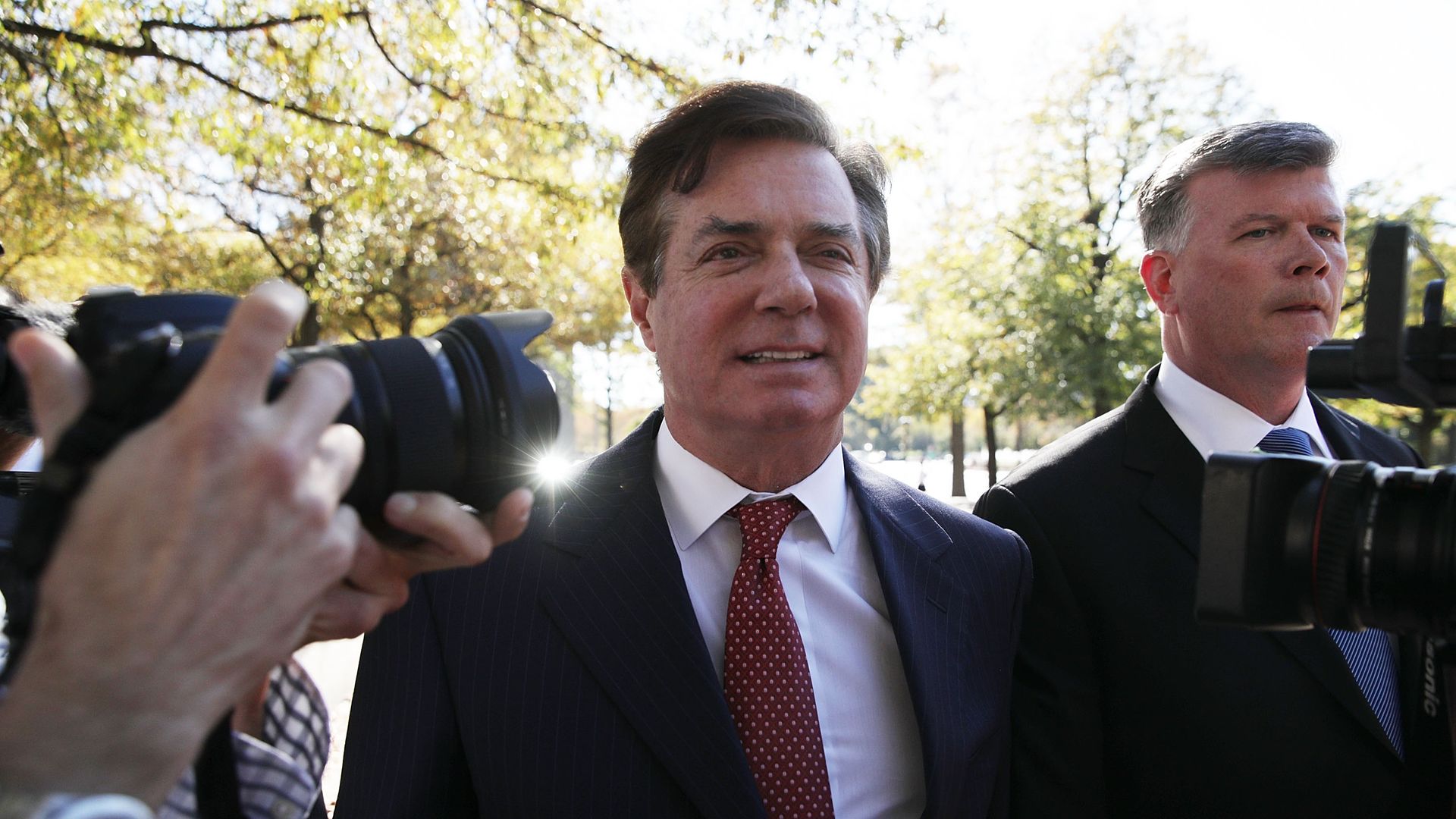
Paul Manafort's trial began after the jury was seated on Tuesday with Manafort's defense team quickly placing blame on his confidant and business partner, Rick Gates, saying he lied to both Manafort and federal investigators about Manafort’s taxes.
Why it matters: Manafort's trial is the first of special counsel Robert Mueller's investigation into the Trump Campaign and potential ties to Russia. Though Mueller's team likely won't make any reference to "Russians" or "collusion," and instead focus on alleged financial crimes by Manafort. The trial is expected to last three weeks.
After hearing testimony from migrant children and staff members from a Texas detention center, a federal judge in Los Angeles ordered a halt on Monday to the reported practice of giving the children psychotropic drugs without parental consent, according to the Washington Post.
What they're saying:
“The staff threatened to throw me on the ground and force me to take the medication. I also saw staff throw another youth to the ground, pry his mouth open and force him to take the medicine. ... They told me that if I did not take the medicine I could not leave, that the only way I could get out of Shiloh was if I took the pills.”
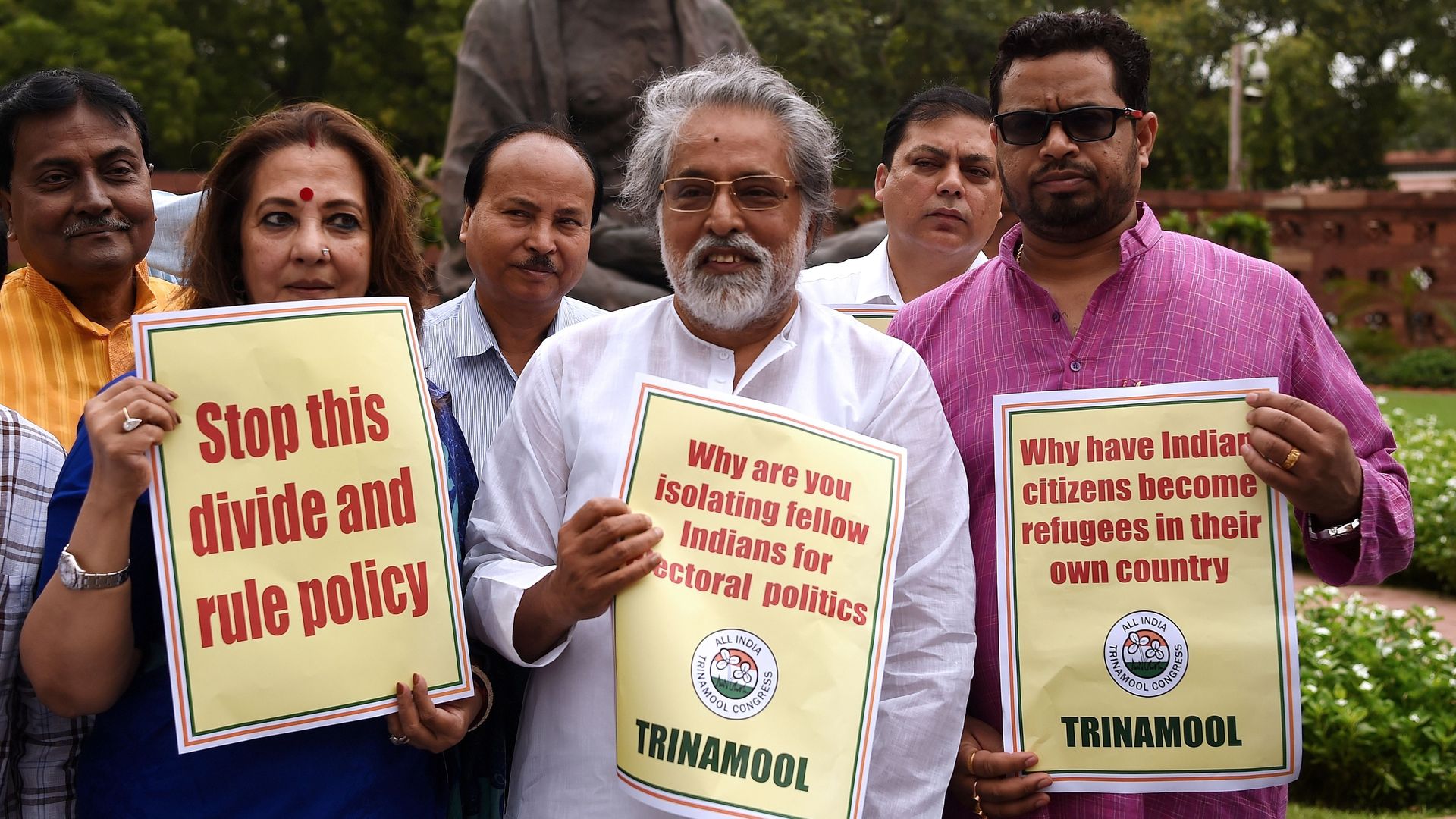
The Government of Assam, a northeast Indian state, published a list of official citizens on Monday that excluded 4 million people, heightening fears of unrest and violence. The list, called the National Register of Citizens, left off those who could not prove they came to Assam before March 24, 1971, when Bangladesh (previously West Pakistan) declared independence and millions fled, with over 900,000 settling in Assam.
Why it matters: The list has renewed panic among residents, mainly Bengali Muslims, who have neither the desire nor the ability to return to Bangladesh. The register has already stripped many of the right to vote, own property or access any other social services, and six detention camps now house more than 800 people who have been declared non-residents. It is unclear what will happen to these “illegals” who are now essentially stateless, much like the Rohingya who fled Myanmar and live in camps in Bangladesh.
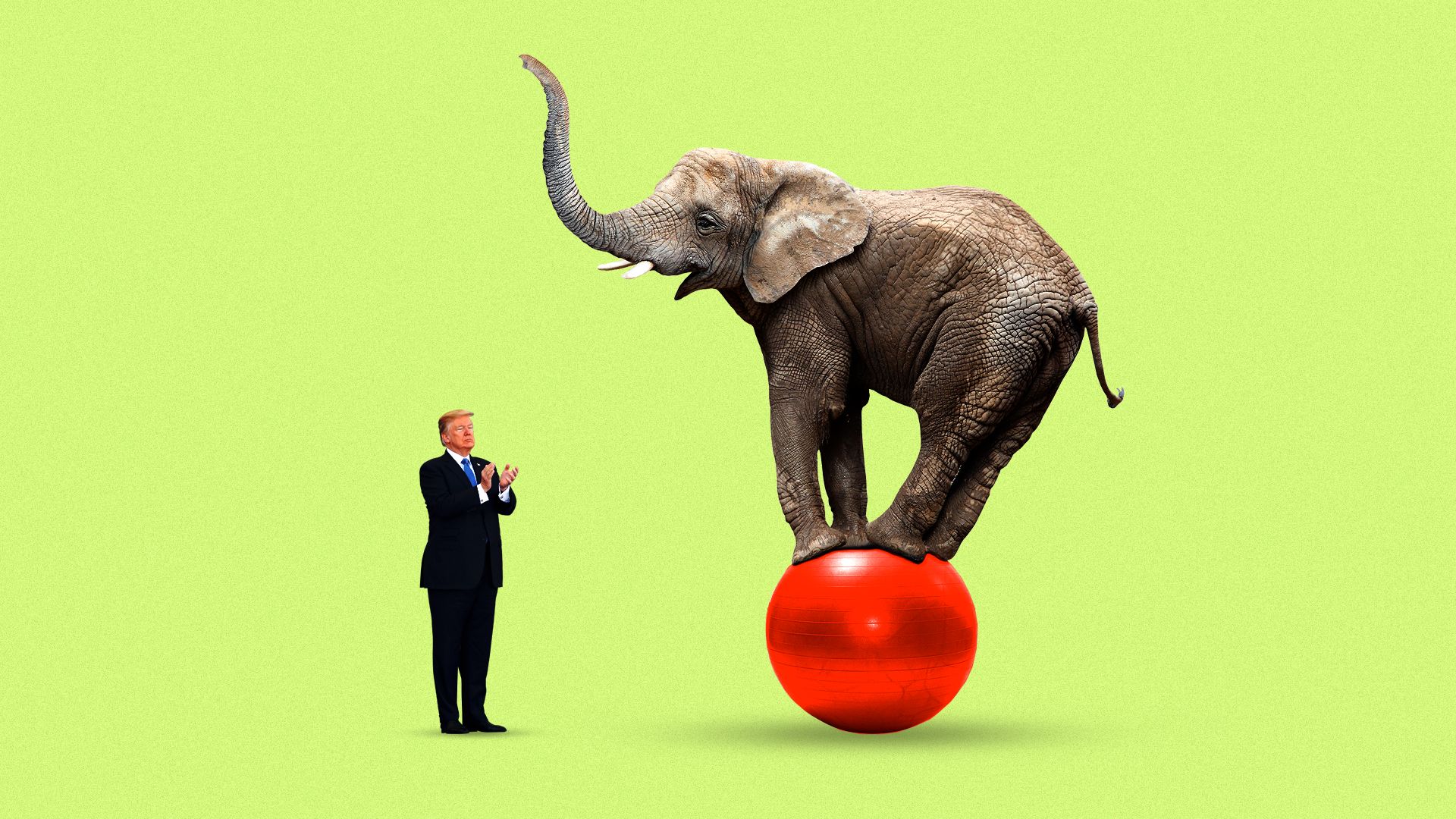
President Trump's power over politics and the Republican Party is growing, with more GOP candidates adopting his tactics and relying on his seal of approval to win.
The big picture: For a party defined for a lifetime by cutting taxes and regulation, numerous GOP candidates are instead choosing to run ads on Trump topics like crime, gangs and illegal immigration.