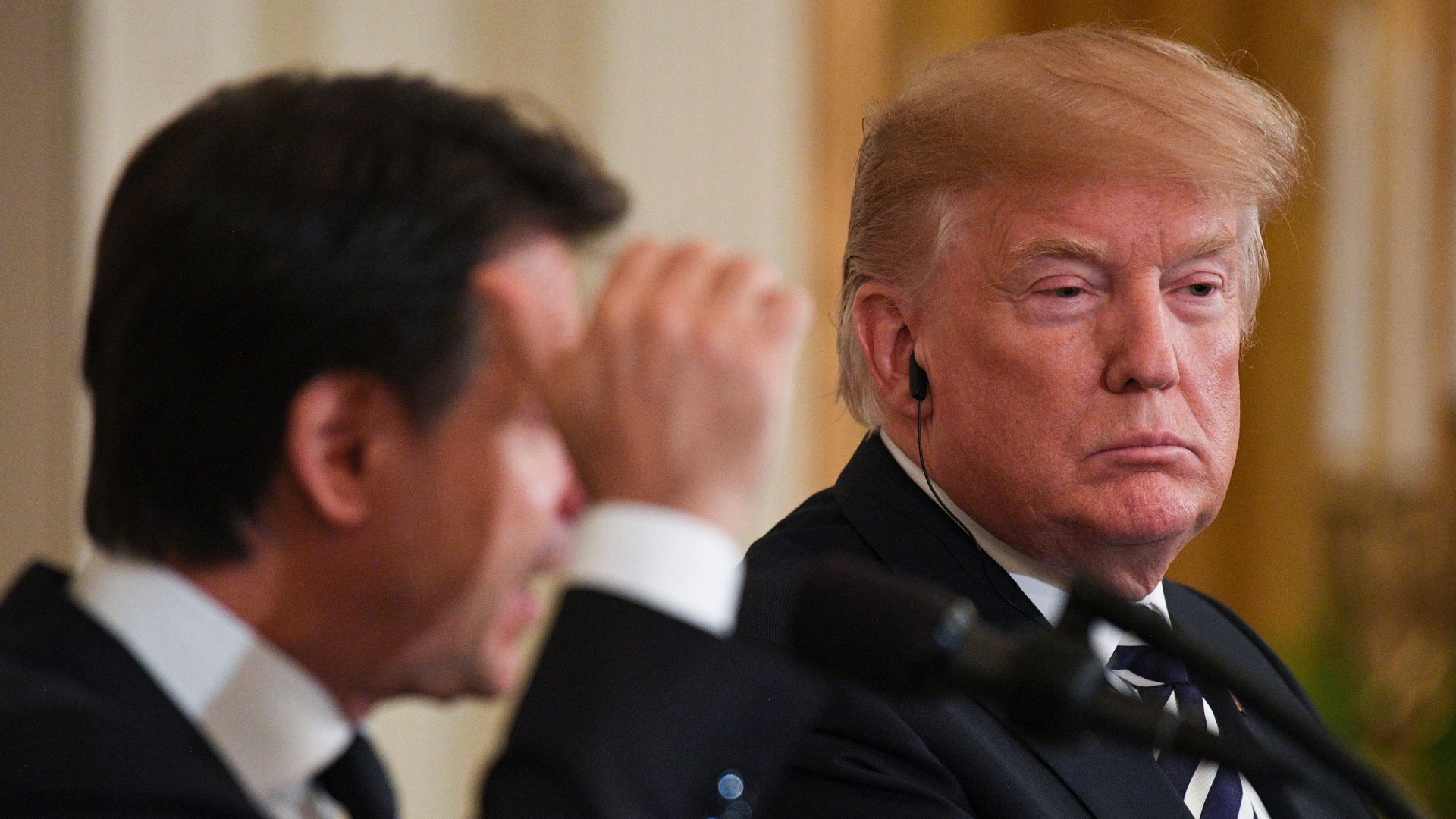
President Trump’s call for unconditional talks with Iran should not have come as a surprise, given that he has made a habit of personally engaging American adversaries. Sometimes, as with North Korea, after threatening them; other times, as with Russia, after deferring. For Trump, unconditional talks with adversarial leaders — including those whom many in the international community deem toxic — are a feature, not a bug, of his diplomacy.
The big picture: Trump’s approach creates formidable risks, but cannot be dismissed out of hand. The open question is whether such an approach will advance America’s interests or undercut Trump's ability to secure results.
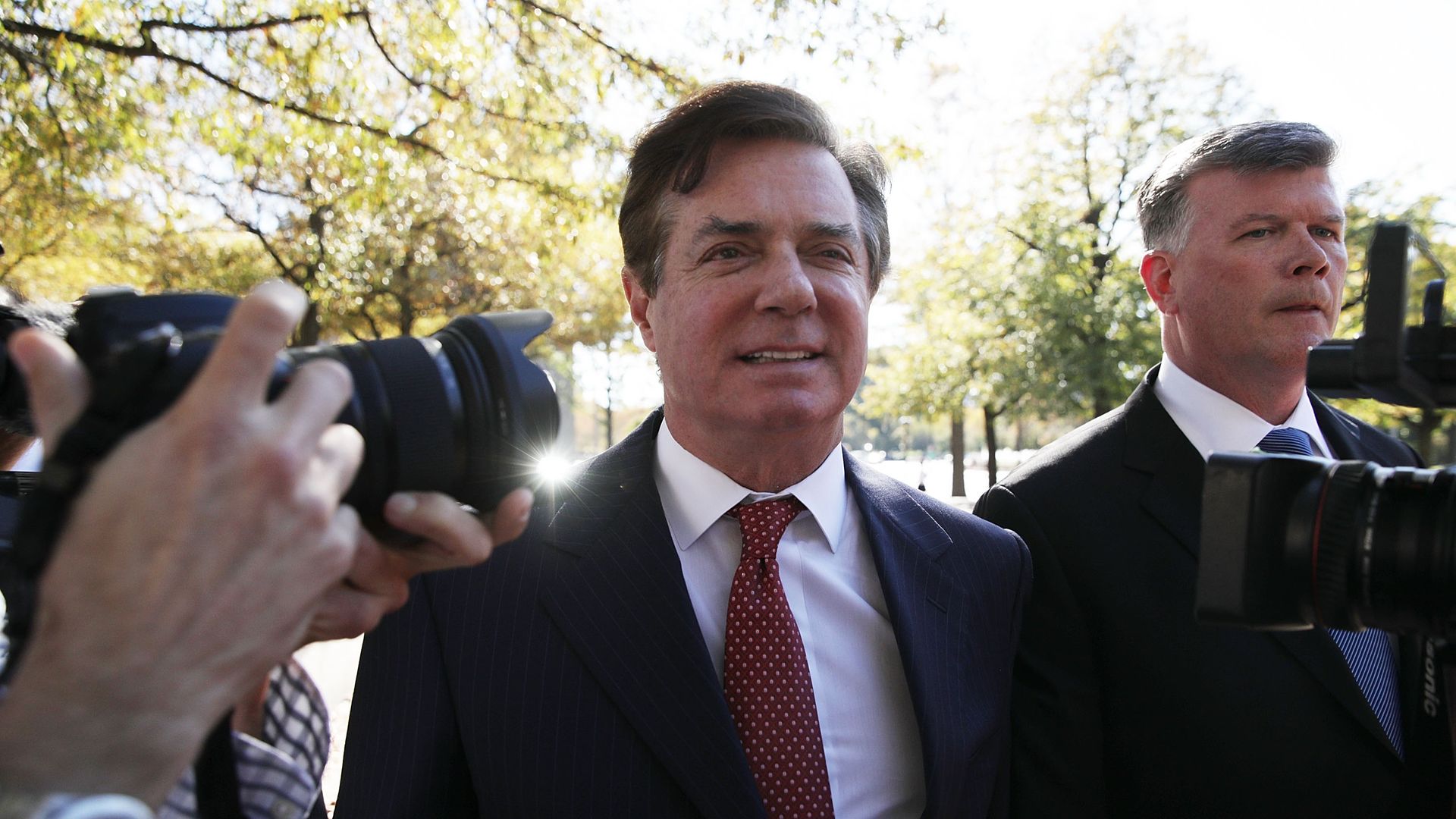
Paul Manafort's trial began after the jury was seated on Tuesday with Manafort's defense team quickly placing blame on his confidant and business partner, Rick Gates, saying he lied to both Manafort and federal investigators about Manafort’s taxes.
Why it matters: Manafort's trial is the first of special counsel Robert Mueller's investigation into the Trump Campaign and potential ties to Russia. Though Mueller's team likely won't make any reference to "Russians" or "collusion," and instead focus on alleged financial crimes by Manafort. The trial is expected to last three weeks.
After hearing testimony from migrant children and staff members from a Texas detention center, a federal judge in Los Angeles ordered a halt on Monday to the reported practice of giving the children psychotropic drugs without parental consent, according to the Washington Post.
What they're saying:
“The staff threatened to throw me on the ground and force me to take the medication. I also saw staff throw another youth to the ground, pry his mouth open and force him to take the medicine. ... They told me that if I did not take the medicine I could not leave, that the only way I could get out of Shiloh was if I took the pills.”
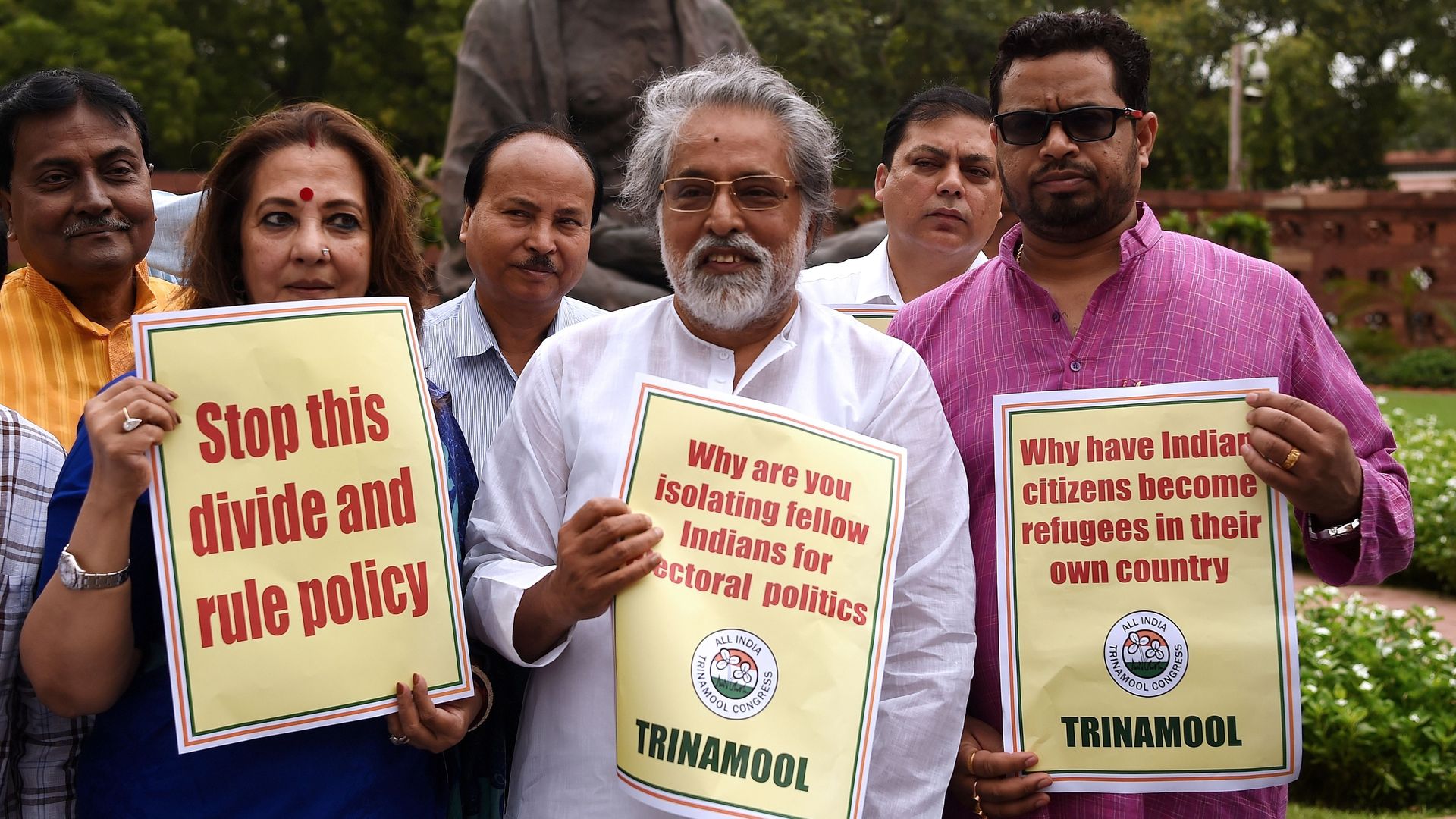
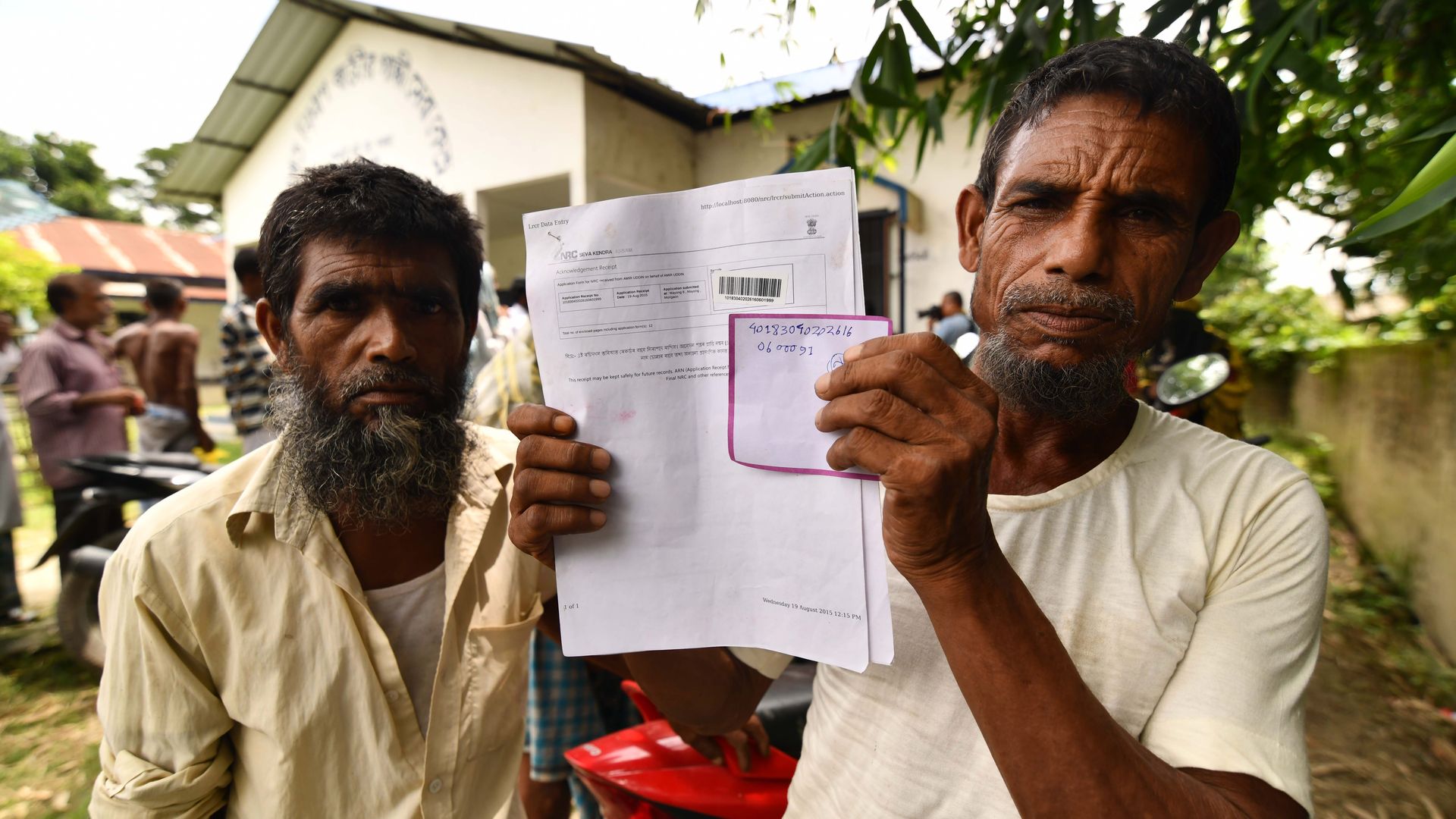
The Government of Assam, a northeast Indian state, published a list of official citizens on Monday that excluded 4 million people, heightening fears of unrest and violence. The list, called the National Register of Citizens, left off those who could not prove they came to Assam before March 24, 1971, when Bangladesh (previously West Pakistan) declared independence and millions fled, with over 900,000 settling in Assam.
Why it matters: The list has renewed panic among residents, mainly Bengali Muslims, who have neither the desire nor the ability to return to Bangladesh. The register has already stripped many of the right to vote, own property or access any other social services, and six detention camps now house more than 800 people who have been declared non-residents. It is unclear what will happen to these “illegals” who are now essentially stateless, much like the Rohingya who fled Myanmar and live in camps in Bangladesh.
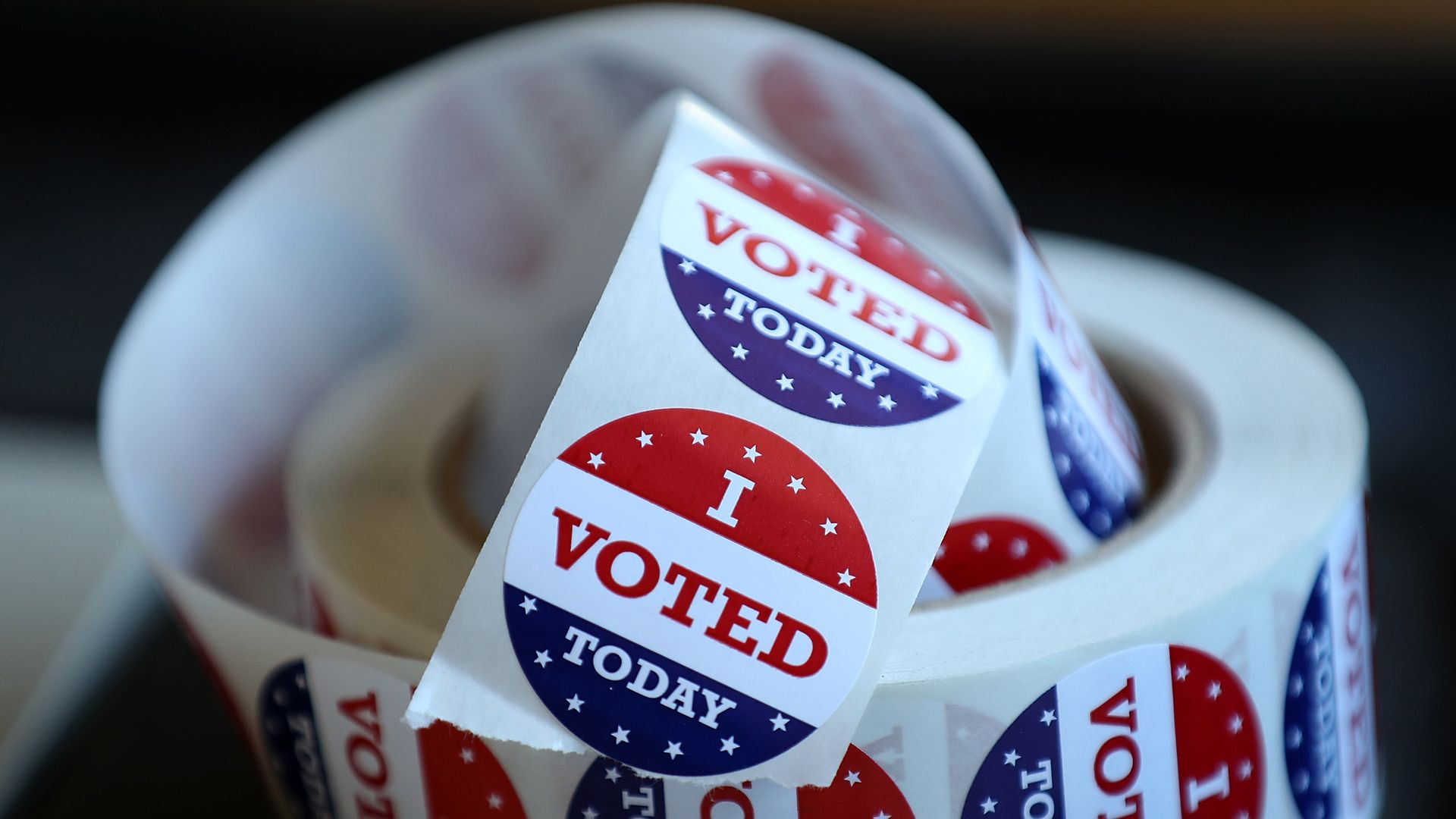
President Trump's power over politics and the Republican Party is growing, with more GOP candidates adopting his tactics and relying on his seal of approval to win.
The big picture: For a party defined for a lifetime by cutting taxes and regulation, numerous GOP candidates are instead choosing to run ads on Trump topics like crime, gangs and illegal immigration.
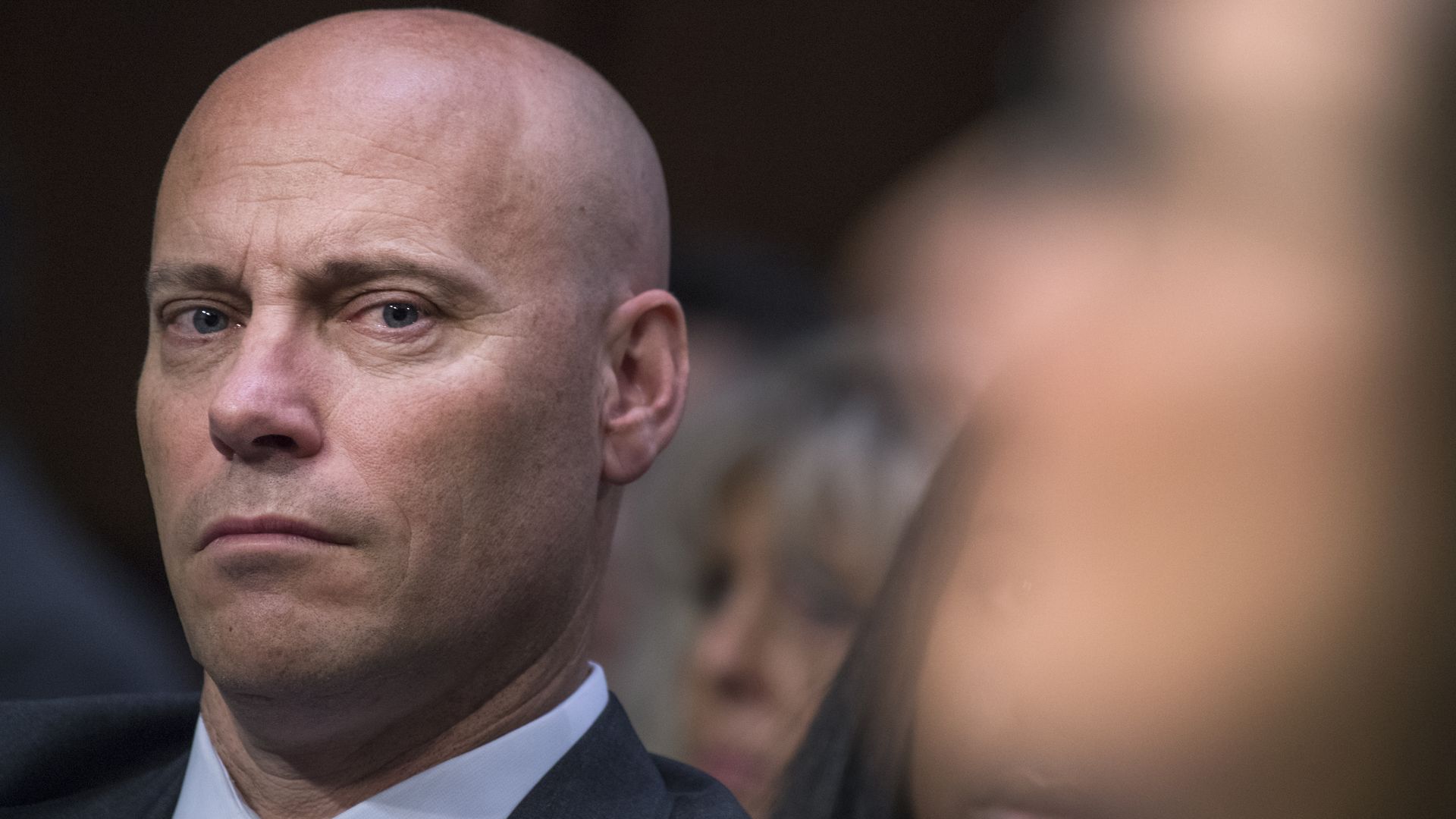
Investor and major donor Tom Saunders, former Virginia Attorney GeneralKen Cuccinelli and other prominent alumni of the University of Virginia have signed a letter in support of hiring former Trump aide Marc Short as a senior fellow at the Miller Center.
The big picture: The letter, obtained by Axios, defends him against the backlash over his hiring. Short was a relatively non-controversial figure, but because of Trump's policies and persona — particularly his saying there were "fine people" among the white supremacists who rallied in UVA's hometown of Charlottesville — thousands of students and professors have signed a petition lambasting the school for hiring Short. Two professors have resigned over the decision.
Vox's editor-at-large Ezra Klein took a deep dive today into America's shifting demographics to examine the Obama to Trump transition and understand "what happens... when a majority feels its dominance beginning to fail."
The big picture: In 2013, a majority of infants in the U.S. were nonwhite, thefirst time in the nation's history.
India has released an updated list of citizens living in the border state of Assam which excludes refugees who arrived after March 24, 1971, the day before neighboring Bangladesh declared independence, reports BBC News.
Why it matters: The four million people left off the register include many who immigrated before the war but lack the paperwork to prove it. The Indian government claims the updated register is an attempt to identify illegal Bangladeshi migrants for deportation, while critics say it's being used as a nationalist pretext for discrimination against the state's Bengali Muslim population.
The center-left think tank Third Way Americans is trying to convince potential Democratic presidential candidates that a wide swath of voters prefer policies that promote opportunity, rather than the entitlement of "Sanders-ism."
The big picture: "Voters see an opportunity crisis, and in some ways Trump tapped into that," said Lanae Erickson Hatalsky, Third Way's vice president for social policy and politics. "[I]f Democrats embrace this cause, they can beat Trump."
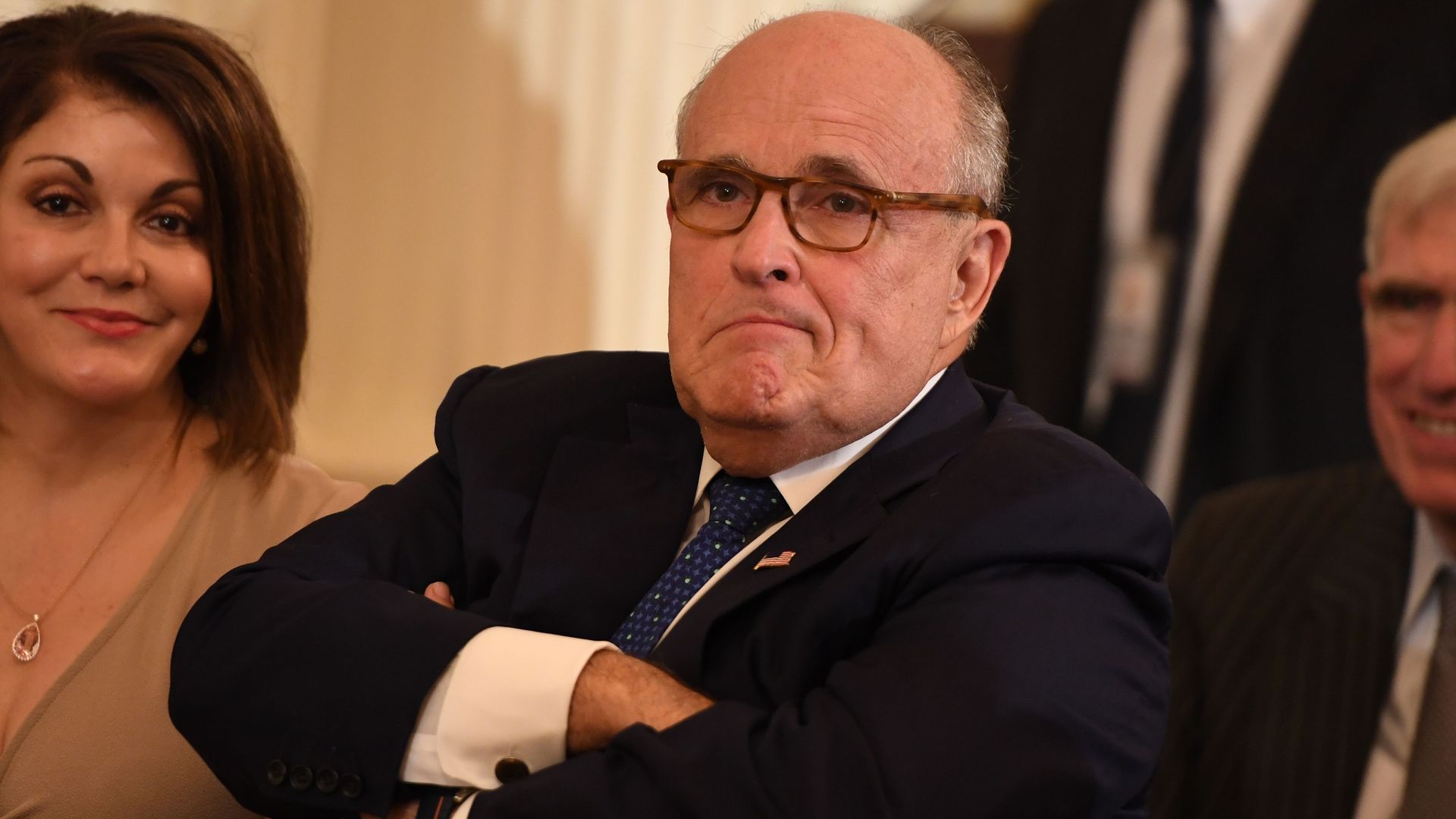
Rudy Giuliani told me that President Trump is fed up with Robert Mueller and wants him to "put up or shut up."
What he's saying: "Why don't you write a report and show us what you have, because they don't have a goddamn thing. It's like a guy playing poker. He's bluffing and he's only got a pair of twos."
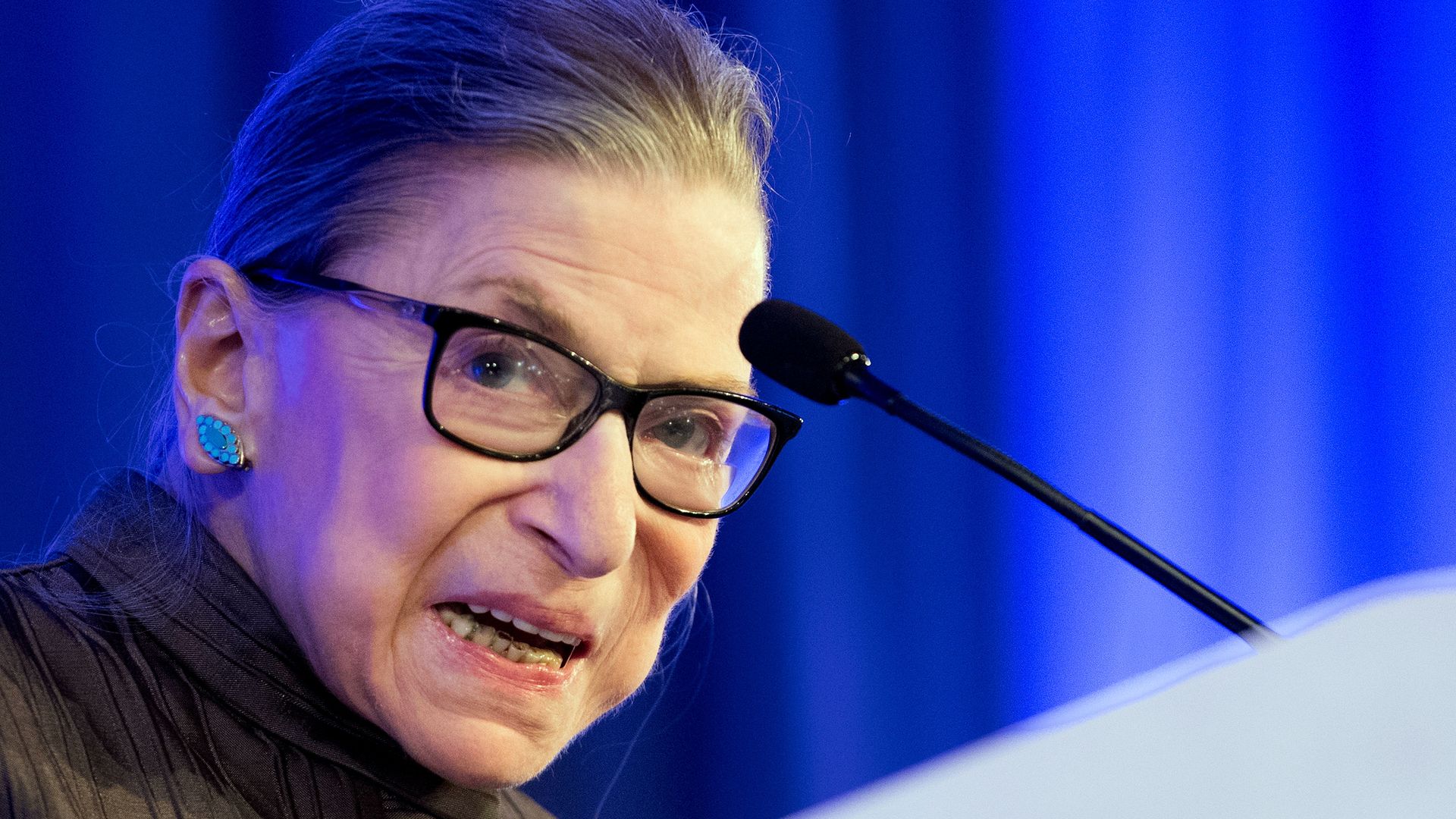
Supreme Court Justice Ruth Bader Ginsburg suggested that she plans to stay on the Court for "at least five more years" during a speech in New York on Sunday, per CNN.
I'm now 85. My senior colleague, Justice John Paul Stevens, he stepped down when he was 90, so think I have about at least five more years.
Why it matters: As Axios' Jonathan Swan scooped last year, Trump has privately predicted that he'll appoint four justices to the Supreme Court during his presidency. He's already had the chance to name two — and Ginsburg was next on his list to step down.