Friday's politics & policy stories

Taxpayers paying for rooms at Mar-a-Lago
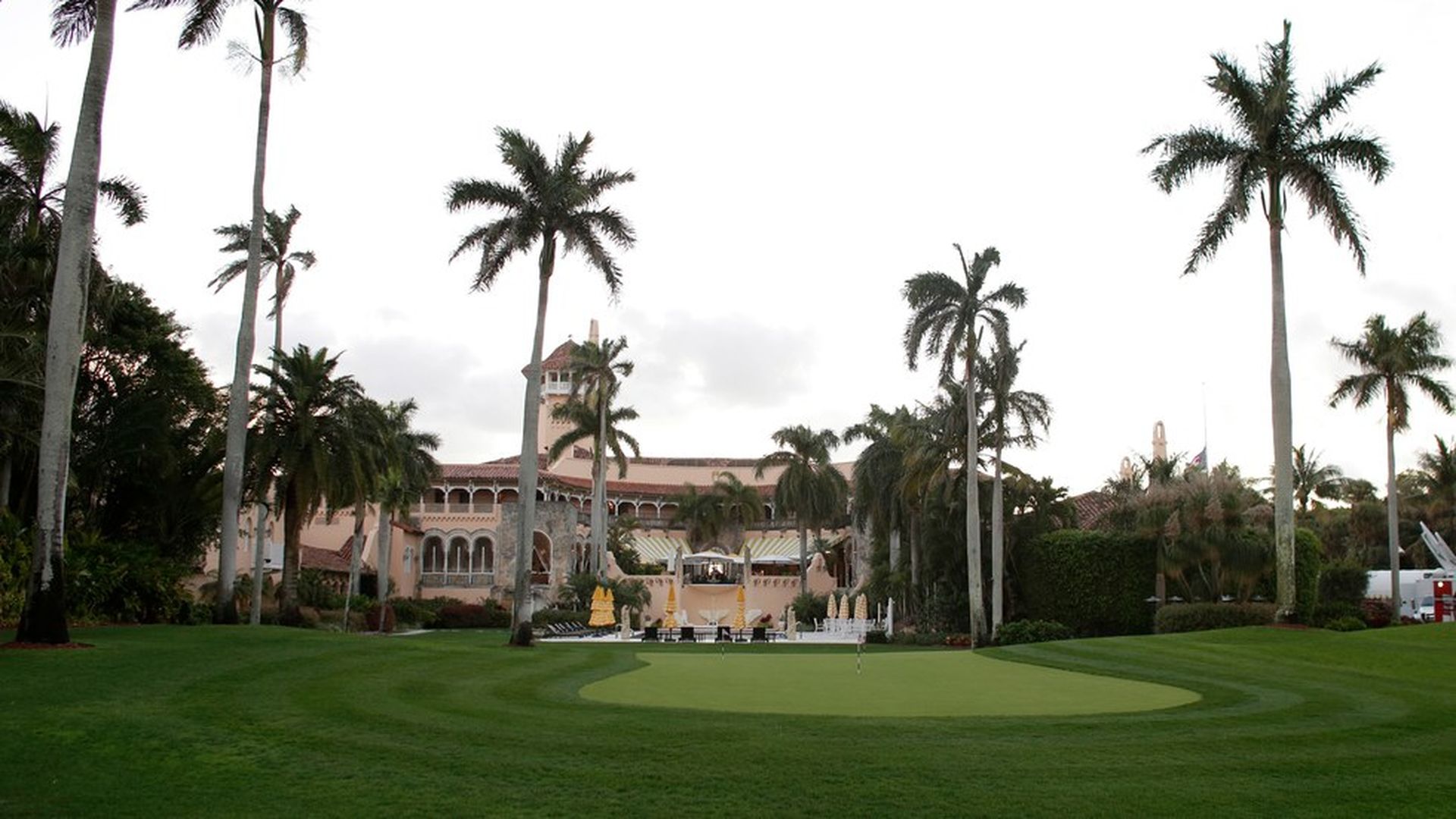
The federal government paid $1,092 for a room at President Trump's Mar-a-Lago resort for two nights during a presidential visit in March, per The Washington Post. The invoice containing the charges was obtained via a FOIA request to the Coast Guard by the advocacy group Property of the People.
The only detail about who stayed in the room is the note "National Security Council" on the document. Because other government agencies haven't disclosed their expenses at Mar-a-Lago during Trump's visits, it's impossible to know if this was the only room booked using federal funds or part of a larger block of rooms.
Why it matters: This is "one of the first concrete signs" that the president's use of Mar-a-Lago "resulted in taxpayer funds flowing directly into...his private business," the Post says.

Active transgender troops' status will change in February
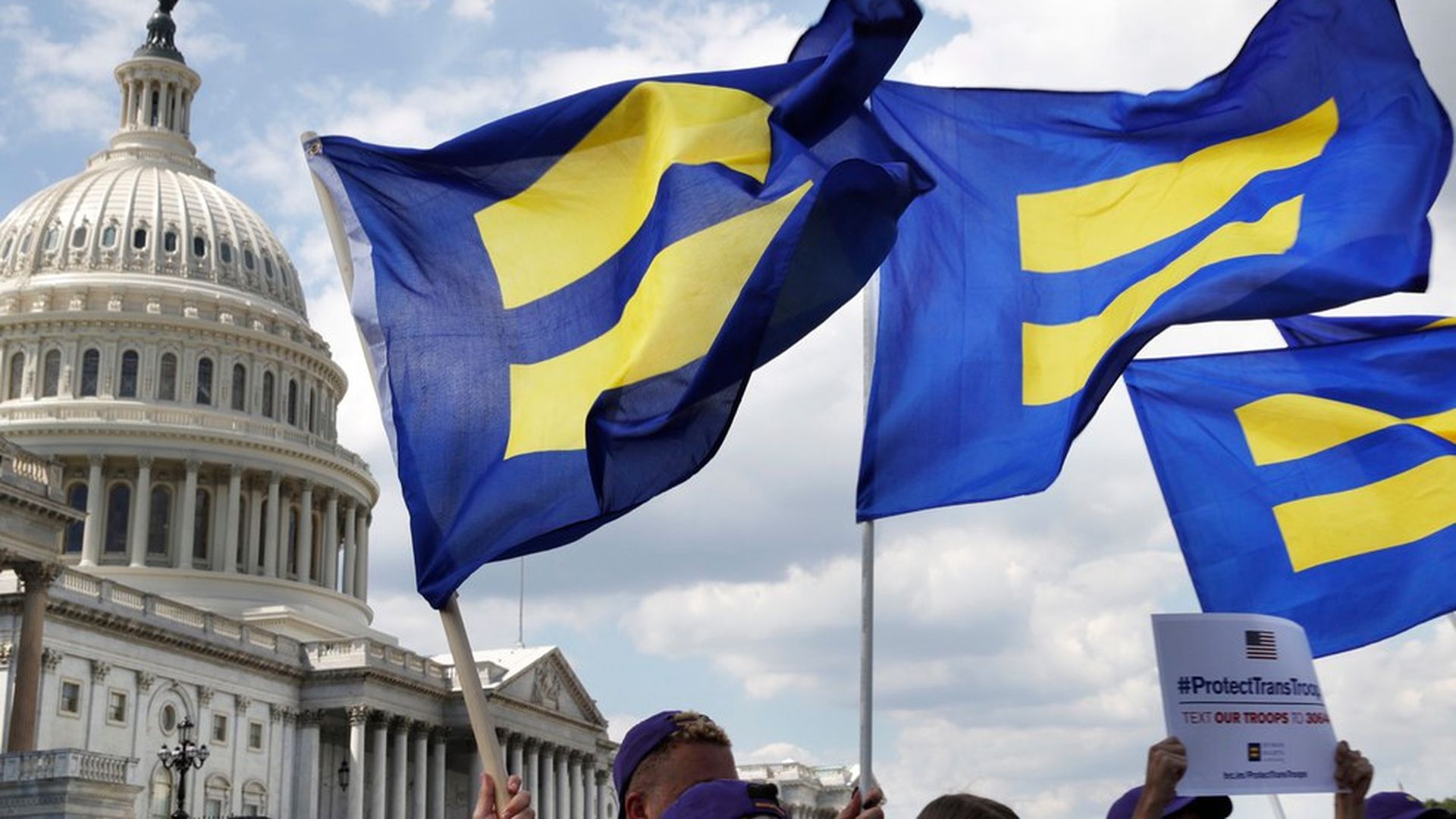
Transgender troops currently serving in the military won't face any changes to their status until at least February when the Pentagon must decide the parameters of President Trump's ban, according to The Daily Beast.
- Enlisted transgender troops can continue to receive medical care as prescribed and will be able to re-enlist as normal should their service terms expire before February.
- Secretary of Defense Jim Mattis will decide how to implement recommendations regarding the transgender troop ban from a military panel by February 21, 2018 — all while a legal challenge to the ban by the ACLU winds its way through federal court.

McMaster: "There is a military option" for North Korea
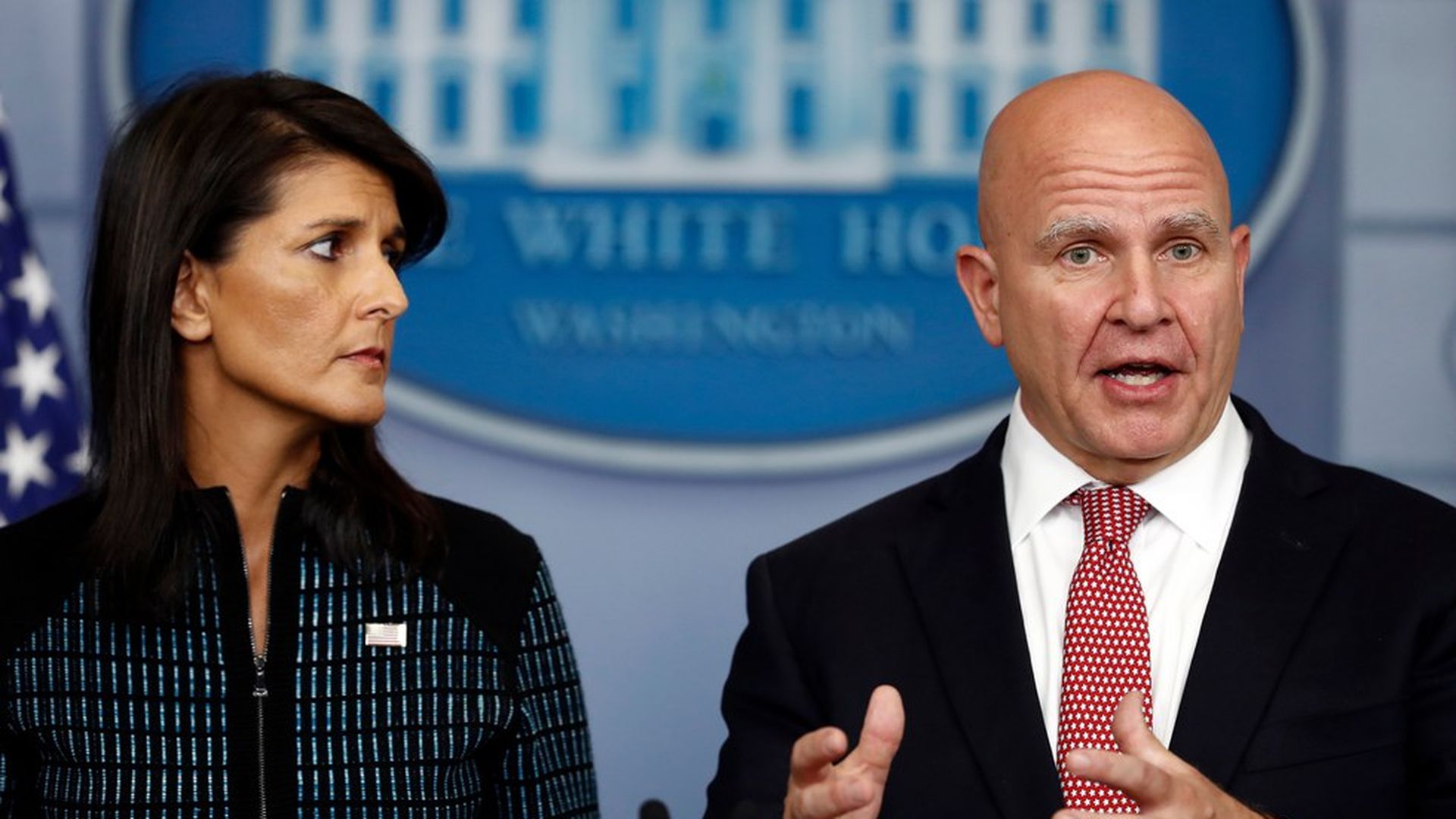
U.N. Ambassador Nikki Haley and National Security Advisor Gen. H.R. McMaster revealed Friday that the administration has an aggressive military plan to deal with North Korea, if necessary, following their recent missile strike. Haley urged that it's important to push through "as many of the diplomatic options that we have," but also stated she has "no problem kicking it to General Mattis" because he has "plenty of options."
McMaster added that "there is a military option" but that's "not what we would prefer." He also reminded the room that "this is not an issue between the United States and North Korea. This is an issue between the world and North Korea." More from Sarah Sanders' Friday briefing:
Castro denies involvement in mystery 'health attacks'
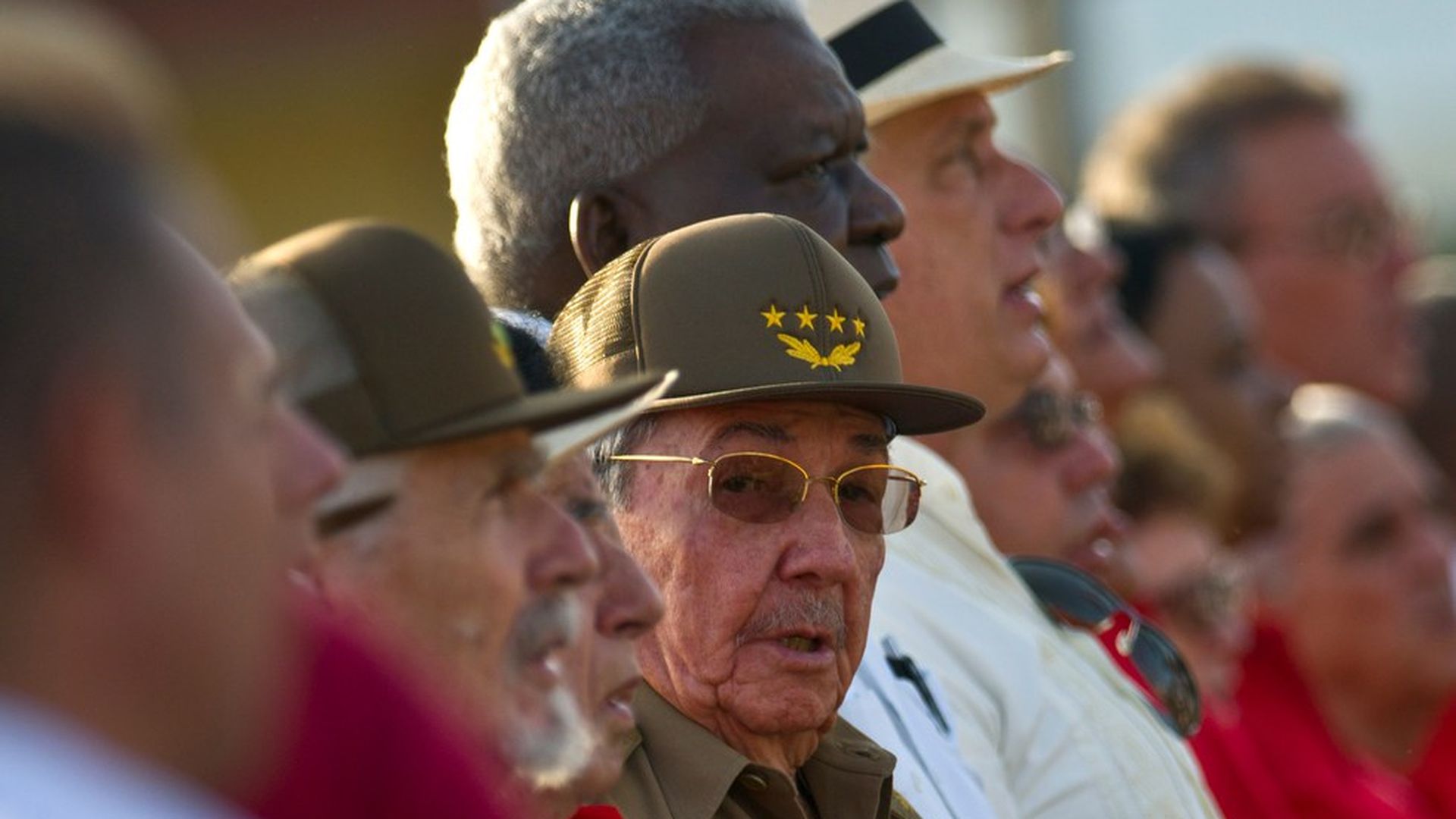
At least 21 U.S. diplomats in Cuba have become victims of mystery "health attacks" that have caused hearing loss and mild brain injury, per the Associated Press, leaving the U.S. government confounded. It initially suspected that the diplomats were targeted by a covert sonic weapon, but later said that brain injury is unlikely the result from sound.
Cuban President Raul Castro met with Jeffrey DeLaurentis, the American Embassy chief, in February and said he was "equally befuddled, and concerned" with the incidents, and denied any culpability.
Why this is surprising: When the U.S. has accused Cuba of misconduct in the past, Havana has often responded criticizing Washington for creating a fabrication. But Castro didn't dispute that something wrong may have taken place on Cuban soil.
Trump: political correctness is stifling travel ban
President Trump took to Twitter to address the terrorist attack in London Friday morning:
"Another attack in London by a loser terrorist.These are sick and demented people who were in the sights of Scotland Yard. Must be proactive!... Loser terrorists must be dealt with in a much tougher manner.The internet is their main recruitment tool which we must cut off & use better!... The travel ban into the United States should be far larger, tougher and more specific-but stupidly, that would not be politically correct!... We have made more progress in the last nine months against ISIS than the Obama Administration has made in 8 years.Must be proactive & nasty!"
Why it matters: Trump believes the attack in London this morning could have been avoided if government was much tougher in its crackdown on terrorism, such as through his proposed travel ban, even if it means not being "politically correct."

Trump signs measure rejecting white supremacists
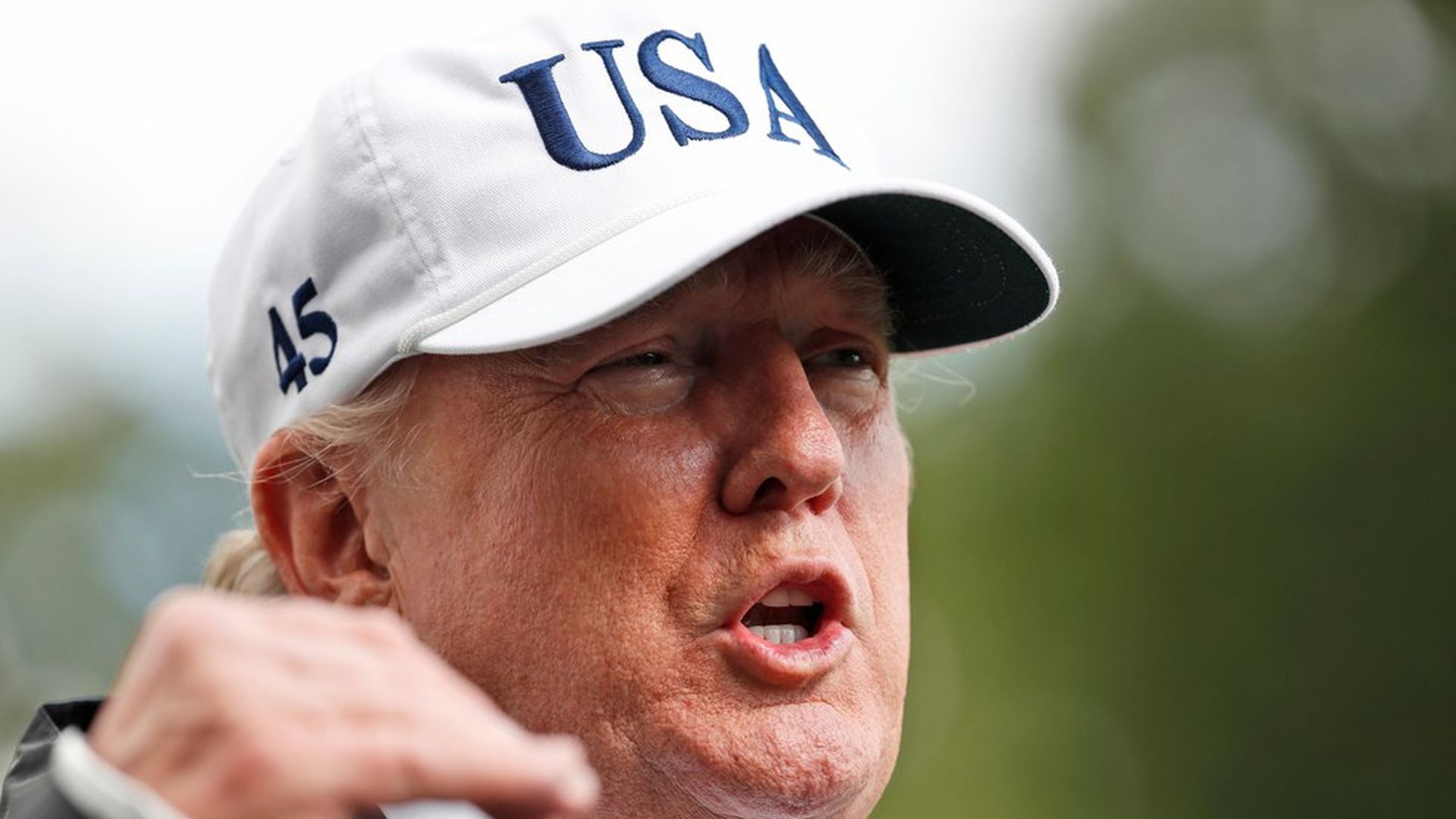
Trump has signed the congressional resolution condemning the "violence and domestic terrorist attack" in Charlottesville, Virginia. That means he's "rejecting White nationalists, White supremacists, the Ku Klux Klan, neo-Nazis, and other hate groups."
Why it matters: This comes hours after he repeated his statement Thursday that there was violence on "both sides" in Charlottesville, noting there are "some very bad people on the other side." This has raised suspicions that Trump is equating white supremacists and neo-Nazis with those who were part of the counter-protest.
Roger Stone to testify before Congress
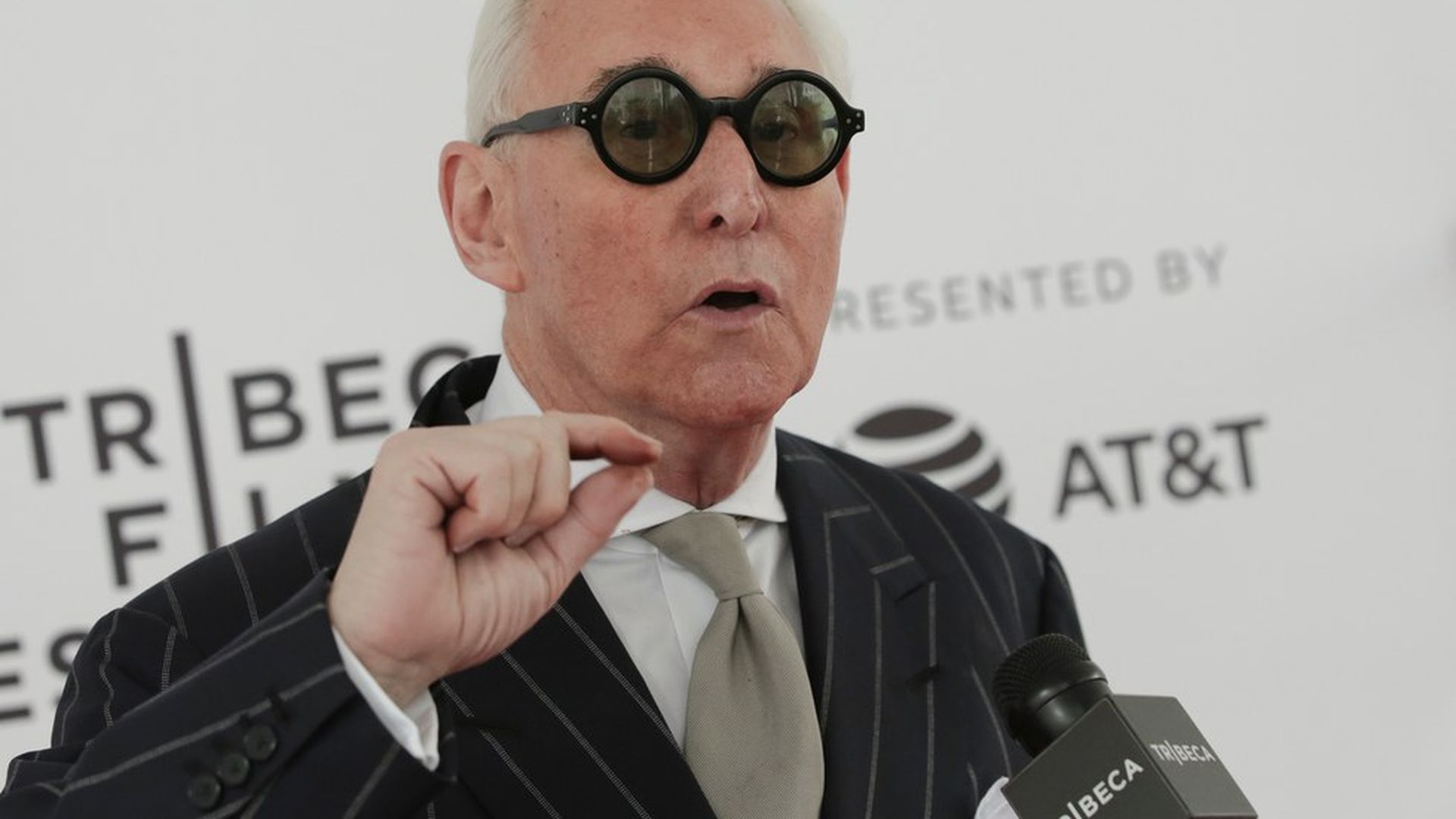
Roger Stone, one of Trump's longtime allies who advised him informally during the 2016 campaign, is set to testify before the House intelligence committee later this month in a closed hearing.
Why it matters: Stone has said he has communicated with Guccifer 2.0, the hacker believed to be a front for Russian intelligence that's taken credit for hacking into the Democratic National Committee.
Stone has said he wants the transcripts of his appearance to be immediately released and is calling for an open hearing even though the panel's business is usually closed.
ICE wants to destroy records of death and sexual abuse
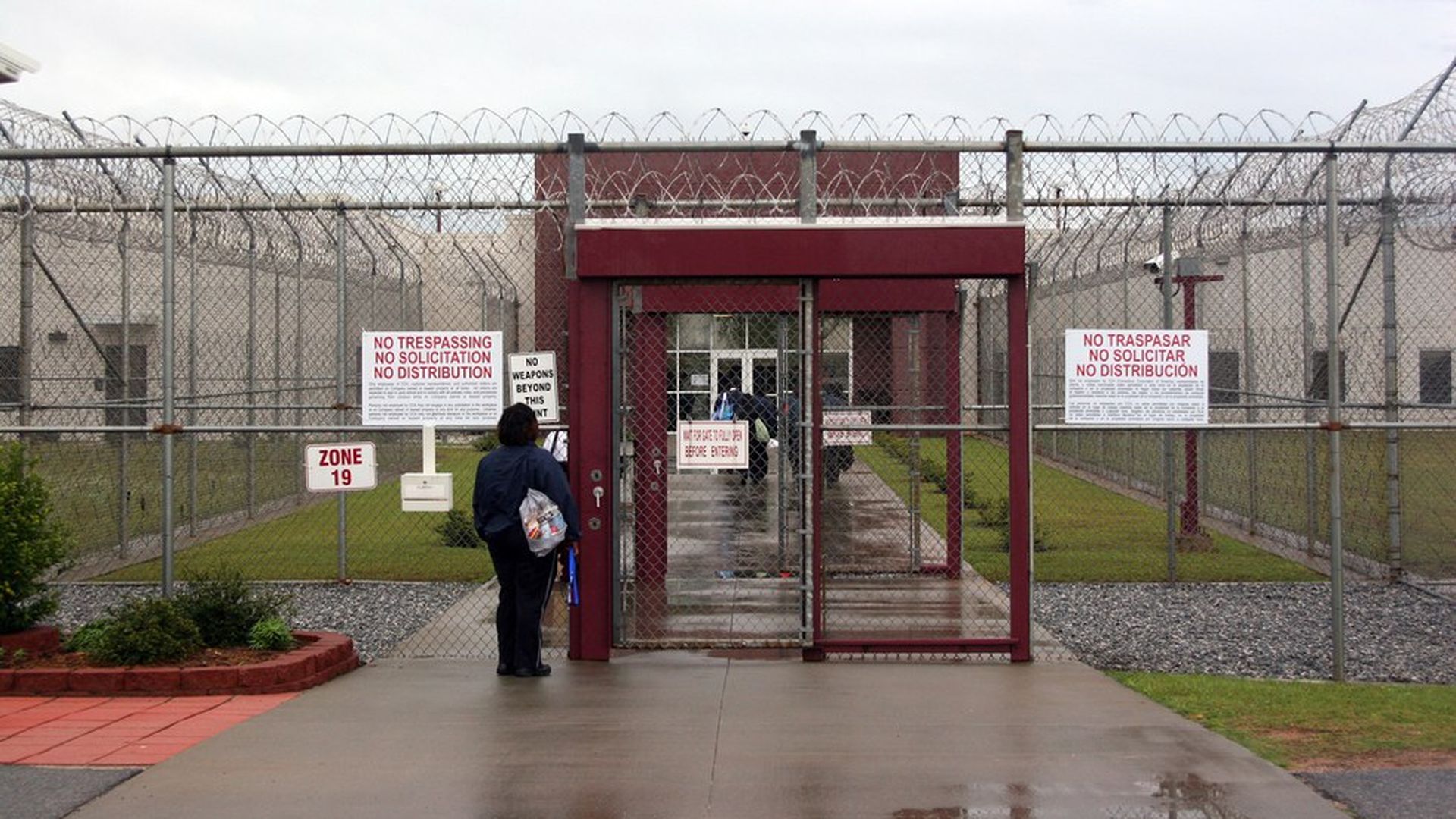
Immigration and Customs Enforcement has requested permission to destroy records pertaining to death and sexual abuse in its detention facilities after 20 years and records of solitary confinement after three, per the San Diego Union Tribune.
- Their reasoning: Sarah Rodriguez, spokesperson for ICE, said in a statement: "This is routine, government record maintenance as prescribed by the National Archives and Records Administration...ICE is working to be in full compliance with the federal records authority."
- Another ICE official said that while "the narrative out there is that we're hiding something," the death, sexual abuse, and solitary confinement files are contained permanently elsewhere.
- The opposing view: The ACLU voiced concerns that this puts "an entire paper trail for a system rife with human rights and constitutional abuse" at stake, and that keeping documents available "is necessary for the public to understand...the operation of a system that is notorious for inhumane and unconstitutional conditions."
Lobbyists can anonymously fund WH aides' Russia legal fees
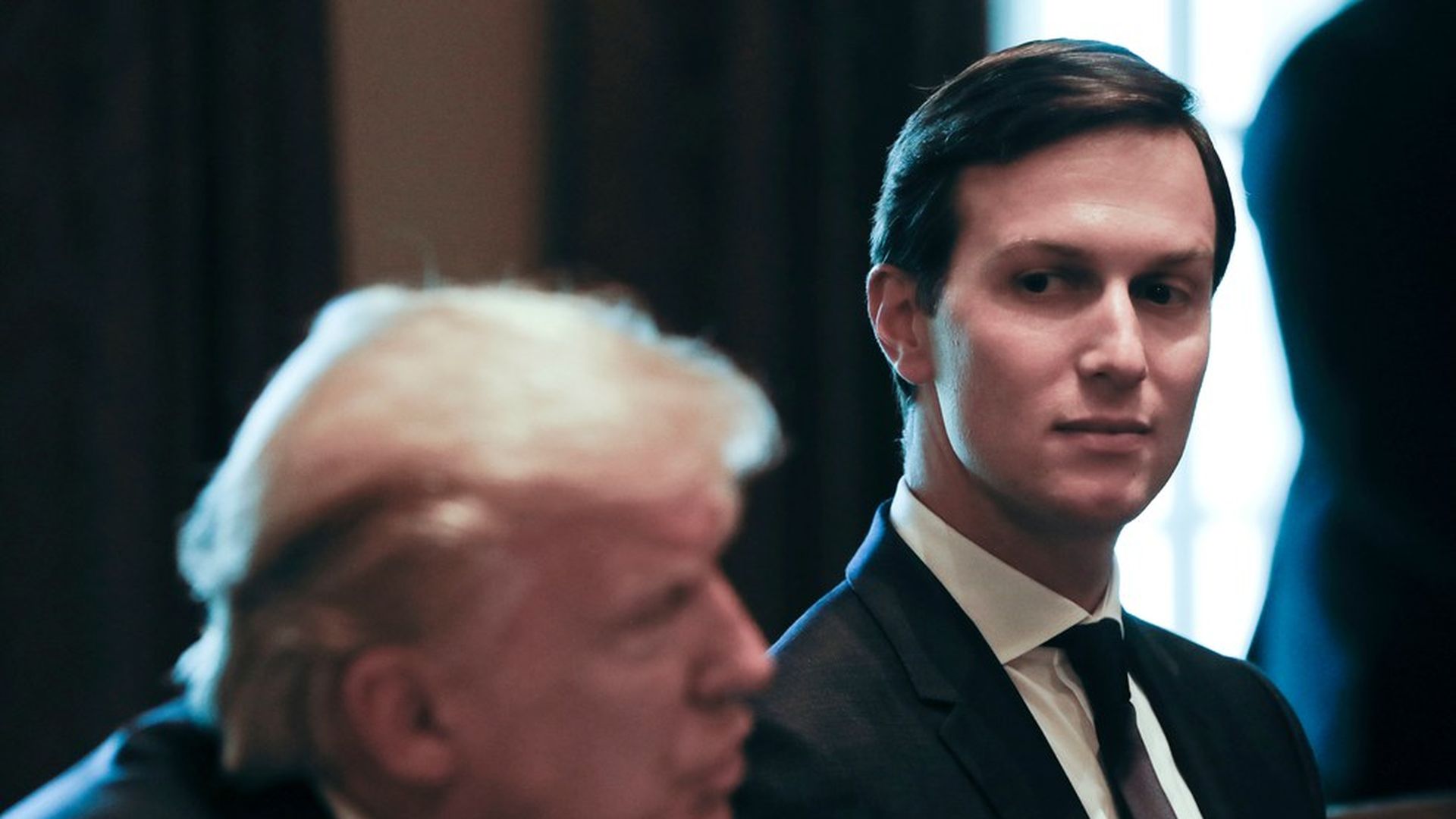
The Office of Government Ethics will now allow lobbyists to contribute anonymous gifts to White House staffers' legal defense funds — including those caught up in the current Russia probes, per a Politico report. Lobbyists were previously banned from doing so.
Why it matters, as Politico's Darren Samuelsohn writes: "The little-noticed change could help President Donald Trump's aides raise the money they need to pay attorneys as the Russia probe expands — but raises the potential for hidden conflicts of interest or other ethics trouble."
Sessions sent Trump a resignation letter in May
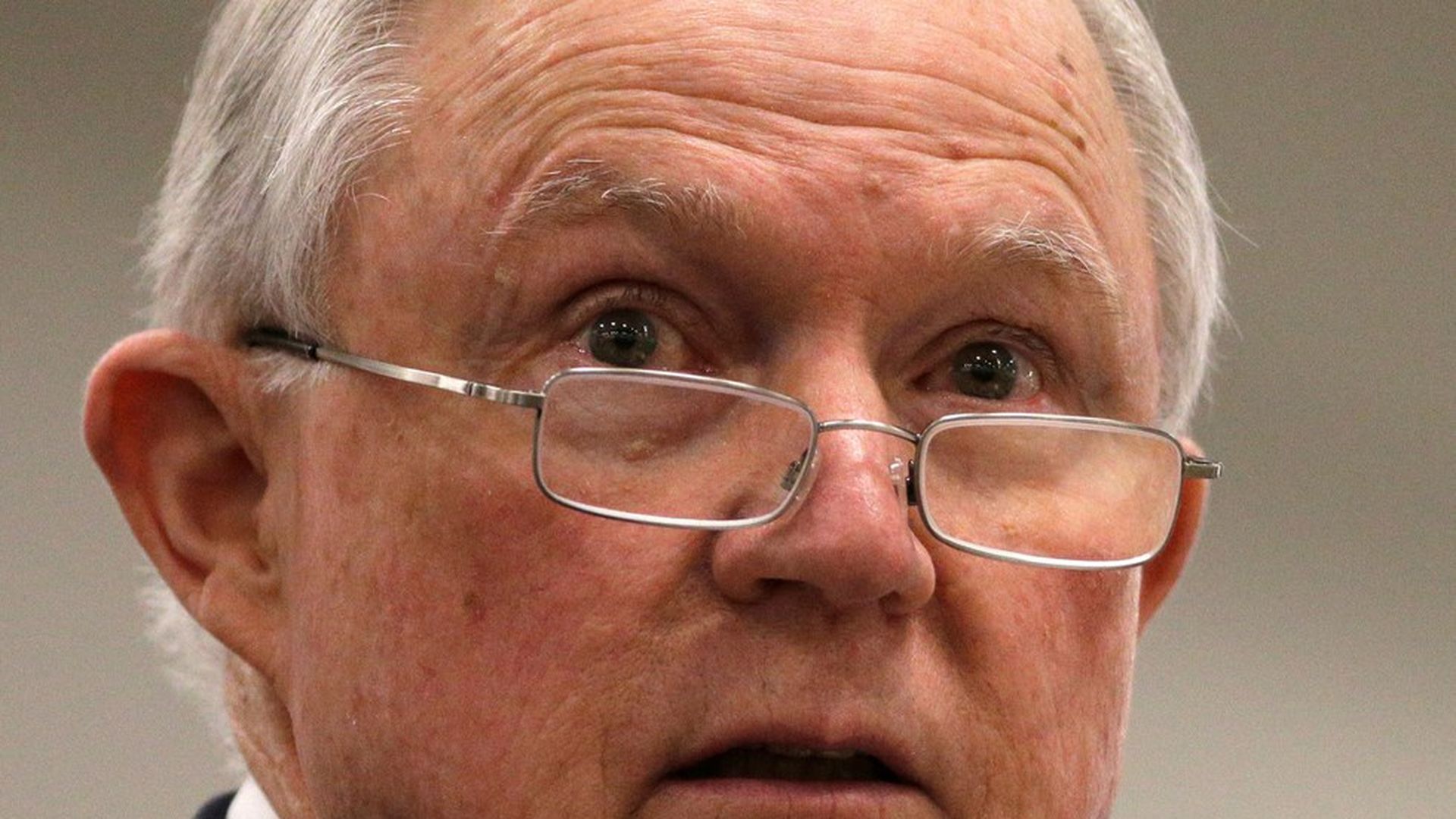
Attorney General Jeff Sessions sent President Trump his resignation letter in May — which Trump later rejected — after Trump berated him during an Oval Office meeting after learning that Robert Mueller had been appointed as special counsel for the Russia investigation, per a NYT report.
- Trump blamed Mueller's appointment on Session's decision to recuse himself from the Russia prove, telling the attorney general that he regretted appointing him and that he was an "idiot." Vice President Mike Pence, White House counsel Don McGahn, and other aides were in the room.
- Trump decided not to accept Sessions' resignation after top aides — including Pence, Steve Bannon, and Reince Priebus — told him that it would only result in more discord both with the administration and amongst establishment Republicans.
- Why it matters: The report is the fullest glimpse yet at Trump's distaste with Sessions, who was one of Trump's earliest congressional supporters.
Trump: “If there’s not a wall, we’re doing nothing”

President Trump told reporters Thursday that he won't "do anything" regarding DACA unless the border wall becomes a reality, not necessarily in the legislation he's discussing with Nancy Pelosi and Chuck Schumer to replace DACA, but at some point in the future:
- "Very important is the wall. We have to be sure the wall isn't obstructed because without the wall I wouldn't do anything... It doesn't have to be here but they can't obstruct the wall if its in a budget or anything else."
- "We're not looking at citizenship. We're not looking at amnesty. We're looking at allowing people to stay here... I just spoke with Paul Ryan, everybody's on board."
Why it matters: Trump, who two hours ago said "the wall will come later," is pulling back on his earlier comments in an effort to appease his base, who have been ripping him apart for agreeing to this DACA framework.
More from Trump"We'll only do it if we get extreme security, not only surveillance but everything that goes with surveillance. If there's not a wall, we're doing nothing.""There was no deal and they didn't say they had a deal. in fact they just put out a statement and they didnt say that at all."Chuck Schumer"We all agreed on the framework... details will matter, but [the dinner] was a very, very positive step" to have Trump agree to seek legal protections for Dreamers."If you listen to the president's comments this morning... what Leader Pelosi and I put out last night is exactly accurate.More on the wall: "The president made clear he intends to pursue it at a later time. And we made clear we'd continue to oppose it... [the wall is] a medieval solution for a modern problem. A Game of Thrones idea for a world that is a lot closer to Star Wars."Nancy Pelosi "We agreed to a plan to work out an agreement to protect our nation's Dreamers from deportation... we would review border security measures that do not include building a wall."On the DREAM Act and path to citizenship: "We agreed on our path."Mitch McConnell "As Congress debates the best ways to address illegal immigration through strong border security... DACA should be part of those discussions.""We look forward to receiving the Trump administration's legislative proposal."Background: The president called the Leader this morning to discuss the need for strong security measures and the need to address DACA.
Pelosi: "We agreed to a plan to work out an agreement" on Dreamers
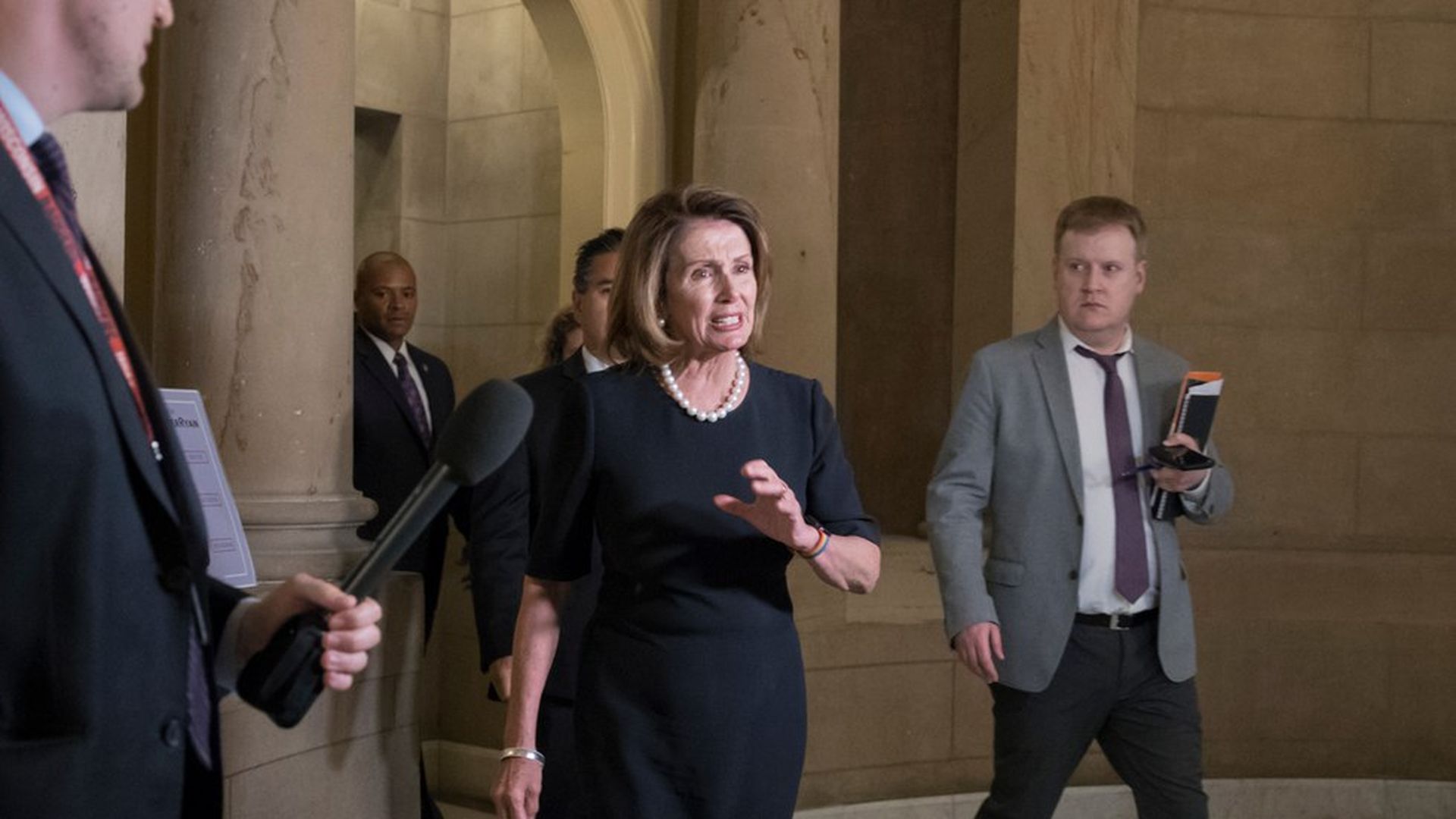
House Democratic Leader Nancy Pelosi told reporters she, Chuck Schumer, and Trump agreed Wednesday night "to a plan to work out an agreement to protect our nation's Dreamers from deportation." She added "we would review border security measures that do not include building a wall."
On the DREAM Act and path to citizenship: When Pelosi was asked whether she had "no doubt" that she and Trump were on the same page that Dreamers be able to pursue citizenship through the DREAM Act, she shied away from answering explicitly yes or no. Instead, she emphasized "we agreed on our path." When asked if she trusts the President on this issue, she answered "Now is that a fair question?"
Why it matters: There's no clear alignment between Trump and the Democratic demands on this issue — yet.
Conservatives blast Trump for teaming up with Chuck & Nancy on DACA

Right-wing commentators are taking aim at President Trump for his in-the-works DACA deal that would include increased border security but no funding for the border wall.
Why it matters: Trump's newfound desire for bipartisanship is putting his conservative base in jeopardy. Many of his most feverish supporters voted for him because of his hard line on immigration, and to them this deal makes it seem like Trump's caving on his core promises.

Trump: "The wall will come later"
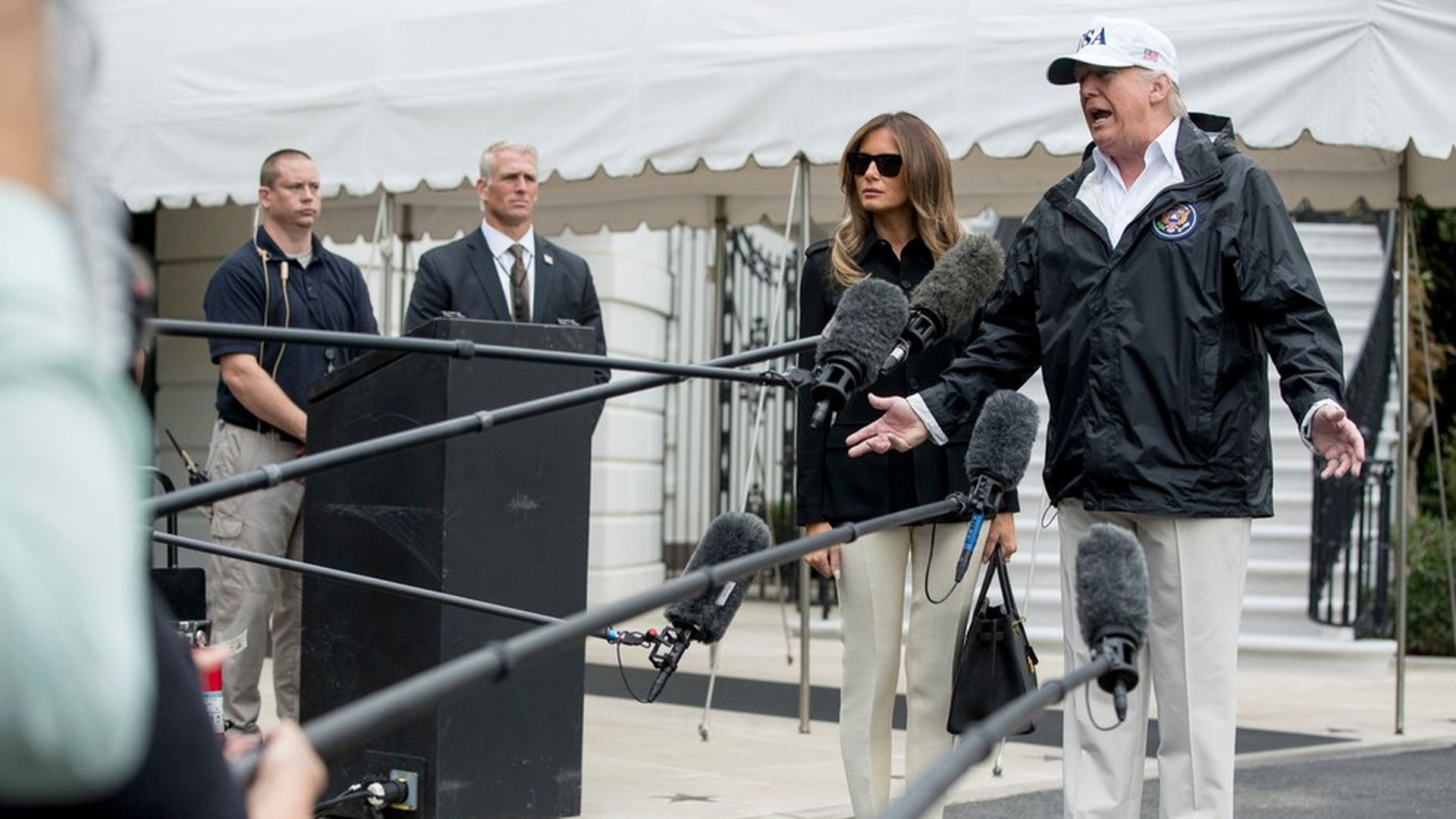
Nancy Pelosi and Chuck Schumer issued a joint statement responding to President Trump's morning tweets surrounding DACA, agreeing that there was "no final deal" but rather general agreement on the following terms:
- Trump will encourage the House and Senate to enshrine protections granted by DACA into law.
- There will be a bipartisan border security package that still needs to be negotiated — but it will not include the wall, which Trump plans to continue to advocate at a later date.
Confirmation from POTUS: Leaving the White House for Florida this morning, Trump told the pool that "the wall will come later," adding that a deal is "fairly close" with Paul Ryan and Mitch McConnell both on board, but both sides have to "get past the border security."
Ivanka’s reasons for not publicly disagreeing with her dad
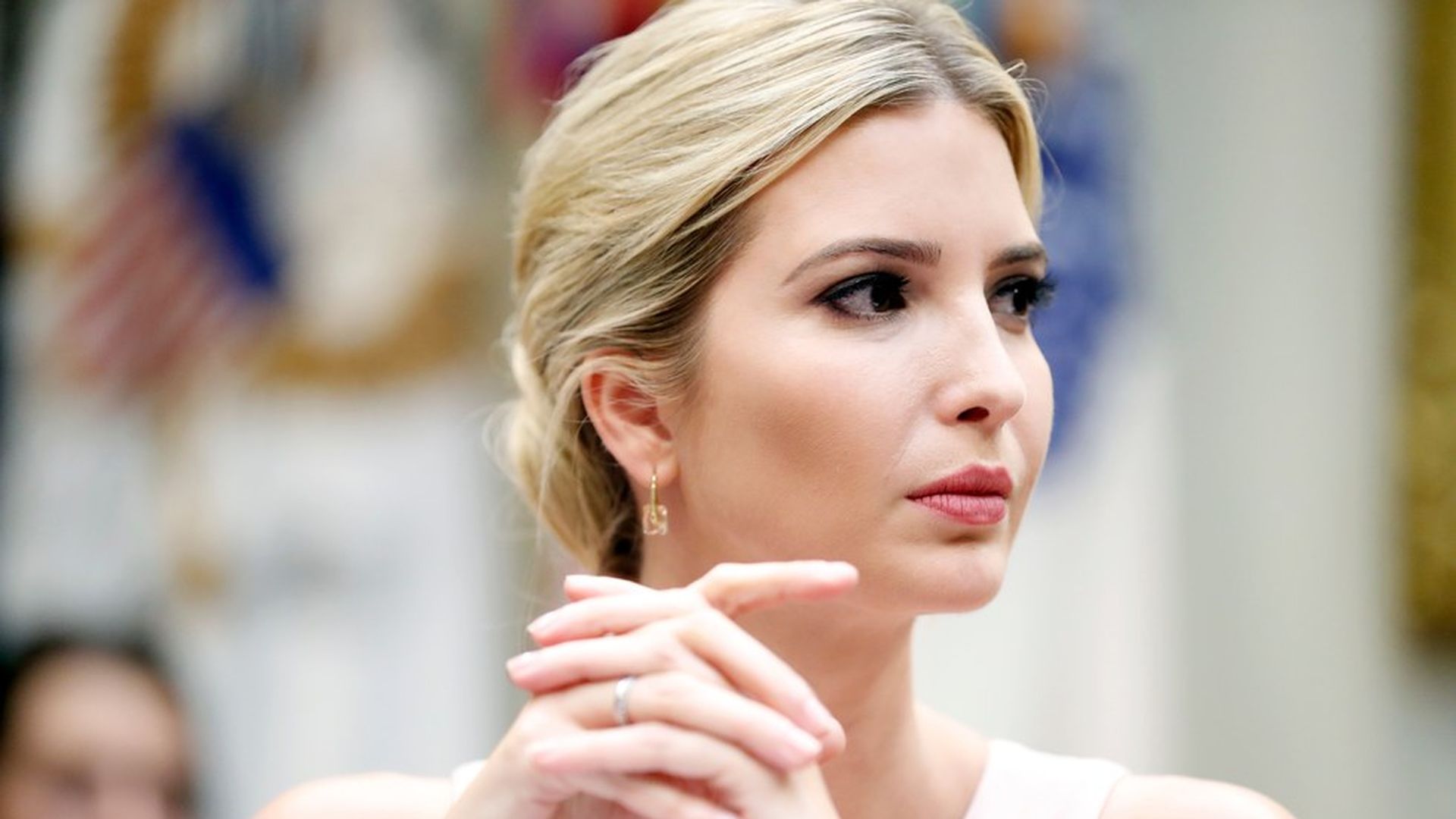
Ivanka Trump gave three in-person interviews to the Financial Times for this weekend's edition:
- On her ability to change her father's policies: "Some people have created unrealistic expectations of what they expect from me. That my presence in and of itself would carry so much weight with my father that he would abandon his core values ... It's not going to happen."
- On why she so rarely publicly criticizes her father: "To voice dissent publicly would mean I'm not part of the team. When you're part of a team, you're part of a team."
- So far she and Jared "haven't felt much of a chill" in the liberal New York circles they ran in before the campaign. They know that friends who are happy to trash Ivanka anonymously in newspapers are usually not gutsy enough to do it to her face.
- Read on (subscription).
Harvard Business School dissects the problems with U.S. politics
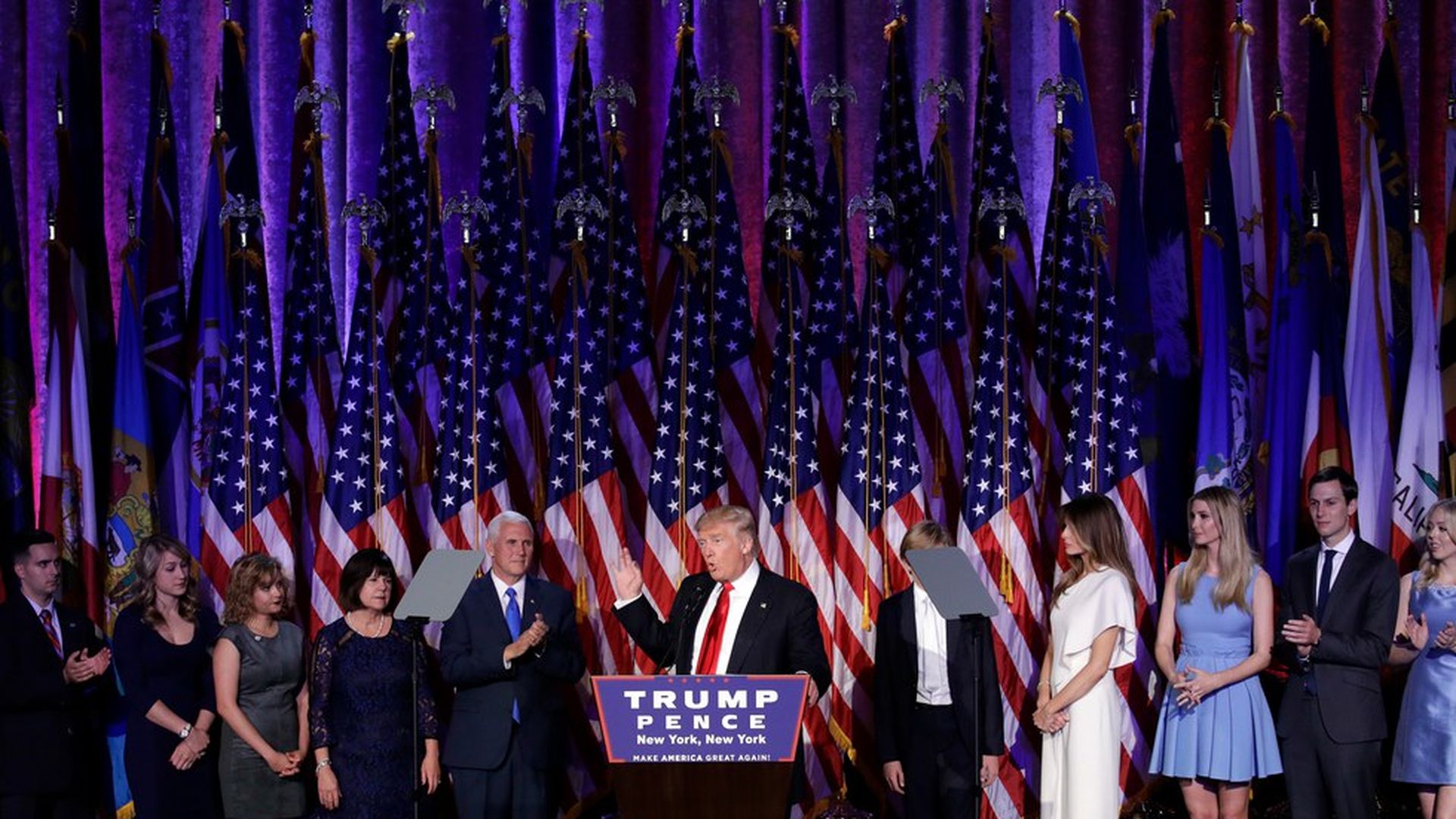
A study out overnight from Harvard Business School and its U.S. Competitiveness Project, titled, "Why Competition in the Politics Industry Is Failing America," concludes that
- "Our political problems are ... a failure of the nature of the political competition that has been created. This is a systems problem."
- Trump didn't change this: Under Trump, "neither the structure of the politics industry nor its incentives have fundamentally changed."
- Why it matters: "Politics in America is not a hopeless problem, though it is easy to feel this way ... It is up to us as citizens to recapture our democracy — it will not be self-correcting."
Be smart: Each side's unresolved splits — Bernie v. Hillary, and Trump v. GOP — signal the possibility that the two uber-parties could splinter further, with dozens of Democrats seeking the 2020 nomination, and populist Republicans empowered while the establishment tries to reassert dominance.