Monday's politics & policy stories

Trump won't use executive privilege on Comey testimony
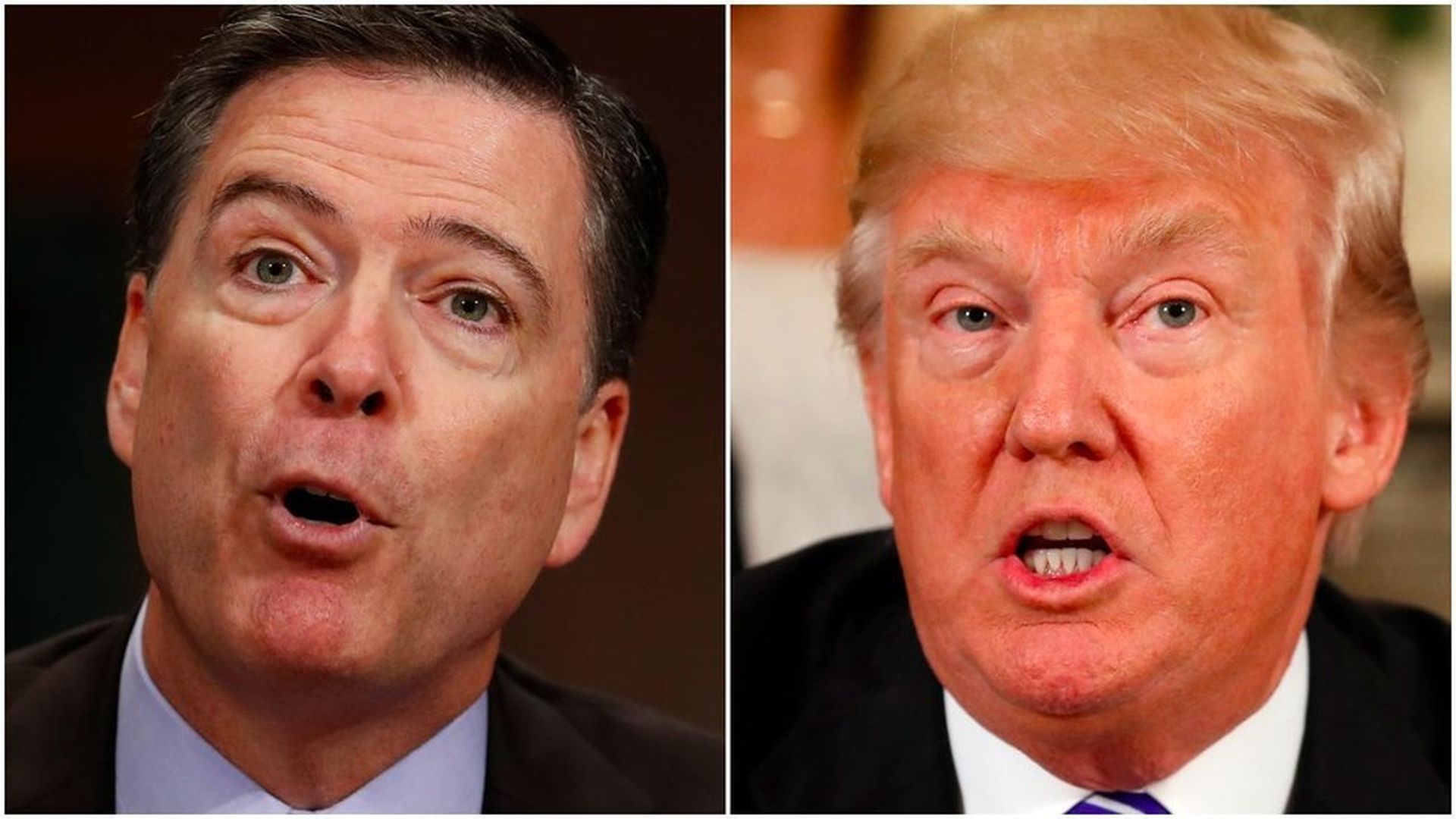
Deputy Press Secretary Sarah Sanders announced Monday that President Trump "will not assert" his executive privilege to block former FBI Director James Comey's testimony before the Senate Intelligence Committee Thursday.
Immediately after her announcement, the White House press office released an official statement confirming that although Trump has the power to block Comey's testimony, he has chosen not to in order to "facilitate a swift and thorough examination of the facts sought" by the committee.

Trump announces plan to privatize air traffic control
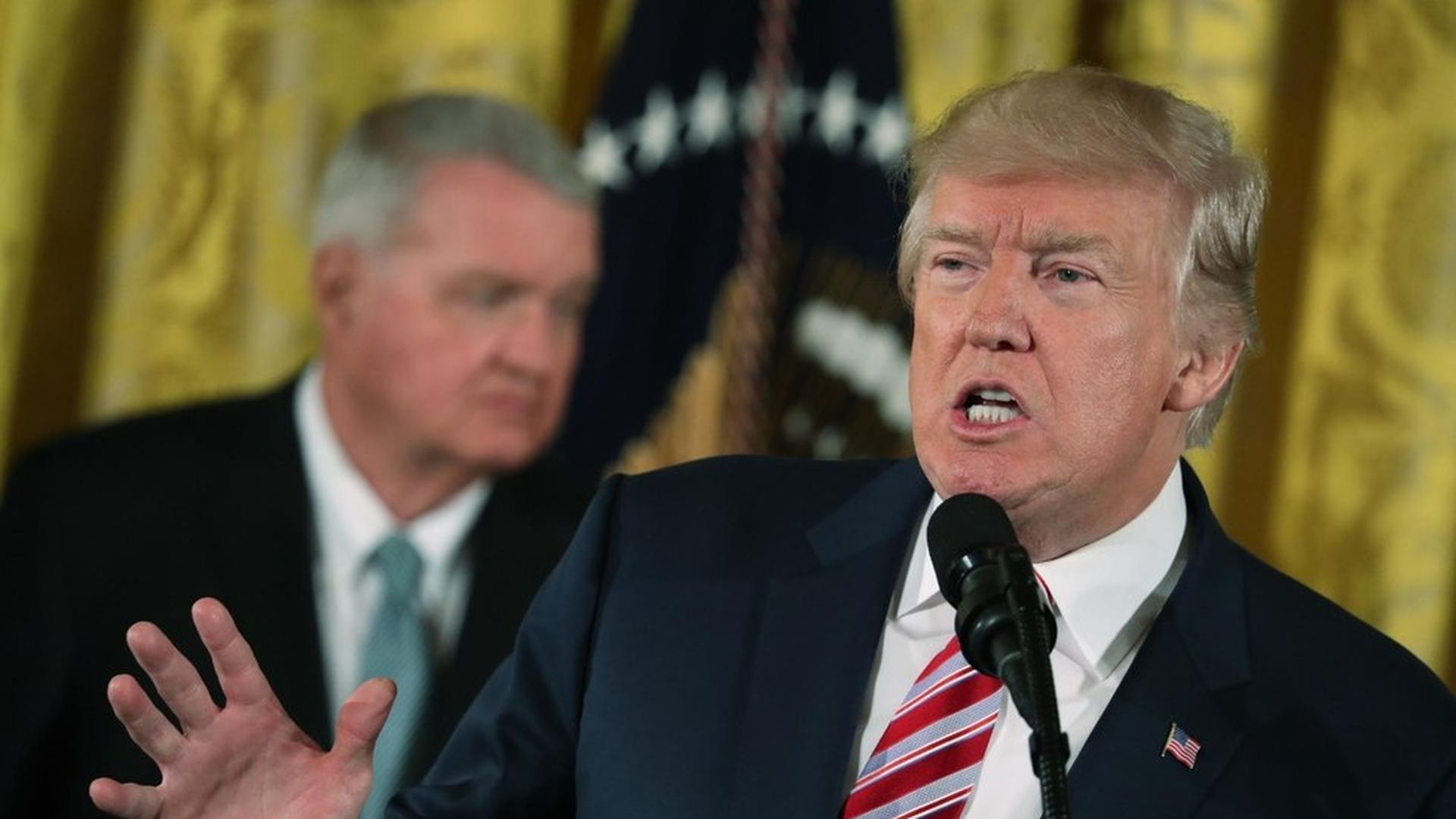
Flanked by Secretaries of Transportation past and present, President Trump kicked off a week of infrastructure announcements today with an "air travel revolution" — a plan to privatize the nation's air traffic control system via an independent non-profit entity spun off from the Federal Aviation Administration.
Why he's starting here: A White House aide said the administration viewed the ATC privatization plan as "low hanging fruit" because House Transportation Chair Bill Shuster, who was in attendance for the White House event today, already had a plan ready to go.
Honestly, they didn't know what the hell they were doing. A total waste of money. President Trump on Obama administration attempts to fund the nation's air traffic control system
Seven countries cut diplomatic ties with Qatar
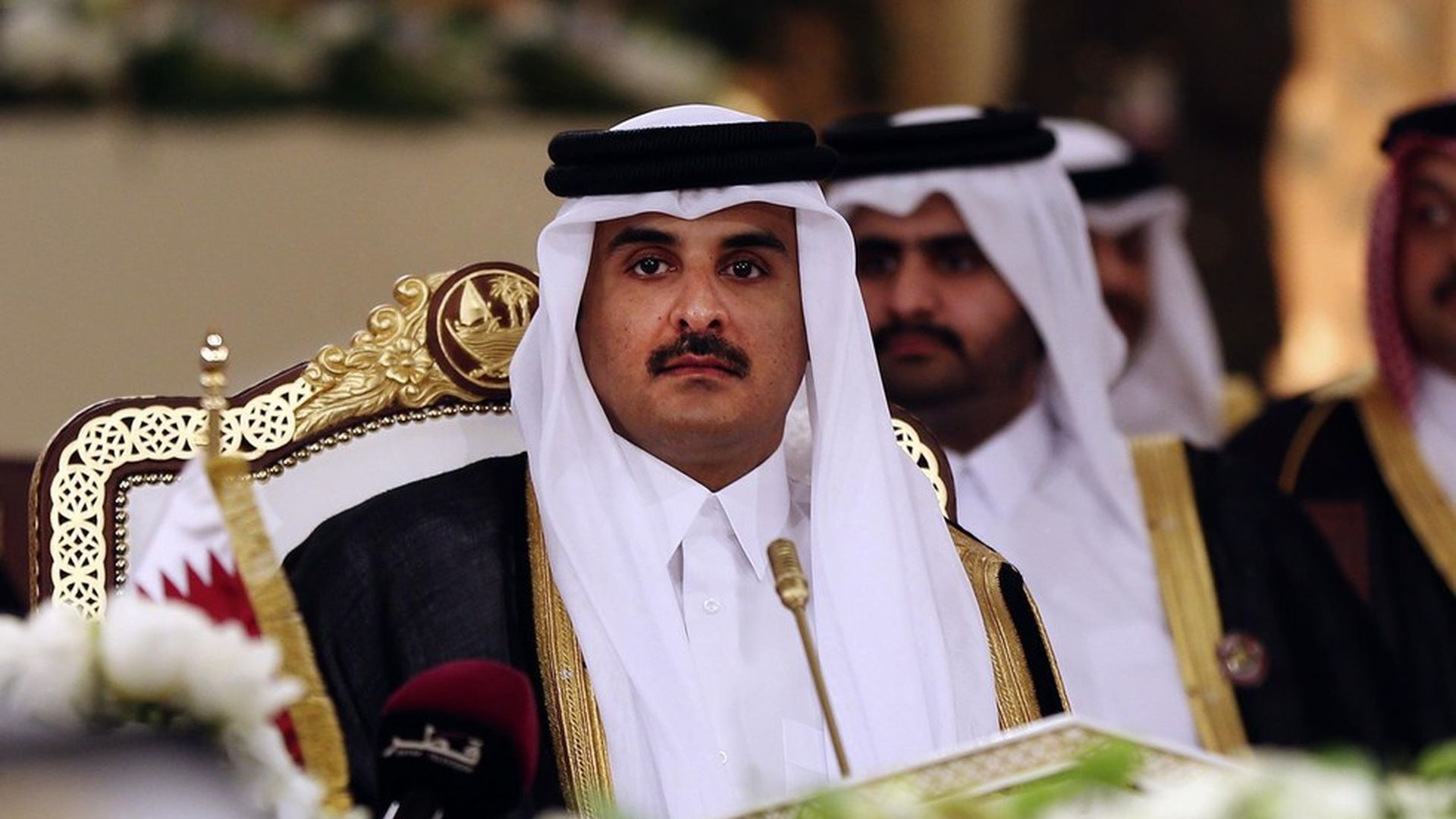
Seven foreign nations — Saudi Arabia, Egypt, United Arab Emirates, Libya, Maldives, Yemen and Bahrain — cut diplomatic ties with Qatar on Monday, as well as suspending sea and air travel to and from the country, after accusing the nation of collaborating with militant groups in the region, reports the BBC. Qatar has called the decision a "violation of its sovereignty" and said it has "no basis in fact."
Tillerson weighs in: Hours after the split, the U.S. Secretary of State urged the Gulf nations to work out their differences, and emphasized the importance of the Gulf Cooperation Council remain unified.
Why it matters: The diplomatic move could have U.S. implications, as American forces have a series of bases in Qatar, including an air war command against ISIS and its U.S. Central Command headquarters, which oversees all American military operations in Afghanistan and the Middle East.
Trump reportedly ad-libbed Article 5 omission to NATO
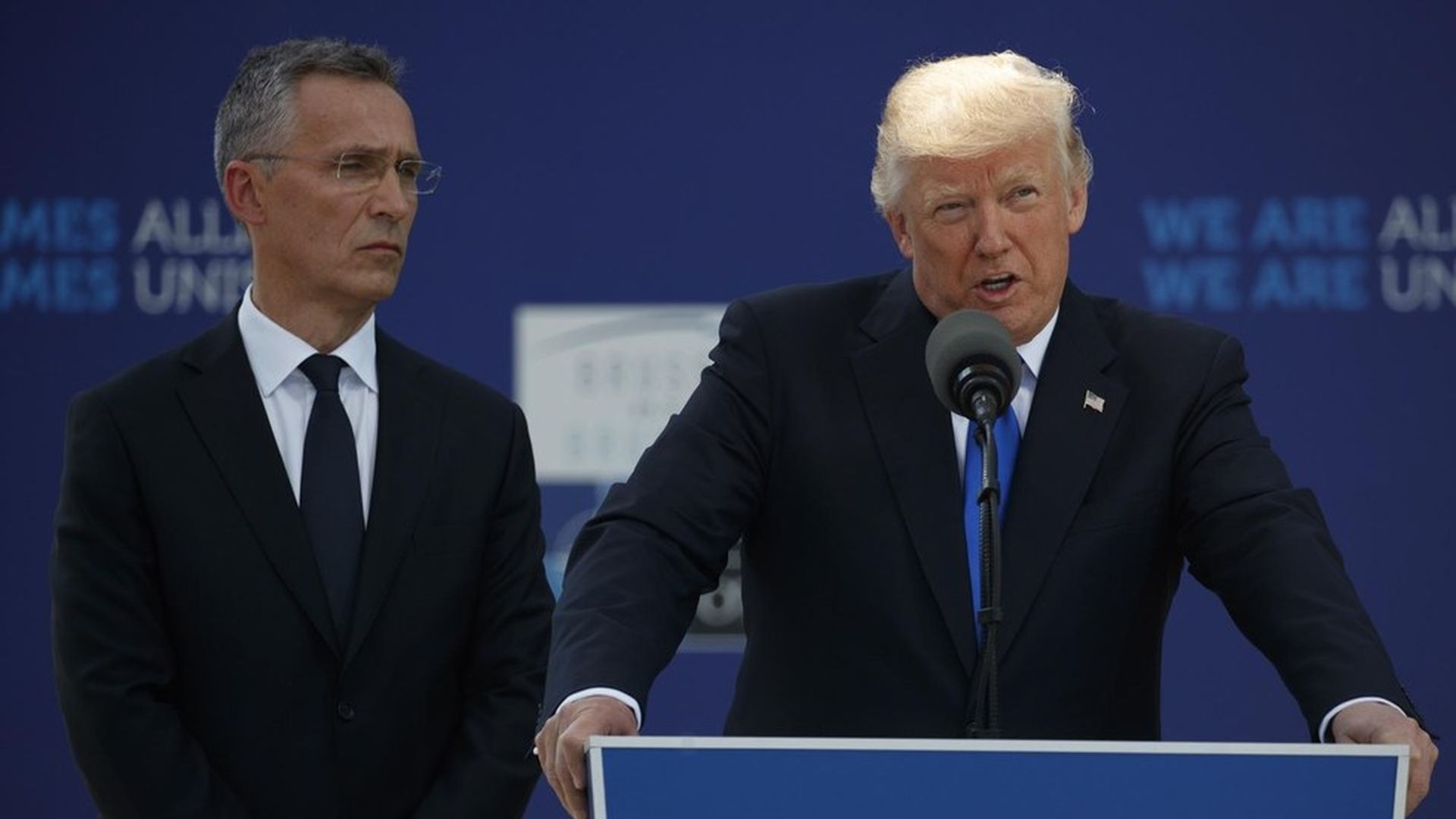
President Trump's speech to NATO leaders last month included an explicit endorsement of the alliance's Article 5 collective defense pact all the way through its final draft — with an apparent ad-libbed deletion by Trump during its delivery, according to Politico Magazine.
Who worked hard to get it in: Secretary of Defense Jim Mattis, national security advisor H.R. McMaster, and Secretary of State Rex Tillerson.
Why it matters: Even with his disruptive leadership style, there's been a persistent mantra in Washington that the steady leadership of Trump's foreign policy team can normalize his most dangerous impulses. But this episode shows that Trump's desire to be different can upend even the United States' most crucial military alliance.
Trump says we need to call it a "TRAVEL BAN"
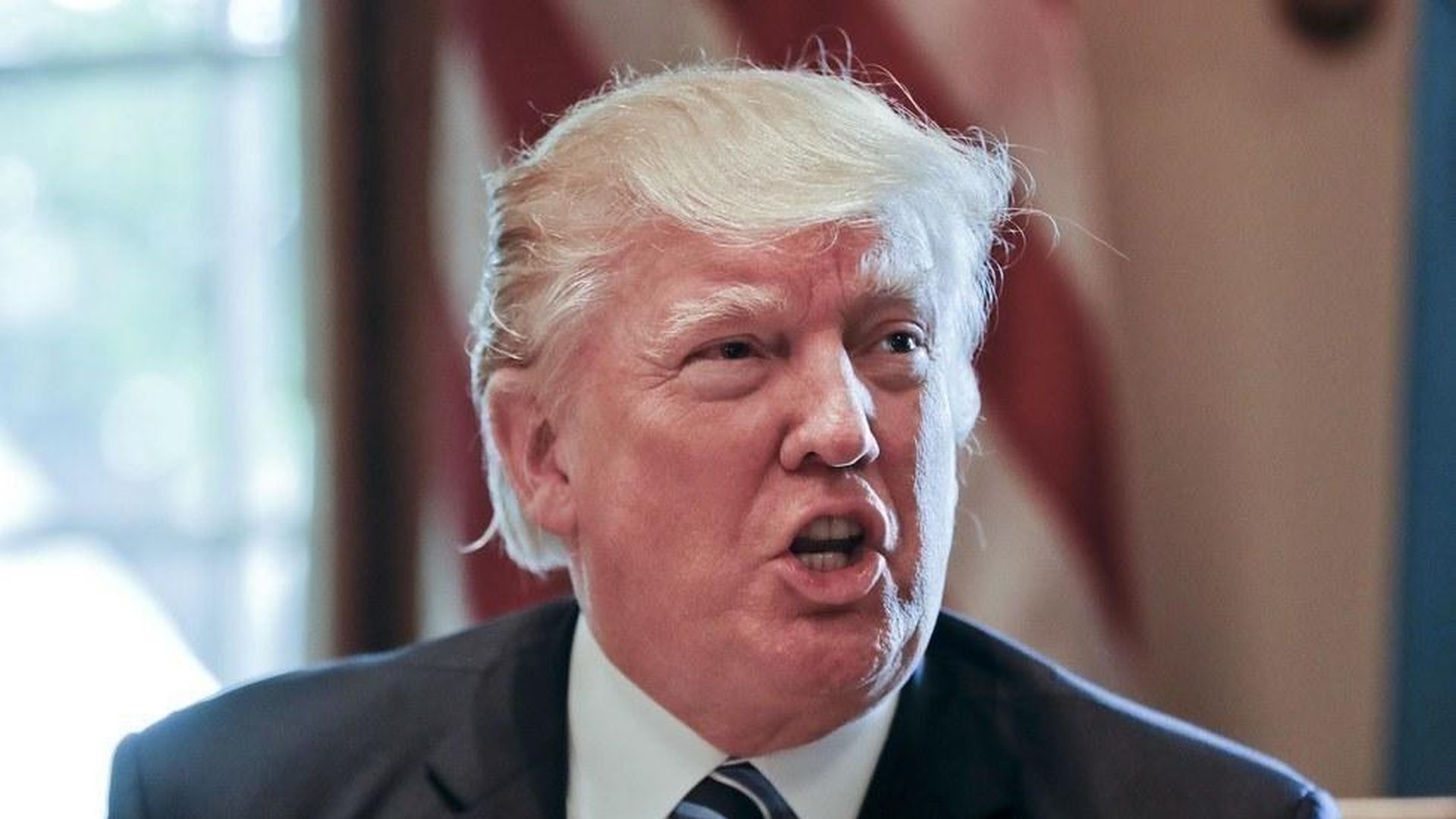
President Trump lashed out at the courts on Twitter Monday morning for being "slow and political" and "watering down" his original executive order banning citizens of six Muslim-majority countries from traveling to the U.S.
People, the lawyers and the courts can call it whatever they want, but I am calling it what we need and what it is, a TRAVEL BAN! The Justice Dept. should have stayed with the original Travel Ban, not the watered down, politically correct version they submitted to S.C. The Justice Dept. should ask for an expedited hearing of the watered down Travel Ban before the Supreme Court - & seek much tougher version! In any event we are EXTREME VETTING people coming into the U.S. in order to help keep our country safe. The courts are slow and political!

Trump kicks off infrastructure week
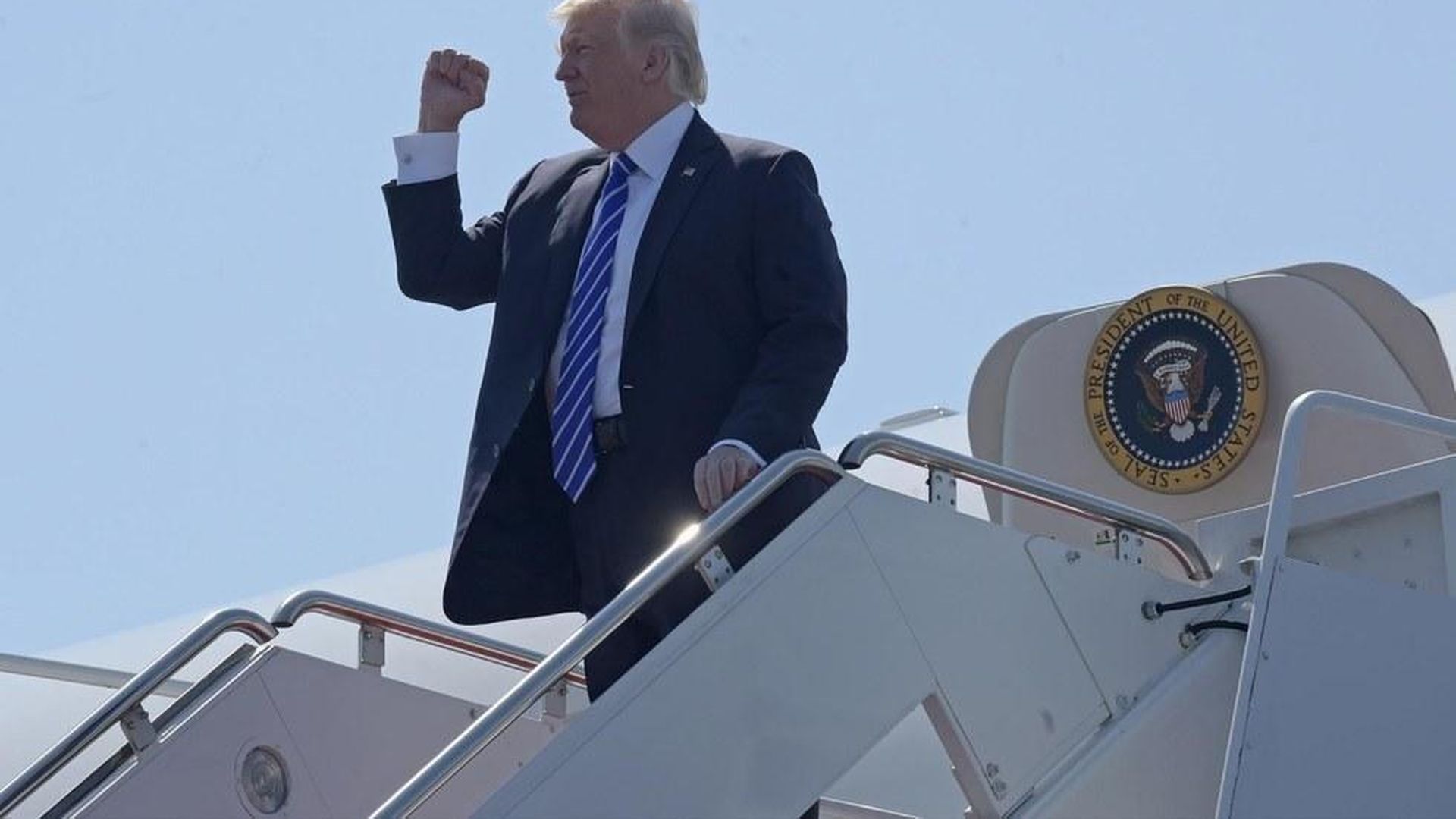
In the East Room at 11:30a.m., President Trump will joined by executives from major airlines as he kicks off "infrastructure week" by unveiling his plan to reform the nation's air-traffic control system.
The most consequential provision: privatizing air-traffic control by transferring that power from the FAA to a non-profit entity, funded by user fees, over three years.
Why this matters: Trump is getting behind the single biggest priority of Bill Shuster, the Republican House Transportation and Infrastructure Committee chairman. If Trump delivers this controversial privatization for Shuster, he can expect the chairman's loyalty and support on many of his other infrastructure priorities.

Trump and Russia: What we know, what we don't
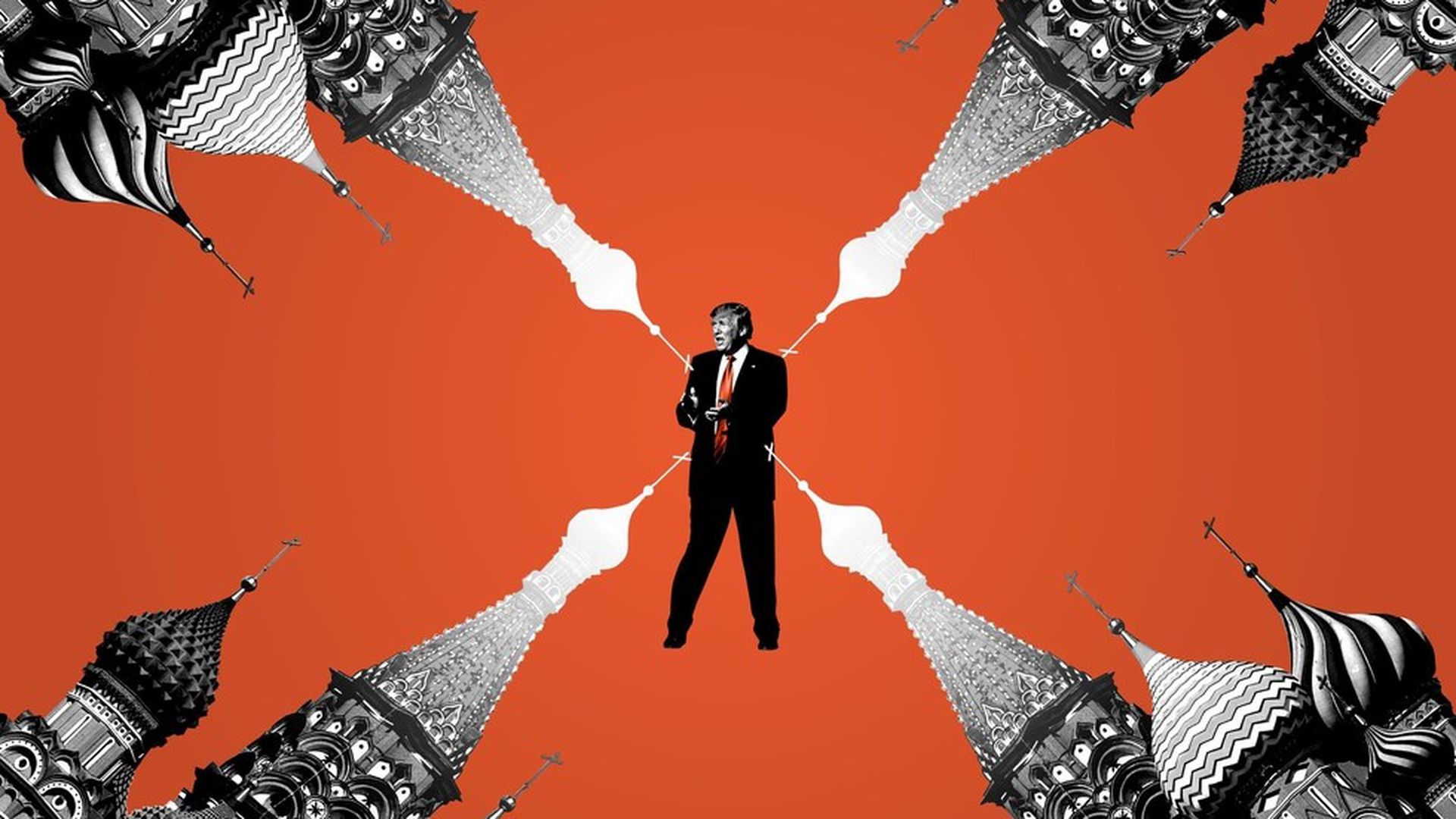
A quick primer on the Trump-Russia storyline, broken down by the details we know and the questions still unresolved.

Oculus founder has new border surveillance startup
Palmer Luckey, a founder of Facebook-owned VR company Oculus, has stealth a new company working on surveillance technology that could be deployed on country borders and military bases, according to a report from the New York Times. Peter Thiel and his VC fund, Founders Fund, are said to be planning to fund the venture.
"We need a new kind of defense company, one that will save taxpayer dollars while creating superior technology to keep our troops and citizens safer," said Luckey in an email to the Times. Luckey has reportedly discussed border technology with Trump advisor Stephen Bannon and recently met with the secretary of interior.
Why it matters: Luckey and Thiel are part of the small part of Silicon Valley that backs President Trump, and the only two who have been public about it, investor Marc Andreessen recently told Axios's Dan Primack. Thiel made headlines last year when he donated to Trump's campaign and spoke at the Republican National convention, while Luckey's support for anti-Hillary Clinton organization was made public last year and reportedly led to his eventual departure from Facebook.