Midwest is not immune to climate hazards


Add Axios as your preferred source to
see more of our stories on Google.
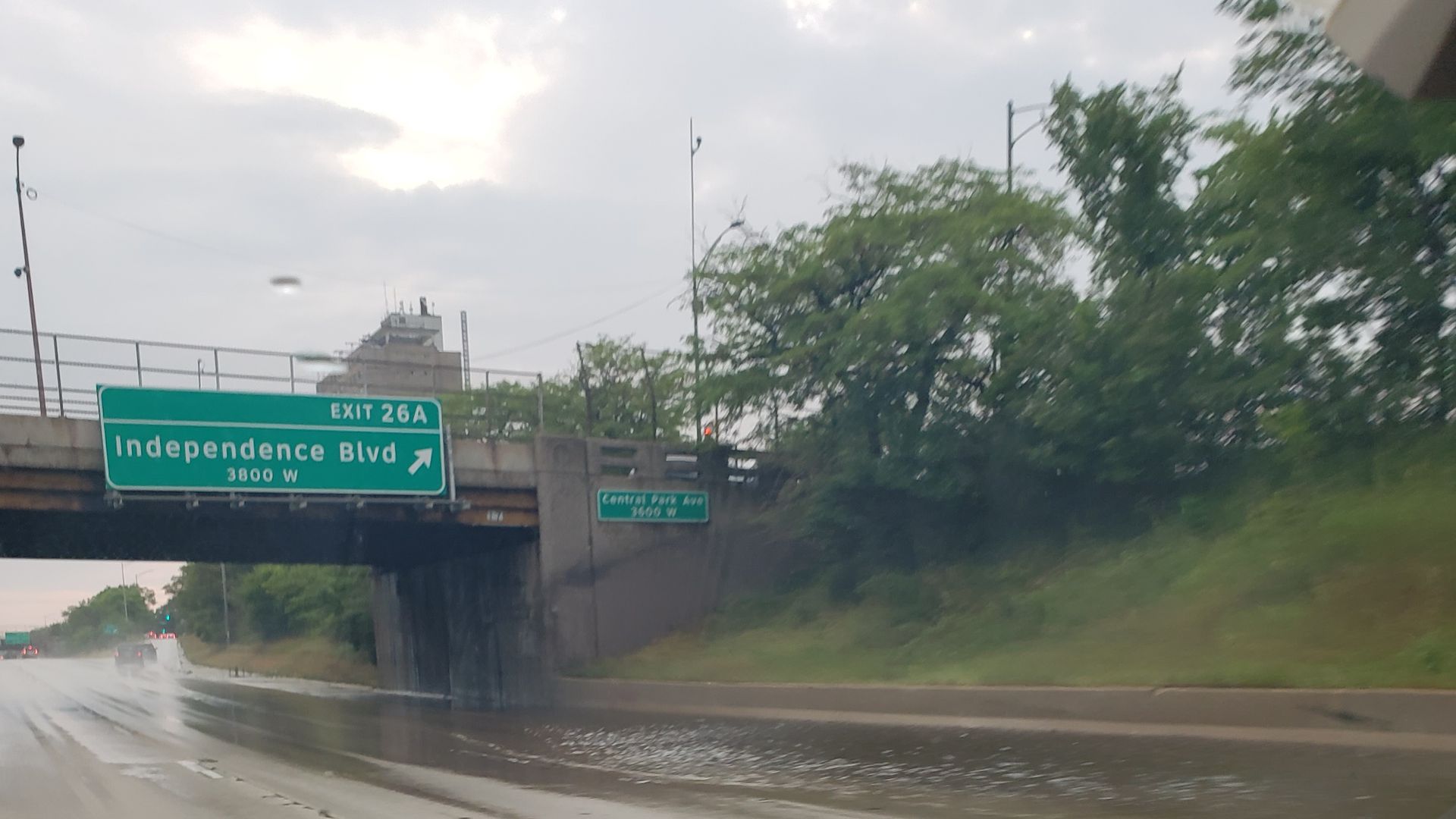
The downpours and floods in July 2023 shut down some exits on the Eisenhower and flooded hundreds of West Side homes. Photo: Monica Eng/Axios
The Midwest may be billed as a "climate haven" insulated from the wildfires and hurricanes hitting the West and Southeast — but experts say even our region faces serious climate challenges.
Why it matters: A "hallmark" of how the Midwest is experiencing climate change is a "weather whiplash effect" like our prolonged droughts followed by heavy precipitation.
- Those rapid shifts put a strain on local infrastructure and make it hard for cities to prepare and adapt, says Steve Bowen, Chicago-based chief scientist at Gallagher Re, a reinsurance company.
State of play: Americans are increasingly citing climate change as a factor in their decision to move from one region to another.
- Some areas of the Midwest have been deemed "climate havens" by city leaders and climate scientists, because of protection from sea-level rise, more temperate weather and proximity to the Great Lakes' freshwater.
Reality check: Our region's intensifying heat and precipitation still impose harsh conditions and put pressure on its infrastructure, Jeremy Porter, head of climate implications for the research group First Street Foundation, tells Axios.
Threat level: An "extreme heat belt" is emerging from Texas to Iowa bringing heat indexes of 110-115°F. The warm air holds more moisture allowing "100-year floods" to arrive every seven or eight years now, Porter says.
Zoom in: Chicago's West Side residents were still dealing with the structural and health effects of the July 2023 floods a year after the storm.
What they're saying: "People are traumatized. You have mental health problems from the flood, physical health problems," state Rep. La Shawn Ford said at a summer press conference.
What we're watching: Cities around the Midwest, including Chicago, are continuing to develop climate resiliency plans.
- Mayor Brandon Johnson's administration has announced climate plans to improve stormwater infrastructure, restore the shoreline and reduce coastal hazards.
What's next: "We've always had weather," Bowen says of the region.
- "But what is definitely changing is the fact that the individual events themselves are starting to take on more extreme types of behavior — certainly more intense than we've seen before."