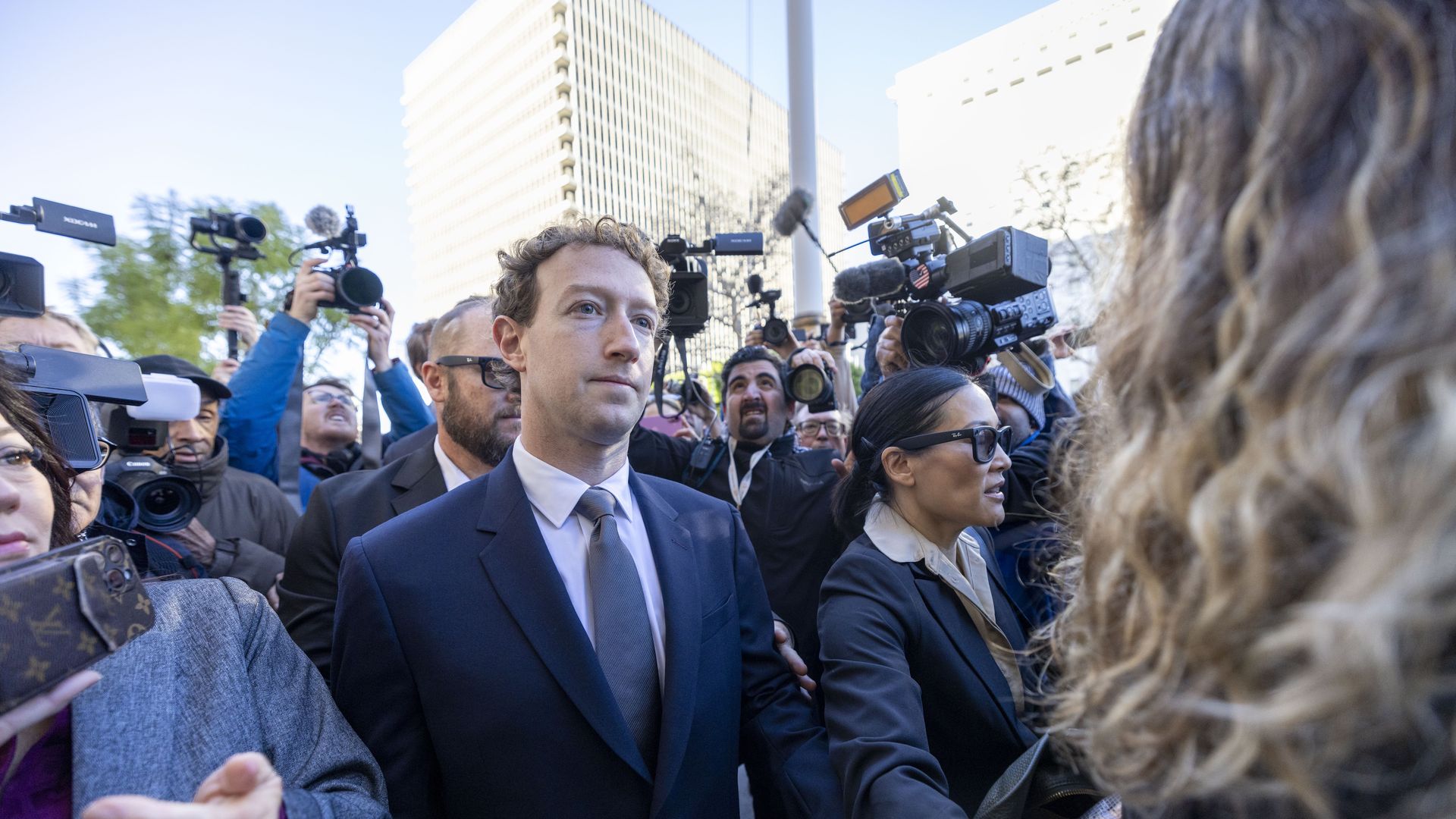
Meta CEO Mark Zuckerberg on Wednesday was grilled for past statements about his company's role in child safety and knowledge of alleged harms.
Why it matters: This is the first time Zuckerberg has faced a jury in a courtroom alongside families who say that Meta's products harmed their children.
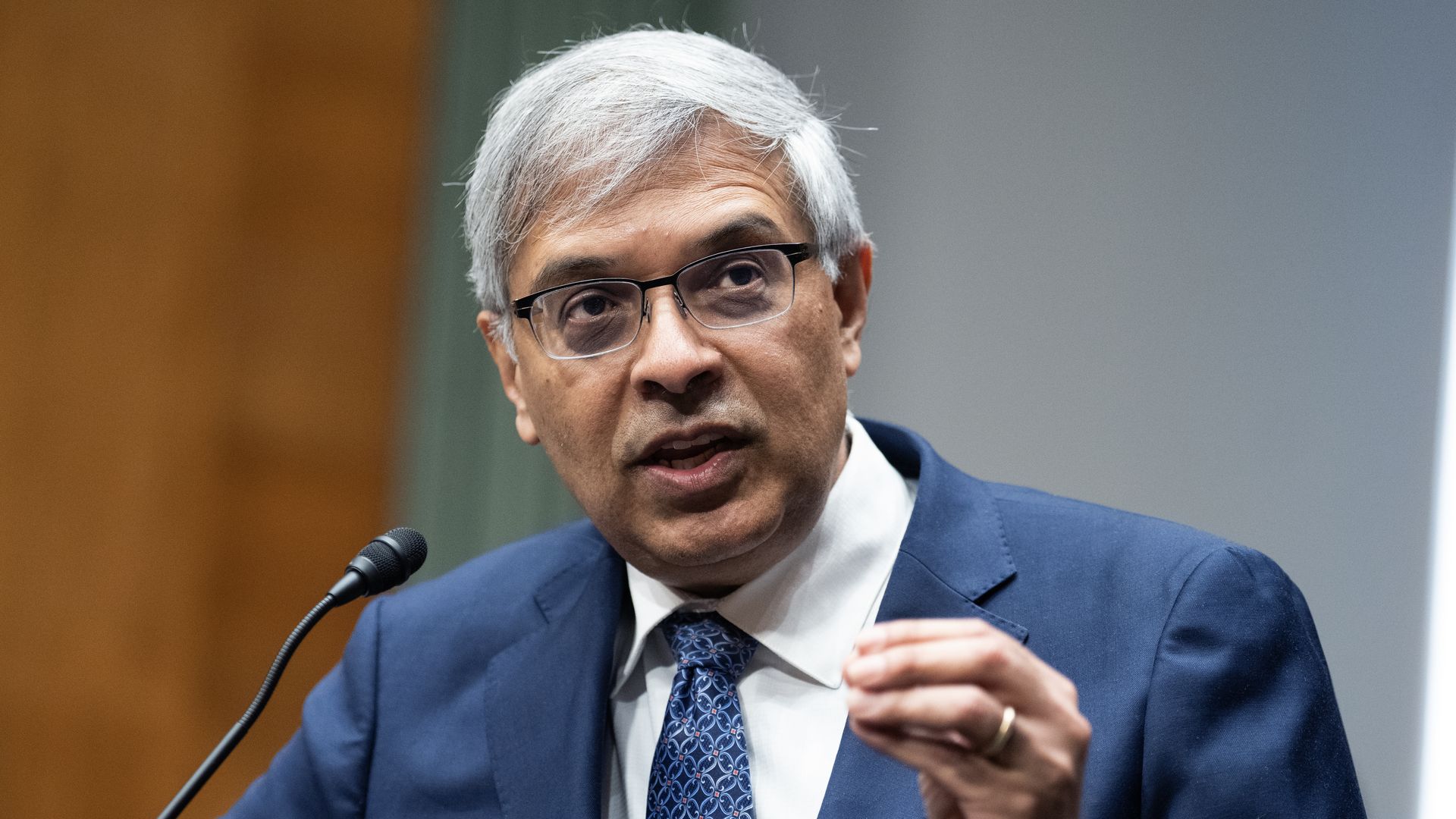
National Institutes of Health director Jay Bhattacharya will also become acting director of the Centers for Disease Control and Prevention as the Trump administration continues a shakeup of its senior health leadership, two sources told Axios.
Why it matters: The CDC has lacked a permanent political leader since August, when Health Secretary Robert F. Kennedy Jr. fired career scientist Susan Monarez.
Deputy Health Secretary Jim O'Neill, who is leaving his post, has been acting CDC director since then, presiding over the agency during a period of heavy turnover from staff reductions and DOGE-directed layoffs.
Bhattacharya's appointment was first reported by the New York Times.
Driving the news: Bhattacharya is a former Stanford professor who has tried to deflect controversy over the administration's health agenda while others on the Trump health team have leaned into their roles as disruptors.
He's presided over NIH during a period of unprecedented budget cuts and grant freezes, taking credit for fighting what he called "politicized science" while telling Congress he didn't accept the job to terminate grants.
Bhattacharya rose to prominence in the Trump world as a vocal opponent of COVID-era lockdowns.
He cowrote the Great Barrington Declaration, a petition from a group of scientists that argued for allowing COVID to spread among young, healthy people to reach herd immunity faster.
The permanent CDC director has to be confirmed by the Senate, which could be a big political lift heading into the midterm elections.
Meta CEO Mark Zuckerberg will be grilled on Wednesday on the addictive nature of social media for youth, though scientists have not reached a consensus on whether "addiction" is the right label for compulsive use.
Why it matters: Regardless of the classification, researchers have found that excessive social media use has negative effects on youth mental health.
Moderna on Wednesday said the Food and Drug Administration will review its application for a new mRNA flu vaccine, reversing the surprise refusal to evaluate the shot last week after the company amended the proposal.
Why it matters: The denial sent shockwaves through the drug industry and raised new fears about the Trump administration chilling the development of new vaccines.
Senior Trump administration health officials sought to smooth over simmering tensions with the drug industry at an industry forum on Tuesday — but with limited success.
Why it matters: Drug companies have been frustrated navigating President Trump's pricing initiatives and a turbulent Food and Drug Administration that's drawn criticism for inconsistent standards and anti-vaccine rhetoric.
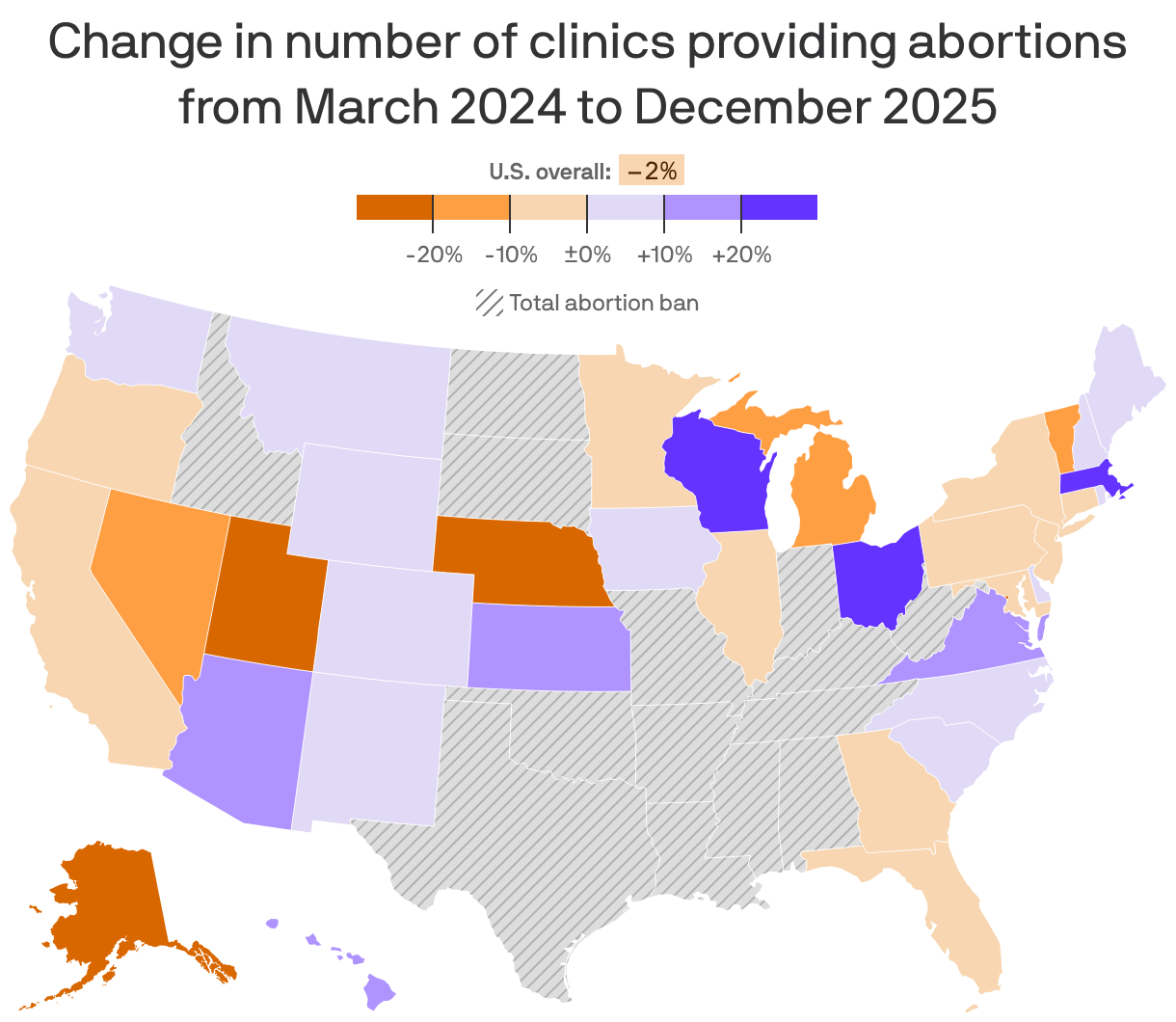
Federal funding freezes and new abortion restrictions likely reduced the number of brick-and-mortar abortion clinics over a 21-month period ending in December, while dozens of other providers also limited access to the procedure, according to a Guttmacher Institute report out today.
Why it matters: Physical clinics still provide about 80% of abortions in states without bans, even as telehealth-prescribed medication abortion becomes more prevalent.
What they found: The Trump administration's withholding of Title X funds from reproductive health networks such as Planned Parenthood likely contributed to the closure of three clinics in Michigan between March 2024 and December 2025.
Florida's ban on most abortions after six weeks, which took effect in May 2024, similarly factored in the closing of four clinics in that state.
But Missouri saw the opening of three clinics following voters' reversal of the state's post-Roe abortion ban in November 2024.
Reality check: Those numbers obscure significant churn in overall abortion access during the period studied, Guttmacher said.
51 clinics across the country that provided abortions as well as other kinds of health care stopped offering the procedure during the 21 months, while other clinics started offering the care.
Online-only clinics have become a critical new source of care, Guttmacher noted, even though brick-and-mortar clinics are usually the only option for those who need or prefer a procedural abortion.
Bayer has agreed to a $7.25 billion deal to settle tens of thousands of lawsuits that its weedkiller Roundup caused cancer.
The big picture: Bayer — which acquired Roundup when it bought Monsanto in 2018 — announced Tuesday that it'll compensate people who allegedly suffered non-Hodgkin lymphoma due to exposure to Roundup.
Employers who are wary of paying for workers' pricey weight-loss drugs are discovering a workaround: Offer coverage through a telehealth vendor and split the cost.
Why it matters: Workers want access to GLP-1s, and employers want to avoid the cost of obesity-related illness. But fewer than 20% of employers covered the medications for weight loss last year, according to KFF — and some laterditched them due to cost pressures.