Moderna rejection adds to vaccine cloud under Trump

Add Axios as your preferred source to
see more of our stories on Google.
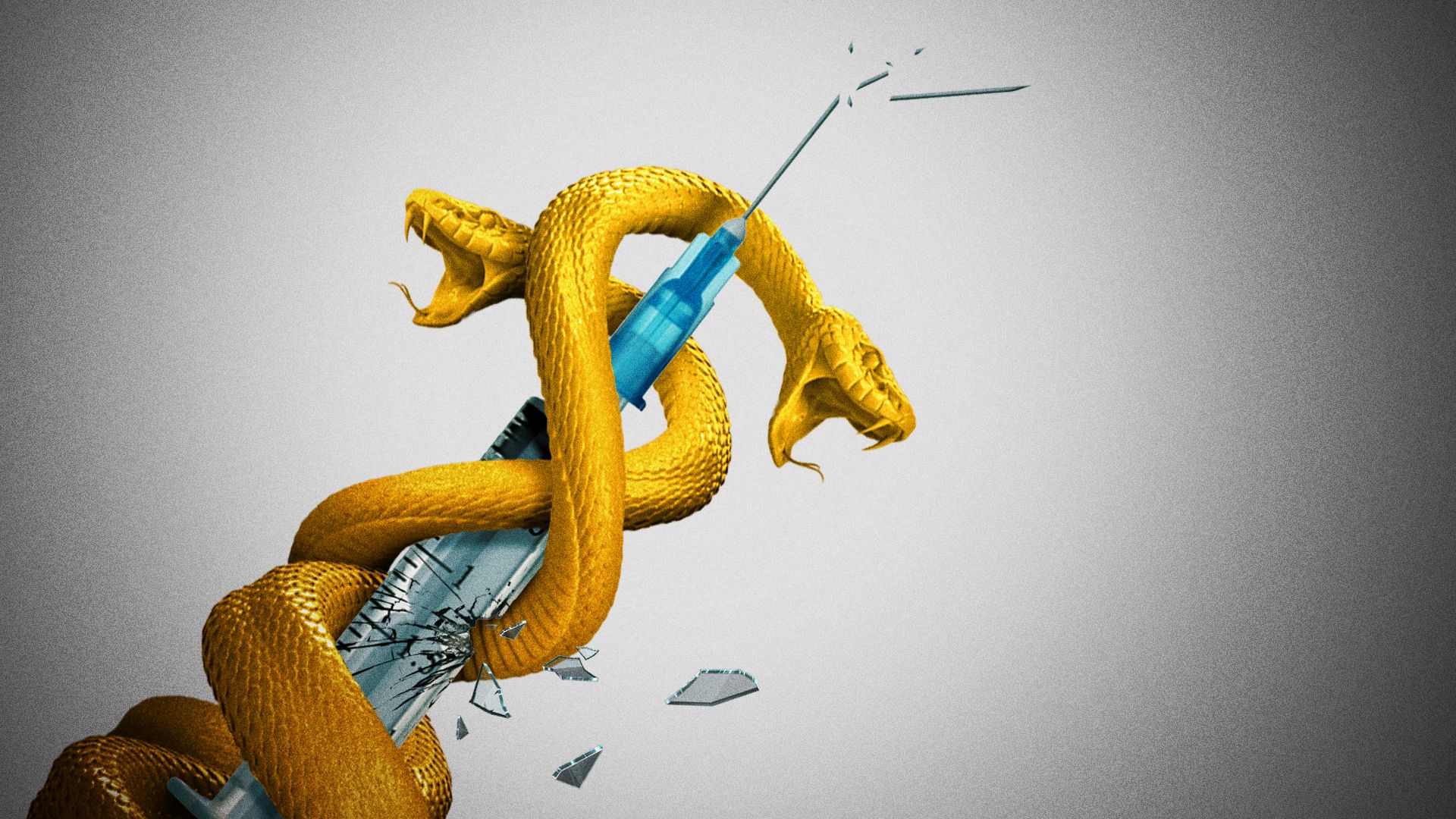
Illustration: Maura Losch/Axios
The Food and Drug Administration's refusal to review Moderna's mRNA flu vaccine is raising questions about how the Trump administration intends to treat other new products built around the technology.
Why it matters: Some medical experts warn that the U.S. will miss out on promising new vaccines if it does not embrace the technology, which powered the COVID-19 shots and could be adapted to target other diseases, including cancer.
Driving the news: The FDA's decision, which the company disclosed on Tuesday, comes after Health and Human Services last year canceled nearly $500 million in grants for developing new mRNA vaccines.
- Health Secretary Robert F. Kennedy Jr. argued at the time that mRNA vaccines are not effective against infections like COVID-19 and flu.
- Some conservative-led states have targeted mRNA vaccines amid ongoing suspicion of public health officials and the tools they used to fight the COVID-19 pandemic.
State of play: The FDA said that it rejected Moderna's application because the company refused to follow guidance on which current flu vaccine its new product should be compared with in its study, with FDA saying a higher-dose vaccine should have been used.
- Moderna countered that while the higher dose was recommended, the FDA had previously been open to using the standard-dose vaccine as a control, and the agency had not objected before the study began.
What they're saying: "It seems that the federal government, at this point, has decided unjustifiably against mRNA vaccines," said Amesh Adalja, a senior scholar at the Johns Hopkins Center for Health Security.
- He added that position "disincentivizes companies to use mRNA vaccine technology, which is really instrumental when it comes to infectious disease emergency preparedness and pandemic preparedness, because of the rapidity and the adaptability of that platform."
- Drug development experts raised concern that companies won't invest in long and expensive clinical trials if they think the FDA could move the goalposts at the end of the process.
The other side: A senior FDA official told reporters the decision was based on the design of Moderna's study and not any overarching objections to mRNA vaccines.
- Kennedy was "not directly or indirectly involved" in the FDA's decision on the Moderna shot, the senior FDA official said.
- "I would like to see more research with mRNA technology," the official added. "But I don't think the government should pay for it. These companies made over $50 billion on the mRNA COVID shot. They can fund their own research."
The intrigue: The decision on the Moderna shot drew swift condemnation from Democrats in Congress.
- "You could spend billions of dollars developing a drug, and then the FDA's going to not even consider it because of the quacks," said Rep. Frank Pallone (D-N.J.), the top Democrat on the House Energy and Commerce Committee.
