What Florida's new six-week ban means for abortion access

Add Axios as your preferred source to
see more of our stories on Google.
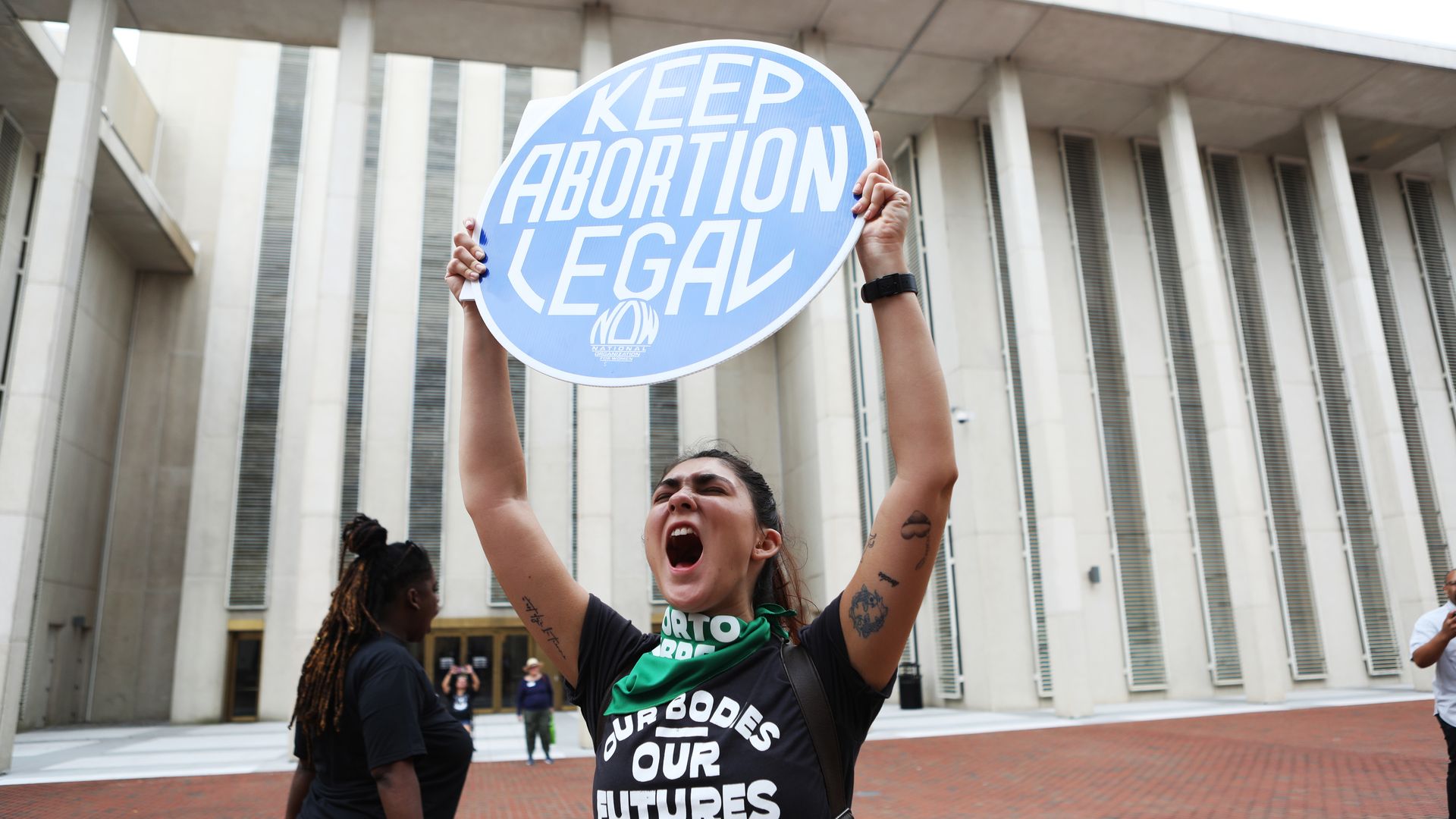
Faith Halstead chants along with other protesters and activists near the Florida State Capitol in April, as the six-week abortion ban moved through the Legislature. Photo: The Washington Post via Getty Images
When a statewide ban on most abortions after six weeks of pregnancy takes effect in a month, its implications for reproductive rights will reach well beyond Florida.
Why it matters: The ban, which the state Supreme Court cleared the way for on Monday, drastically reduces access to the procedure not just for Floridians but for people in neighboring states who have relied on the Sunshine State as a haven for access.
- States across the South have passed six-week or total bans since the fall of Roe v. Wade in June 2022.
Yes, but: The court also ruled on Monday that Florida voters will have a chance this November to enshrine abortion access until fetal viability — around 24-28 weeks of pregnancy — in the state constitution.
Catch up quick: The six-week ban passed by the state Legislature and signed by Gov. Ron DeSantis last April, was contingent on the state's high court upholding the legality of the 15-week ban currently in effect.
- The six-week ban will go into effect in 30 days, per the law.
Zoom in: The new ban includes carve-outs to save a pregnant person's life, to "avert a serious risk" to the patient's health, or in limited cases in which the fetus has a fatal abnormality.
- It also has exceptions up to 15 weeks for pregnancies caused by rape, incest or human trafficking — if the patient can back it up with certain documentation, such as a police report or court record.
Between the lines: Even in states with such exceptions, few have been granted, according to The New York Times.
- That includes two Florida women who were denied abortions even as their pregnancy complications put their lives at risk, the Washington Post reported. Both women survived.
Plus: Under the new law, women seeking abortion pills can only obtain them by seeing a doctor in person. And it bars state money from being used to help someone obtain an abortion outside of Florida.
By the numbers: Out-of-state patients are driving an increase in the number of abortions performed in Florida, according to state data.
- Doctors performed 84,052 abortions last year, about 1,500 more than in 2022. About two-thirds of that increase can be attributed to out-of-state patients.
- That spike was even more dramatic from 2021 to 2022, per WUSF.
Friction point: At stake in the lawsuit decided on Monday was whether a right to privacy enshrined in the state constitution applies to abortion.
- Court precedent said yes; justices ruled in 1989 that the privacy right extends to abortion access, writing that, "We can conceive of few more personal or private decisions concerning one's body that one can make in the course of a lifetime."
- That was also the intention of the woman who drafted it.
Yes, but: The court overturned that precedent in Monday's ruling.
- With the court's flip to a conservative majority under DeSantis, the decision was largely expected by legal experts and people on both sides of the abortion access debate.
The bottom line: With the six-week ban, Florida will go from being one of the freest states for abortion access to one of the most restrictive in a span of just two years.