Florida's post-Roe v. Wade abortion uptick

Add Axios as your preferred source to
see more of our stories on Google.
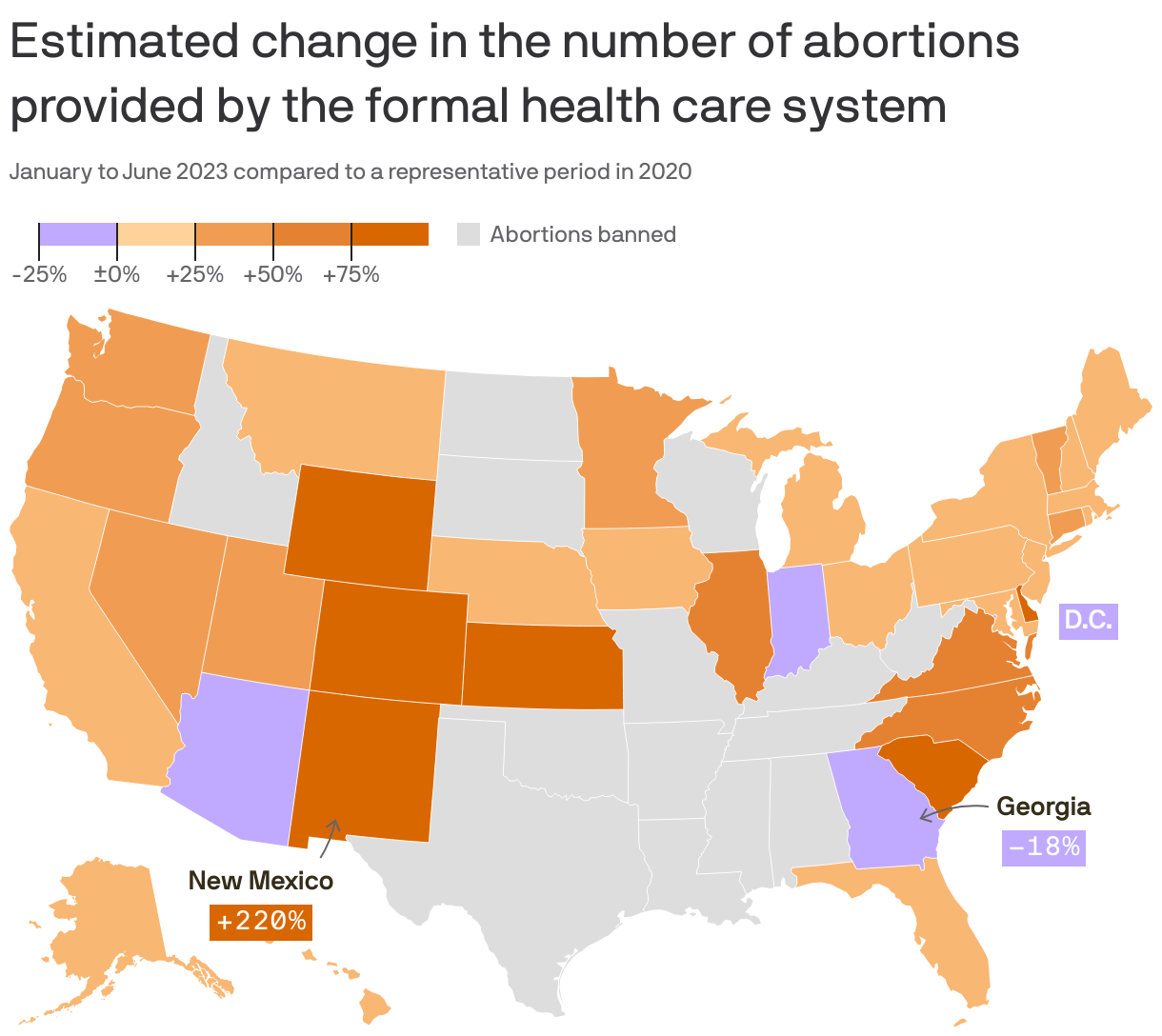
States near those that banned abortion after Roe v. Wade was overturned saw sharp increases in the number of procedures performed, likely due to an influx of out-of-state patients, according to a new analysis from the Guttmacher Institute.
Why it matters: Patients are proving highly motivated to travel to get the care they need, according to Guttmacher, a research organization that supports abortion rights. But for some, that involves overcoming logistical and financial challenges.
Zoom in: Florida has long been a refuge for people living in southern states with abortion bans. The state saw a 13% increase in the procedure over the last three years, based on a comparison of 2020 and 2023 data for the first six months of each year.
- We also saw one of the largest increases in total number of abortions in the six months after the Dobbs decision.
- We're likely picking up patients from Georgia, whose number of abortions went down 18% over the last three years. The state's six-week abortion ban went into effect last summer.
Yes, but: As Florida's abortion bans go back and forth in court, patients are confused about how to navigate the system.
Reality check: Florida's six-week ban is on hold while a lawsuit against the 15-week ban, which is currently in effect, makes its way through the court system.
- The case is before the conservative-leaning state supreme court, which has not yet scheduled oral arguments.
The latest: Floridians Protecting Freedom, a coalition aiming to put abortion access on next year's ballot, reached the signature threshold needed to trigger a supreme court review of the ballot question's language.
- The group needs more than 800,000 signatures by February to get it in front of voters in 2024.