Why it matters: The decline marks a loss of trust after the Trump administration's politicization of one of the world's preeminent public health agencies.
Almost 14% of households across the country experience food insecurity. They are part of communities that regularly lack access to food, especially nutritious options like fresh fruits and vegetables. Healthier communities lead to healthier people.
U.S. hospitals performed more than 200,000 unnecessary back surgeries on older adults that cost taxpayers $1.9 billion, according to a new analysis of Medicare and Medicare Advantage claims data.
Why it matters: The findings from the Lown Institute track with earlier studies but come as Medicare administrators step up scrutiny of low-value services that often have limited effectiveness, by using clinical reviews and AI.
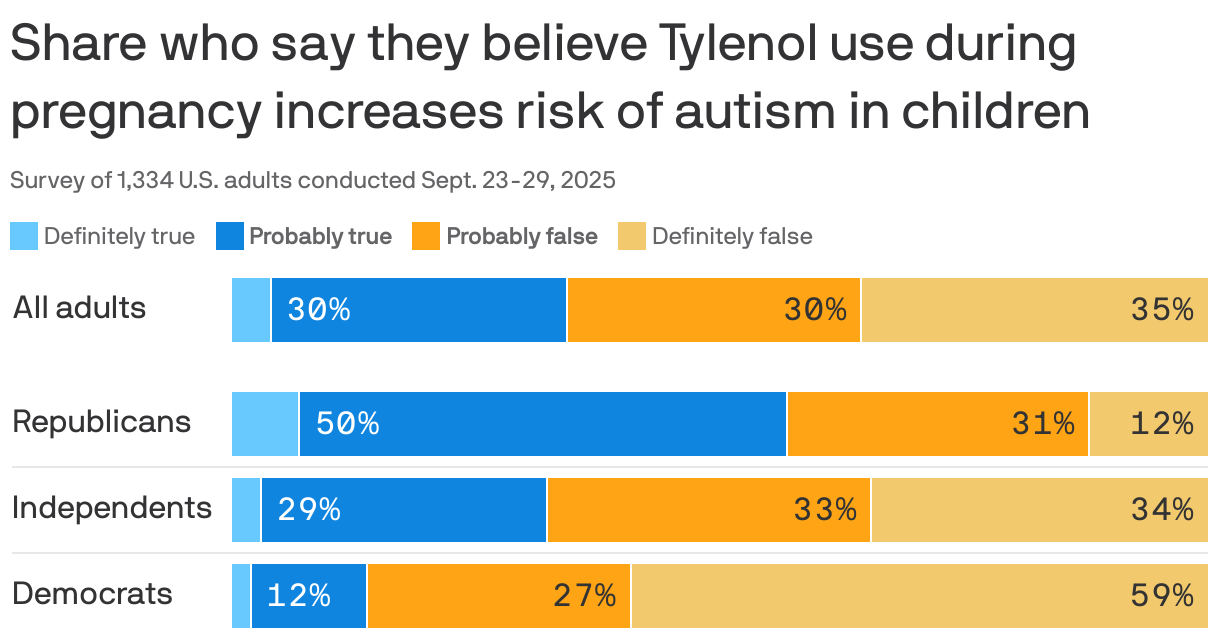
Most Americans aren't sure what to make of President Trump's claim that taking Tylenol during pregnancy can increase the risk of autism in children, but few are accepting it as fact, a new KFF poll finds.
Why it matters: There are deep partisan divisions on the question, just as there are on vaccines, the pandemic response and other health issues.
Drug companies' increasing willingness to negotiate deals with the Trump administration and voluntarily cut some prices may be making a splash, but the real-world impact will probably be underwhelming.
Why it matters: The pharmaceutical industry's compromises so far can be best viewed as attempts to avoid tariffs or undesirable regulatory action by the Trump administration. And it's anyone's guess as to whether they'll be successful.
The road to futuristic nuclear power is long and paved with… cancer drugs?
The big picture: Several nuclear startups are pursuing profits on offshoot products stemming from scientific innovations — such as ingredients in cancer-treating drugs — to fund long journeys toward profiting on their primary business.
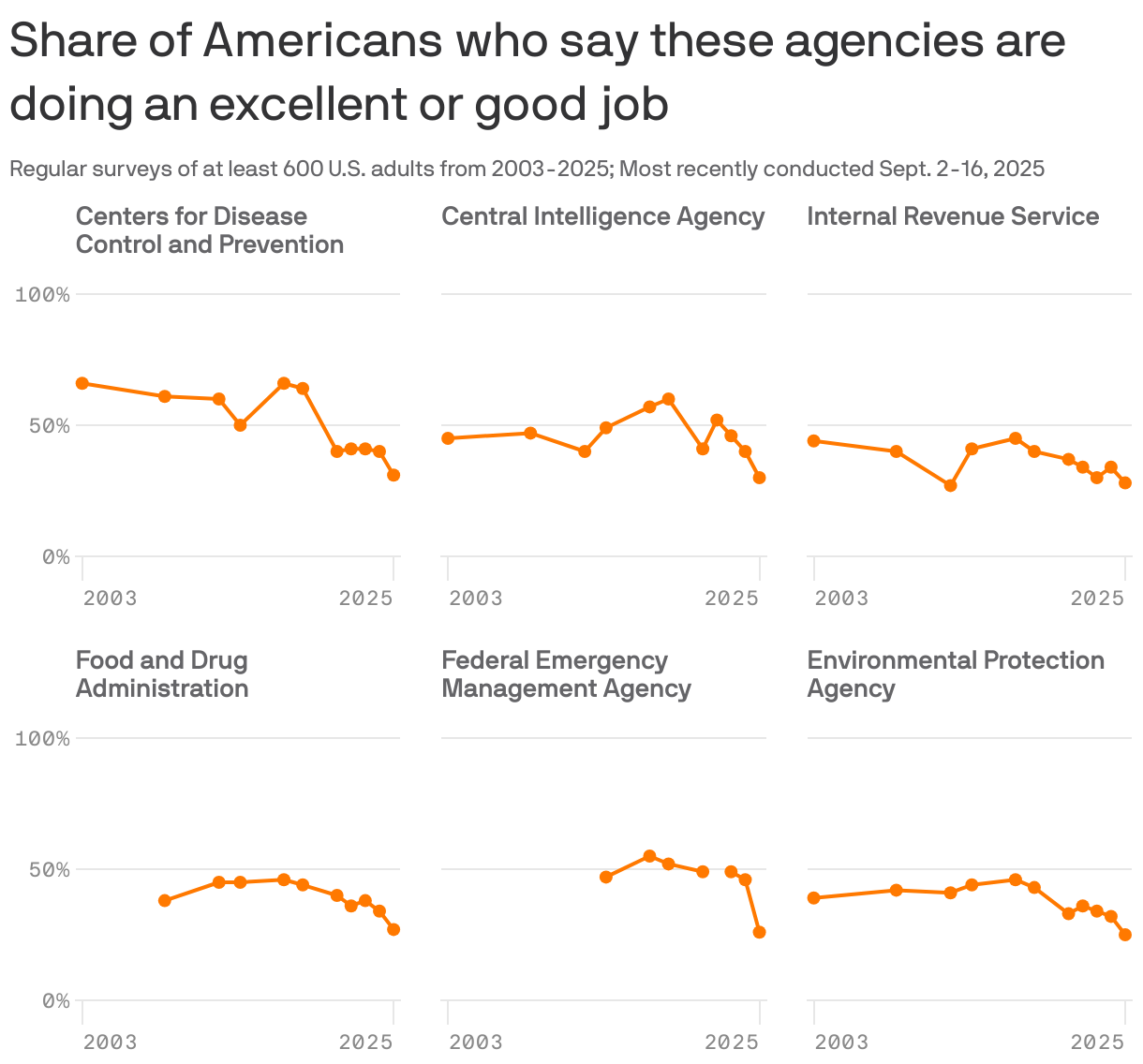
Americans' approval ratings for six major federal agencies — FEMA, CIA, CDC, FDA, EPA and the IRS — have dropped sharply since 2024, according to a Gallup poll released Thursday.
The big picture: Many of these agencies sit at or near their lowest approval levels in Gallup's records, which date back to 2003, signaling an overall increase in dissatisfaction toward the U.S. government.
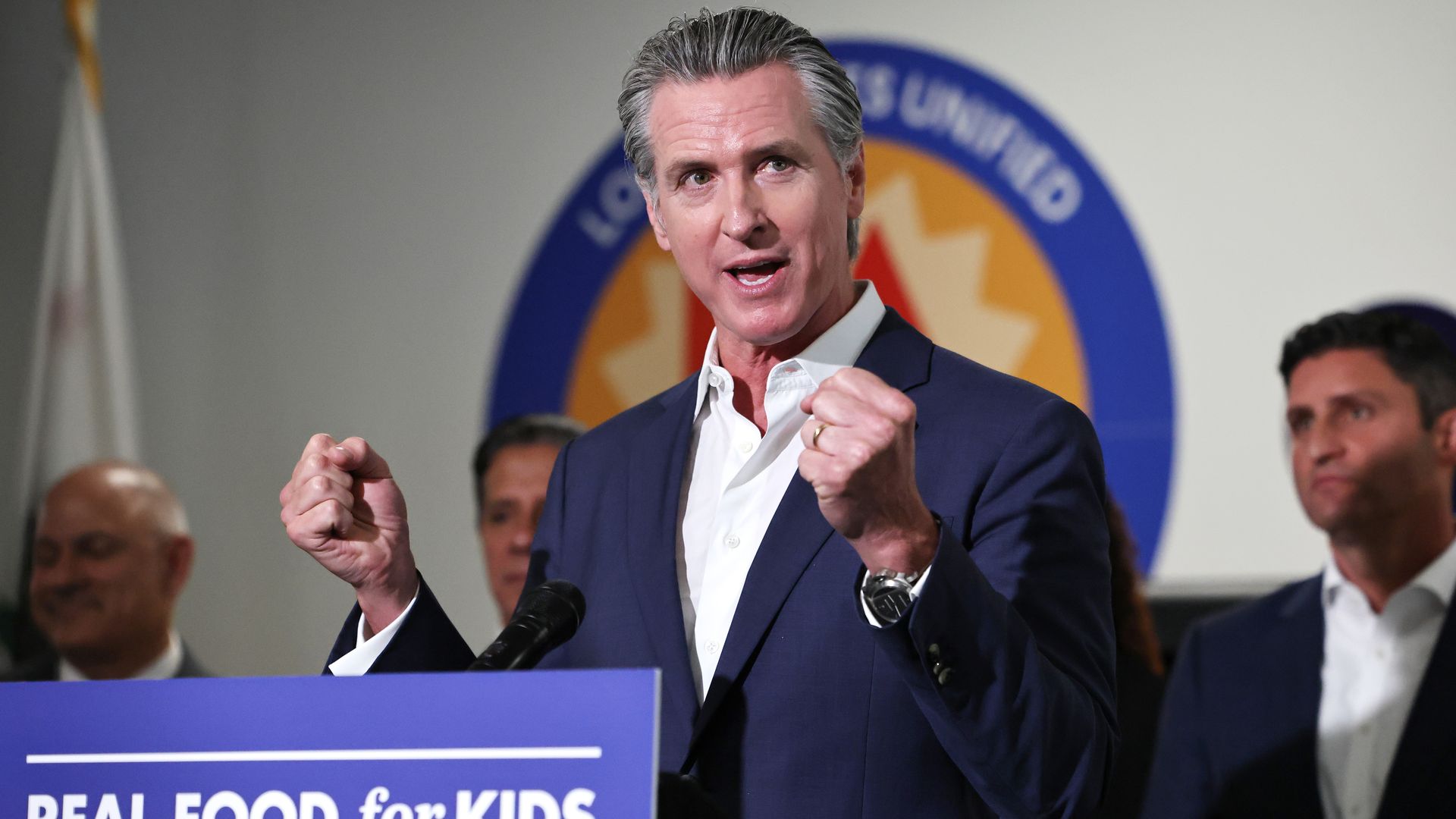
California Gov. Gavin Newsom signed legislation Wednesday to phase out "the most concerning" ultra-processed foods phased from school meals over the next 10 years, per a statement from the governor's office.
Why it matters: California is the first U.S. state to pass such a law and also the first to require that a statutory definition of ultra-processed foods (UPF) be provided.
Mel Robbins has built a media empire around giving people advice and coaching in simple, blunt, effective terms.
But for every piece of good guidance out there, there's plenty of bad advice too. Axios CEO Jim VandeHei interviewed Robbins for "The Axios Show" and asked her some of the worst tips she hears — and what to do instead.
Here are 3 truisms that just aren't true, according to Robbins, author of the bestselling "The Let Them Theory":
Some moderate Senate Democrats say they are open to placing an income cap on eligibility for Affordable Care Act tax credits to help facilitate a deal with Republicans.
Why it matters: The way high earners can tap ACA tax credits is helping drive Republican resistance to renewing the subsidies.An income cap is almost essential to a potential deal, whether as part of negotiations to reopen the government or as part of a health care package later this year.
Whole Foods Market says 2026 will be all about fiber, fat and freezer meals — as consumers chase gut health, back-to-basics cooking and restaurant-quality convenience.
Why it matters: The grocer released its annual trends report Wednesday — a forecast that often foreshadows what ends up in grocery aisles and where food brands will chase consumer dollars next.
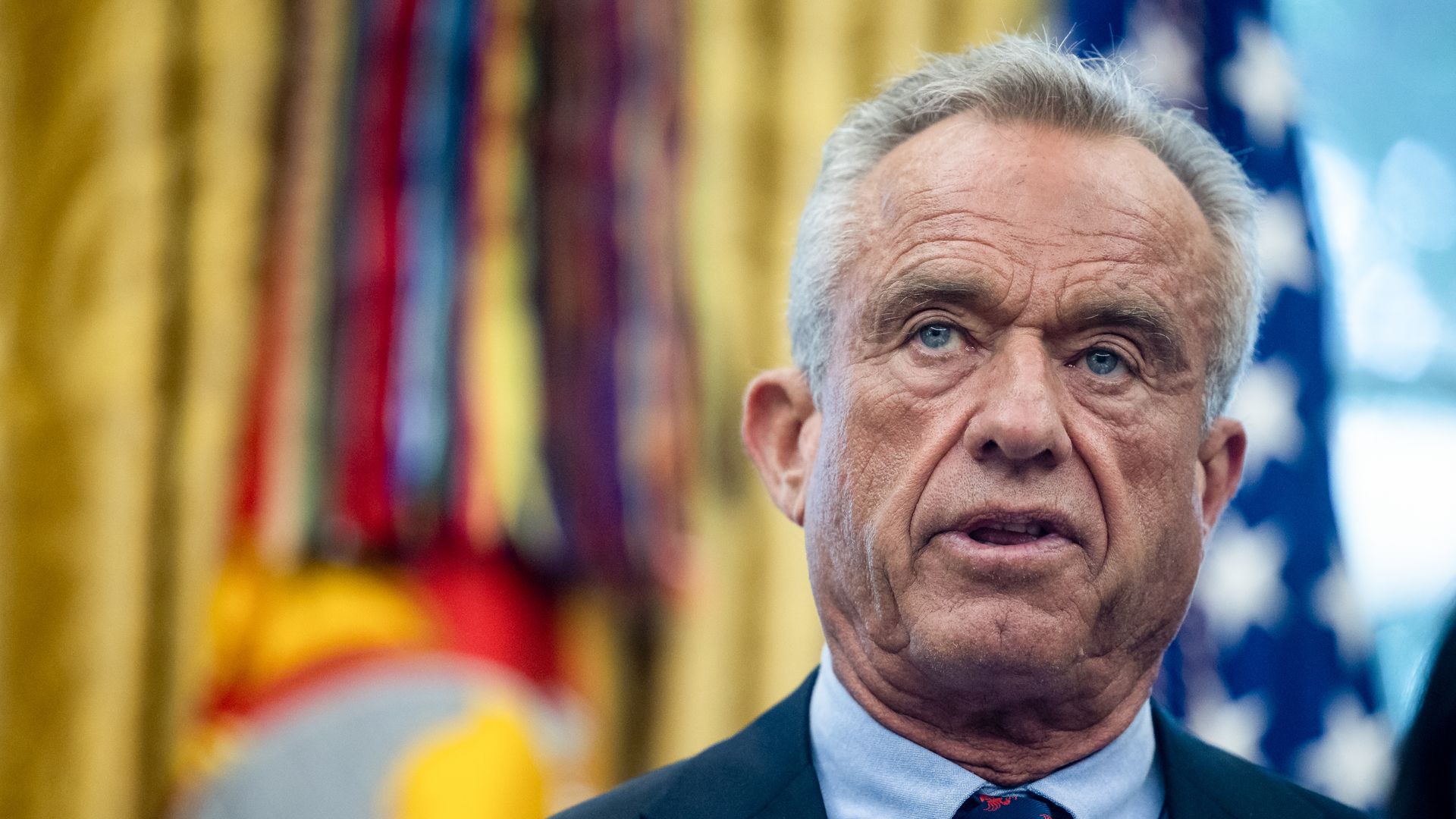
Six former U.S. surgeons general on Tuesday joined a growing list of credentialed medical experts and others in health circles to raise alarm about Health Secretary Robert F. Kennedy.
Why it matters: The common theme is Kennedy's disregard for evidence-based science is dangerous, particularly when it comes to vaccines.
The Health and Human Services Department last week ordered the federal organ procurement and transplant network to halt many operations until the government shutdown is over, Axios has learned.
Why it matters: Patients will still be able to receive and donate organs, but many compliance and policy development activities will stop for the remainder of the shutdown, according to the United Network for Organ Sharing.
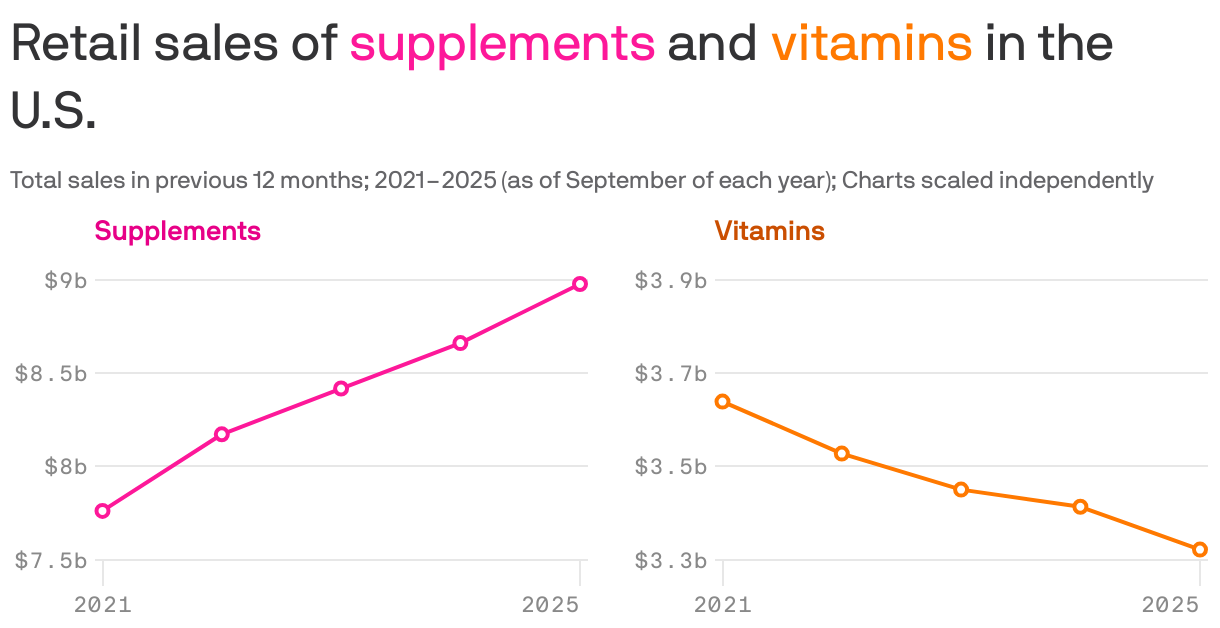
Data: NielsenIQ U.S. xAOC; Note: Tracked sales from brick-and-mortar stores; Chart: Jacque Schrag/Axios
Sales of supplements, which typically contain multiple ingredients, are outselling main-ingredient vitamins (think: vitamin C or D capsules), according to data from NielsenIQ.
Why it matters: Consumers are pouring more money into products promising weight loss, sleep and stress relief — part of a bigger global shift toward spending on wellness.
Health and Human Services Secretary Robert F. Kennedy Jr. has been portrayed as supplements' savior, but his FDA plans may not go down easy.
Why it matters: Millions of Americans take supplements, and how the federal government treats them impacts everything from individual health to a booming business' bottom line.