A Justice Department attorney who defended the availability of abortion pills in a high-profile case during the Biden administration will be the Food and Drug Administration's top lawyer, a choice made by commissioner-designate Marty Makary.
Why it matters: The future of access to medication abortion — specifically mifepristone — is a hot-button issue facing the Trump administration and was a key line of questioning at Makary's Senate confirmation hearing last week.
The surge of online weight-loss drug providers is unexpectedly fueling demand for a much older, once-stigmatized treatment: hormone replacement therapy.
Why it matters: Facing a dearth of providers for treating menopause symptoms including weight gain, women are looking for answers online and increasingly finding all-in-one hubs run by top telemedicine companies.
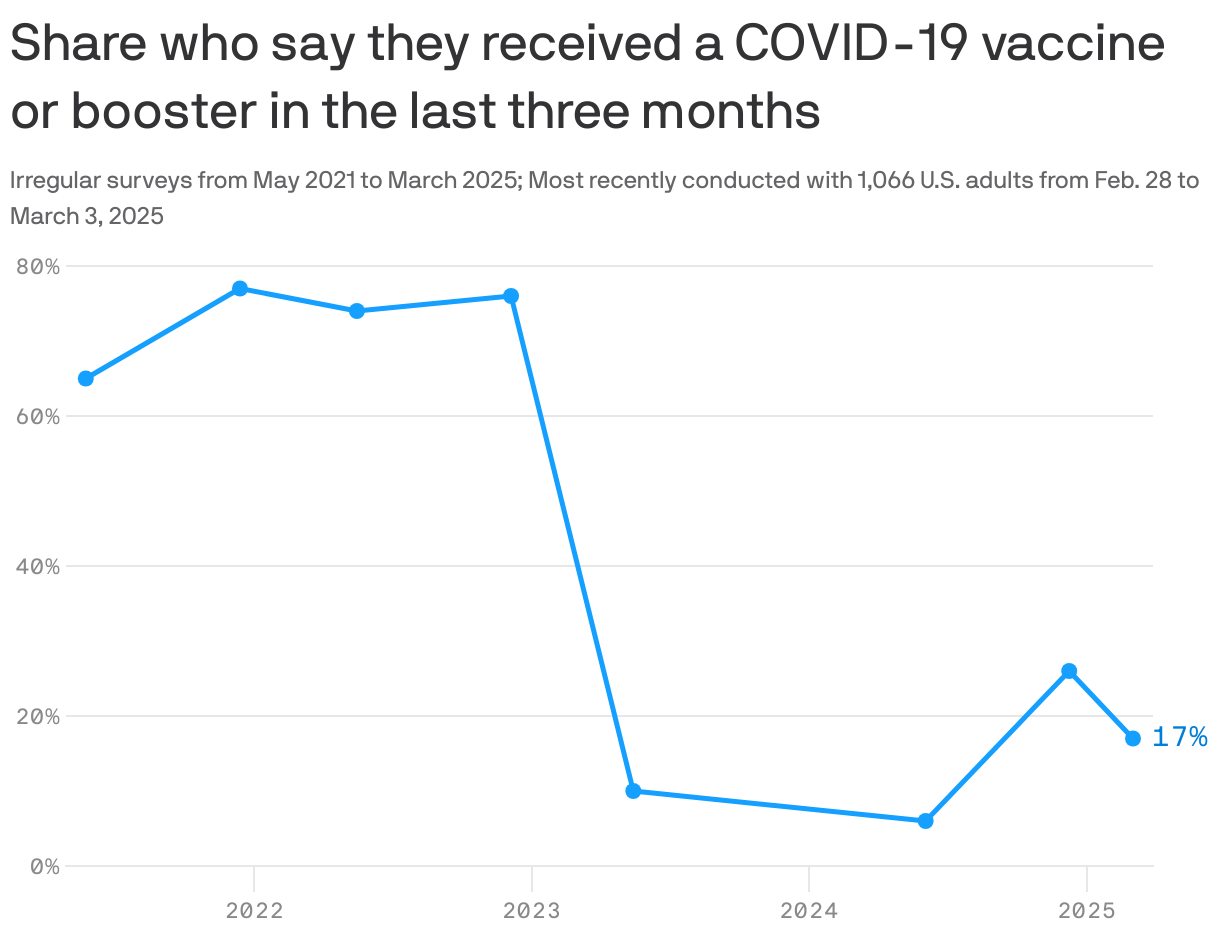
Five years after the COVID pandemic began, its legacy is as much political as epidemiological, according to a comprehensive new Axios-Ipsos poll, with Americans' views of what happened cleaved by partisanship and media preferences.
The big picture: 39% say they know someone who died. Everybody wants to leave the era behind. Yet two-thirds of Americans don't believe the nation is adequately prepared to deal with another pandemic or widespread health crisis, according to the Axios-Ipsos American Health Index.
Former Philippine President Rodrigo Duterte was taken into custody at Manila's international airport on an Interpol arrest warrant from the International Criminal Court on Tuesday morning local time, local officials said.
Pope Francis' health condition continues to improve and he's no longer facing immediate threat of dying from pneumonia, according a Monday update from the Vatican.
The big picture: After nearly a month hospitalized, the 88-year-old Catholic church leader's "clinical condition remains stable," though he'll have to remain in a hospital to continue treatment, the Vatican said.
Consumer health innovation is key to addressing challenges, like self-care access, health literacy and holistic wellness.
Rachel Koontz, Bayer's head of R&D for consumer health North America and global therapeutics, shares how the company leads the way with sustainable, science-backed products tailored to evolving health care needs.
The Trump administration wants to roll back Biden-era changes to make signing up for Affordable Care Act marketplace plans easier for certain individuals and limit coverage of gender-affirming care.
Why it matters: The Centers for Medicare and Medicaid Services said in a notice Monday that the changes would reduce improper federal spending on premium tax credits for marketplace plans by $11 billion.
The Federal Trade Commission under President Trump is making its first move to challenge private equity in health care, by suing to block the $627 million acquisition of a maker of specialized coatings for catheters and other medical devices.
Why it matters: It's the first such FTC action around M&A since Trump was sworn in and could signal continued regulatory scrutiny as private equity buys more health care firms.
The National Institutes of Health plans to centralize its peer review operations for the grants and research contracts it awards, reportedly eliminating certain jobs at the agency.
Why it matters: The agency said thechange, announced Thursday, is aimed at removing bias from the grant awards process and making NIH more efficient. But it's fueling concerns about more layoffs and political influence over science.
COVID-19 put public health officials on the front lines against a once-in-a-lifetime threat. It's left them with less power and resources to respond to future emergencies.
Why it matters: Instead of strengthening America's public health infrastructure, the pandemic experience spawned hundreds of new laws in at least 24 states limiting public health orders or otherwise undercutting emergency responses.
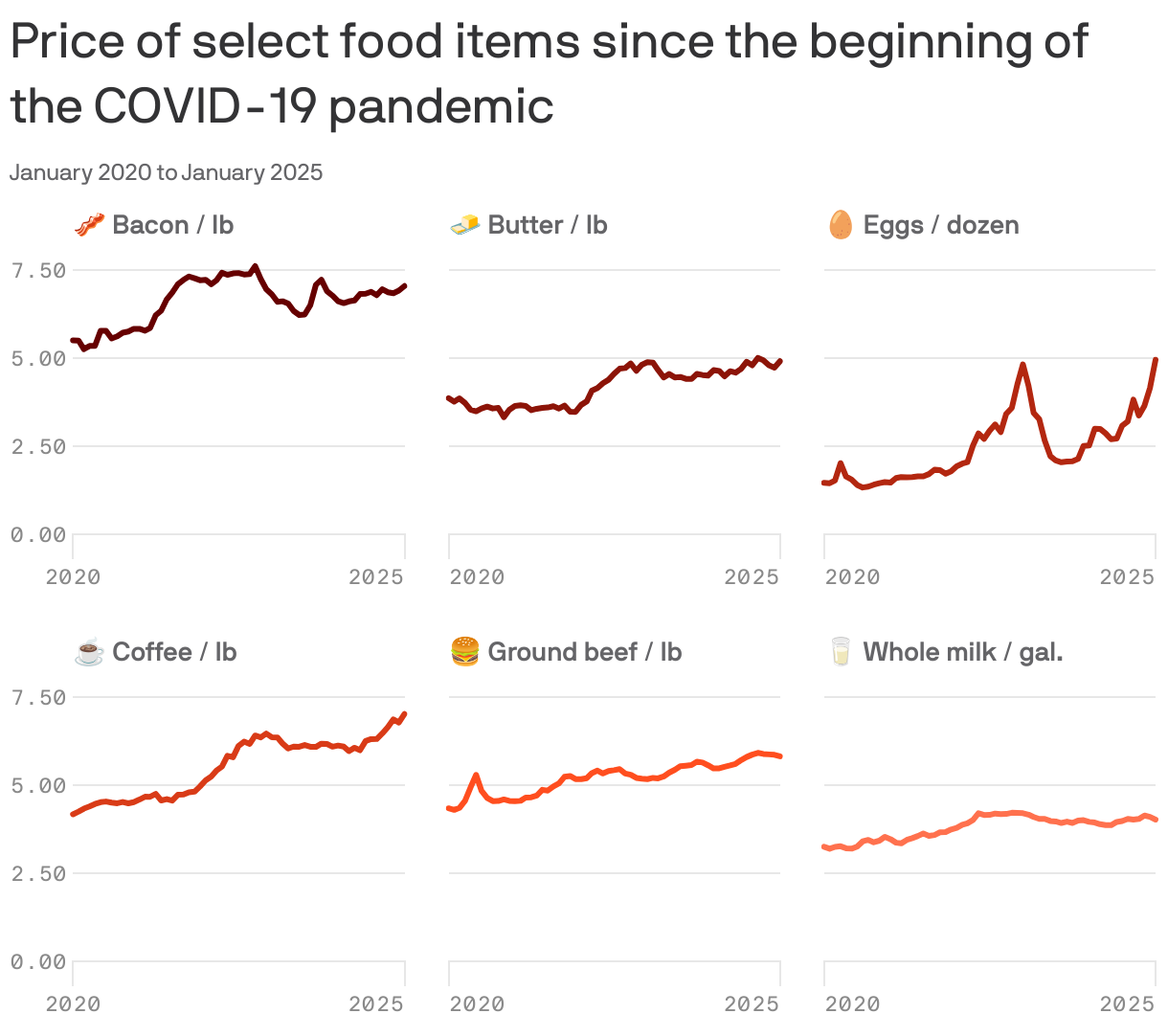
Sticker shock at the grocery store became a fact of life during the pandemic as food prices skyrocketed.
Why it matters: Higher prices have been unavoidable ever since — but five years since the start of COVID, new tariffs and retaliatory action could cause food prices to rise again.