The Trump administration wants to roll back Biden-era changes to make signing up for Affordable Care Act marketplace plans easier for certain individuals and limit coverage of gender-affirming care.
Why it matters: The Centers for Medicare and Medicaid Services said in a notice Monday that the changes would reduce improper federal spending on premium tax credits for marketplace plans by $11 billion.
The Federal Trade Commission under President Trump is making its first move to challenge private equity in health care, by suing to block the $627 million acquisition of a maker of specialized coatings for catheters and other medical devices.
Why it matters: It's the first such FTC action around M&A since Trump was sworn in and could signal continued regulatory scrutiny as private equity buys more health care firms.
The National Institutes of Health plans to centralize its peer review operations for the grants and research contracts it awards, reportedly eliminating certain jobs at the agency.
Why it matters: The agency said thechange, announced Thursday, is aimed at removing bias from the grant awards process and making NIH more efficient. But it's fueling concerns about more layoffs and political influence over science.
COVID-19 put public health officials on the front lines against a once-in-a-lifetime threat. It's left them with less power and resources to respond to future emergencies.
Why it matters: Instead of strengthening America's public health infrastructure, the pandemic experience spawned hundreds of new laws in at least 24 states limiting public health orders or otherwise undercutting emergency responses.
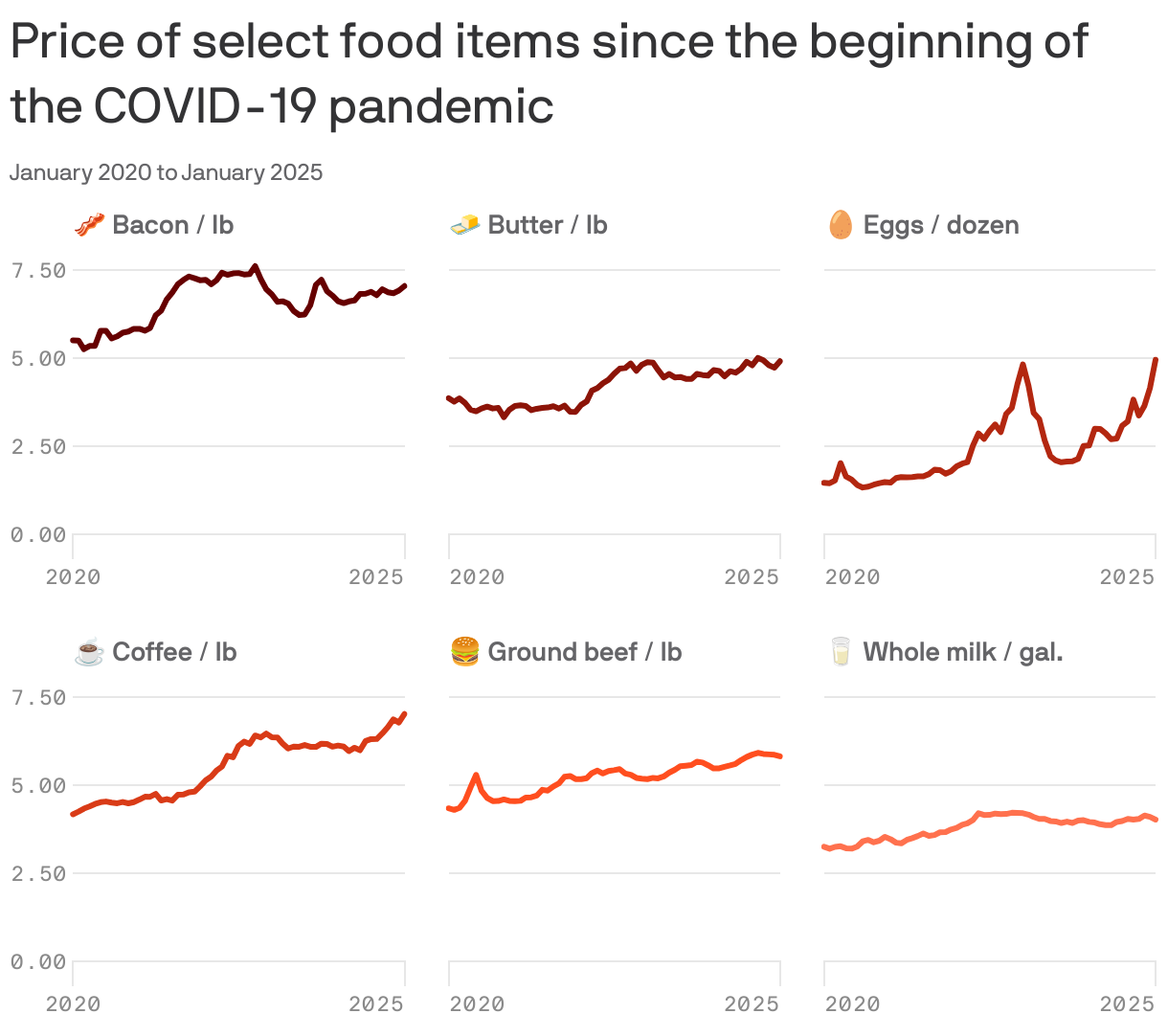
Data: U.S. Bureau of Labor Statistics; Chart: Danielle Alberti/Axios
Sticker shock at the grocery store became a fact of life during the pandemic as food prices skyrocketed.
Why it matters: Higher prices have been unavoidable ever since — but five years since the start of COVID, new tariffs and retaliatory action could cause food prices to rise again.
One of the biggest forces that contributed to President Trump's defeat in 2020 also helped propel him to the White House in 2024.
Why it matters: The pandemic pushed voters — from young men to suburban parents — to the right, fueling Trump's decisive victory and raising questions about Democrats' ability to hold onto once-reliable blocs.