Friday's health stories

Drug industry sees partnership with Trump, RFK Jr.

The pharmaceutical industry is framing itself as a key partner for President Trump and HHS Secretary Robert F. Kennedy Jr. in their push to address America's chronic disease burden.
- The problem: Kennedy doesn't seem to be buying it.
Why it matters: One of America's most powerful industries is in uncharted territory. It's now in the position of convincing critics that its products are not just safe, but crucial to solving the country's diciest health problems.
Driving the news: The PhRMA forum, held this week at one of D.C.'s coolest concert venues, featured a stream of not-so-subtle indications that the industry wants to make the case that the best way to reduce the country's chronic disease burden is to find more and better drugs to treat chronic conditions.
- Attendees received name tag lanyards with the event's slogan — "Commitment to a Healthier America" — printed at the top.
- While speakers hit on familiar policy goals, such as cracking down on pharmacy benefit managers and removing the government's hand from drug pricing, there was a lot of talk about how to keep people out of hospitals through more preventative care.
Pharmaceutical leaders kicked off Kennedy's tenure at the helm of HHS not with defensiveness or aggressiveness, but with declarations of optimism and mutual goal-sharing.
- "We have a disruptor-in-chief in President Trump and a new HHS secretary — both of which are committed to overturning the status quo," PhRMA president and CEO Steve Ubl said in his remarks at the industry group's policy forum this week.
- "We embrace disruption because we are disruptors," he added. "We see an opportunity to fix what's broken, to get more impact out of every health care dollar we spend and to make America healthier by launching a new era of medical innovation."
- "What we need to do is keep people well," GSK CEO Emma Walmsley told me in an offstage interview. "Making the country healthier is a really good idea. But people should see the drug industry not as the enemy in that, but as part of the solution."
And speakers made it blatantly clear that former President Biden was bad for the industry, while Trump has the potential to be very good.
- "I truly believe that the opportunities truly outweigh the risks," Pfizer CEO Albert Bourla told the crowd.
- While a big partnership on vaccines is "probably not" in the cards, such a partnership on cancer or chronic disease could "absolutely" happen, Bourla added.
But at nearly the same time, Kennedy's welcoming remarks to HHS staff threw some cold water on the idea of an intimate partnership.
- After a long list of chronic disease statistics, he said, "Our only solution to these issues seems to be more and more pharmaceutical interventions that don't seem to be alleviating the problem, and in many cases, appear to be worsening it. Overmedication, particularly in children, is a growing issue."
- As has been widely reported, the childhood vaccine schedule and psychiatric drugs were both on Kennedy's list of possible contributors to chronic disease that will be investigated.
- There is no evidence that childhood vaccines are unsafe or cause chronic disease, and Kennedy has amplified debunked conspiracy theories about vaccines.
- "Secretary Kennedy put PHARMA on notice that solutions to the chronic illness epidemic are going to be found upstream through prevention not through pharmaceutical interventions," texted David Mansdoerfer, a former senior HHS official in the first Trump administration.
An assessment of the threat posed by psychiatric and weight-loss drugs was also ordered in a recent executive order from the White House this week establishing a "Make America Healthy Again Commission."
- Just yesterday, the first meeting of the CDC vaccine advisory committee since Kennedy's confirmation was postponed, creating more consternation over how Kennedy will approach vaccines as secretary.
- HHS also ordered the CDC to shelve some vaccine promotions, saying Kennedy wants ads that feature "informed consent" in vaccine decision-making instead, STAT reported later yesterday.
- And Kennedy is planning to replace members of vaccine advisory committees that he perceives to have conflicts of interest, Politico reported.
Drug company and PhRMA executives once again met with Trump yesterday, though to what avail is unclear.
- "PhRMA president and CEO Steve Ubl and members of our board had a productive conversation with President Trump today. We expressed our commitment to strengthening American leadership in biopharmaceutical innovation, revitalizing domestic manufacturing and lowering costs for patients," said Alex Schriver, PhRMA's senior vice president of public affairs.
Reality check: Yes, the drug industry hates that Medicare now negotiates the prices of some drugs. But the new law has, so far, failed to cause much of a hit to big drug companies' finances, and there is plenty of reason to think things may actually get worse for the industry under the Trump administration.
- Put aside Kennedy's vaccine history, he and Trump have both been critical of the fact America pays so much more for drugs than other wealthy countries.
- If that criticism ever turns into meaningful policy, it could hit the industry way harder than Biden's Medicare negotiations.

If you can't beat 'em, join 'em
The pharmaceutical industry is framing itself as a key partner for President Trump and HHS Secretary Robert F. Kennedy Jr. in their quest to alleviate America's chronic disease burden.
- The problem: Kennedy doesn't seem to be buying it.
Why it matters: One of America's most powerful industries is in uncharted territory. It's now in the position of convincing critics that its products are not just safe, but crucial to solving the country's diciest health problems.
Driving the news: The PhRMA forum, held this week at one of D.C.'s coolest concert venues, featured a stream of not-so-subtle indications that the industry wants to make the case that the best way to reduce the country's chronic disease burden is to find more and better drugs to treat chronic conditions.

Scoop: Senate Dems squeeze GOP on Trump's IVF promise
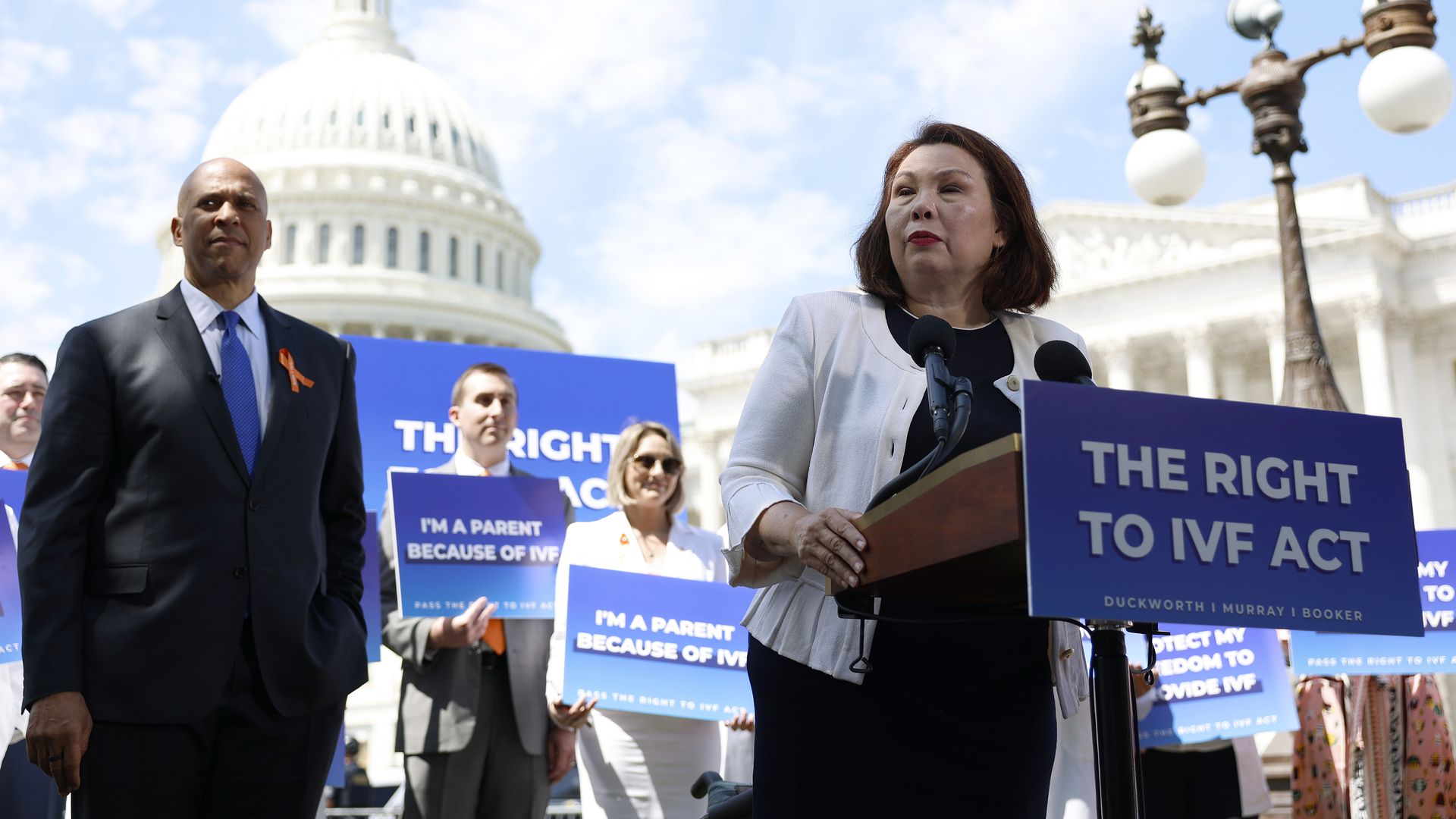
Senate Democrats want to force Republicans to vote on mandating insurance coverage of IVF as part of a debate over the GOP's budget resolution, Axios has learned.
Why it matters: President Trump signed an executive order meant to expand access to IVF this week, but Democrats say the directive is toothless.

HHS postpones first vaccine advisory meeting of RFK era
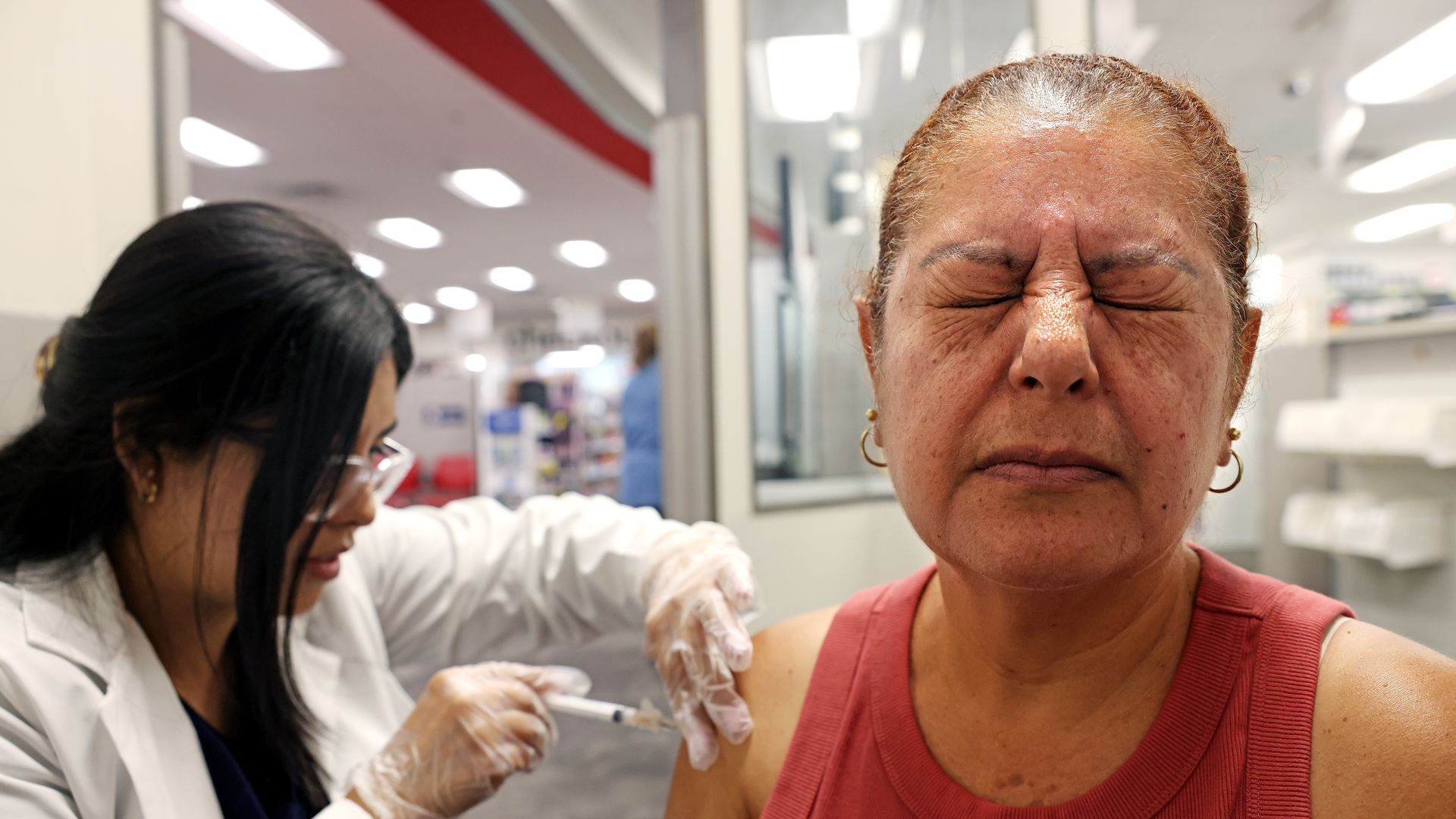
The first CDC vaccine advisory committee meeting since Robert F. Kennedy Jr. was sworn in as HHS secretary has been indefinitely postponed, the department confirmed.
Why it matters: The Advisory Committee on Immunization Practices, or ACIP, offers guidance on vaccine approvals and influences which shots insurers cover.

Global warming's deadly toll on hospitals
Heat waves can gum up hospitals enough to bring deadly consequences even beyond patients directly afflicted, a new study finds.
Why it matters: It's the first estimate of extreme heat that "unpacks the direct from the indirect effects that arise due to hospital congestion," it states.
Catch up quick
💰 Health care executives paid millions of dollars to attend at least six different dinners with now-President Trump before he took office. (WSJ)
👉 Men die younger than women. Is it time for a focus on men's health? (NPR)
🏥 A Walmart heir's foundation is going to build health care facilities, starting with a 100-acres campus in Arkansas. (Axios)
Oz to divest from HCA Healthcare and UnitedHealth if confirmed
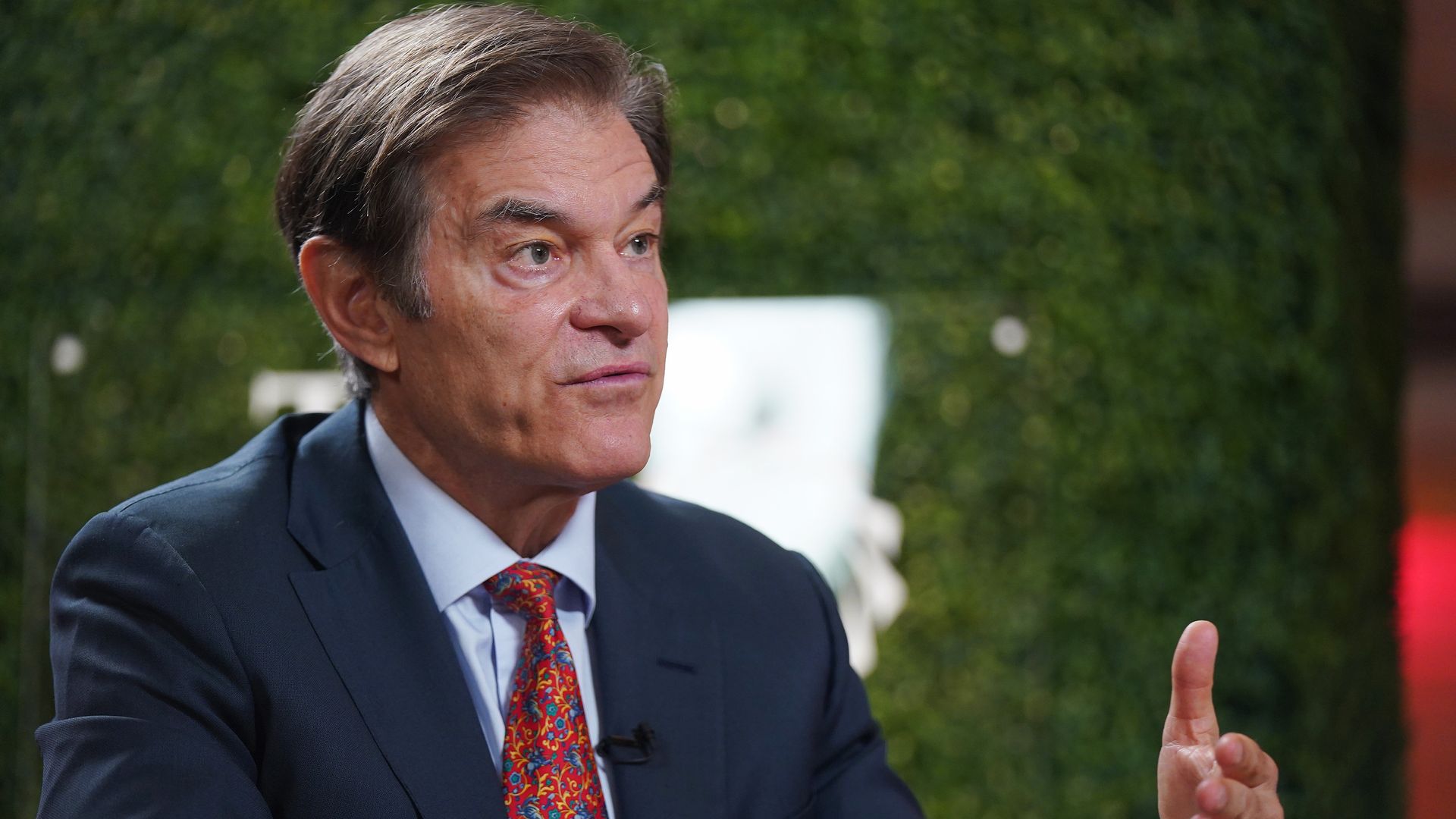
Mehmet Oz, Trump's nominee to lead the Centers for Medicare and Medicaid Services, pledged to divest his investments in hospitals and insurers if confirmed to lead the agency, he said in a filing with the Office of Government Ethics.
Why it matters: As CMS chief, Oz — better known as Dr. Oz — would oversee the largest health care purchasers in the U.S. that do business with and regulate many of the companies he's currently invested in.
Fed workforce cuts hit FDA foods program
A Food and Drug Administration division that went through a major reorganization to address concerns about food safety was caught up in the Trump administration's federal workforce cuts.
Why it matters: The fledgling Unified Human Foods Program was created in the wake of high-profile safety failures, including the baby formula crisis, and was the agency's key resource on improving food safety as well as nutrition policy.

Trump administration to defend ACA preventive services mandate

The Trump administration told the Supreme Court late Tuesday that it intends to defend the Affordable Care Act's requirement that insurers cover certain recommended preventive services at no cost to patients.
Why it matters: President Trump's past moves to dismantle ACA requirements stoked speculation in health and legal circles that he might not defend the law in a high court review.

Insurers push back on Medicare and Medicaid coverage for GLP-1s

Health plans are lobbying the Trump administration to scrap a proposal dating from the final days of the Biden administration that would require Medicare and Medicaid to cover anti-obesity drugs, including GLP-1s, for weight loss.
Why it matters: The final decision, expected in April, is an important barometer of which health care interests have President Trump's ear, since many providers, patients and drugmakers want Medicare to cover the products.

Fatal drug overdoses are falling — but not everywhere
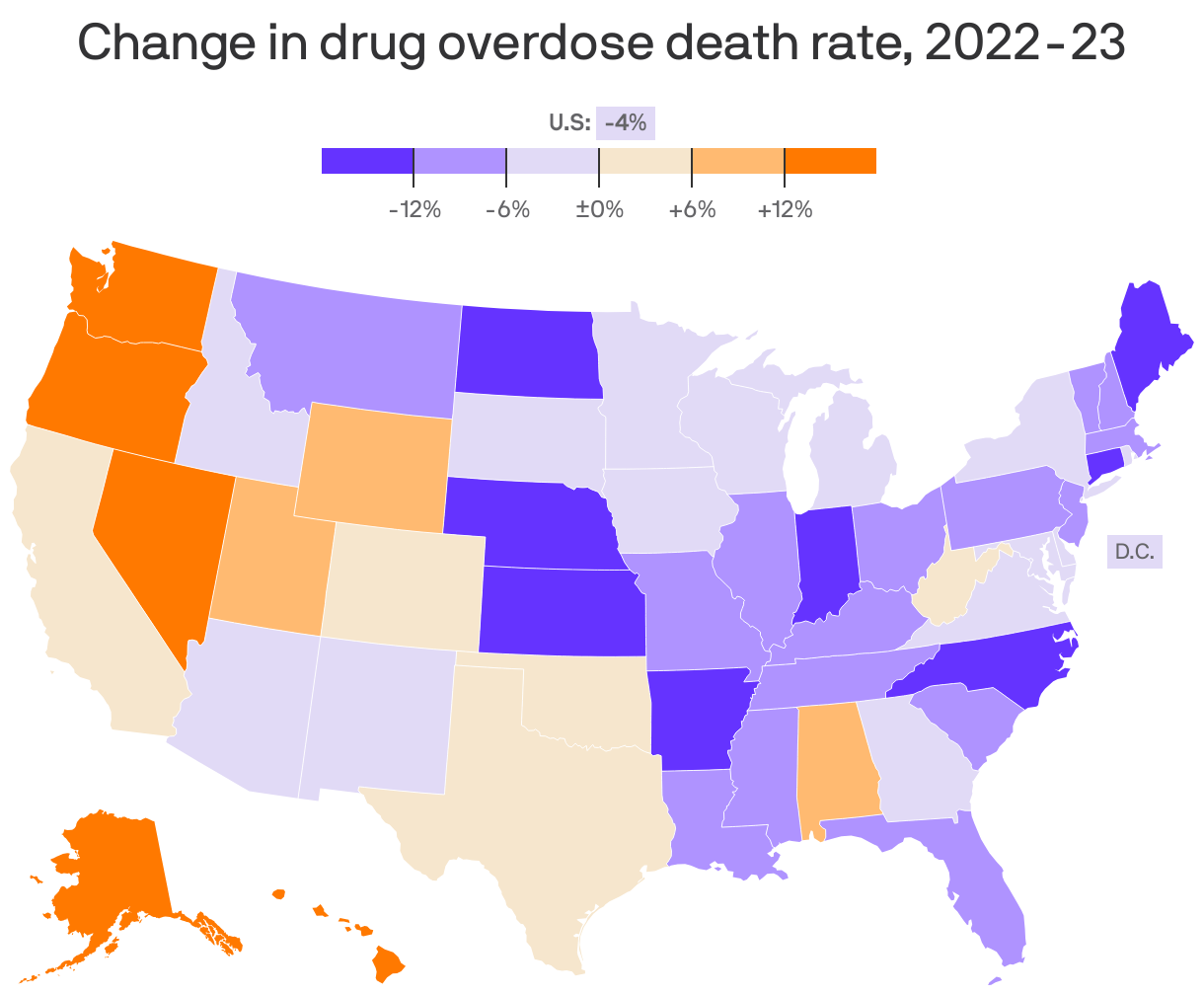
The fatal drug overdose rate fell 4% nationwide from 2022 to 2023, per new CDC data — but grew notably out West and up in Alaska.
Why it matters: Overdose deaths seem to be falling as pandemic-era isolation ebbs and access to life-saving medications like Naloxone grows.
HHS redefines sex as "immutable" in new guidance
The Department of Health and Human Services will define sex as an "immutable biological classification" and only recognize males and females, officials said on Wednesday.
Why it matters: HHS Secretary Robert F. Kennedy Jr. on his first full day on the job released guidance building on on President Trump's executive order seeking to stop recognizing the concept of gender identity.