Use of diabetes and anti-obesity drugs surges nationwide

Add Axios as your preferred source to
see more of our stories on Google.
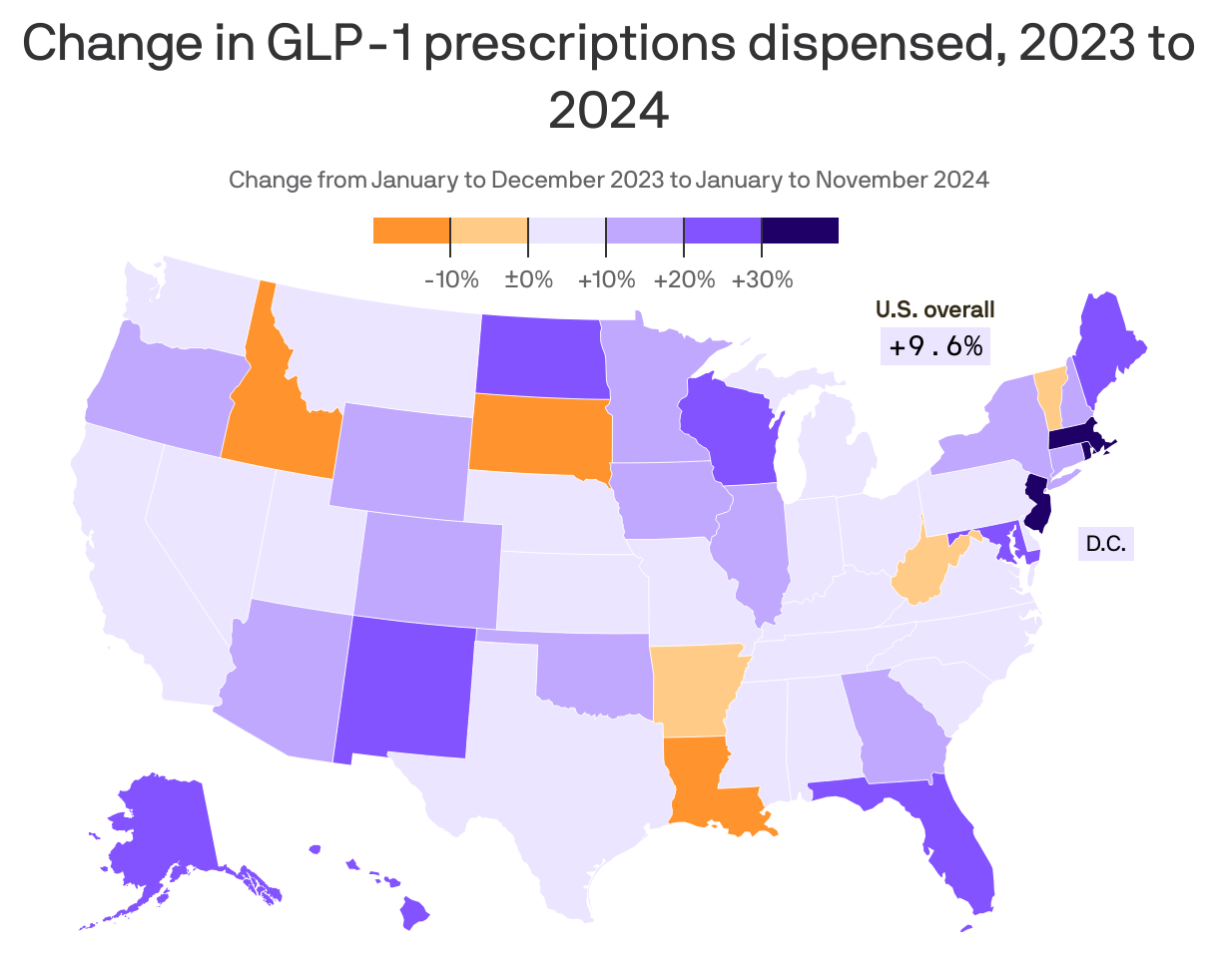
The number of prescriptions for GLP-1 drugs jumped roughly 10% in 2024, according to insurance claims data provided to Axios by health analytics company PurpleLab.
Why it matters: The data, which shows double-digit growth in 23 states, offers a snapshot of the sustained growth in demand across the U.S. for the drugs hailed as game-changers in the fight against obesity.
By the numbers: Rhode Island (67.8%), Massachusetts (48%) and New Jersey (35.8%) saw the largest year-over-year growth in prescriptions dispensed between 2023 and 2024.
- There were declines in six states including Arkansas, Louisiana, West Virginia, Idaho, South Dakota and Vermont.
Between the lines: The most prescriptions went to adults ages 55 to 65 (29%), followed by seniors 65 and older (26%).
- The vast majority of prescriptions went to commercially insured patients while only 9% were written for Medicaid patients. 17% went to patients on Medicare.
The data is based on roughly 7.5 billion claims from private insurers, as well as Medicare — which only covers GLP-1s to treat diabetes — and Medicaid.
- The data captures prescriptions for Novo Nordisk's diabetes drug Ozempic, which has been widely prescribed off-label for weight loss, and Wegovy, which was approved for weight loss in 2021.
- It also includes Eli Lilly's diabetes medication Mounjaro and its anti-obesity medication, Zepbound, which was approved by the Food and Drug Administration in November.
- The data lumps the prescriptions together, so it's not possible to tease out how often these drugs are being prescribed for obesity versus diabetes or heart disease.
