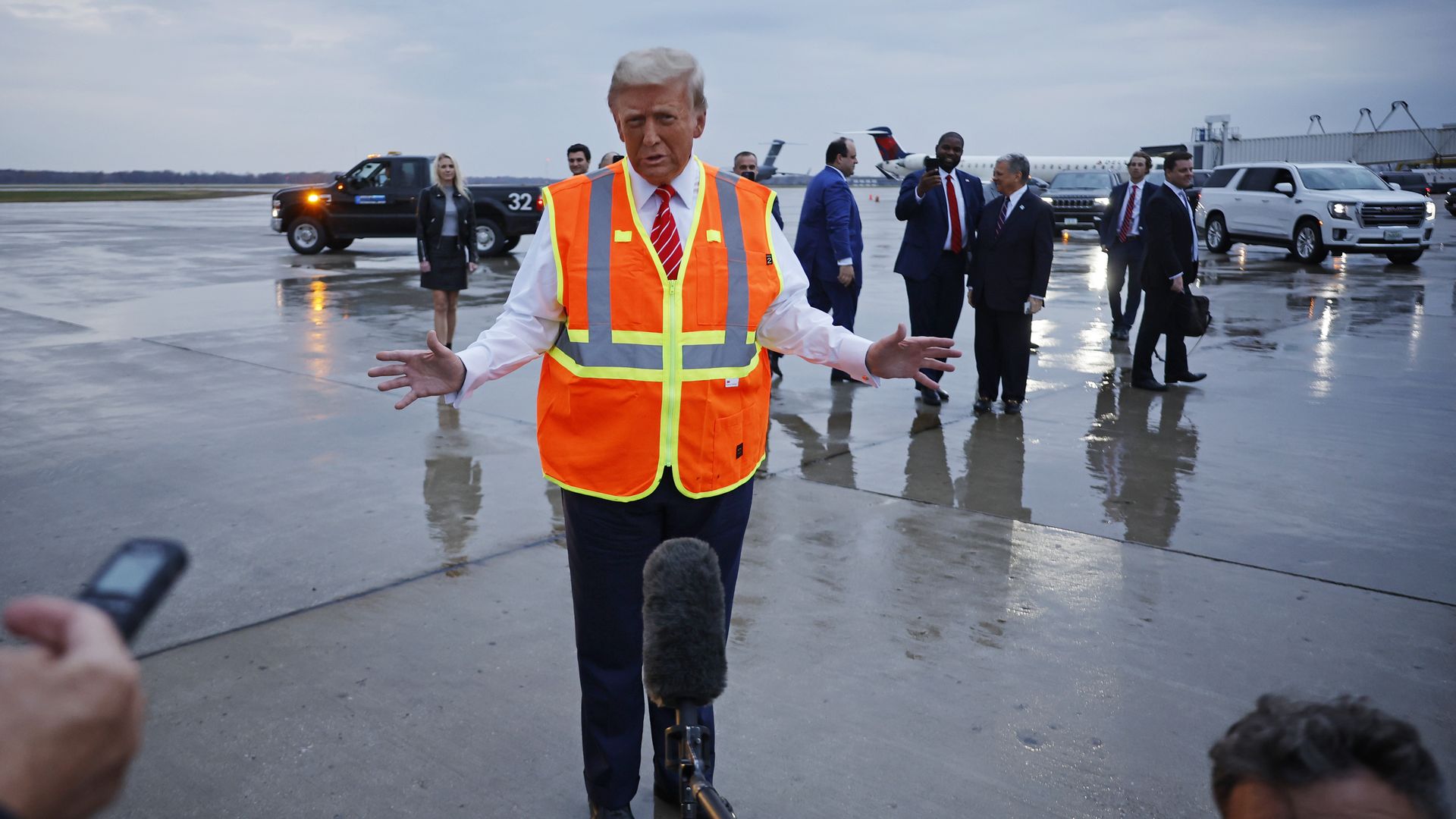
Former President Trump vowed to "protect" women "whether the women like it or not" at a Wisconsin rally Wednesday, drawing sharp blowback for a campaign that's already floundering with women voters.
Why it matters: Though his comments came in the context of discussing crime from undocumented migrants, Trump's words evoked his history of bragging about sexually assaulting women and his role in overturning Roe v. Wade, which turned many women away from the Republican Party.
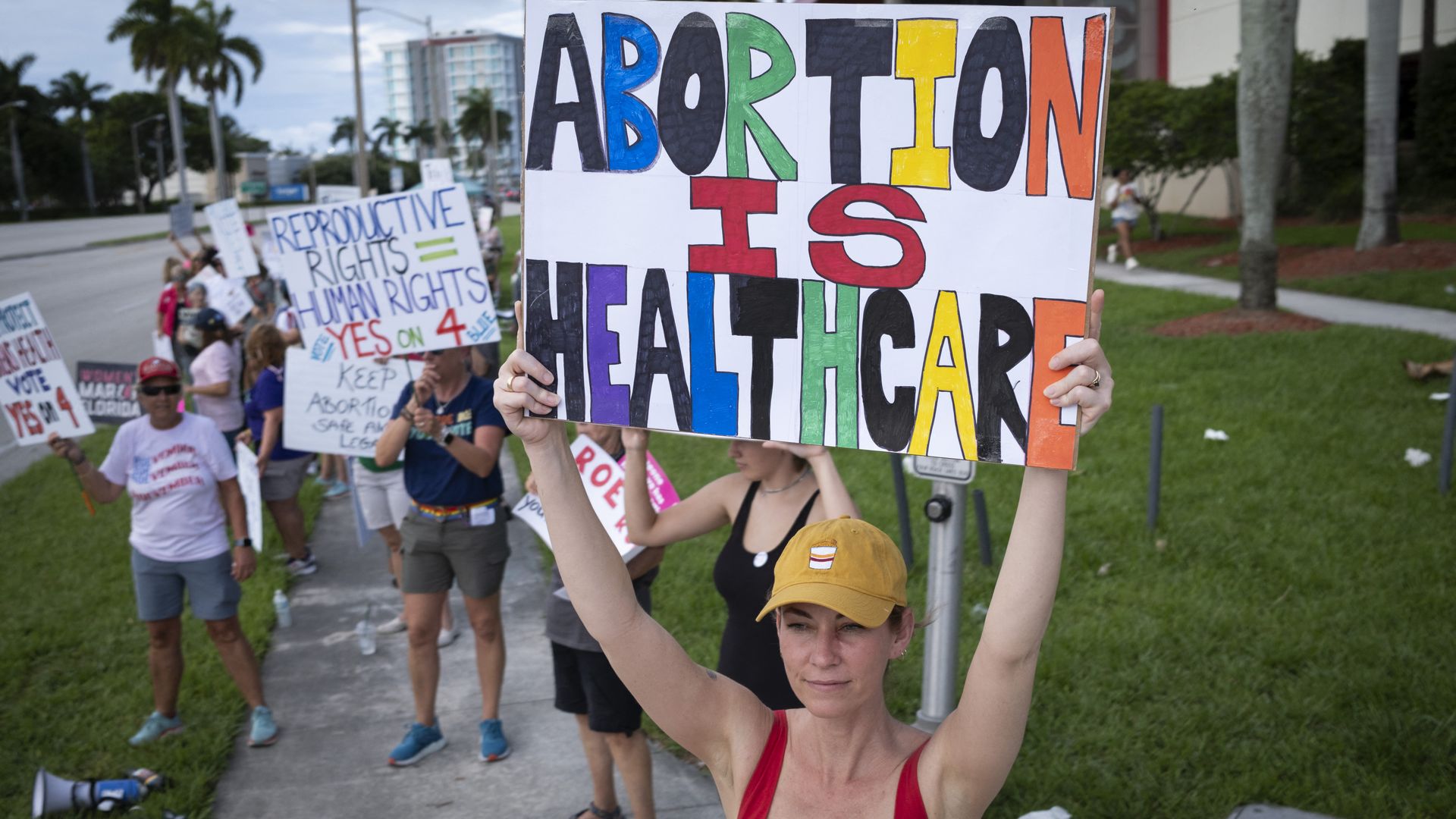
The nonprofit investigative news outlet ProPublica has unearthed multiple cases of pregnant women who died after they couldn't access timely medical care in states with strict abortion bans.
All of them were preventable, medical experts told the news outlet. Two of them died during miscarriages.
A case of H5N1 bird flu was found for the first time in a pig in Oregon, Department of Agriculture officials said on Wednesday, raising new concerns about the potential transmission risk to people.
Why it matters: Pigs can be infected by both human and bird viruses, which could create conditions for H5N1 to morph into more transmissible variants.
The Biden administration this week is hosting a first-of-its-kind international summit about the use of artificial intelligence in the life sciences as governments and private industry increasingly push the boundaries of biotechnology.
Why it matters: The convergence of the life sciences and advanced AI could reveal the underpinnings of diseases, help identify new cures or produce more resistant crops. But thereare barriers and bottlenecks — and potential risks — to combining the technologies.
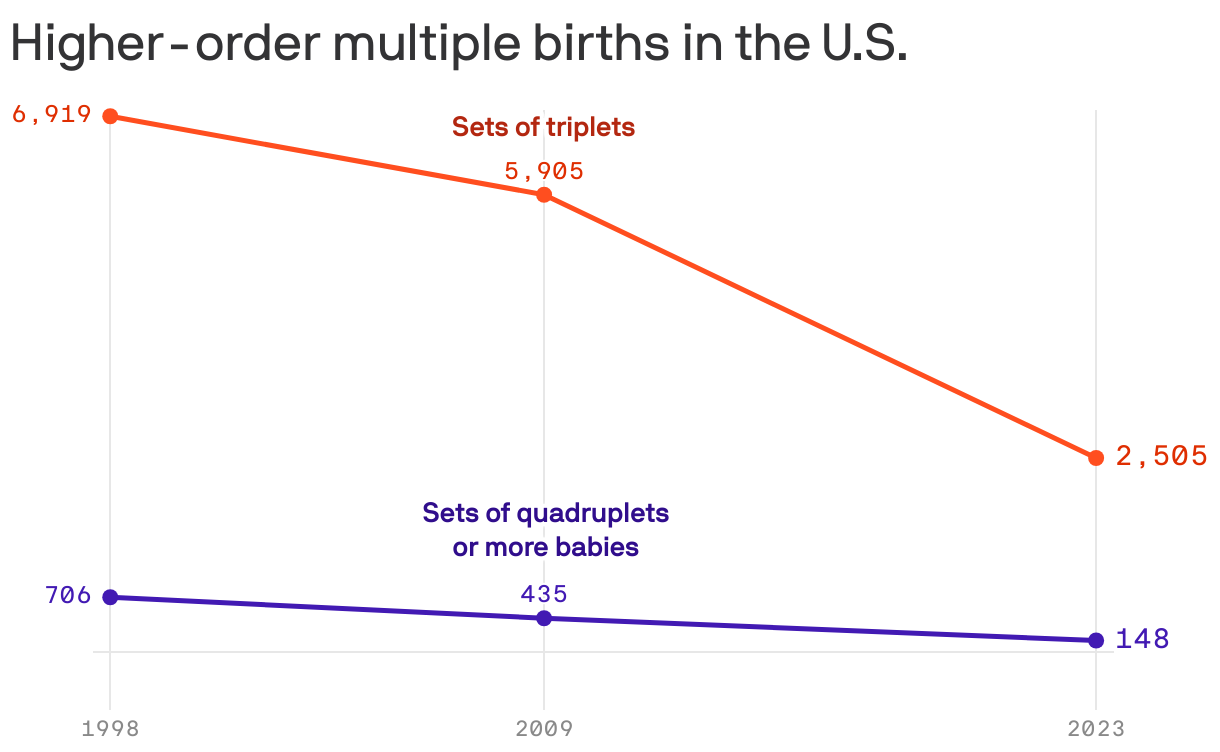
Data: National Center for Health Statistics, CDC; Chart: Erin Davis/Axios Visuals
Triplet and higher-order births have fallen sharply in the U.S. as in vitro fertilization advances made it less common to implant multiple embryos in patients getting treatment.
The big picture: The number of triplet births in the United States fell 64% from 1998 to 2023, according to the Centers for Disease Control and Prevention, while quadruplet and higher-order births fell nearly 80% over the same time.
Climate change exposed people to an average of 50 more days of health-threatening temperatures around the world last year and drove heat-related deaths to record highs, according to an annual report published Wednesday.
Why it matters: The Lancet Countdown on Health and Climate Change represents the most up-to-date assessment of the connection between health and climate change and includes sweeping recommendations for the U.S., including a call for ending fossil fuel expansion specifically because of the health consequences.
Hospitals and clinics remain among the most violent workplaces in America, continuing to strain health workers in the aftermath of the pandemic experience.
Why it matters: The situation is bad enough that the American Hospital Association and the FBI last week announced that they're collaborating on resources to help hospitals make threat assessments and work to mitigate risks.