With abortion on the ballot, reports show how bans lead to preventable deaths

Add Axios as your preferred source to
see more of our stories on Google.
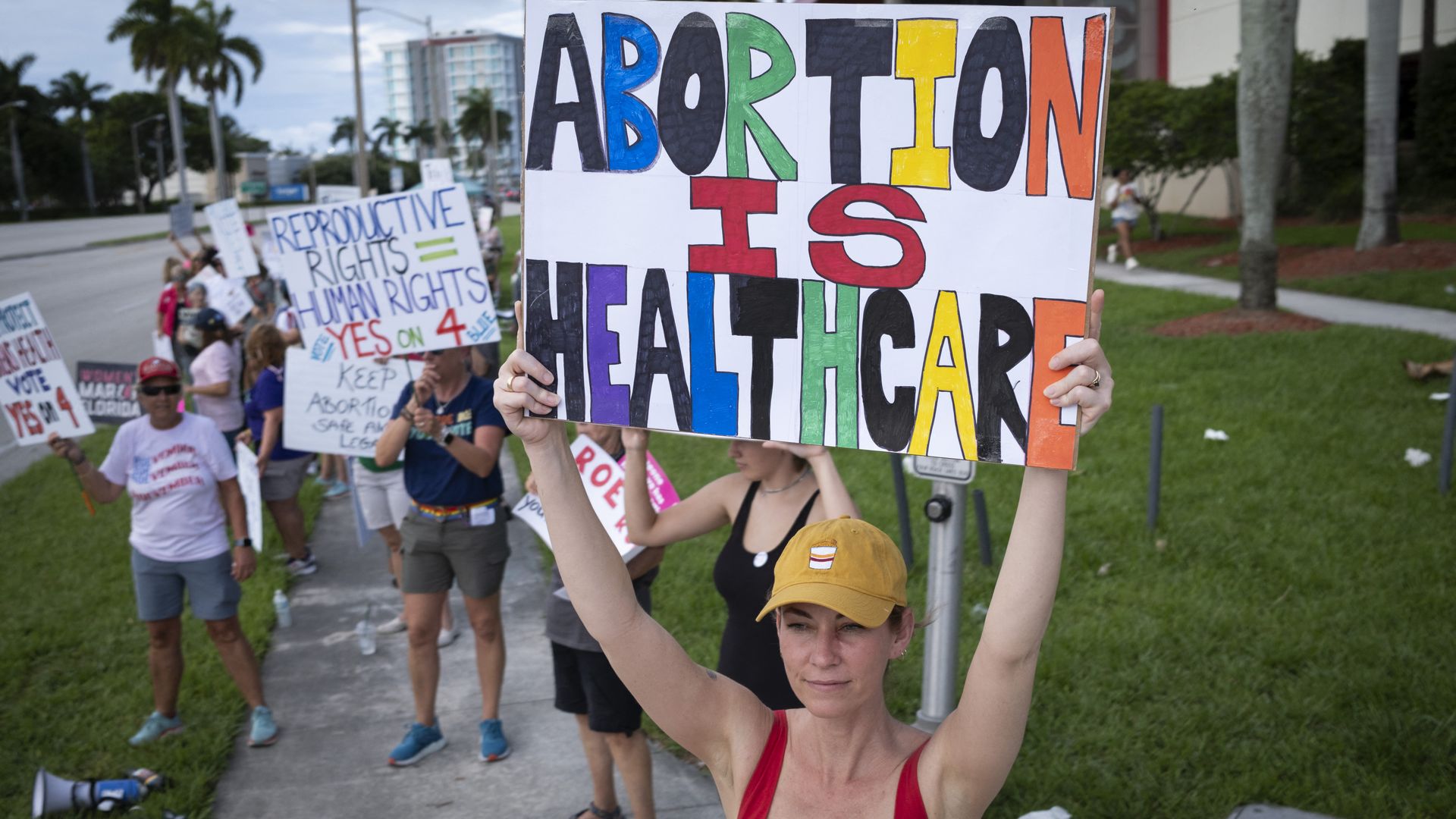
Strict abortion bans like Florida's have been tied to deaths in other states. Photo: Marco Bello/AFP via Getty Images
The nonprofit investigative news outlet ProPublica has unearthed multiple cases of pregnant women who died after they couldn't access timely medical care in states with strict abortion bans.
- All of them were preventable, medical experts told the news outlet. Two of them died during miscarriages.
Why it matters: At a time when voters in several states are weighing in on the future of abortion rights, the cases show how government regulation of high-stakes medical decisions can have dire consequences.
- They also reinforce claims from doctors who've warned that women will die under abortion bans.
The latest: On Wednesday, ProPublica shared the story of Josseli Barnica, one of two Texas women the news outlet said died after doctors delayed treating their miscarriages.
Zoom in: At 17 weeks pregnant, the fetus was starting to come out of her dilated cervix, according to the report. A miscarriage was in progress.
- Instead of hastening delivery or emptying her uterus, doctors said "they had to wait until there was no heartbeat," Barnica's husband told ProPublica. "It would be a crime to give her an abortion."
- She spent 40 hours in a hospital bed with her uterus exposed to bacteria. Finally, when doctors said they could no longer detect a fetal heartbeat, they delivered the fetus.
- Barnica died three days later of an infection.
Zoom out: The news outlet last month shared the story of Amber Nicole Thurman, a Georgia mother who also died due to a delay in care under the state's six-week abortion ban.
The other side: Opponents of abortion often blame doctors for these outcomes, pointing to exceptions to save the life of the mother that are part of most abortion bans, including Florida's.
- "Any suggestion, advertisement, anything to suggest that Florida law in any way prevents a physician from caring for anybody in Florida … is a lie," Gov. Ron DeSantis said Tuesday.
- Any doctors spreading that information, he said, should lose their licenses.
Yes, but: Without further clarification, it falls on doctors to interpret vague language in high-stakes situations with the threat of arrest or license revocation bearing down on them, ProPublica previously reported.
- And even with more specific guidance, there are still gray areas.
Case in point: Georgia's law specifies it's not considered an abortion to remove "a dead unborn child" that resulted from a "naturally occurring" miscarriage or stillbirth.
- Thurman, a 28-year-old medical assistant with a 6-year-old son, told doctors she took abortion pills she got from a clinic in North Carolina, so her miscarriage wasn't naturally occurring.
A second death in Georgia reported by ProPublica demonstrates another grave outcome that healthcare practitioners warned would happen under abortion bans.
- Candi Miller, a 41-year-old mother with health complications, managed her abortion alone. She didn't visit a doctor, her family said, "due to the current legislation on pregnancies and abortions."
- Like Thurman, she didn't expel all the fetal tissue from her body and needed a procedure called a dilation and cutterage, or D&C. It's a routine procedure for both abortions and miscarriages.
- Instead, in November 2022, her husband found her in bed unresponsive, ProPublica reported. Her 3-year-old daughter was at her side.
Worthy of your time: Read ProPublica's series "Life of the Mother" here.