Charted: Big decline in triplet births

Add Axios as your preferred source to
see more of our stories on Google.
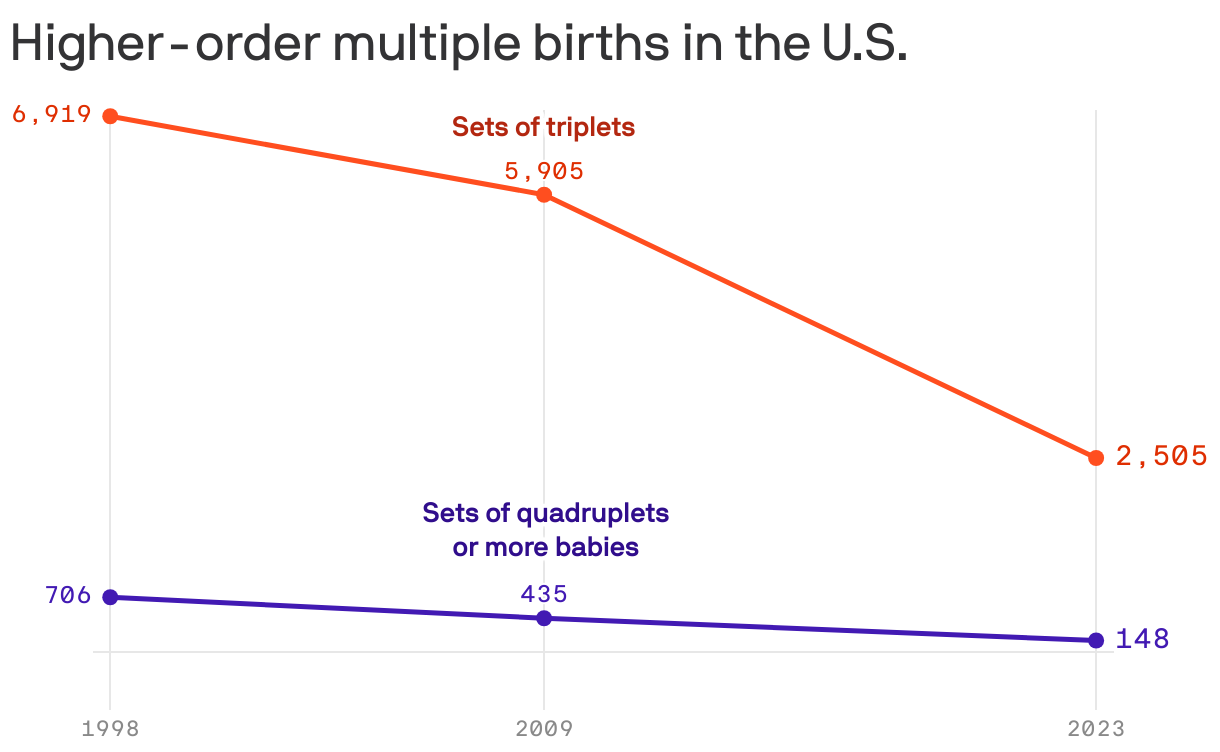
Triplet and higher-order births have fallen sharply in the U.S. as in vitro fertilization advances made it less common to implant multiple embryos in patients getting treatment.
The big picture: The number of triplet births in the United States fell 64% from 1998 to 2023, according to the Centers for Disease Control and Prevention, while quadruplet and higher-order births fell nearly 80% over the same time.
- Such multiple pregnancies spiked in the 1980s and 90s as IVF gained popularity. But they carried the risk of complications, including premature births and, in some cases, an increased risk of developmental disabilities.
Yes, but: The triplet and higher-order birth rate actually increased for Black women over the 25-year period, rising from 87.3 to 108.9 per 100,000 births.
Zoom out: The likelihood of having triplets or more kids in a single pregnancy still increases with age.
- But even among mothers age 40 and older, the rate of multiple births declined 67% between 1998 and 2023.
Go deeper: Twin births are declining, too
