A Supreme Court hearing on a case that could significantly curtail the federal government's regulatory power has big implications for America's health care system.
Why it matters: The justices on Wednesday are considering whether to overturn the 40-year-old legal doctrine known as the "Chevron deference," in which the courts have given leeway to federal agencies to reasonably interpret ambiguous laws or ones subject to multiple interpretations.
Next Life Sciences has raised $2.5 million to develop a male contraceptive product called Plan A, which could become a nonsurgical alternative to vasectomies.
Why it matters: This could help balance family-planning responsibilities that fall disproportionately on women.
Venture capital firm General Catalyst on Wednesday announced plans to buy Akron, Ohio, health system Summa Health, which it will convert into a for-profit.
Why it matters: This is an unprecedented deal for venture capital, which typically invests in startup companies. If successful, it could position General Catalyst as the industry's most formidable developer and seller of health care technology.
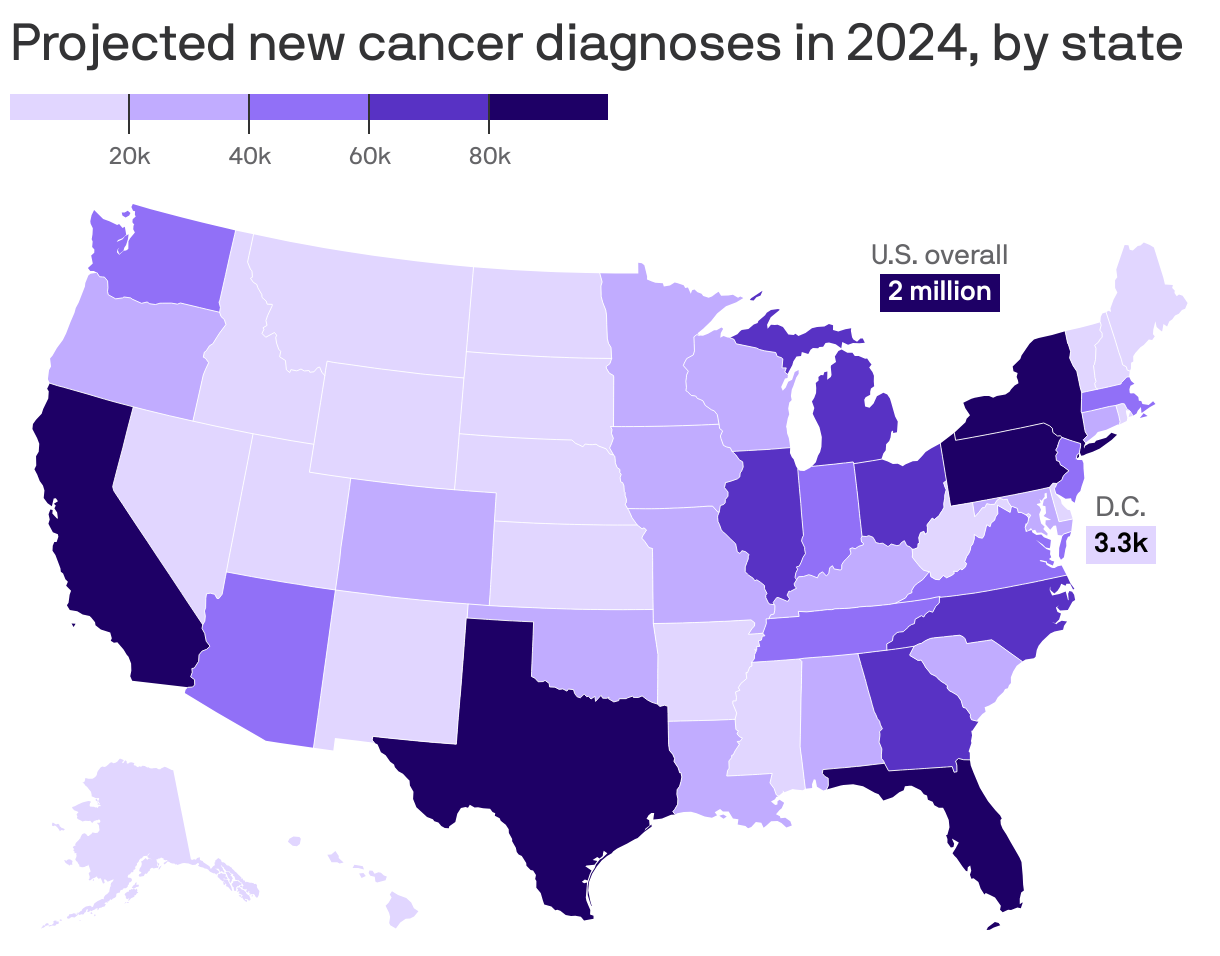
Data: American Cancer Society; Map: Tory Lysik/Axios Visuals
New cancer diagnoses in the U.S. are expected to top 2 million for the first time in 2024, driven in large part by an alarming increase in cancers among younger Americans, according to new American Cancer Society data.
Why it matters: There have been major improvements in cancer survival, but there's a worrying rise in some cancers at the same time doctors are trying to figure out why they're seeing more young patients with cancer.
A therapy based on CRISPR gene-editing technology that the Food and Drug Administration approved in December for sickle cell disease can be used for a second inherited blood disorder, the agency said on Tuesday.
Why it matters: The approval expands applications for multimillion-dollar therapies that edit genes directly in a patient's body. But it could present additional cost challenges for employers, public health programs and other payers.
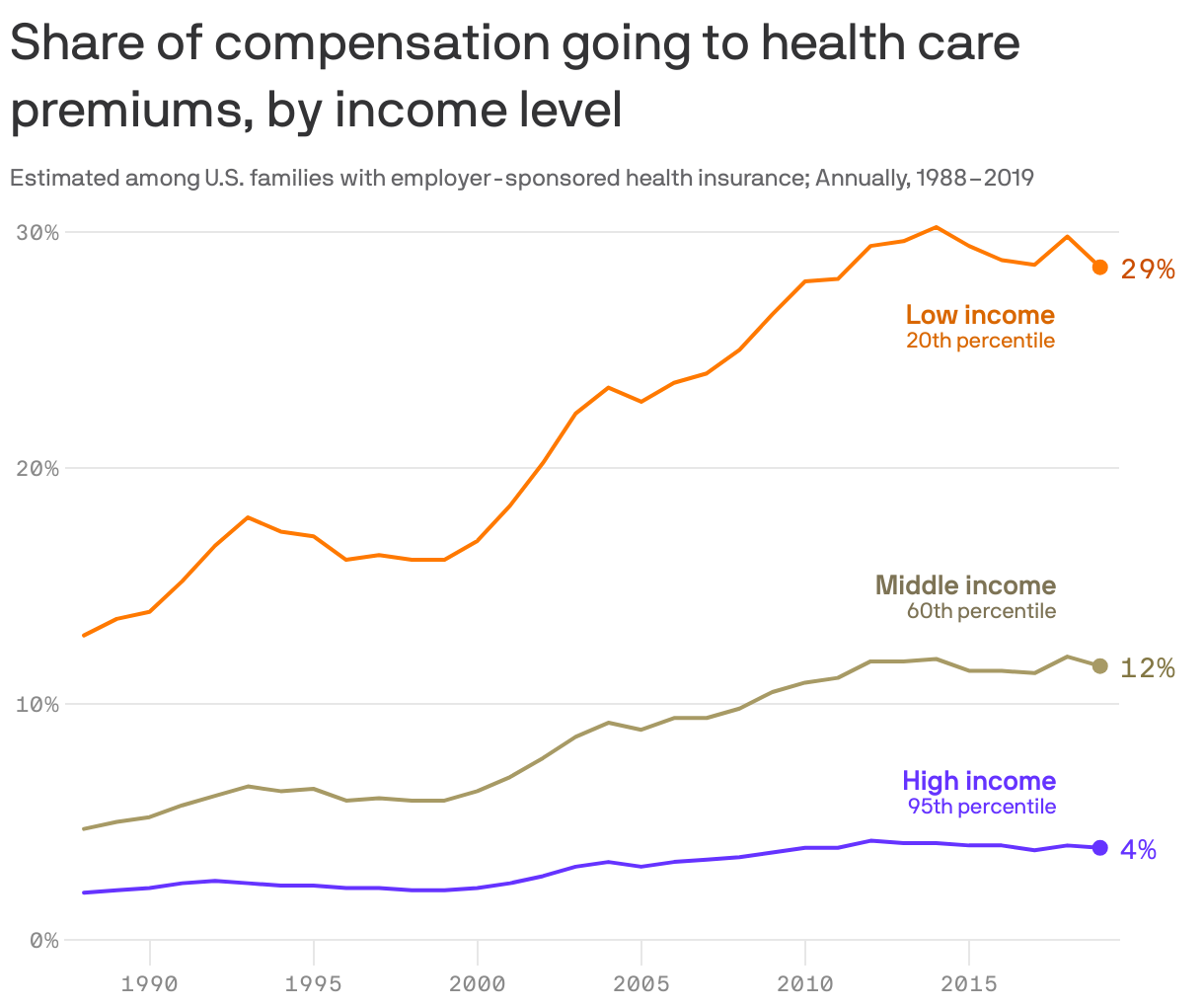
Families with workplace health insurance may have missed out on $125,000 in earnings over the past three decades as a result of rising premiums eating into their pay, according to a new JAMA Network Open study.
Why it matters: While employers, rather than workers, typically bear the brunt of rising health insurance costs, the study is further evidence that rising premiums are costing workers through wages they would have otherwise received.
Marijuana may offer medical benefitsand isn't as risky as other tightly controlled substances, according to a new federal scientific review.
Why it matters: The review, posted Friday evening, provides insight on the U.S. Department of Health and Human Services' recommendation that the Drug Enforcement Administration reclassify marijuana out of a category that includes heroin and LSD.
One side effect of the new RSV shots for older Americans: More are winding up getting other preventative tests and services during their vaccine appointments.
Driving the news: That tidbit came from UnitedHealth Group's year-end earnings reportthat showed use of medical services were up, prompting health insurer stocks to dip on Friday.
The health care industry is again grappling with how aggressively to push providers into payment arrangements that hold them financially accountable fordelivering better and more efficient care after the debate was largely put on hold during the pandemic.
The big picture: A centralquestion surrounding the long-running movement toward value-based care has been how quickly and broadly to require providers to participate in fixed-payment arrangements and other alternative models.











/2024/01/13/1705157006879.gif?w=3840)