New federal rules requiring health insurers to streamline requests to cover treatments are being hailed as a good first step toward addressing a problem that's increasingly aggravated patients and doctors.
But it may not be Washington's last word on so-called prior authorization, as lawmakers look to jumpstart legislation that would further limit the practice.
Employers are facing stronger legal requirements to ensure they aren't wasting their workers' money on overpriced health insurance, at the growing risk of financial consequences.
But employers say secrecy around negotiated health care prices too often prevents them from accessing data that would help them figure out if they're getting a good deal.
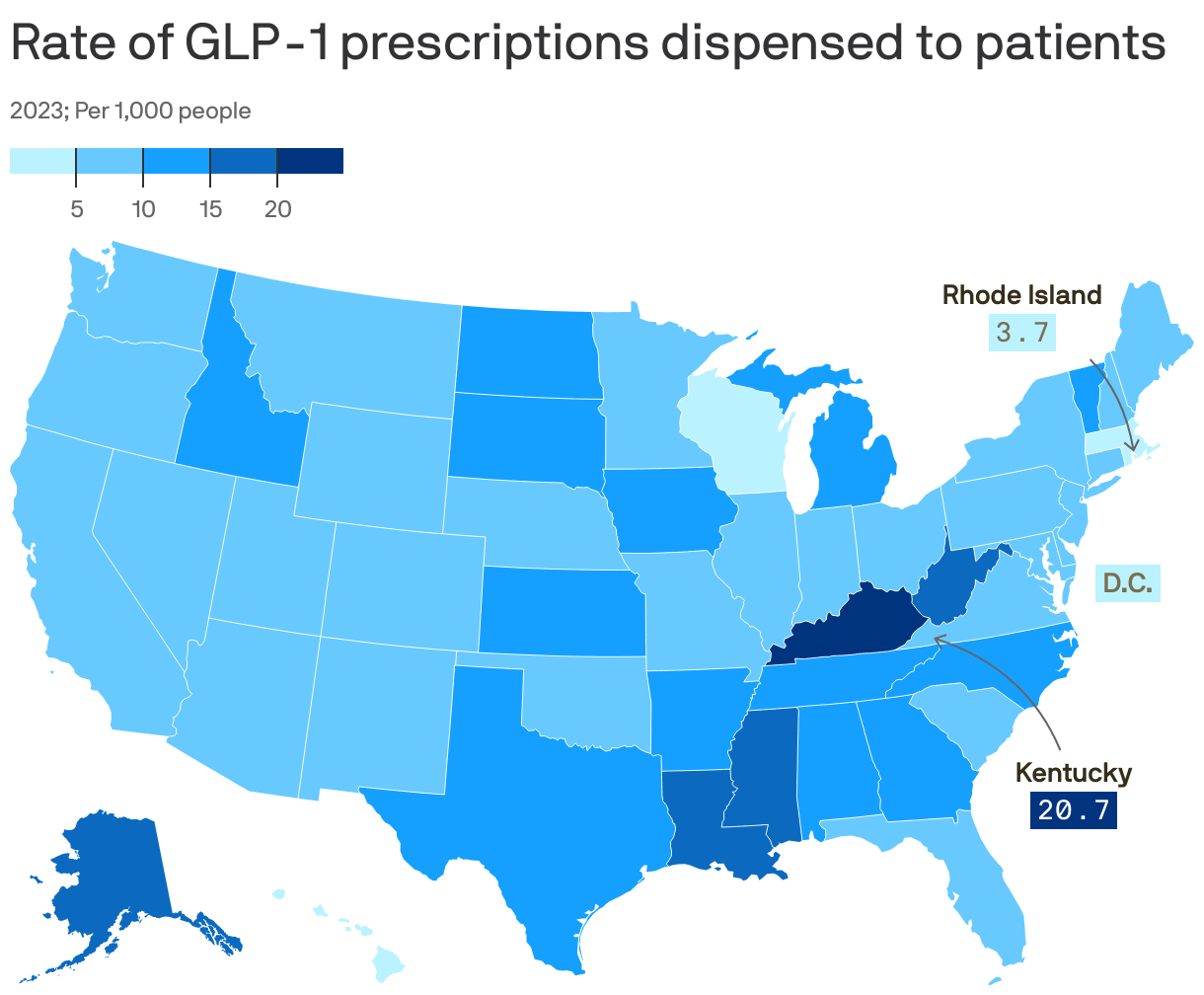
For every 1,000 people in Kentucky, roughly 21 were prescribed a drug that belongs to a buzzy class of diabetes and anti-obesity medications last year — the highest rate of any state, according to insurance claims data provided to Axios by health analytics company PurpleLab.
The big picture: It's among a few Southern states, including Louisiana and Mississippi, that had some of the highest prescribing rates for drugs like Ozempic and Wegovy.
A Supreme Court hearing on a case that could significantly curtail the federal government's regulatory power has big implications for America's health care system.
Why it matters: The justices on Wednesday are considering whether to overturn the 40-year-old legal doctrine known as the "Chevron deference," in which the courts have given leeway to federal agencies to reasonably interpret ambiguous laws or ones subject to multiple interpretations.
Next Life Sciences has raised $2.5 million to develop a male contraceptive product called Plan A, which could become a nonsurgical alternative to vasectomies.
Why it matters: This could help balance family-planning responsibilities that fall disproportionately on women.
Venture capital firm General Catalyst on Wednesday announced plans to buy Akron, Ohio, health system Summa Health, which it will convert into a for-profit.
Why it matters: This is an unprecedented deal for venture capital, which typically invests in startup companies. If successful, it could position General Catalyst as the industry's most formidable developer and seller of health care technology.
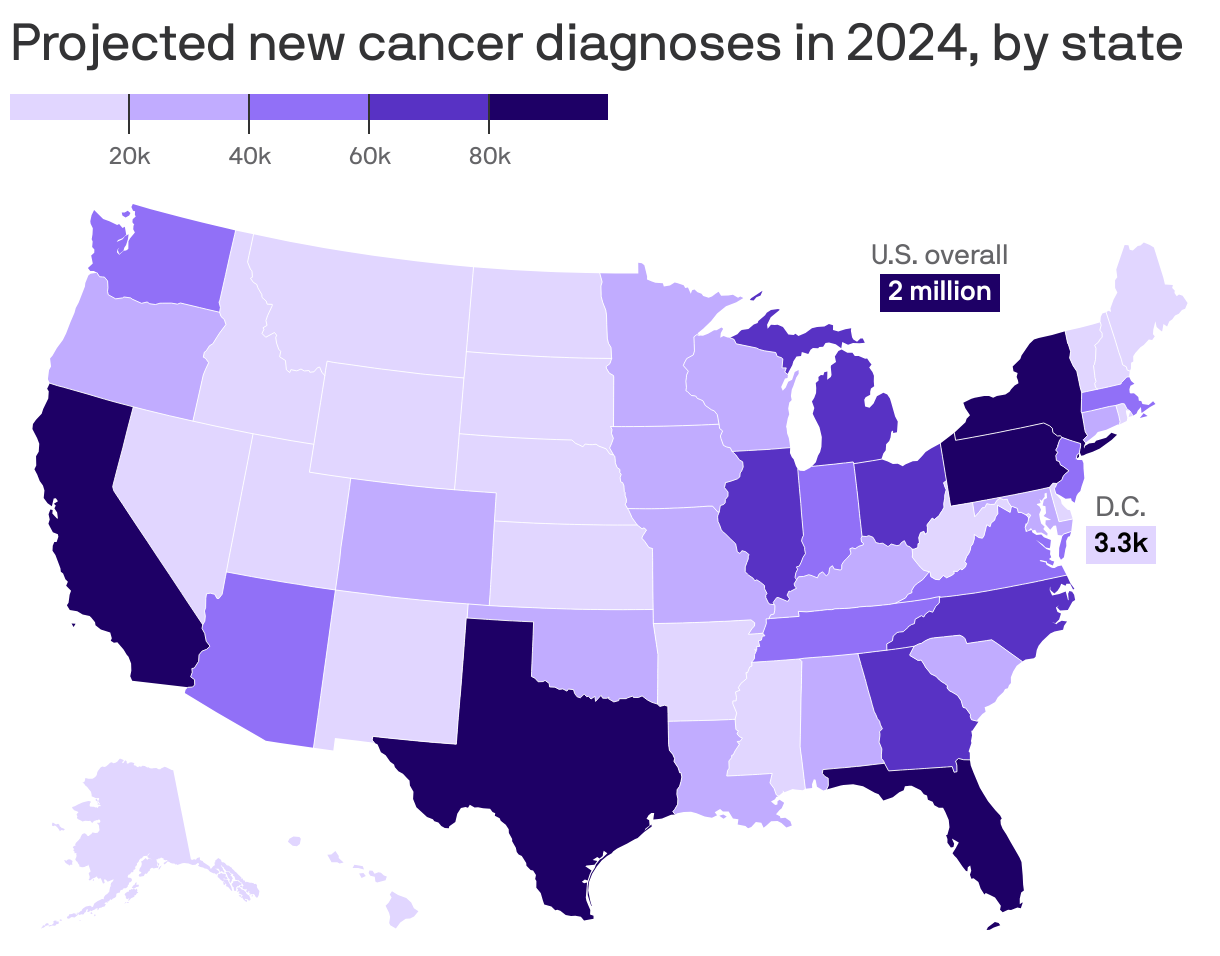
Data: American Cancer Society; Map: Tory Lysik/Axios Visuals
New cancer diagnoses in the U.S. are expected to top 2 million for the first time in 2024, driven in large part by an alarming increase in cancers among younger Americans, according to new American Cancer Society data.
Why it matters: There have been major improvements in cancer survival, but there's a worrying rise in some cancers at the same time doctors are trying to figure out why they're seeing more young patients with cancer.
A therapy based on CRISPR gene-editing technology that the Food and Drug Administration approved in December for sickle cell disease can be used for a second inherited blood disorder, the agency said on Tuesday.
Why it matters: The approval expands applications for multimillion-dollar therapies that edit genes directly in a patient's body. But it could present additional cost challenges for employers, public health programs and other payers.