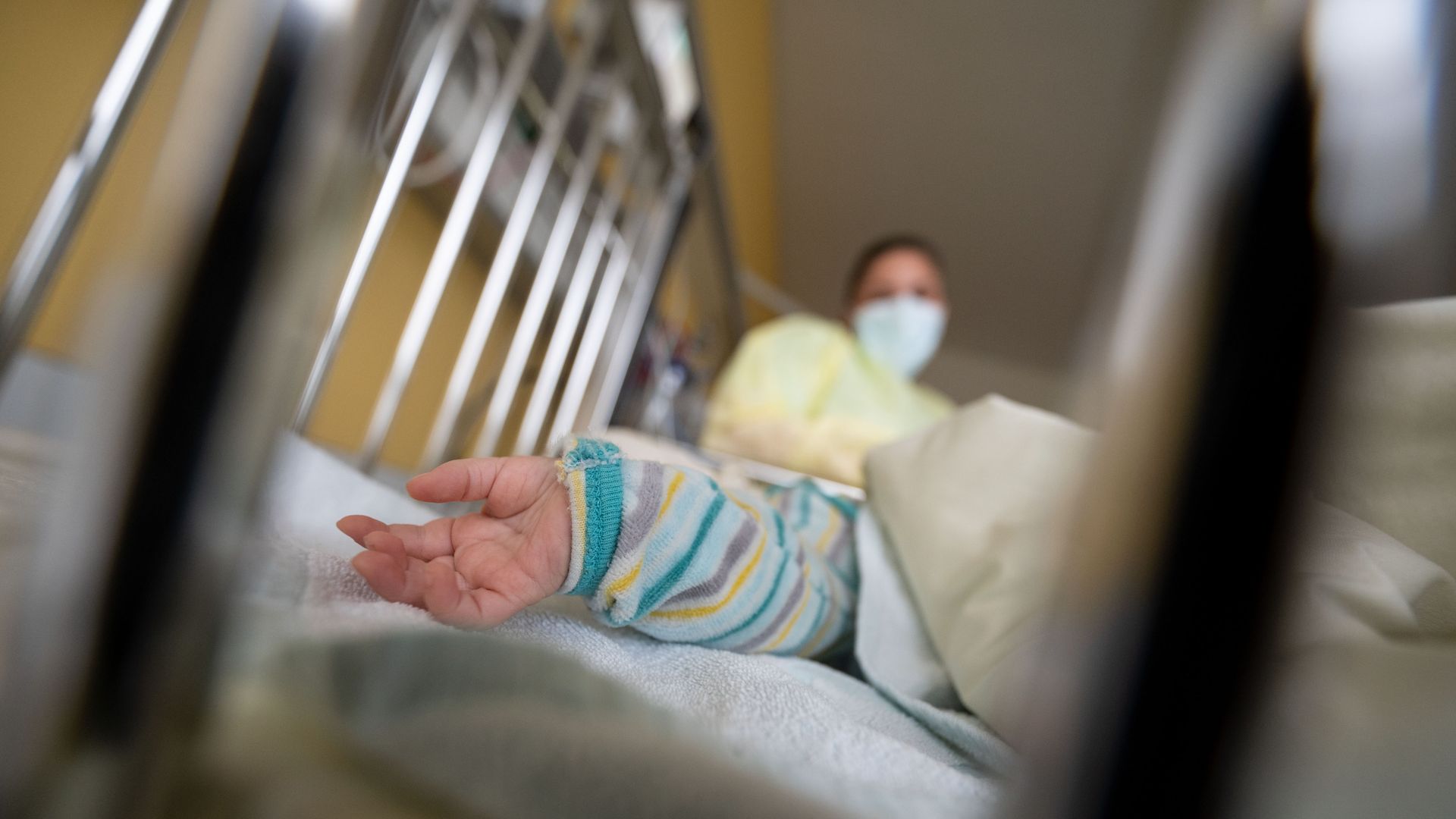
The Centers for Disease Control and Prevention is calling on doctors to prioritize doses of a new RSV drug to the most vulnerable infants amid limited supply.
Why it matters: Experts say demand for the drug, Beyfortus, has far outpaced supply in the first respiratory virus season since the Food and Drug Administration approved the drug in July.
The number of legal abortions in the United States increased in the year after the Supreme Court overturned Roe v. Wade. But they decreased sharply in states with total bans or strict limits on the procedure.
Why it matters: A string of state bans and restrictions on abortion hasn't lowered the overall abortion rate, according to a new report from the Society of Family Planning, a group that supports abortion rights.
Georgia's abortion ban will remain in effect after the state Supreme Court on Tuesday reversed a lower court's previous decision that it was unconstitutional.
Driving the news: The state's highest court sent the lawsuit back to Fulton County Superior Court on Tuesday morning, where the fight over the anti-abortion law will continue.
People experiencing homelessness are 16 times more likely to die suddenly than people with housing, a new study in San Francisco finds.
Driving the news: The unhoused population in San Francisco County, which has one of the nation's highest concentrations of homeless people, is more likely to die from drug overdoses, gastrointestinal disorders and infection, according to the study in JAMA Internal Medicine.
With HGTV-style finishes like butcher block counters and hardwood floors, a tiny house on wheels rolled into Washington this week demonstrating what it looks like to hospitalize patients at home.
Why it matters: Medically Home — one of the companies helping health systems like the Mayo Clinic and Kaiser Permanente launch their own hospital-at-home programs — is making the case for Medicare to extend pandemic-era flexibilities funding at-home hospital care.
Why it matters: Limited treatment options and coverage gaps mean that many kids aren't getting needed care that could help prevent them from developing a deeper and potentially deadly addiction.
Disclaimer: This article covers pregnancy complications and loss.
1 in 4 women will experience pregnancy loss, and 2.6 million stillbirths happen each year, according to the World Health Organization.
Even given these staggering statistics, open discussion about the topic remains stigmatized, leaving mothers and families to grieve in silence or behind closed doors.
Some of the most high-profile artificial intelligence chatbots churned out responses that perpetuated false or debunked medical information about Black people, a new study found.
Why it matters: As AI takes off, chatbots are already being incorporated into medicine — with little to no oversight. These new tech tools, if fueled by false or inaccurate data, have the potential to worsen health disparities, experts have warned.
A new, more expansive definition of "infertility" could lead to more help for hopeful LGBTQ+ or single parents.
Why it matters: The decision by an influential organization of reproductive health providers to redefine the condition could lead to broader insurance coverage of fertility services like egg freezing and in vitro fertilization for all people who need help starting families — not just those in heterosexual couples.