Walgreens saw its share price jump Thursday after laying out aggressive plans to cut $1 billion in costs over the next year and close 60 VillageMD clinics.
Why it matters: The company has struggled to meet investor expectations and compete with CVS Health, Walmart and Amazon, placing much of its focus on the expansion of primary care.
Illegal flavored e-cigarettes are flooding the U.S. market and circumventing FDA efforts to curb youth vaping.
Why it matters: The situation raises questions about whether the FDA is capable of enforcing new standards in public health — and if some prohibition-based policies lead to unintended consequences.
Monthly Medicare premiums covering physician and outpatient care will rise almost 6% next year as part of a series of hikes the Centers for Medicare and Medicaid Services announced Thursday.
A casual Zoom call with some doctor friends in the early days of the pandemic put retired tennis major champion Andy Roddick on an unlikely path charting the fortunes of a firm that uses telehealth to diagnose sports injuries.
Why it matters: The company Roddick founded, called ViewFi, is evidence of how high-profile athletes and other celebrities are investing in, and sometimes helping run, digital health care companies.
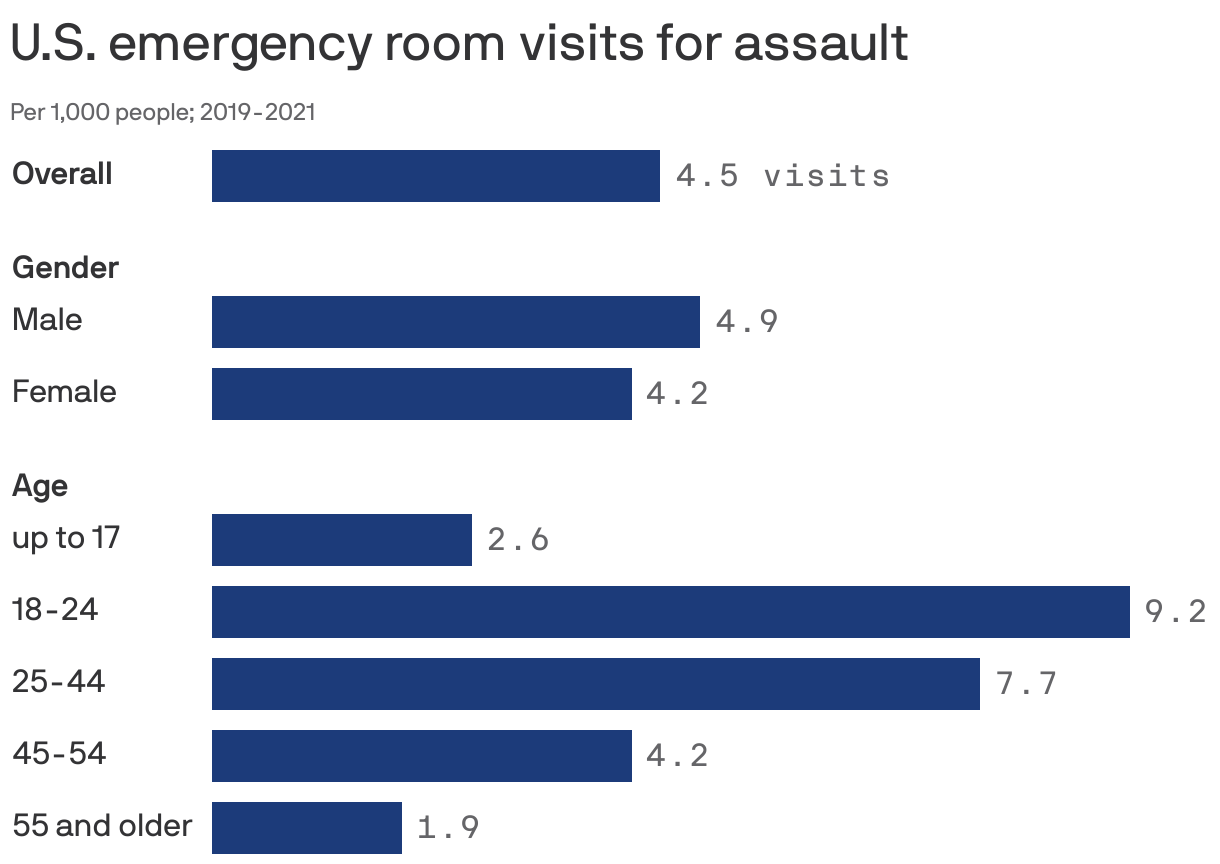
Assaults accounted for more than 1.3 million — or roughly 6% — of all injuries treated in emergency departments in 2020, according to new figures from the CDC's National Center for Health Statistics.
Why it matters: The data, which doesn't include sexual assaults, provides a snapshot of the burden violence-related injuries places on the health system.
Harvard and University of Oxford researchers are harnessing AI to predict threatening new strains of COVID-19 and other viruses.
Why it matters: The approach could prove more efficient than lab-based testing, because it doesn't rely on people becoming infected or getting vaccinated to develop antibodies.
Nearly two years after a surprise medical bill ban took effect, the process for settling billing disputes between insurers and providers is still mired in litigation and many cases remain unresolved.
Why it matters: Uncertainty around how providers get paid for disputed out-of-network services isn't likely to ease as multiple challenges to the Biden administration arbitration rules continue to work through the courts.