A federal appeals court on Tuesday maintained a freeze on a ruling that struck down the Affordable Care Act's mandate that employers and insurers fully cover preventive health services while the case continues to wind through the courts.
Why it matters: The decision from the New Orleans-based U.S. 5th Circuit Court of Appeal means that over 150 million people's health care coverage for certain cancer screenings, behavioral counseling, HIV prevention and other services recommended by the U.S. Preventive Services Task Force will remain in place for the time being.
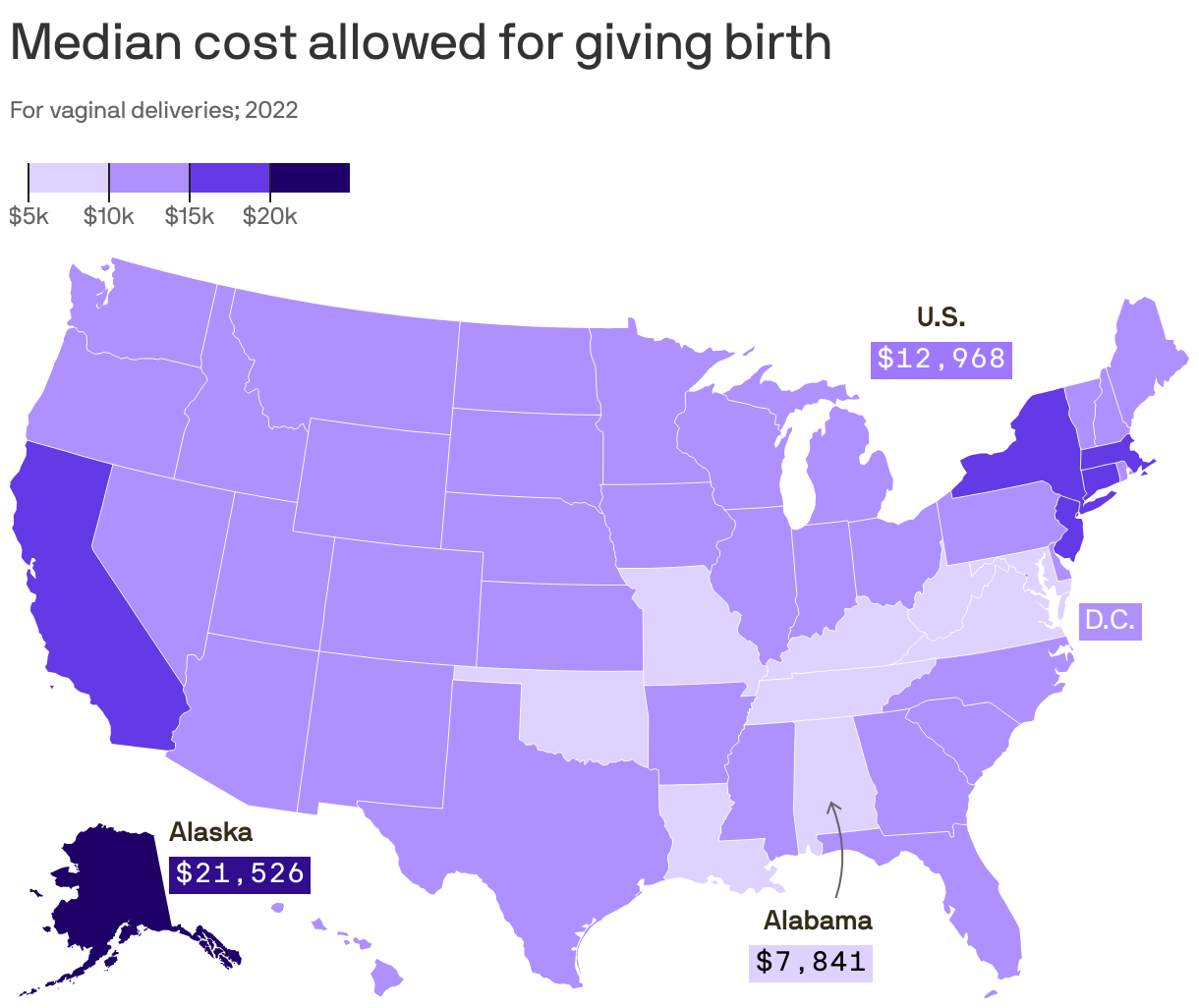
Data: FAIR Health; Note: Costs include the delivery itself, anesthesia, fetal nonstress tests, ultrasounds, laboratory work and breast pump; Map: Alice Feng/Axios
Having a baby isn't cheap anywhere, but there are some states in the U.S. where it's far pricier to give birth than others, according to data provided first to Axios from FAIR Health.
Why it matters: FAIR Health's new Cost of Giving Birth Tracker — which uses data from more than 41 billion private healthcare claim records — offers a glimpse at how much variability there is in the cost of one of the most common health care services.
The push to make food part of medical care won a prominent endorsement on Tuesday as Uber Health launched of a new grocery delivery service for patients recently discharged from hospitals and other settings.
Why it matters: It's the latest expansion of Uber's health care arm and part of part of a broader push by investors and companies that see opportunity partnering with providers to address nutrition and other social determinants of health.
Safety net hospitals will soon learn how the government plans to reimburse them for nearly $10 billion resulting from underpayments from the federal drug discount program. The question is whether it will come at the expense of other hospitals.
Where it stands: The Centers for Medicare and Medicaid Services is poised to reveal a repayment plan to facilities in the 340B program, after the Supreme Court found the agency made illegal program cuts from 2018 to September 2022.
Health care’s labor shortage is adding new urgency to the need for new tech.
Why it matters: Americans 65 and older, those most in need of health care services, are expected to outnumber children in the U.S. for the first time by 2030 — just as the health care sector is expected to have a shortfall of more than 200,000 physicians and nurses.
Data: Center for Medicare and Medicaid Services; Chart: Tory Lysik/Axios Visuals
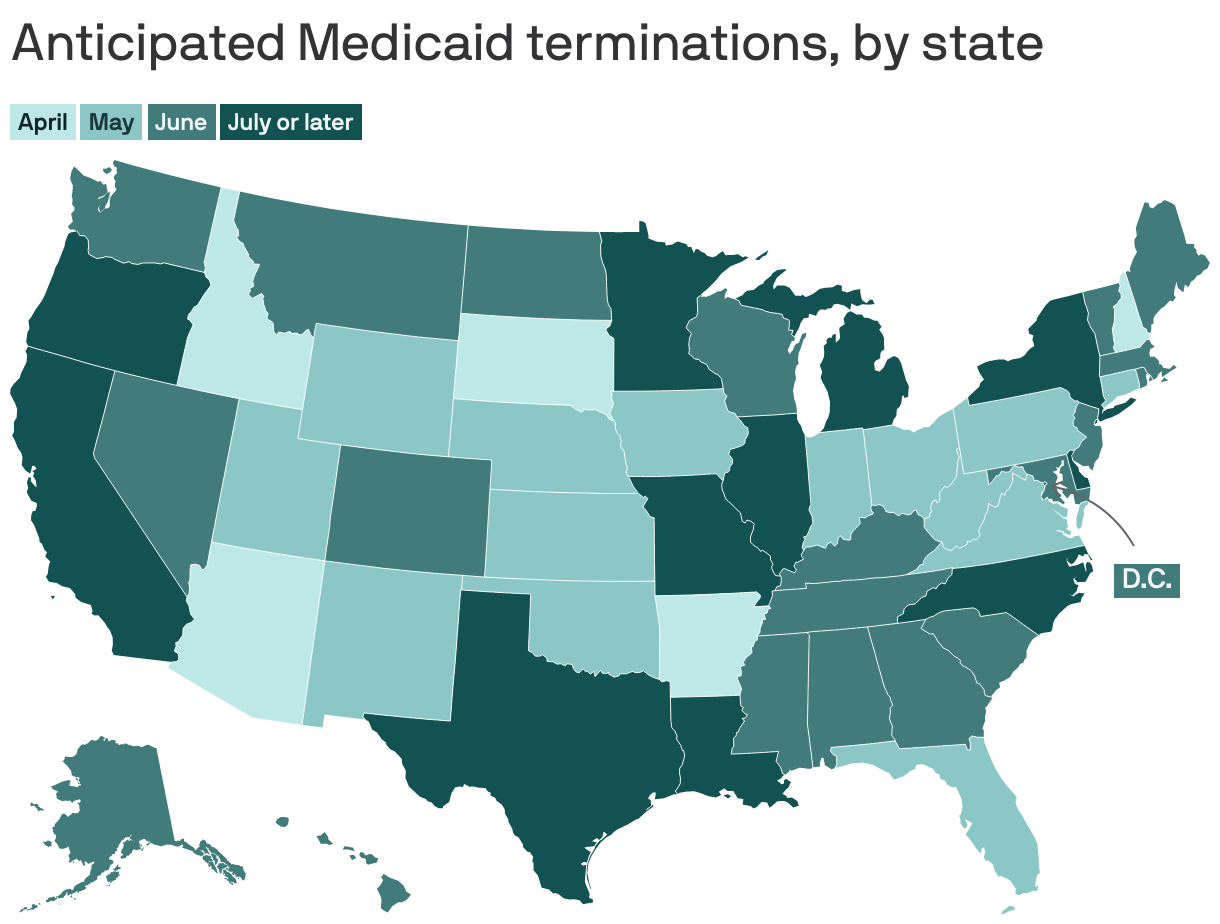
More than 725,000 Medicaid recipients have been pushed off the safety net program's rolls as of last week, based on data from 14 states that are unwinding a pandemic-era policy that assured continuous coverage, according to a KFF tracker.
Why it matters: While some of the individuals have lined up other forms of health coverage, most are falling victim to bureaucratic churn because they didn't complete the process for renewing coverage or because states had outdated contact information.
A fight is heating up over a plan to keep drugmakers from gaming the patent system that would potentially lower drug prices as senators weigh a broader health care package.
But the outcome is far from certain, given the range of competing health care interests.