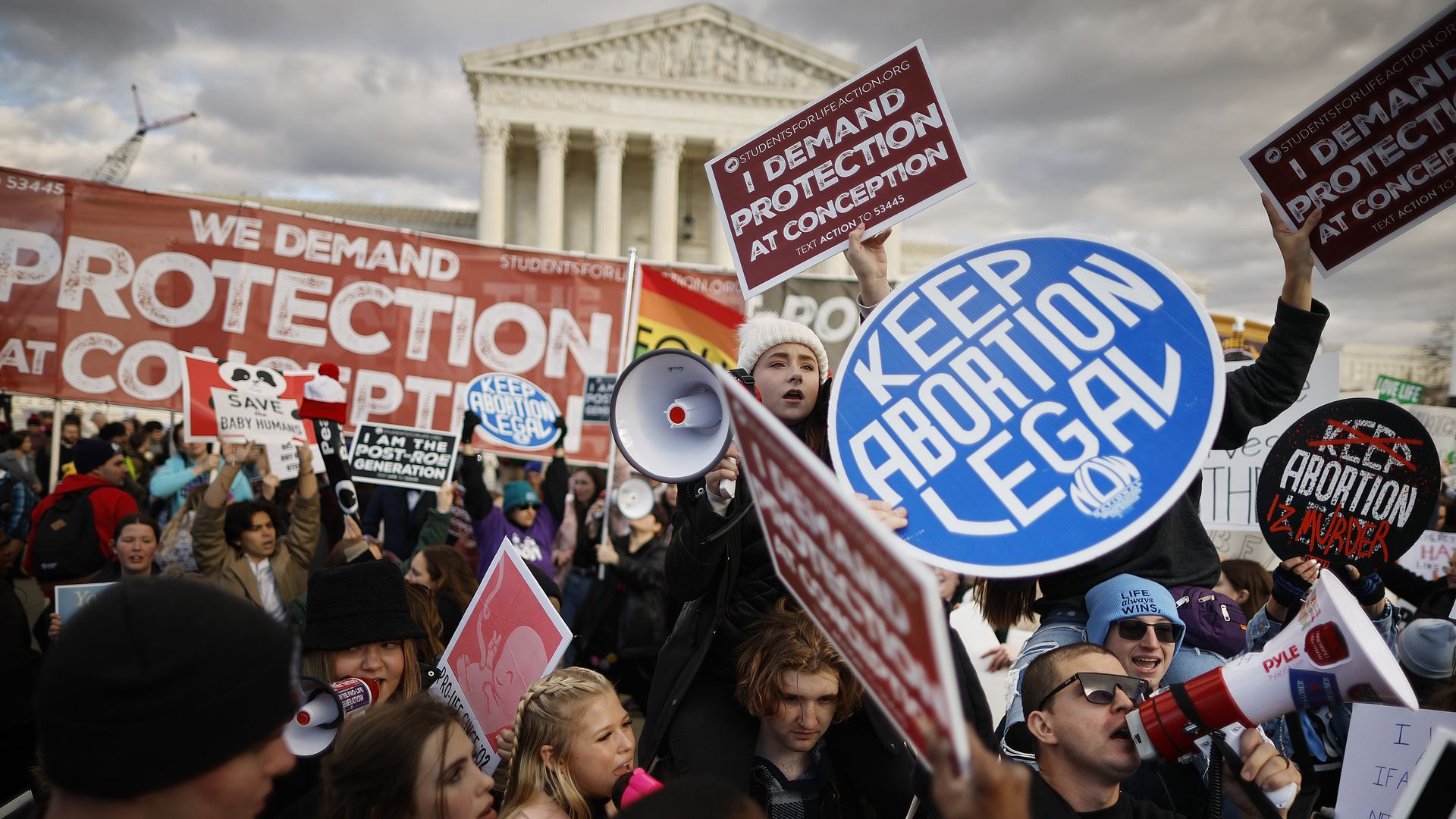
The Supreme Court on Friday temporarily blocked lower court orders that imposed restrictions on the widely used abortion pill mifepristone, keeping the status quo for the most common form of medication abortion while a legal challenge to the Food and Drug Administration's authority plays out.
Why it matters: The decision forestalled what would have been an unprecedented court-ordered rollback of FDA powers and at least temporarily settled a legal standoff arising from conflicting orders issued by separate federal courts on abortion pills.
Why it matters: Justices have another high-profile abortion fight on their doorstep less than a year after overturning Roe v. Wade, ending federal protections on abortion.
As alarm over the fentanyl epidemic grows in the U.S., Republicans, including Donald Trump, are proposing military strikes against Mexican cartels, the Biden administration is urging Mexico and China to clamp down, and the leaders of those countries are making clear they see this as an entirely American problem.
Why it matters: “Fentanyl is the single deadliest drug threat our nation has ever encountered,” U.S. Drug Enforcement Agency administrator Anne Milgram testified during a Senate hearing in February.
A Biden administration effort stemming from the 21st Century Cures Act to make health data sharing more transparent is facing pushback from health insurers.
Why it matters: The rule from the Office of the National Coordinator for Health Information Technology aims to get providers and payers to share patient health information in a more seamless way.
The Supreme Court could rule as soon as today in the legal battle over abortion pills — and could effectively override the Food and Drug Administration's decision-making if it doesn't turn back a ruling limiting the use of the drug mifepristone.
Why it matters: Until last week, such a sweeping blow against the FDA's authority would have been unprecedented. Now it's a real possibility — one that could quickly threaten access to the pill used in more than half of U.S. abortions.
Undocumented immigrants who were brought to the U.S. as children could enroll in Medicaid, the Children's Health Insurance Program and Affordable Care marketplaces under a proposal the Biden administration submitted on Thursday.
Why it matters: The plan could trigger a fight with conservatives who've resisted expanding Medicaid and are sharply at odds with the administration over immigration policy.
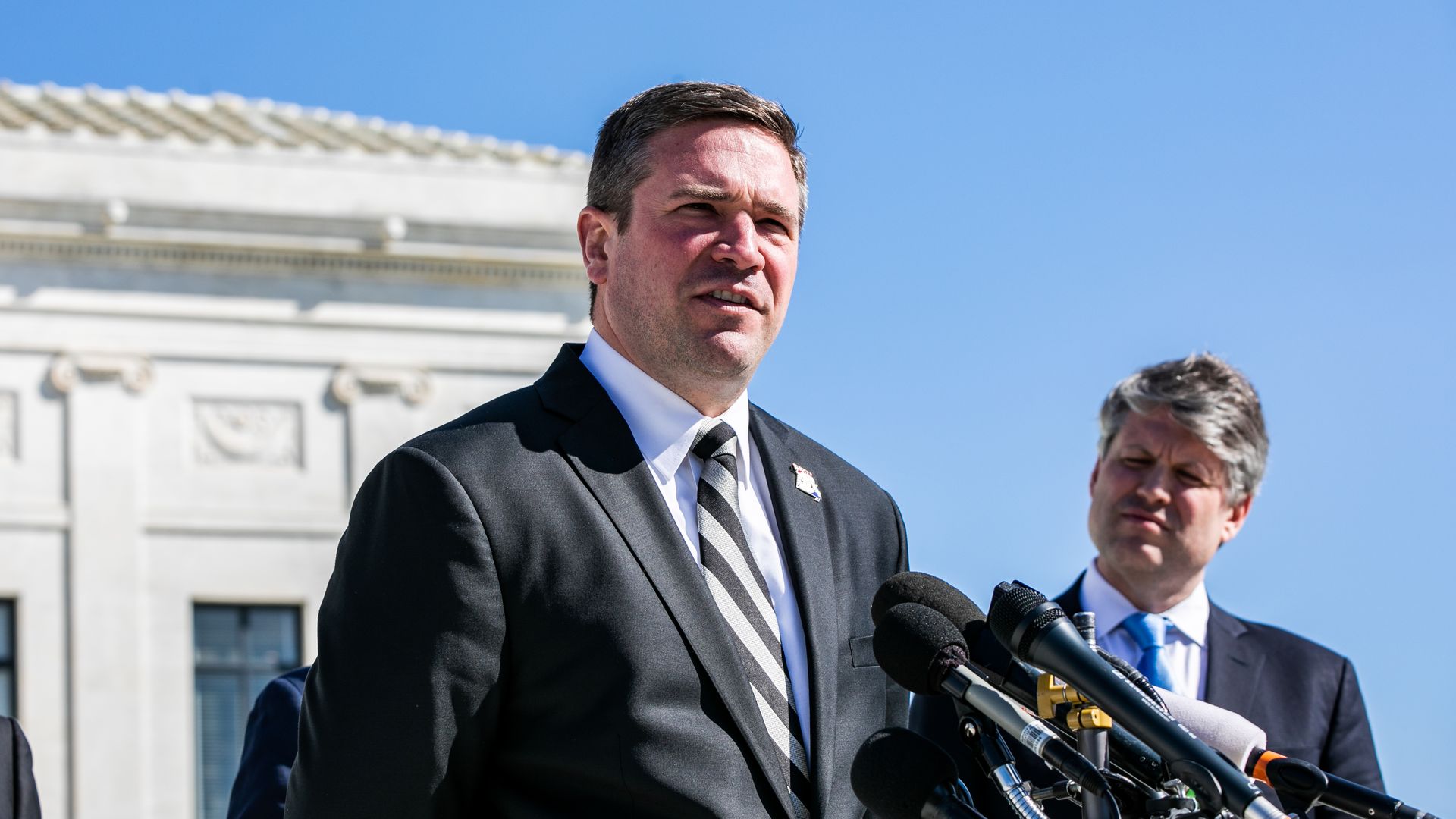
Missouri Attorney General Andrew Bailey issued new regulations Thursday severely limiting gender-affirming care for both adults and youth.
Driving the news: ACLU and Lambada Legal announced they'll take legal action to challenge the order, which states that it's "unfair, deceptive, fraudulent, or otherwise unlawful" to provide a gender affirming care to patients without informed consent and lengthy evaluations.