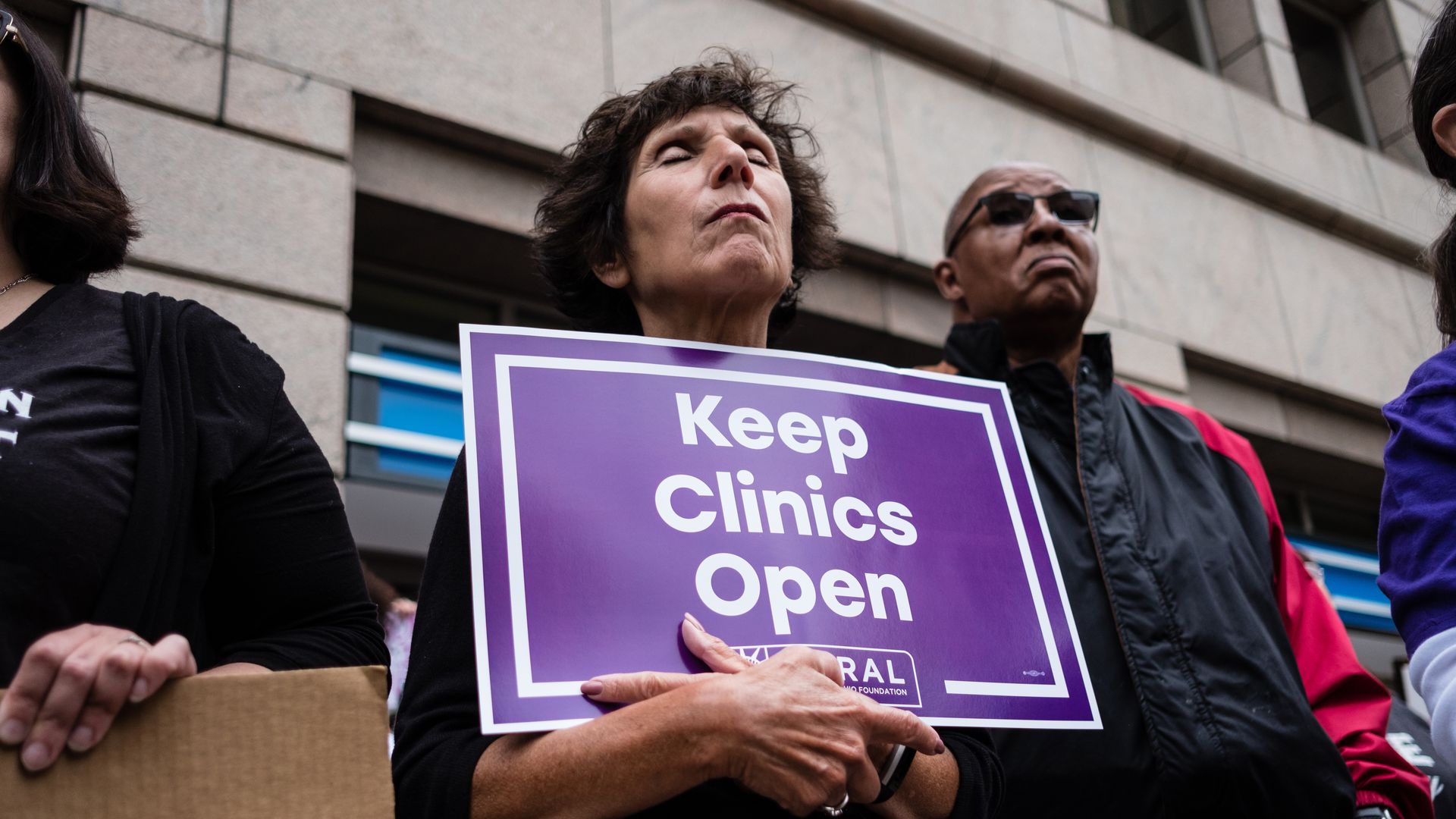
Why it matters: Abortion providers in Ohio filed a lawsuit challenging the state's ban after it took effect following the fall of Roe. Wednesday's ruling means abortions in Ohio are now legal again up to 22 weeks, effective immediately.
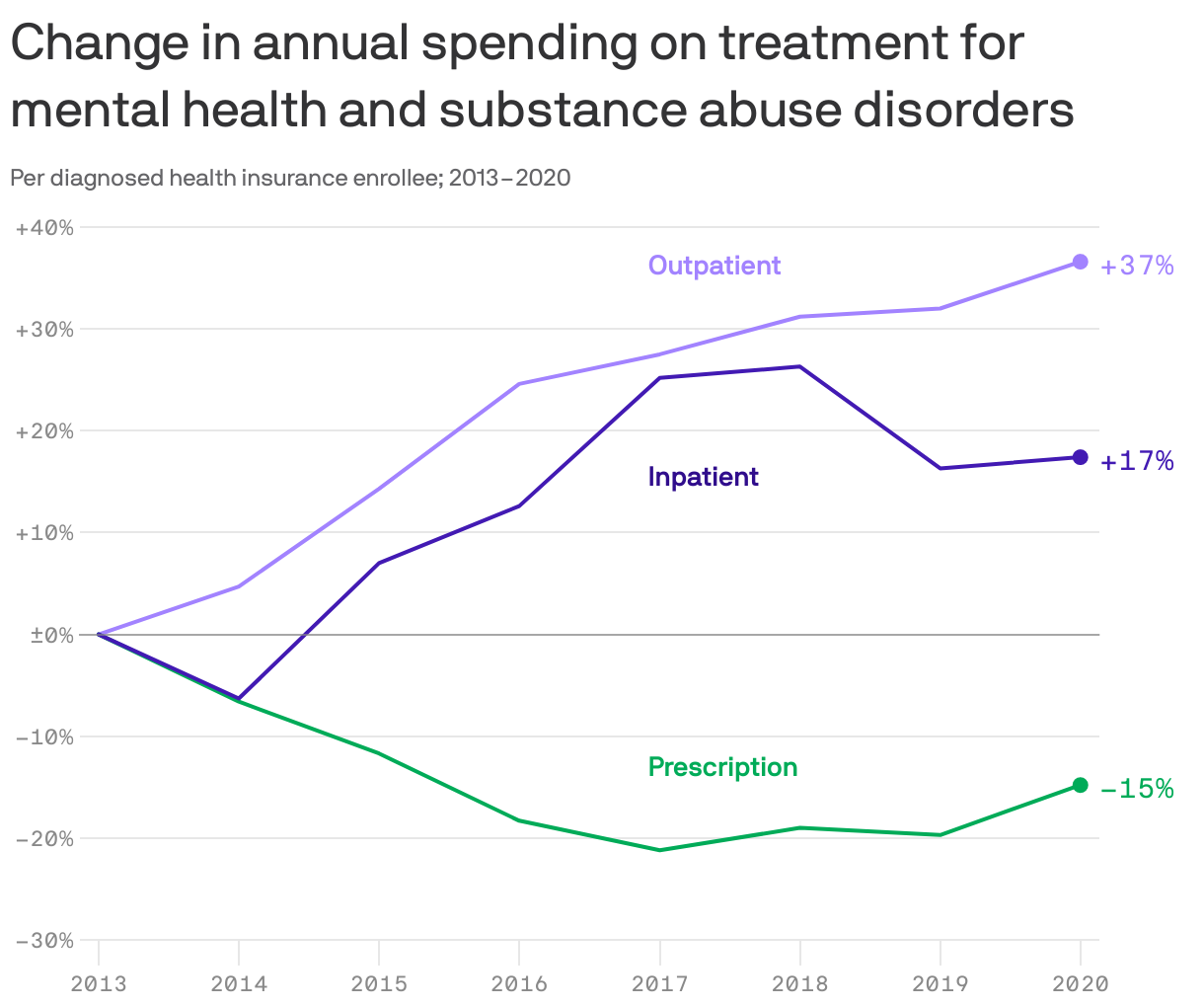
Average annual spending on mental health services by individuals enrolled in employer-sponsored health plans covered reached $2,380 per enrollee in 2020, up 20% since 2013, according to a report from the Employer Benefit Research Institute.
Between the lines: While spending on mental health rose on average of 3% a year, the increase wasn't evenly distributed.
The World Health Organization added the U.S. to the list of countries where vaccine-derived poliovirus is circulating according to a CDC announcement.
Why it matters: The U.S. joins a list of about 30 other countries, including Israel and the U.K., where circulating vaccine-derived polioviruses have been identified, the CDC said.
WHO Director-General Tedros Adhanom Ghebreyesus said Wednesday that the end of the pandemic "is in sight," but cautioned that "we are not there yet."
Driving the news: "We have never been in a better position to end the pandemic," Tedros said, noting that the number of deaths from COVID-19 last week was the lowest it's been since March of 2020.
Acelyrin, a Los Angeles-based biotech focused on inflammatory diseases like psoriatic arthritis and axial spondyloarthritis, raised $300 million in Series C funding led by Access Biotechnology.
Why it matters: This is a departure from biotech VC's current obsession with proprietary drug discovery platforms. Acelyrin bought its lead candidate and is focused on later-stage development and commercialization. It's not a unique strategy, but one that's become overshadowed.
Johns Hopkins University is scaling back how much and how frequently it tracks COVID-19 pandemic metrics due to a slowdown in local data reporting, the university confirmed to Axios.
Why it matters: There will be less attention on COVID case numbers and deaths, which could leave Americans in the dark about future surges.
Senate Democrats are hoping to persuade their GOP colleagues to approve new funding to fight monkeypox, but several Republicans say the public health funding Congress has already provided should be enough.
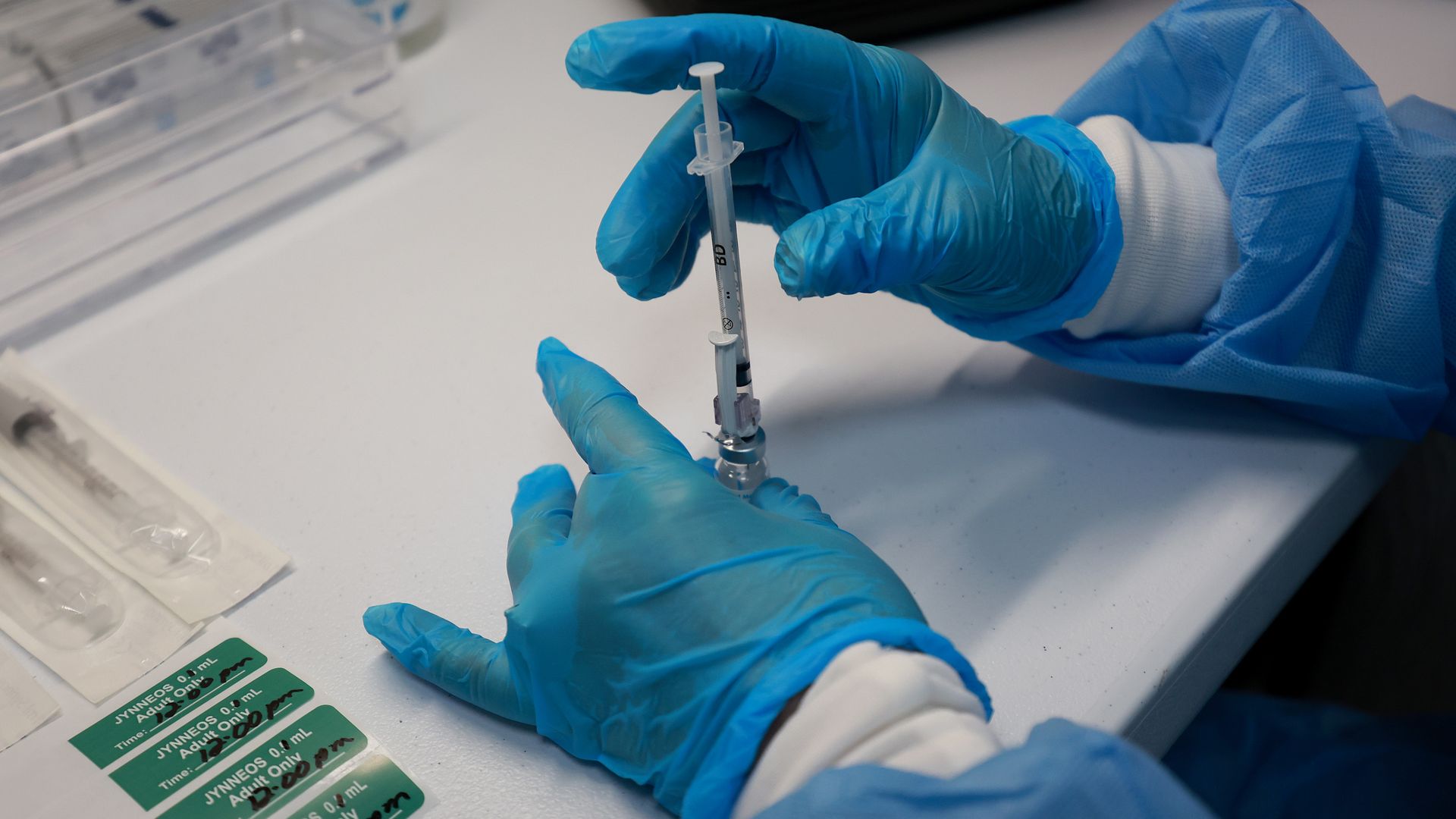
Why it matters: The World Health Organization has labeled the outbreak a global health emergency, but limited vaccine supplies could undermine efforts to protect the most vulnerable people.
Sen. Lindsey Graham's 15-week abortion ban appears to be a political gift to Democrats less than two months before the midterm elections, but it syncs with nearly half of Americans' views on when the procedure should be legal.
The big picture: Elections aren't won on nuance, and most nationally-elected Republicans have gone silent on the subject in the final stretch of the campaign. In the long run, however, abortion politics will likely pivot around which party can most successfully brand the other side as extreme.
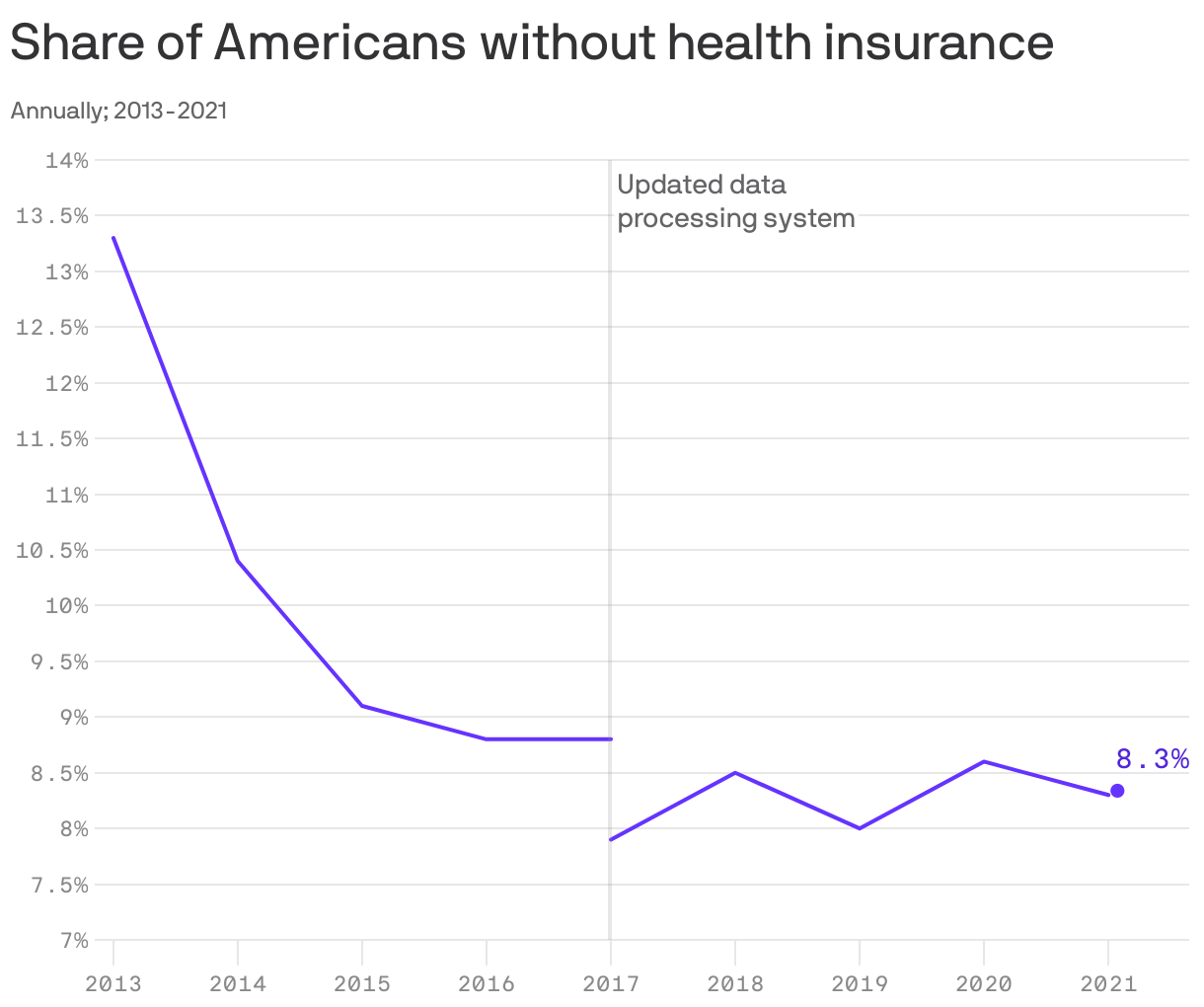
Data: U.S. Census; Chart: Axios Visuals. Footnote: An updated data processing system was implemented beginning with data year 2018 estimates. This system introduced demographic edit changes, revised procedures for editing and added new income and health insurance variables.
The number of Americans without health insurance fell by a million people in 2021, according to U.S. Census Bureau data published yesterday.
Why it matters: Despite COVID-19 and the economic uncertainty it spawned, the uninsured rate remained stable due to enhanced Affordable Care Act subsidies and the Medicaid continuous coverage provisions Congress enacted in response to the pandemic.
California Gov. Gavin Newsom (D) announced Tuesday that the state has launched a website to help people both inside and outside of the state access information about abortions, their legal rights and where to find providers.
As the U.S. rolls out updated mRNA-based COVID shots, a growing chorus of experts say it's a mistake not to focus on treatments that boost immunity through mucous membranes.
Why it matters: Next-generation nasal or oral vaccines could quickly boost the immune response in the very airways where COVID-19 enters the body and ultimately break our reliance on the constant development of reformulated shots to target new variants of concern.
The FDA's decision to consider the first birth control pill that could be sold without a prescription may solve some contraception access problems. But gaps in insurance coverage rules could make it unaffordable for some.
Why it matters: Birth control has been crucial in reducing unwanted pregnancies, and advocates say that making it as widely and easily available as possible is even more important now that abortions are banned in many states
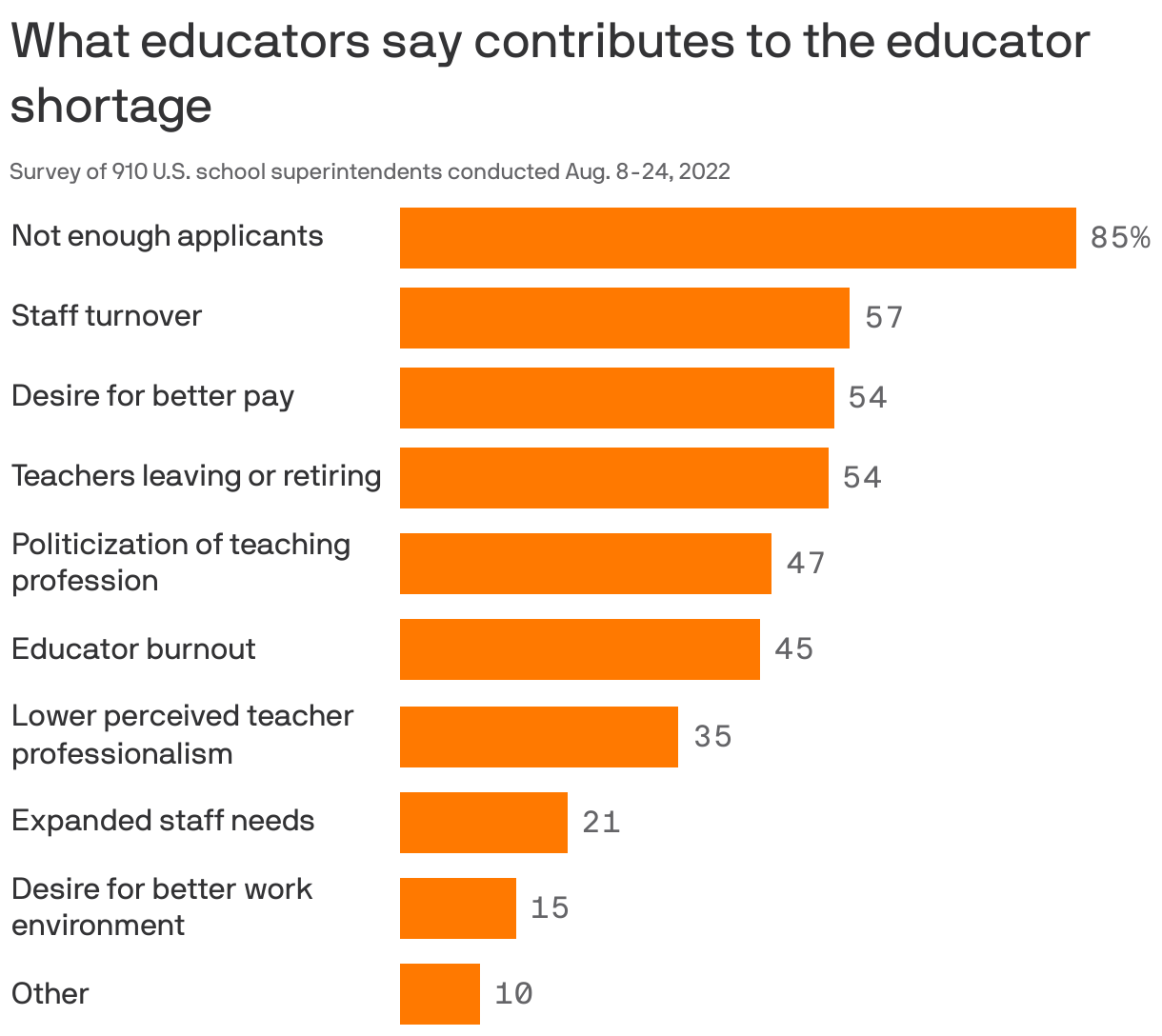
Reproduced from AASA; Note: Respondents could select multiple options; Chart: Axios Visuals
Two-thirds of U.S. public school superintendents say overall vacancies — including teachers and non-instructional staffers — are higher this year than last, a survey by AASA, The School Superintendents Association, found.
About 15% report a lot more openings, saying vacancy rates are 11%-30% higher than last year.
Safety net hospitals are marking up the cost of drugs they buy through the government's discount drug program by as much as 11 times the cost, according to a new report provided first to Axios by the Community Oncology Alliance (COA).
Why it matters: It's the latest evidence of how providers can benefit from the federal 340B drug pricing program, which provides discounted medicines to ensure access to low-income patients.
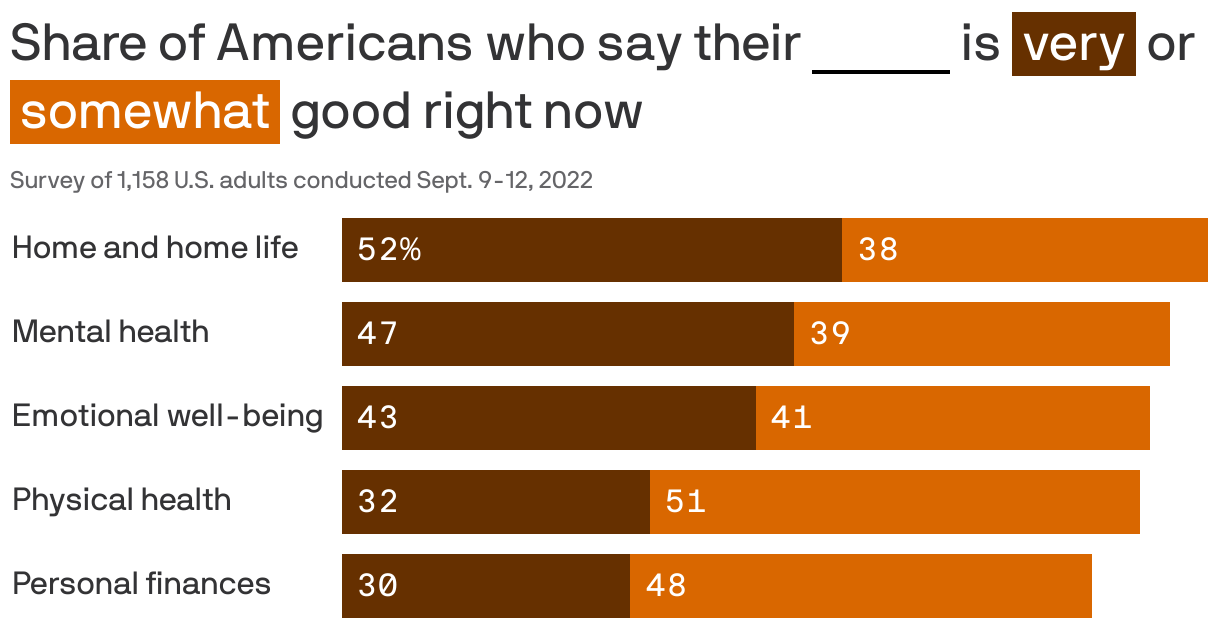
Two and a half years into the pandemic, Americans say they’re doing well in most aspects of their lives — except possibly their personal finances, according to the latest installment of the Axios/Ipsos Coronavirus Index.
Why it matters: Many of us appear ready to roll the credits on the pandemic, despite lingering political divisions over the response and some residual distrust of government and some health institutions.
We asked readers of Axios Finish Line to tell us about random acts of kindness they've experienced in life. And we were struck anew by the eternal reality:
Little things matter.
The big picture: The simplest gestures were remembered and recounted years — sometimes decades — later. One takeaway is that good deeds aren't as common as we might think or hope. The fact that people treasured them is a sign of their rarity.
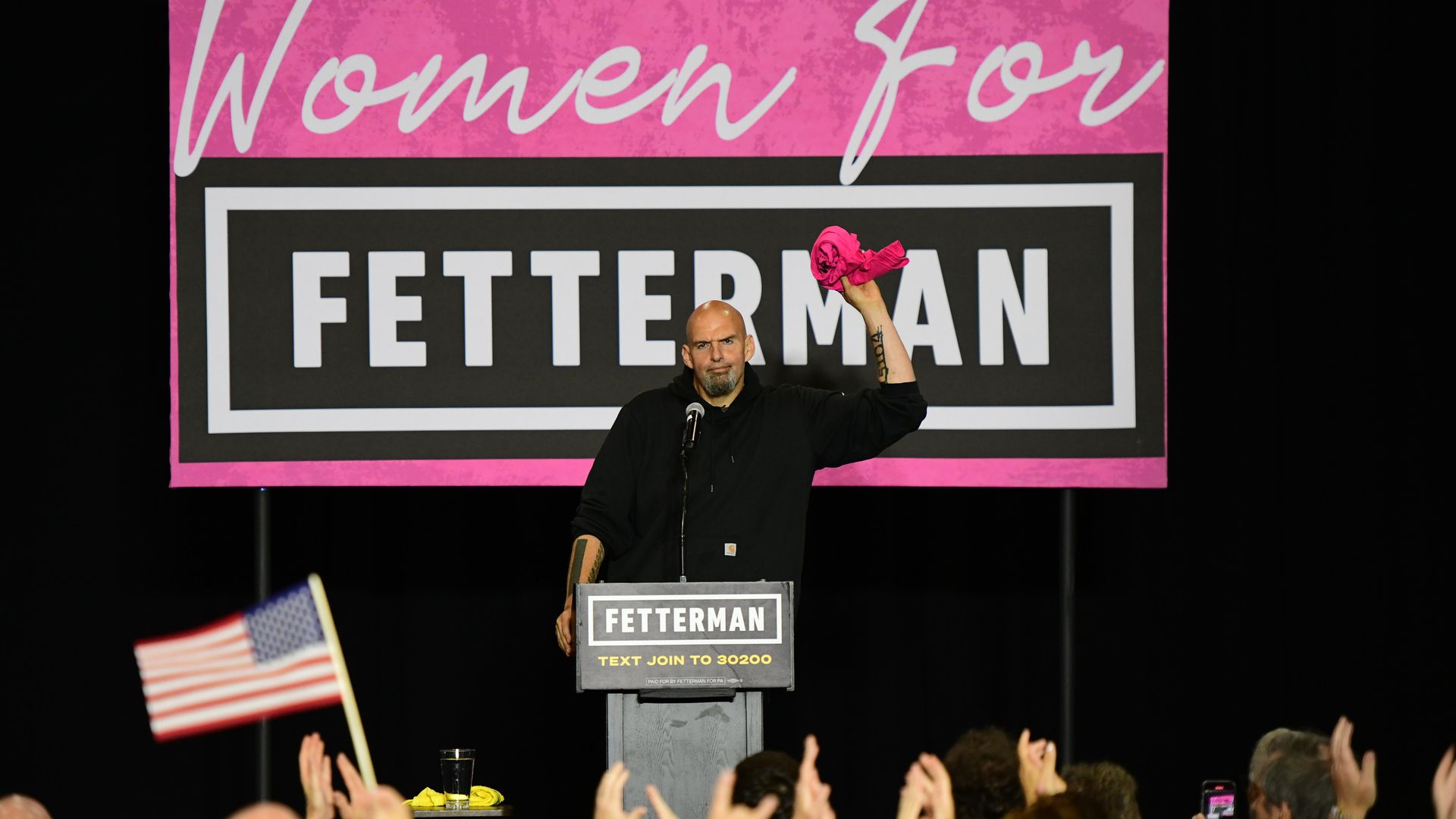
BLUE BELL, Pa. — As the hulking man tossed pink T-shirts into the crowd and roared, "I am John Fetterwoman," he drew conservative commentators' ire but screams of approval from a heavily female abortion-rights crowd.
Why it matters: Since his stroke, Lt. Gov. Fetterman, this swing state's Democratic nominee for Senate, has gingerly returned to the trail.











/2022/09/13/1663101029555.gif?w=3840)