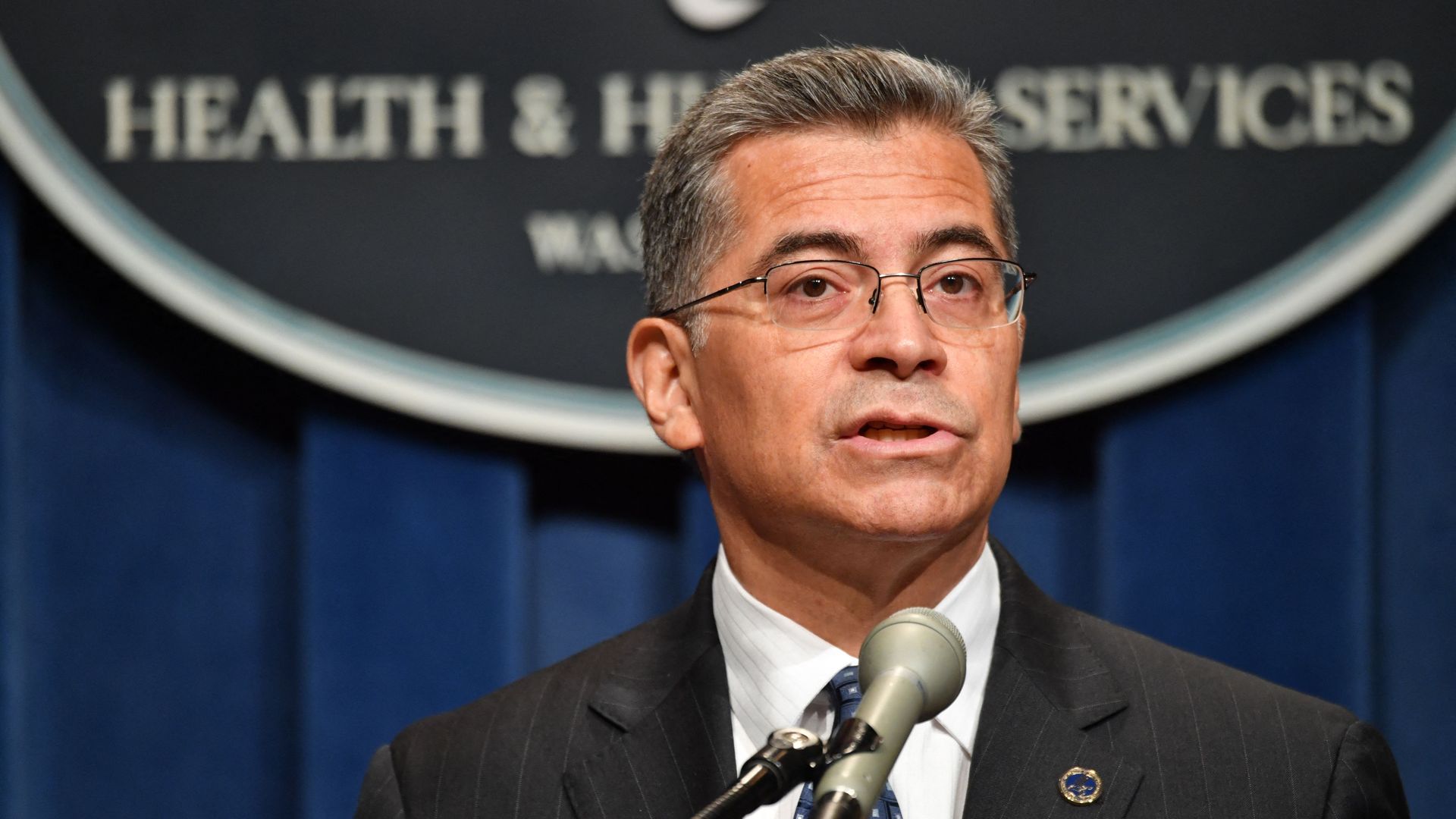
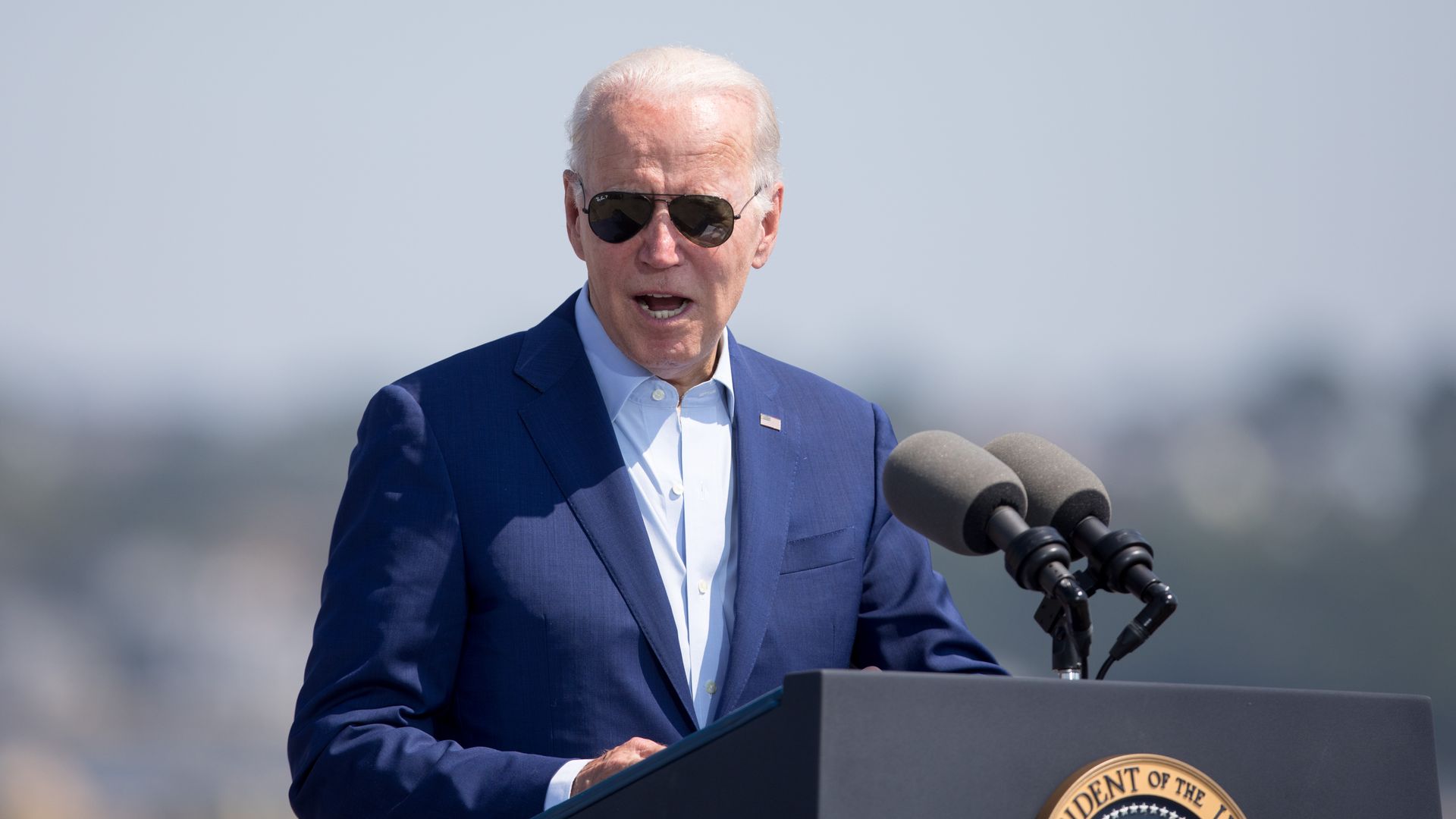
The Department of Health and Human Services on Monday announced a proposed rule to strengthen protections against sex discrimination and reiterates that people cannot be discriminated against for seeking reproductive health care.
Driving the news: Under the Trump administration in 2020, HHS rescinded an Obama-era regulation on the Affordable Care Act that prohibited against discrimination on gender identity and sexual orientation. This new proposed rule would reverse that Trump-era change.
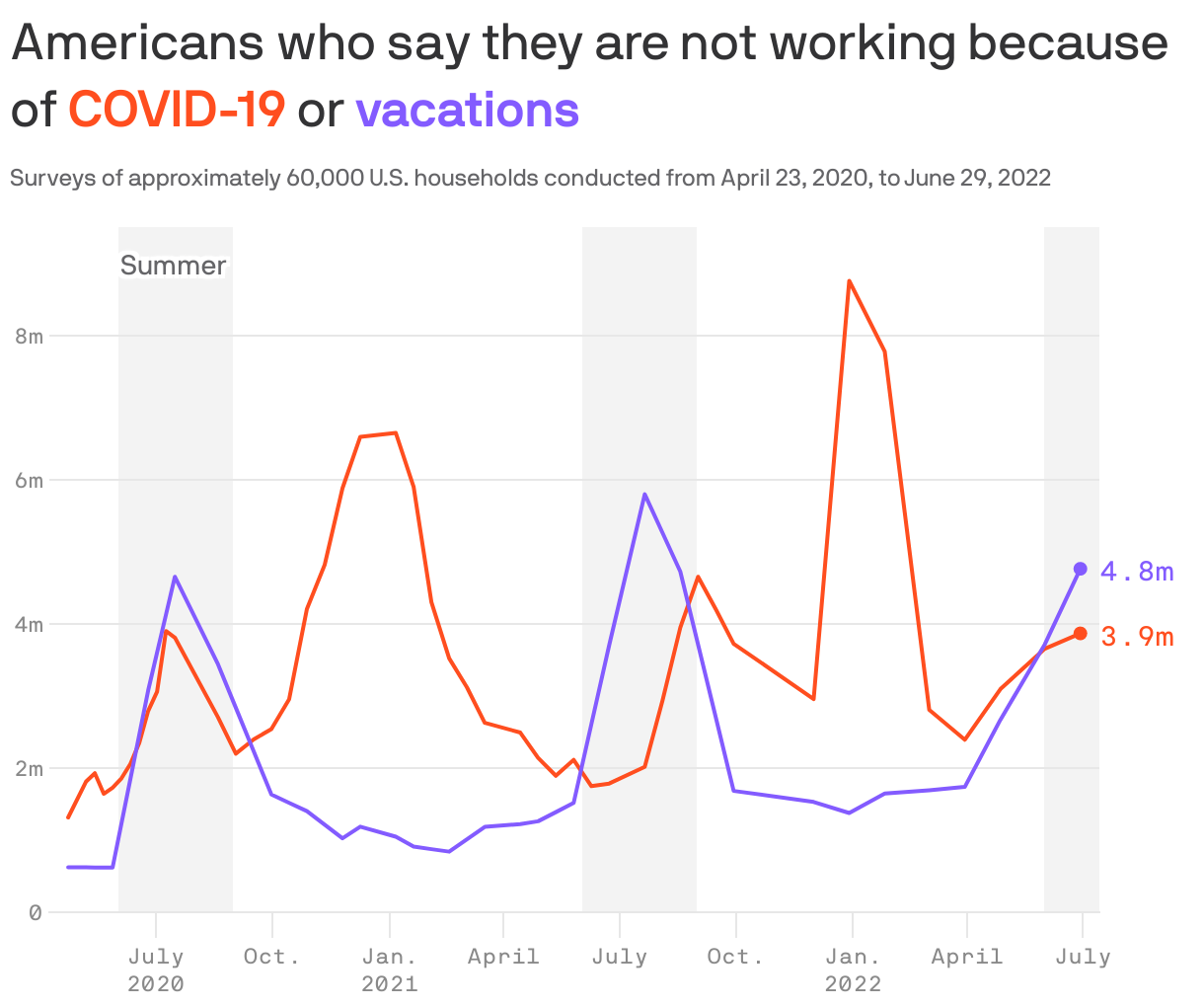
Note: Surveys of Americans who say they are not working because they have or are caring for someone with COVID-19 were conducted weekly through July 21, 2020 and biweekly thereafter. Surveys of Americans who are taking vacations from work are conducted monthly. Data: U.S. Census, Bureau of Labor Statistics; Chart: Erin Davis/Axios Visuals
COVID-19 cases are on the rise with extremely transmissible Omicron BA.5 variant, and businesses — already struggling with labor shortages — are dealing with an influx of workers calling out sick.
By the numbers: Between June 29 and July 11, nearly 3.9 million people said they did not work because they were either sick with coronavirus symptoms or were caring for a sick loved one, according to recent Census Bureau data.
In comparison, almost 1.8 million people around the same time last year said they missed work for those reasons.
Indiana on Monday is convening a special legislative session to consider a new bill that would completely ban abortion except in cases of rape or incest or if the pregnant person's life is at risk.
Why it matters: Though Indiana didn't have a trigger ban in place for the fall of Roe, "the legislature has enacted 55 abortion restrictions and bans, paving the way for a comprehensive ban," according to Guttmacher Institute, a research organization that support abortion rights.
The more than 150 million Americans who get their health coverage through work face significant inequities by race and ethnicity while managing complex health conditions, a new analysis from Morgan Health and NORC at the University of Chicago finds.
Why it matters: While there's a perception employer-sponsored insurance delivers robust coverage, researchers found major gaps in how certain socioeconomic groups in plans managed chronic disease, accessed care and dealt with behavioral and substance use issues.
As Democrats enter a crucial week in their bid to pass a huge health care bill without Republican votes, they have yet to decide how to target hundreds of billions of dollars in spending — a call heavily dependent on politics and Senate rules.
Why it matters: The party seems willing to do whatever it takes to lower prescription drug prices and prevent massive Affordable Care Act premium hikes in the fall. What else — if anything — can be included in the package will depend on how much money they have available, and how much of that Sen. Joe Manchin is willing to spend.
Biological and chemical weapons have the potential to pose a national security threat to the U.S. that the country is not equipped to handle, a panel of lawmakers and a military leader told an audience at the Aspen Security Forum on Friday.
Why it matters: The COVID-19 pandemic underscored how globally debilitating and dangerous pathogens could be if deliberately engineered and released.
Driving the news: Biden, who tested positive for COVID-19 on Thursday, was likely infected by the highly transmissible Omicron subvariant BA.5 but has experienced mild symptoms thus far.