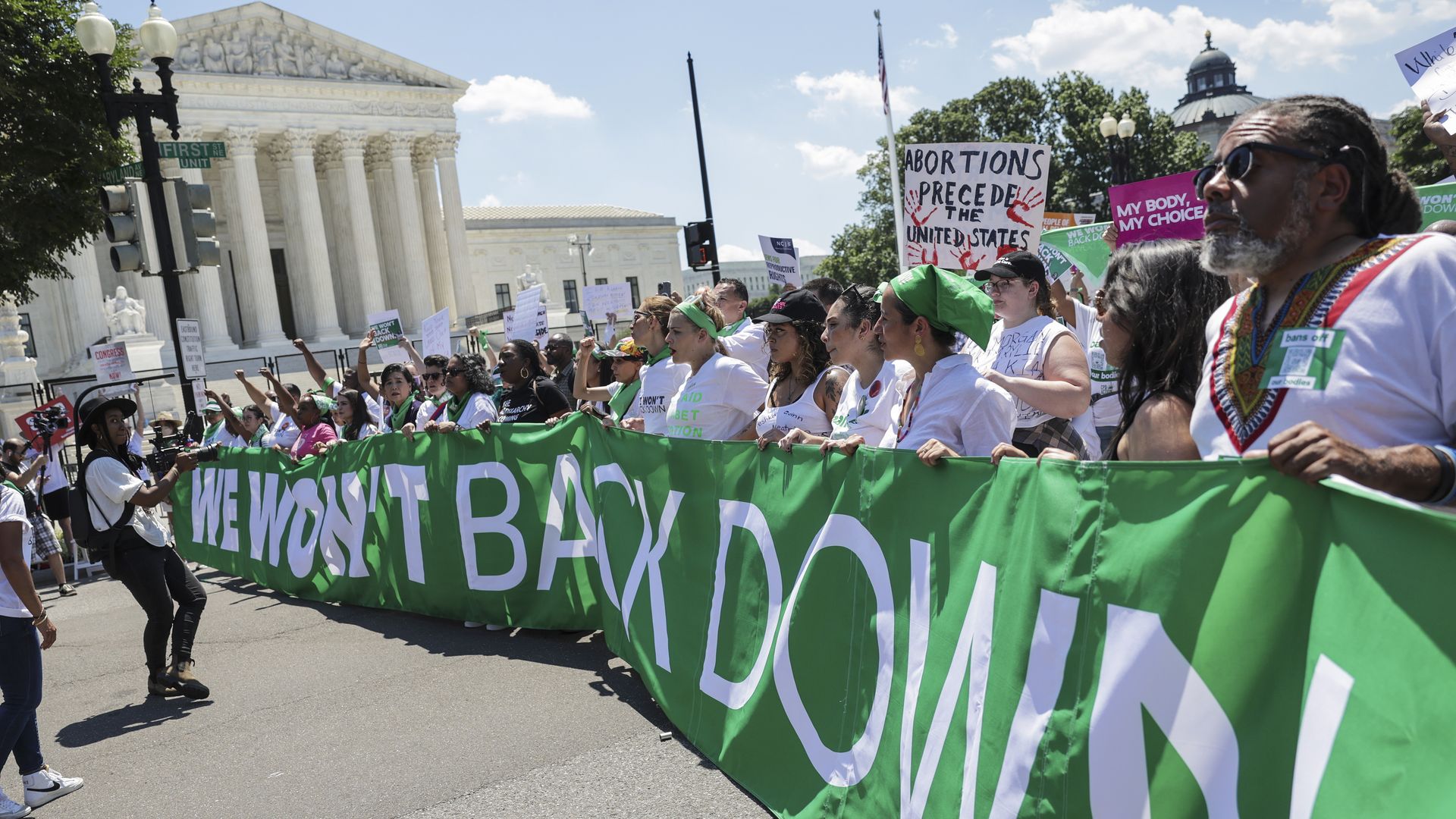
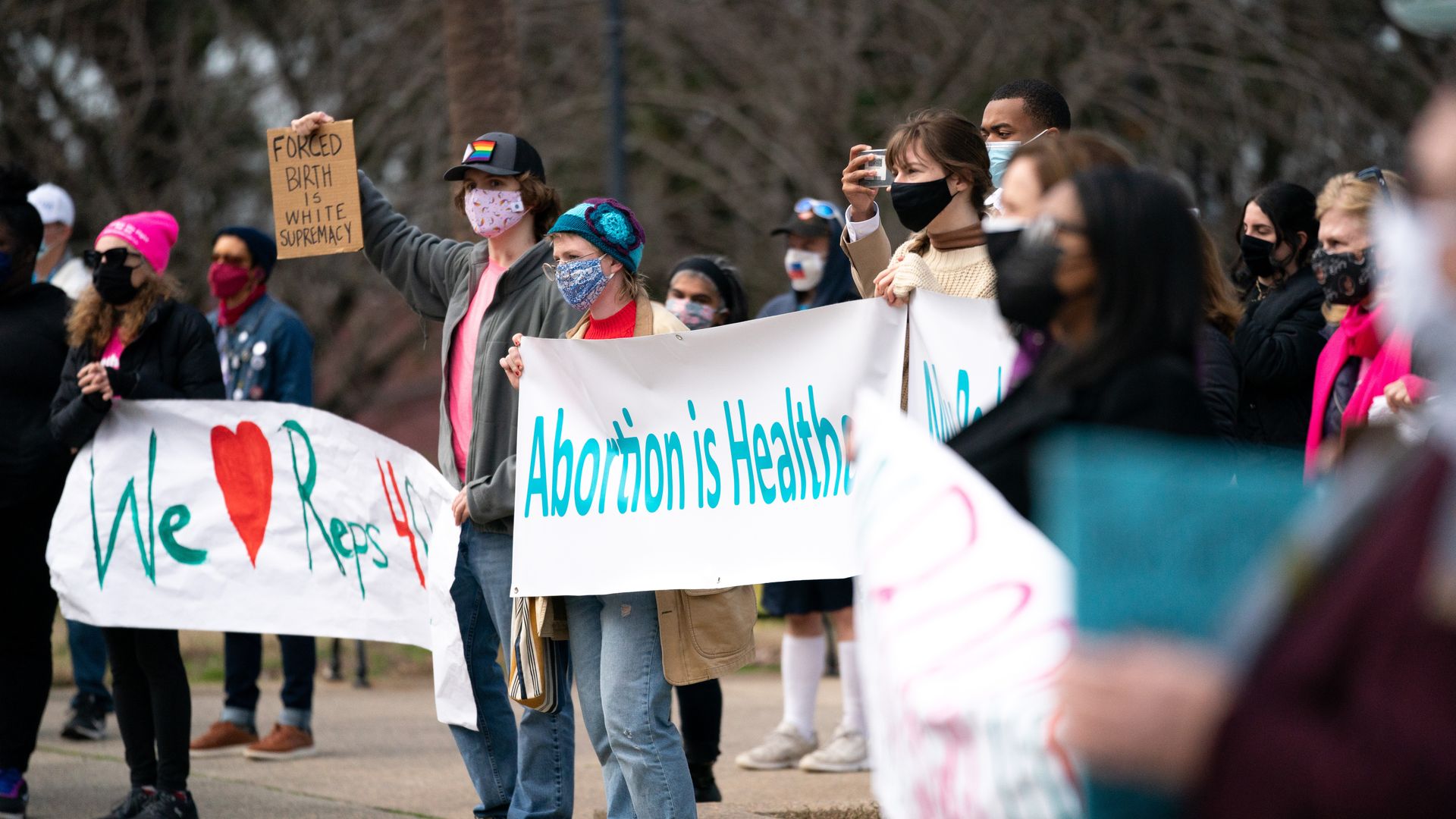
A state judge in North Dakota on Wednesday temporarily blocked the state's trigger abortion ban, a day before it was scheduled to take effect.
Driving the news: The state's only abortion clinic — Red River Women's Clinic — had sued the state arguing the ban violated the North Dakota Constitution.
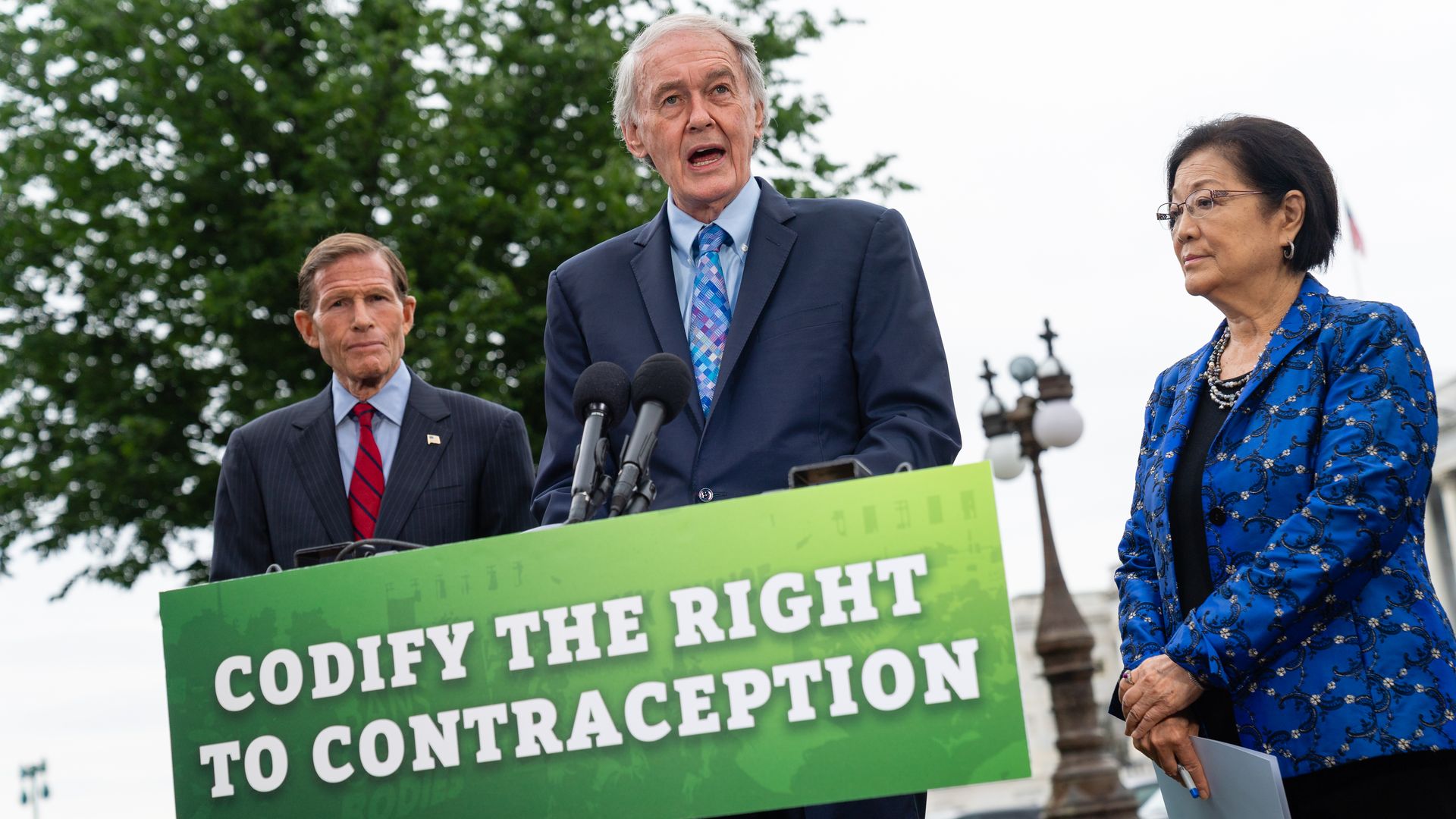
Sen. Joni Ernst (R-Iowa) on Wednesday blocked a unanimous consent request to pass legislation that would have created a federal right to birth control use.
Driving the news: Democrats moved to pass the bill through unanimous consent — meaning the bill would have been deemed passed had no one objected —in response to Justice Clarence Thomas' concurring opinion overturning Roe v. Wade, in which he said the Supreme Court should reconsider its precedents that protect access to contraceptives.
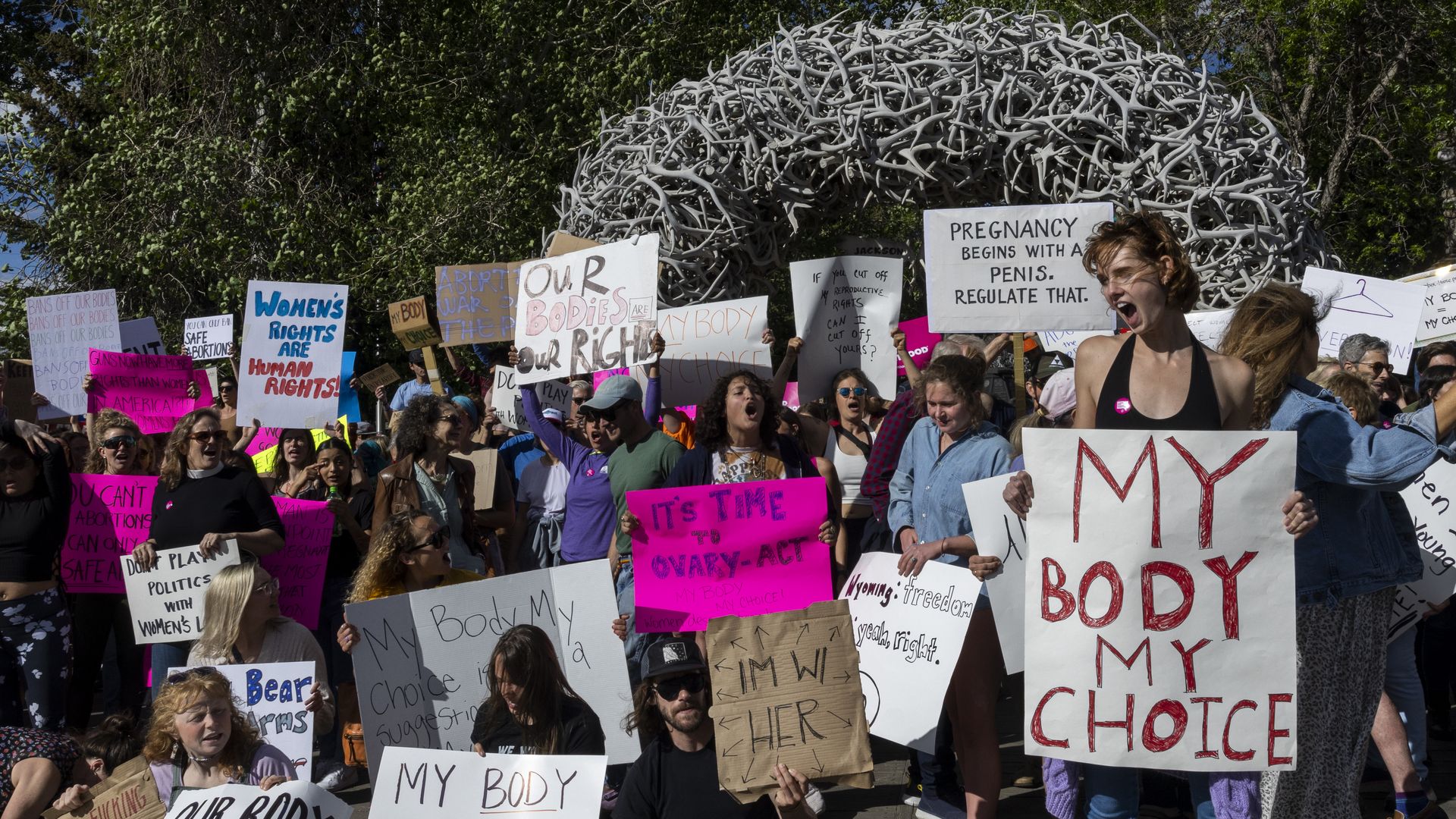
A judge in Wyoming on Wednesday temporarily blocked the state's trigger abortion ban, just hours after the law took effect.
Driving the news: Health providers filed a lawsuit against Wyoming state officials earlier this week challenging the law, saying that it violates the state's constitution because it takes away people's rights around family composition and making decisions around their private health care.
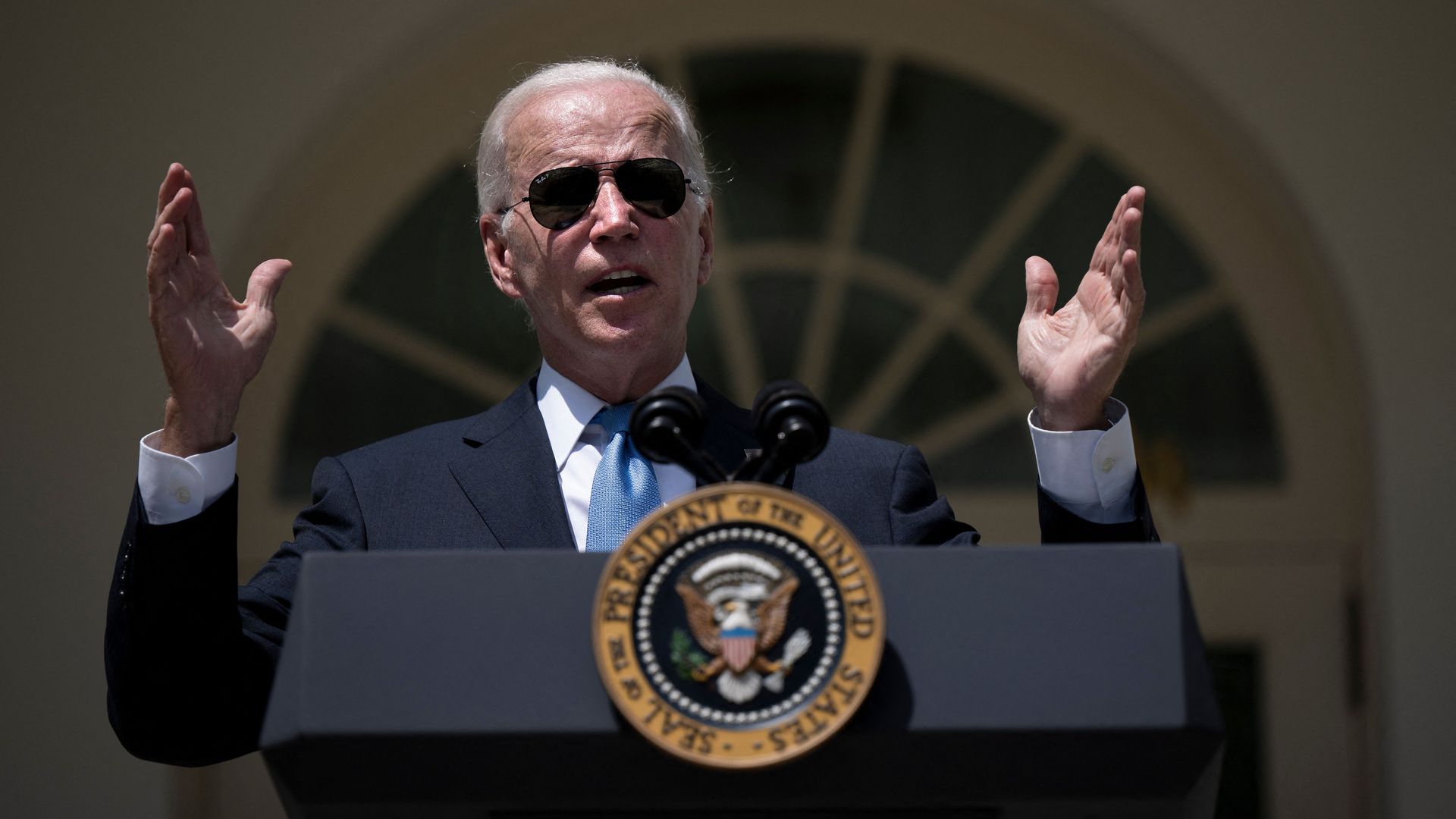
President Biden has twice tested negative for coronavirus and will "discontinue his strict isolation measures," his physician wrote in a letter on Wednesday.
State of play: Biden will continue to wear a "well-fitting mask" for 10 full days when he's around others, Biden's physician, Kevin O'Connor, said.
Democrats' push to allow Medicare to negotiate prescription drug prices has been limited to older drugs without generic competition, but even so, many of the program's costliest medicines would still be eligible.
Why it matters: Direct government negotiations would plug some holes in the system, which is dependent on market competition to contain prices. But it turns out there are a lot of holes, and even older drugs with generic competition can cost the federal government billions of dollars each year.
Dr. Caitlin Bernard told "CBS Evening News" anchor Norah O'Donnell on Tuesday night that people are beginning to realize the real impact of the Supreme Court’s decision to overturn Roe v. Wade.
What she said: "We're at a time in our country where people are starting to realize the impact of these abortion laws ... when it's finally become impossible for some people," she said. "I think people realize that's not actually what they intended, that is not what they want."
A market in Wuhan, China, was the epicenter of the COVID-19 pandemic, and the virus emerged from activities connected with the live animal trade, according to research published in Science on Tuesday.
Why it matters: The case-mapping and genetic studies offer some of the strongest evidence yet that the coronavirus jumped from an animal host to humans — a type of zoonotic spillover seen in other outbreaks like SARS, from 2002 to 2004.
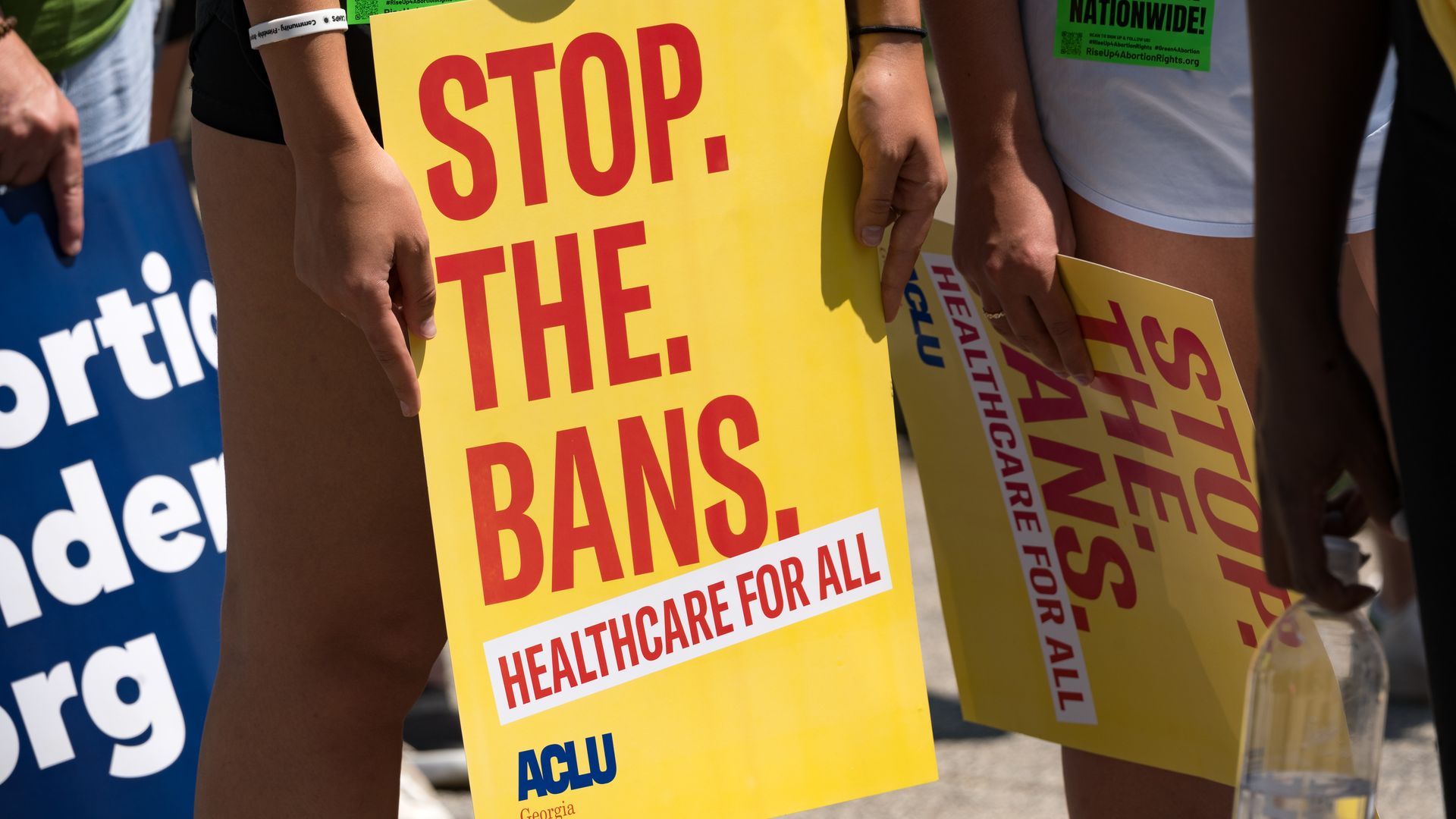
Health care providers and abortion rights advocates are suing the state of Georgia to challenge a six-week abortion ban, which took effect last week.
Driving the news: The six-week ban had been blocked since 2019. Three weeks after the Supreme Court overturned Roe v. Wade, a federal judge lifted the injunction of the law, allowing it to become enforceable immediately.
A South Carolina judge on Tuesday said that the state's six-week abortion ban can continue to be enforced as a case challenging the law proceeds.
Driving the news: Abortion providers filed a lawsuit challenging the ban, which had been blocked since 2021, after a federal district court allowed for it to take effect following the Supreme Court's decision to overturn Roe v. Wade.
A U.S. district court will hear arguments on Tuesday in a case challenging the Affordable Care Act's requirement that HIV preventative medication be fully covered by insurance.
Driving the news: Jonathan Mitchell, Texas' former solicitor general who helped write part of the state's six-week abortion ban, argues that mandatory HIV pre-exposure prophylaxis, known as HIV PrEP, violates the Religious Freedom Restoration Act, a law that "ensures that interests in religious freedom are protected."
Frequent use of cannabis with higher levels of THC could increase the risk of psychosis, according to a Lancet Psychiatry analysis of 20 studies covering more than 119,000 patients.
Why it matters: Cannabis use has been linked to mental health diagnoses before, but the review is the first of its kind to break down the connection between potency, mental health and addiction.
More than four in 10 parents of young children say they will definitely not vaccinate them against COVID-19, according to the Kaiser Family Foundation’s latest vaccine monitor survey.
The big picture: It’s the first measure of parents’ sentiment since the FDA in June authorized two COVID-19 vaccines for use in children from 6 months to 4 years old.
The post-Roe battlefield is spreading to pharmacies, where drugs that can cause fetal abnormalities or that have multiple uses that include ending pregnancies are being put through more scrutiny.
The big picture: Some patients with rheumatoid arthritis, lupus and stomach ulcers are facing delays getting critical treatments while providers verify the drugs' intended use to pharmacists and insurers.
The Affordable Care Act is once again being challenged in federal court, this time with big implications for the private insurance market that dovetail with concerns about contraception access in the post-Roe world.
Why it matters: A pending federal case takes up whether part of the law requiring coverage of preventive services is unconstitutional. If the plaintiffs are successful, millions of people could lose access to free services like cancer screenings, immunizations and contraception.