The head of the World Health Organization on Wednesday warned of the increasingly dire and "catastrophic" humanitarian crisis in Ethiopia's Tigray region, saying, "There is nowhere on Earth where the health of millions of people is more under threat."
Driving the news: As world leaders focus on Russia's war in Ukraine and the growing refugee crisis in Europe, UN bodies and humanitarian groups are urging nations to not forget other crises around the globe.
Health insurers that sell private Medicare plans collected $12 billion more caring for seniors in 2020 than it would have cost in traditional Medicare, according to a report from the Medicare Payment Advisory Commission.
It shows the need for major payment reforms, according to the report.
The White House is intensifying pleas for new emergency COVID funding, warning Tuesday that a continued standoff in Congress on the matter will result in cutbacks in the U.S. pandemic response as early as next week.
Why it matters: With many Americans and lawmakers eager to move on from the health crisis, the Biden administration is fighting an uphill battle trying to convince Congress that $22.5 billion in additional spending is worth it.
The Federal Emergency Management Agency announced Tuesday that it has provided $2 billion in financial assistance to families of COVID-19 victims to help cover funeral expenses.
Why it matters: COVID-19 has killed more than 966,000 people in the U.S. over the course of the pandemic, according to data collected by the Johns Hopkins University.
Pfizer and its partner BioNTech plan to seek emergency authorization for a second COVID-19 booster shot for people 65 and older, Axios has confirmed.
Driving the news: The move is an attempt to combat waning immunity that occurs several months after a first booster shot, according to the Washington Post, which first reported the news.
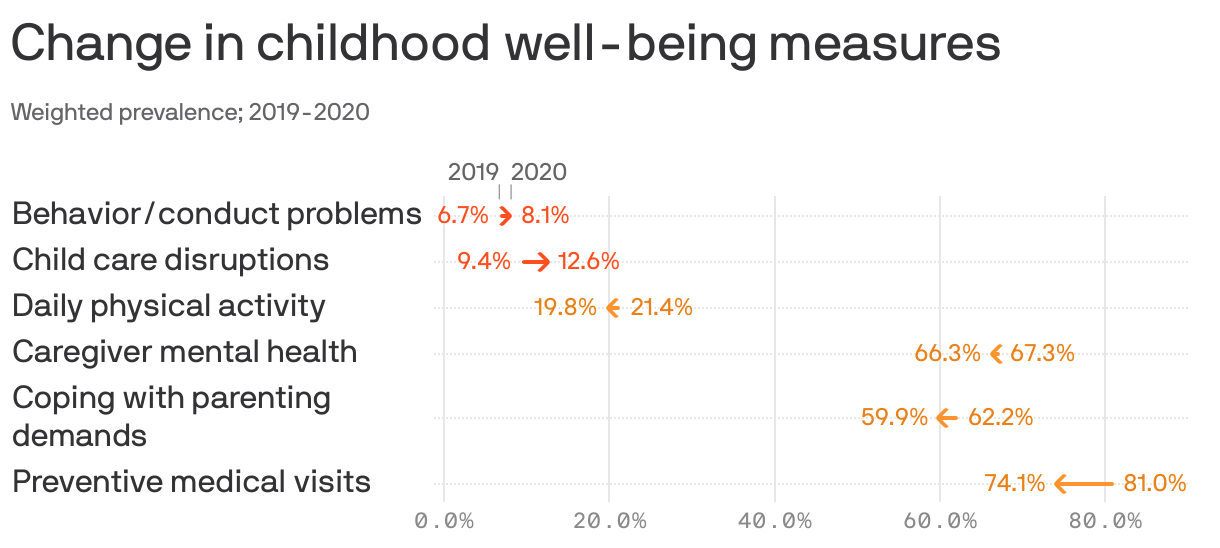
Critical measures of children's health are moving in the wrong direction in the U.S., according to a new study published in JAMA Pediatrics.
What it found: The pandemic took a large toll on children's mental health and overall household stability, but several of these trends had been building for years.
The Biden administration is reviewing a regulation that experts expect would help close the Affordable Care Act's "family glitch," according to a notice filed last week.
Why it matters: The regulation could help as many as 5.1 million people get more affordable coverage by addressing an ACA loophole.
Amid a congressional standoff over COVID funding, the federal government will delay buying "hundreds of thousands" of monoclonal antibody treatments and instead cut state allocations of the drug by 30% starting next week to stretch supplies, senior Biden administration officials said Tuesday.
Why it matters: This is the first time administration officials are threatening pain in the form of cutbacks to the states if Congress doesn't approve new COVID spending.
The move is likely to spark criticism from Republicans, who most want these treatments, and have already complained that the administration is holding back some therapies.
"Even with these cuts, we anticipate that our supply of monoclonal antibody treatments will run out by late May," a senior administration official said.
Driving the news: The Biden administration is seeking $22.5 billion in immediate emergency funding from Congress it says is critical to maintaining adequate supplies of treatments and to continue providing free testing and vaccines to Americans.
The requests for more funding have been met with resistance in Congress, particularly among Republicans, the Wall Street Journal reported over the weekend.
Between the lines: Congress still is divided over how much funding to allocate and where the money would come from. Meanwhile, there are signs from Europe that another COVID wave may be heading our way.
"There is precedence, including in the prior administration multiple times to provide direct COVID response funding on a bipartisan basis without offsets," a senior administration official said. "We hope and expect we should be able to rely on that precedence moving forward.”
Public health experts are already creating blueprints for the next pandemic, but it seems increasingly unlikely that policymakers or Americans themselves will have much of an appetite to follow those plans.
Why it matters: The past two years have provided concrete examples of what works and what doesn't, but those lessons can only help if the U.S. is willing to apply them — whether in response to another new variant or an entirely new virus sometime in the future.
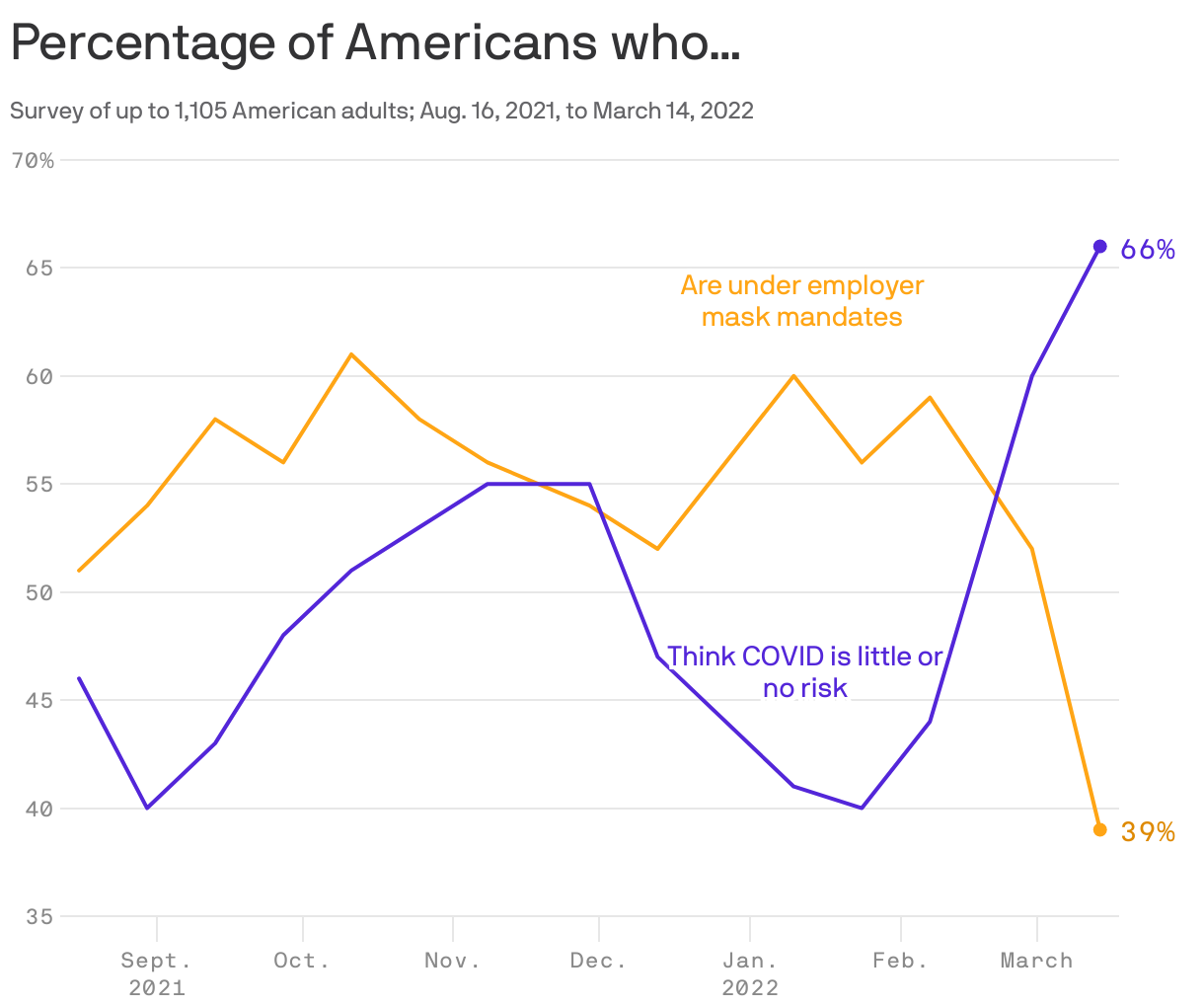
Americans' emotional and physical health is bouncing back, along with record confidence about life returning to "normal" as mask mandates are abandoned, according to the latest installment of the Axios/Ipsos Coronavirus Index.
The big picture: Two years after the start of the pandemic, the nation is ready to move on, even as disinformation at home and a resurgence of cases in Europe driven by the B.A.2 variant point to challenges on the horizon.