Poor sleep patterns can cause more long-term harm for Latinos than for other U.S. adults, according to the results of a seven-year study.
Details: Verbal memory, concentration and processing speed are greatly reduced for Latinos who have conditions like sleep apnea that affect sleep or who sleep more than nine hours.
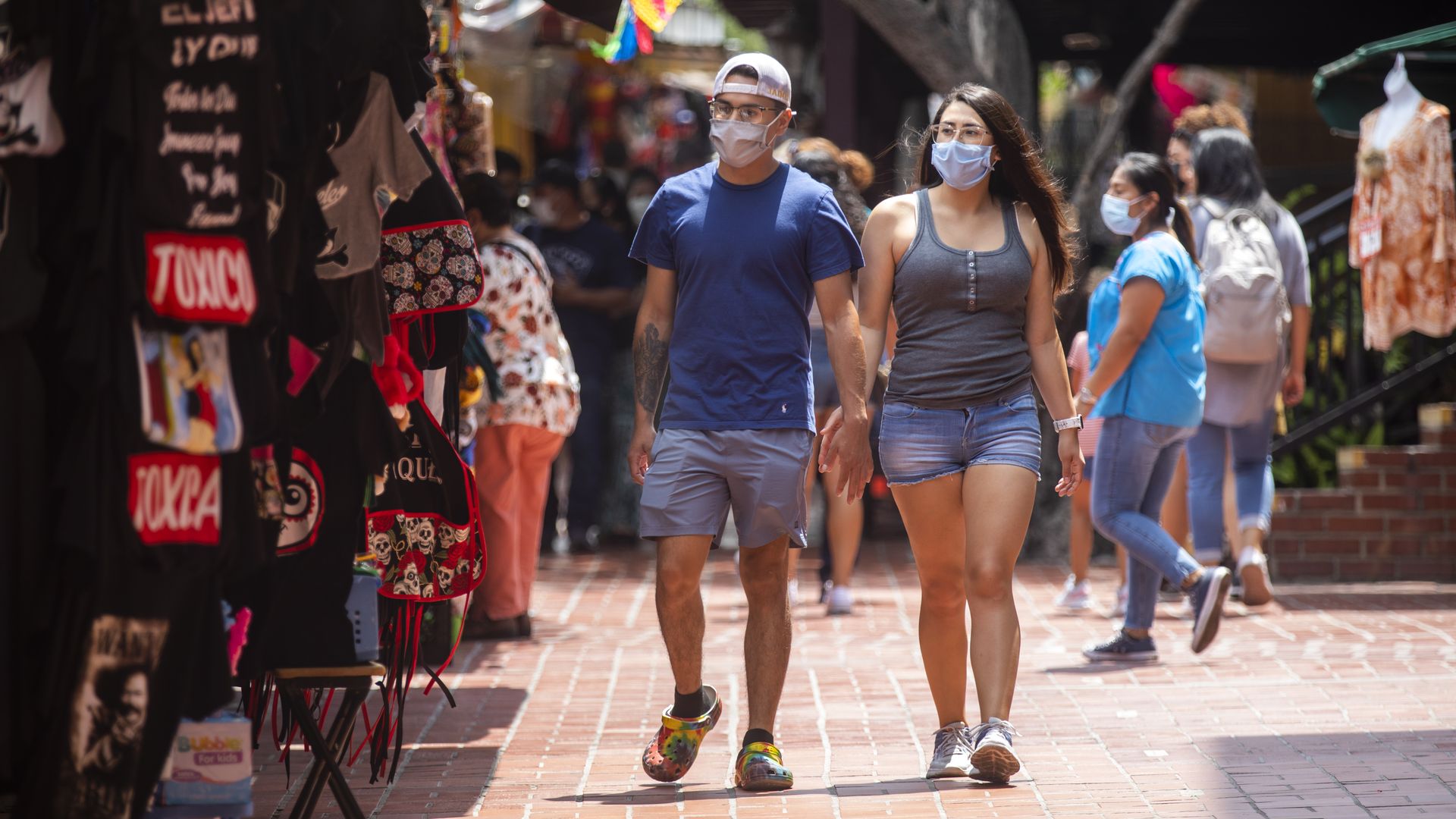
Los Angeles County Department of Public Health this week asked residents to wear face masks indoors, even if they are vaccinated, due to a rise in coronavirus cases.
The state of play: County health officials said the Delta variant, first detected in India, is rapidly spreading across the county's unvaccinated population. Cases in the county have doubled and hospitalizations are up by 30%, the Los Angeles Times notes.
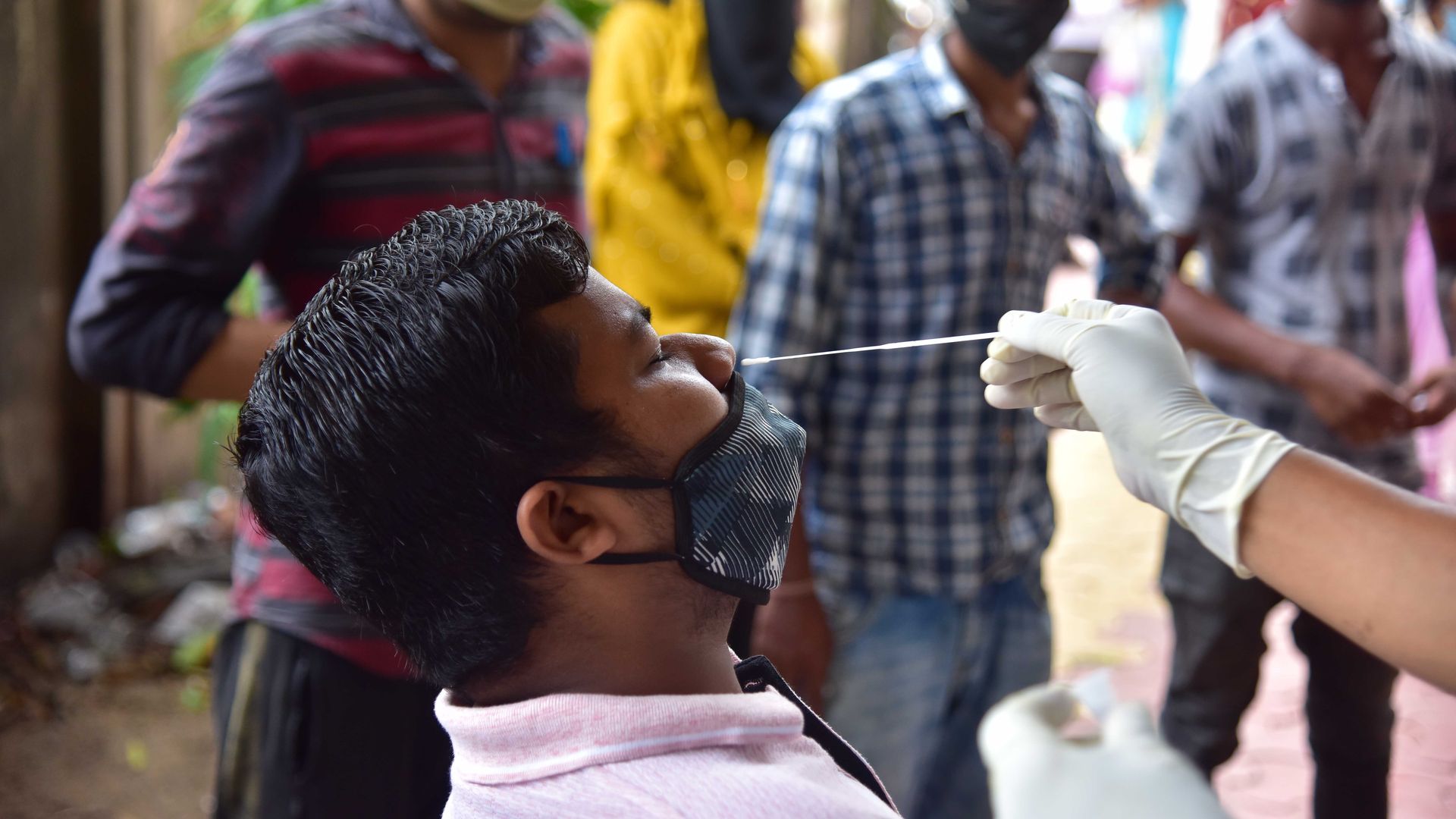
India's government announced Friday that the coronavirus pandemic has killed at least 400,312 people in the country and has infected more than 30 million, though experts believe deaths and cases have been undercounted, according to the Washington Post.
The big picture: India has been attempting to manage a spring surge in new cases driven by the Delta variant of the virus, which is rapidly spreading in Africa, Asia and parts of the United States.
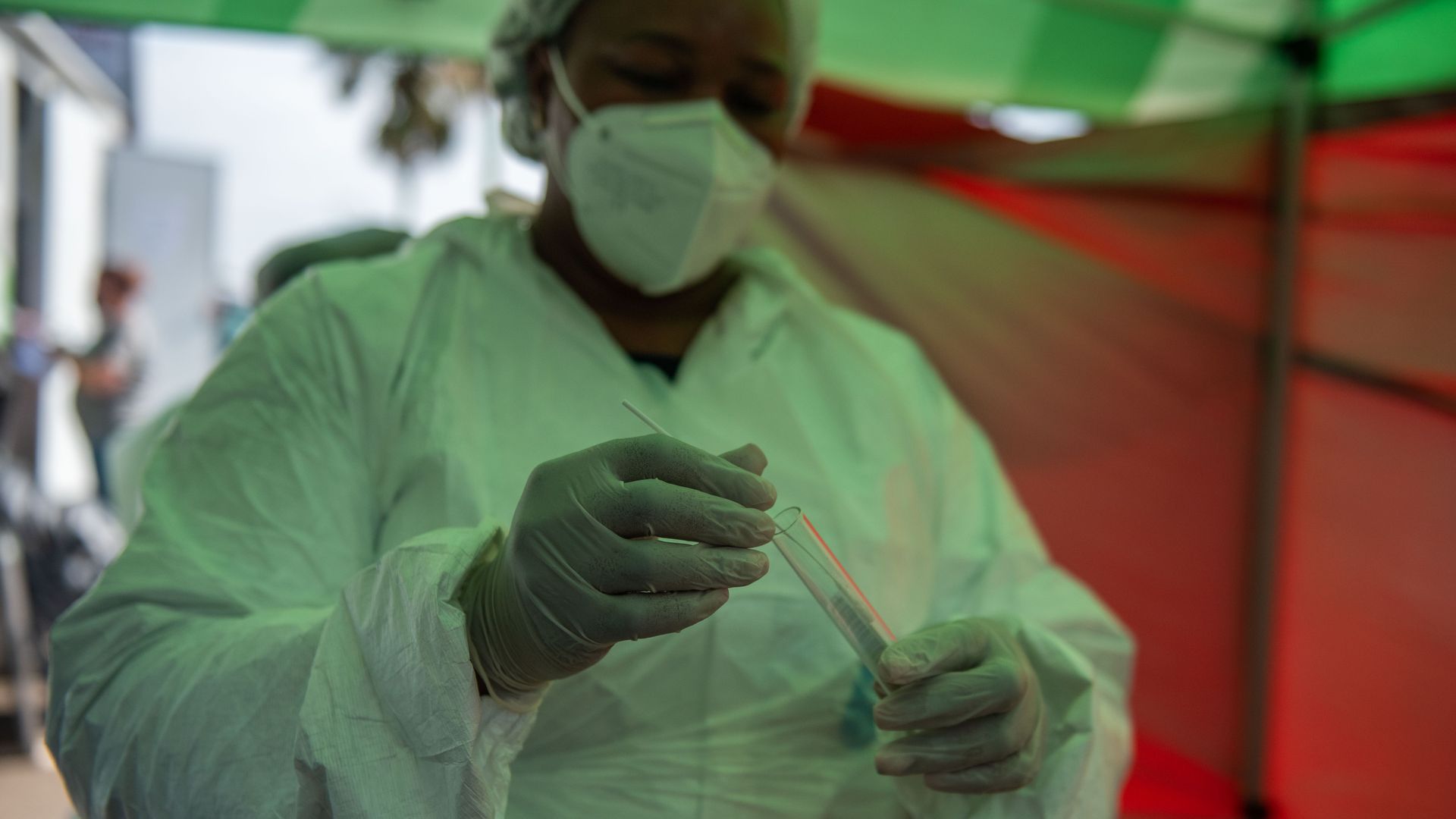
The number of new coronavirus cases in Africa is doubling every three weeks as the continent faces a wave of Delta variant infections, the World Health Organization announced Thursday.
Why it matters: The COVID-19 variant first discovered in India has been reported in 16 African countries and is dominant in South Africa, which accounted for over half of Africa’s cases for the week ending in June 27.
The Johnson & Johnson coronavirus vaccine provides immunity that lasts at least eight months and appears to offer protection against the Delta variant, the company said late Thursday.
Why it matters: The findings come as the highly contagious Delta variant spreads across the U.S., accounting for at least 25% of new COVID-19 cases in the country.
One Democratic defector in the Senate could sink the party's effort to lower prescription drug prices, and a series of new ad campaigns are giving strong hints about who advocates are most worried about.
Driving the news: Two organizations advocating for Medicare to have the authority to negotiate drug prices announced new ad campaigns yesterday.
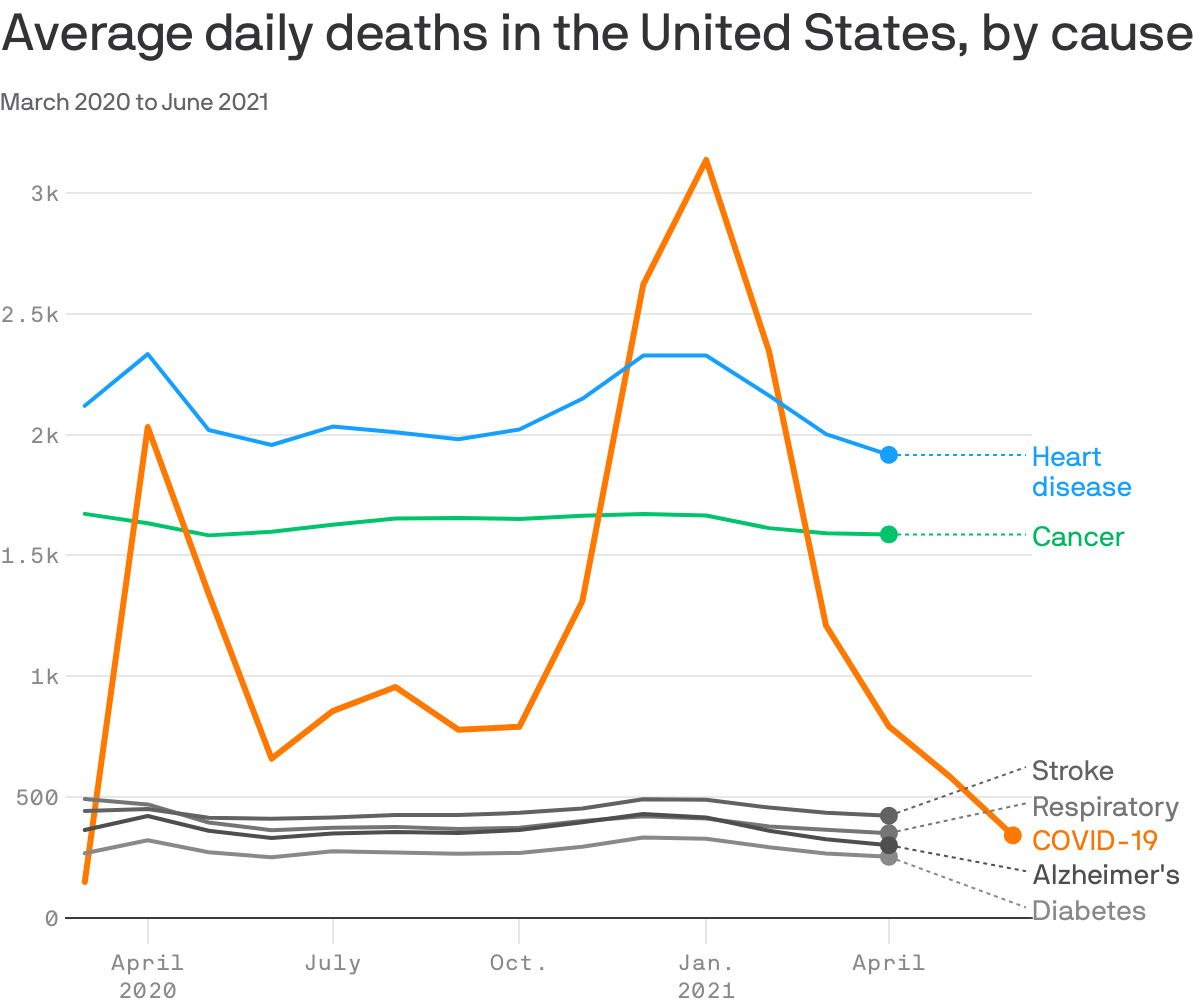
Reproduced from Peterson-KFF Health System Tracker; Chart: Axios visuals
COVID-19 dropped to the seventh leading cause of death in the U.S. in June, a marked decline from January 2021 when it was No. 1, new Kaiser Family Foundation data shows.
Why it matters: COVID-19 is still wreaking major havoc in the U.S., especially among people who aren't vaccinated. On the other hand: We've come a long way. Let's hope the progress continues.
More states are opening the door to psychedelics, with seven states already passing laws over the last several months to allow research or decriminalize its use and another 11 considering similar measures.
Why it matters: There's a growing body of research suggesting psychedelic compounds with psychotherapy can be effective for anxiety, depression, post-traumatic stress disorder and substance use disorder where other therapies have failed.
Amid a national epidemic of opioid abuse and suicides, state legislatures see a greater need to explore new therapeutics.
What's happening: In November, Oregon became the first to legalize psychedelics in licensed, supervised facilities and decrimalize them elsewhere.
In the months following, several states have passed bills to consider allowing the study of the medical risks and benefits of psilocybin, the active ingredient in psychedelic mushrooms.
Texas, Gov. Greg Abbott (R) allowed a bill authorizing the study of psilocybin to become law without his signature on June 18.
Connecticut Gov. Ned Lamont signed a bill of health initiatives on June 7 that called for the state's department of mental health and addiction services to report findings by Jan. 1, 2022.
In New York, a bill was introduced on June 1 that would require the state to establish an institute to investigate the medical potential of substances including “ibogaine, LSD, psilocybin and certain other psychedelic drugs.”
California's legislature is considering a bill that, if ultimately passed, would make California the second state next to Oregon to decriminalize psilocybin.
The big picture: MDMA and psilocybin have been granted breakthrough therapy status by the Food and Drug Administration, signaling a shift in the potential for incorporating psychedelics into the existing health care infrastructure.
Psychedelic drug developer ATAI Life Sciences, backed by Peter Thiel, went public last month. It's one of three such psychedelics companies including MindMed and Compass Pathways that have both gone public in the last year.
More state, federal and even company-sponsored research is beneficial to corroborate early, smaller studies that "show great promise," George Goldsmith, CEO of Compass Pathways, a psychedelic therapy developer that finished its psilocybin therapyIIb clinical trial this week.
The other side: There's a debate between policy advocates on whether state-accelerated research alone could be too slow-moving. And in plenty of other states, the political will isn't there to pass this kind of measure.
In February, an Iowa lawmaker filed a bill that would allow seriously ill people to use psilocybin mushrooms, MDMA, LSD, DMT or peyote as alternative treatments after they’ve exhausted traditional legal medicines. It died in committee.