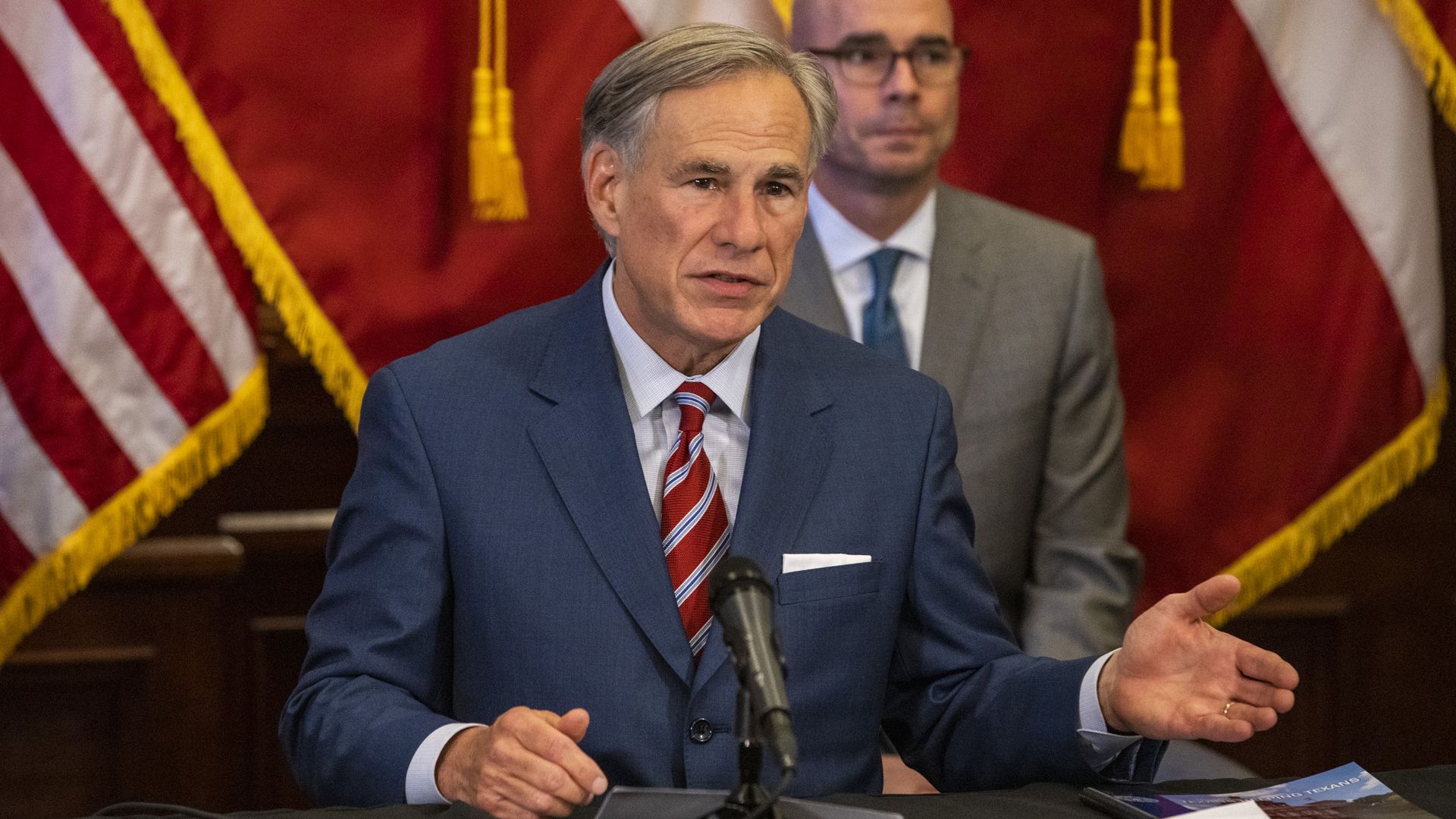
Texas Gov. Greg Abbott (R) issued an executive order Tuesday prohibiting government entities in the state, including public schools, from requiring masks.
The big picture: About 30% of Texans have been fully vaccinated against COVID, but the vast majority of children are unvaccinated, the Texas Tribune reports.
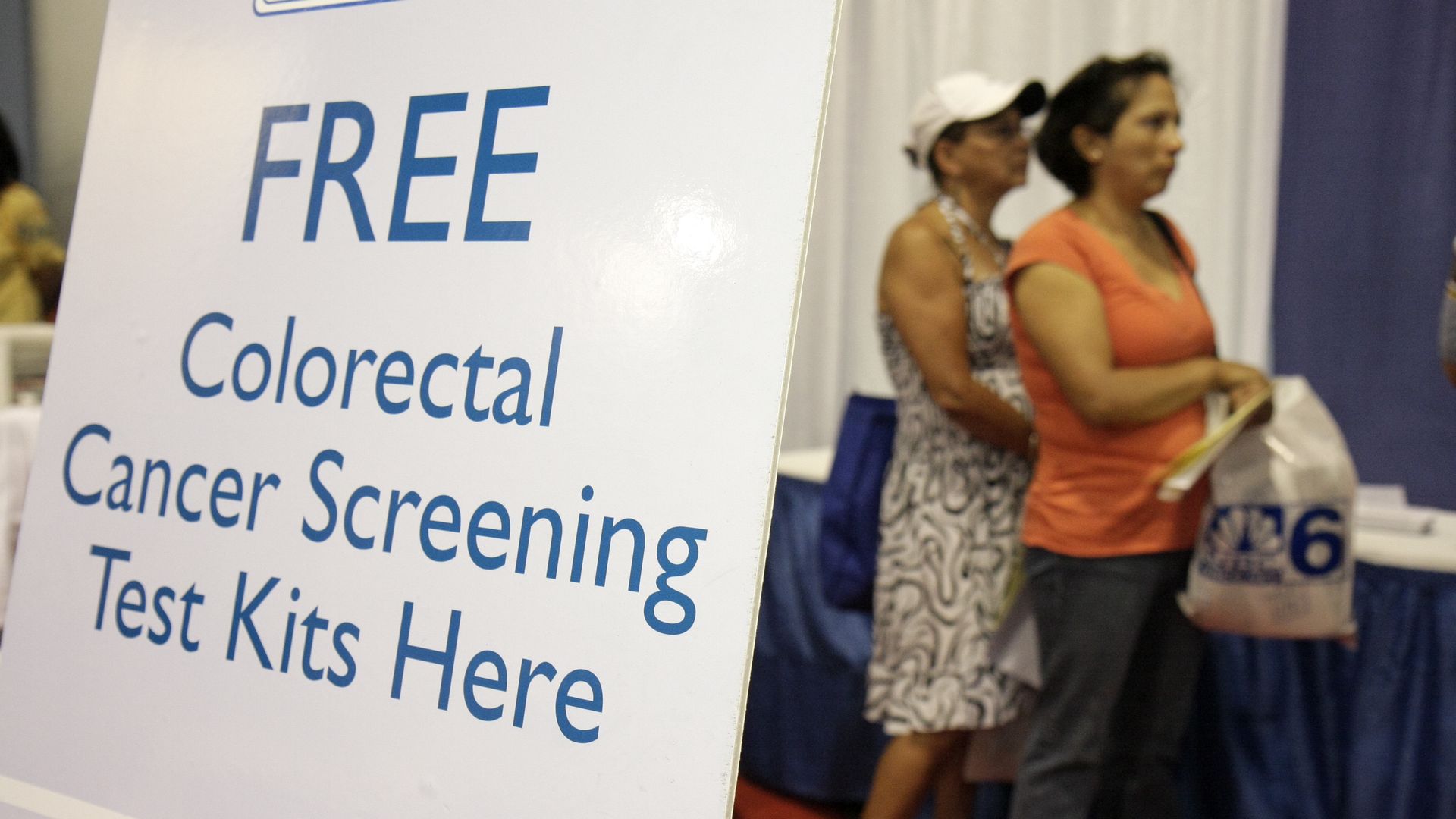
Americans should start getting screened for colon cancer at age 45 instead of at 50, according to new guidance from the U.S. Preventive Services Task Force (USPSTF).
Why it matters: The taskforce said the recommendation reflects the fact that colon cancer — the third-leading cause of cancer death for men and women in the country — is increasingly occurring among adults younger than 50.
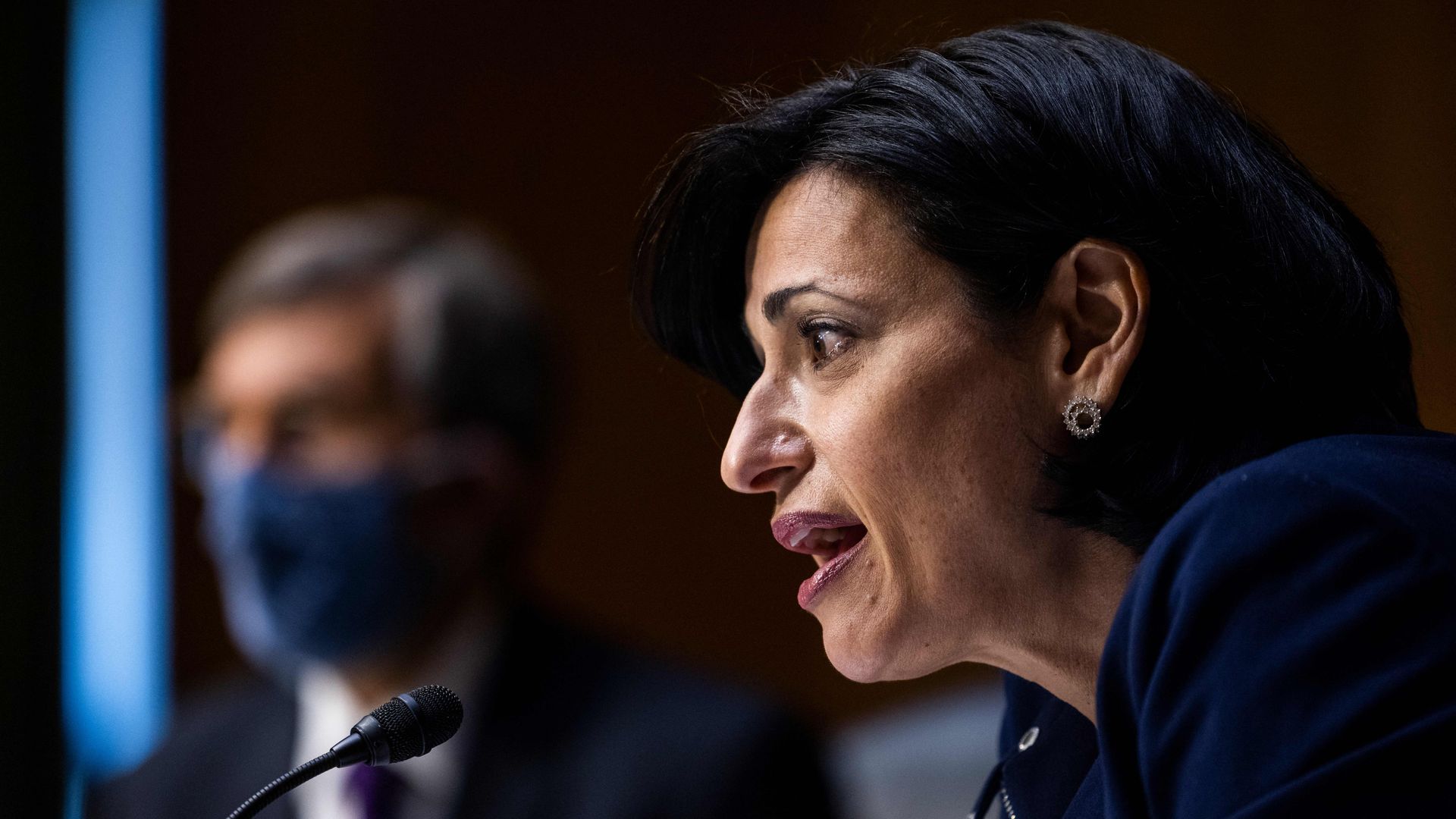
CDC Director Rochelle Walensky announced on Tuesday that 600,000 adolescents between the ages of 12 and 15 have received a dose of the Pfizer COVID-19 vaccine since the FDA granted emergency authorization for that age group last Monday.
Why it matters: Vaccinating teens and children will play a key role in fully reopening schools and fully curbing the pandemic in the U.S.
The Serum Institute of India, the world’s largest maker of vaccines, announced Tuesday that it expects to resume exporting coronavirus vaccines by the end of 2021.
Why it matters: The delay could be a major setback for the United Nations-backed COVAX initiative, which was created to help pool resources to produce and distribute coronavirus vaccines to countries regardless of their wealth.
Over the weekend, Texas reported reaching the milestone of zero deaths from COVID-19 for the first time since March 2020. Arizona, Minnesota, and Massachusetts also recently reported COVID death-free days for the first time in months.
State of play: Other states also posted positive COVID metrics at the top of the week while COVID-19 deaths in the U.S. fell to their lowest in nearly 14 months, Reuters reported.
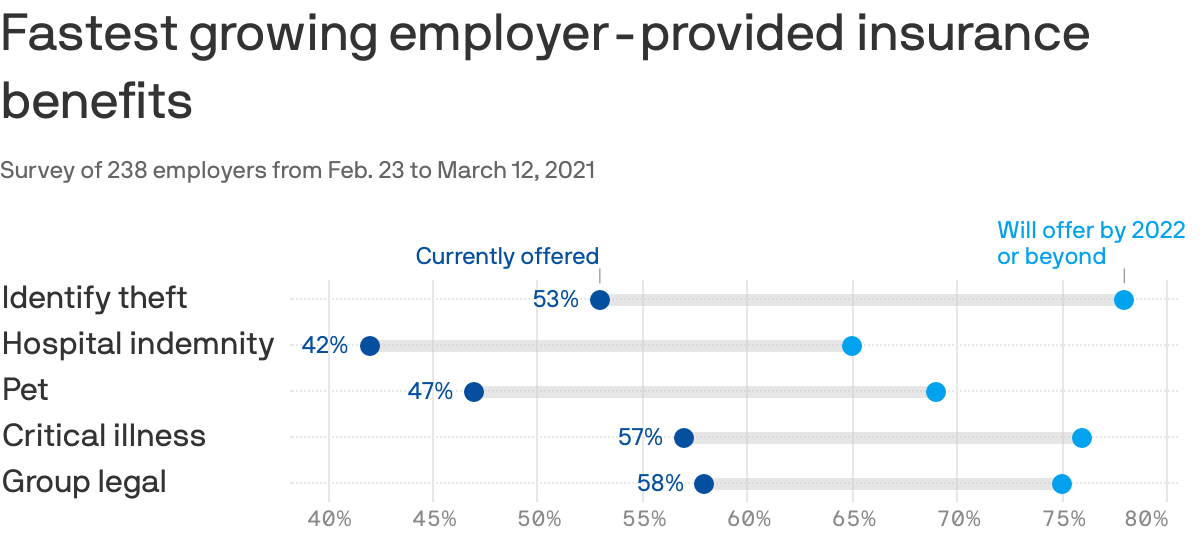
The pandemic is driving more employers to offer benefits such as extra protection against major hospital bills and even pet insurance, according to the Emerging Trends in Health Care Survey from Willis Towers Watson.
Why it matters: In the wake of a year that brought plenty of worst-case scenarios, this analysis shows employers responding to employees' desire for security.
Driving the news: The world has reached a situation of "vaccine apartheid", World Health Organization director-general Tedros Adhanom Ghebreyesus said on Monday, saying "the big problem is a lack of sharing."
As some public health experts continue to criticize the rollout of the CDC's new mask guidance, a top CDC official announced her retirement yesterday — the second in a month.
Why it matters: Although the agency has taken a decidedly more pro-science approach to the pandemic under the Biden administration than it did under Trump's, the trio of negative headlines suggest lingering turmoil.
Working long hours can increase risk of death, according to a first-of-its-kind study by the World Health Organization and the International Labour Organization.
Why it matters: The study does not cover the pandemic, but its authors say that working long hours is now the risk factor with the largest occupational disease burden.
Clinical research treating mental illness with psychedelics has been happening for decades, but now there's a group of companies exclusively focused on using LSD and other psychedelics to treat mental health disorders.
Axios Re:Cap digs into the argument for legalizing prescription psychedelics, and the treacherous FDA approval path, with MindMed CEO JR Rahn, whose company recently listed on the Nasdaq.
President Biden will send an additional 20 million doses of coronavirus vaccines to other countries by the end of June, including shots authorized by the FDA for use in the U.S., White House press secretary Jen Psaki said Monday.
Why it matters: It will be the first time the U.S. has sent Pfizer, Moderna, and Johnson & Johnson vaccine doses abroad. The administration previously announced plans to export 60 million doses of the AstraZeneca vaccine, which has not been authorized domestically.
A growing list of large retailers has begun to ease mask requirements for fully vaccinated customers, after the CDC issued guidance last week saying vaccinated people can do most activities without wearing a mask or physically distancing.
Driving the news: Target and CVS Pharmacy on Monday were among the latest to update policies to allow fully vaccinated guests in their stores without face coverings, unless it is required by local law.
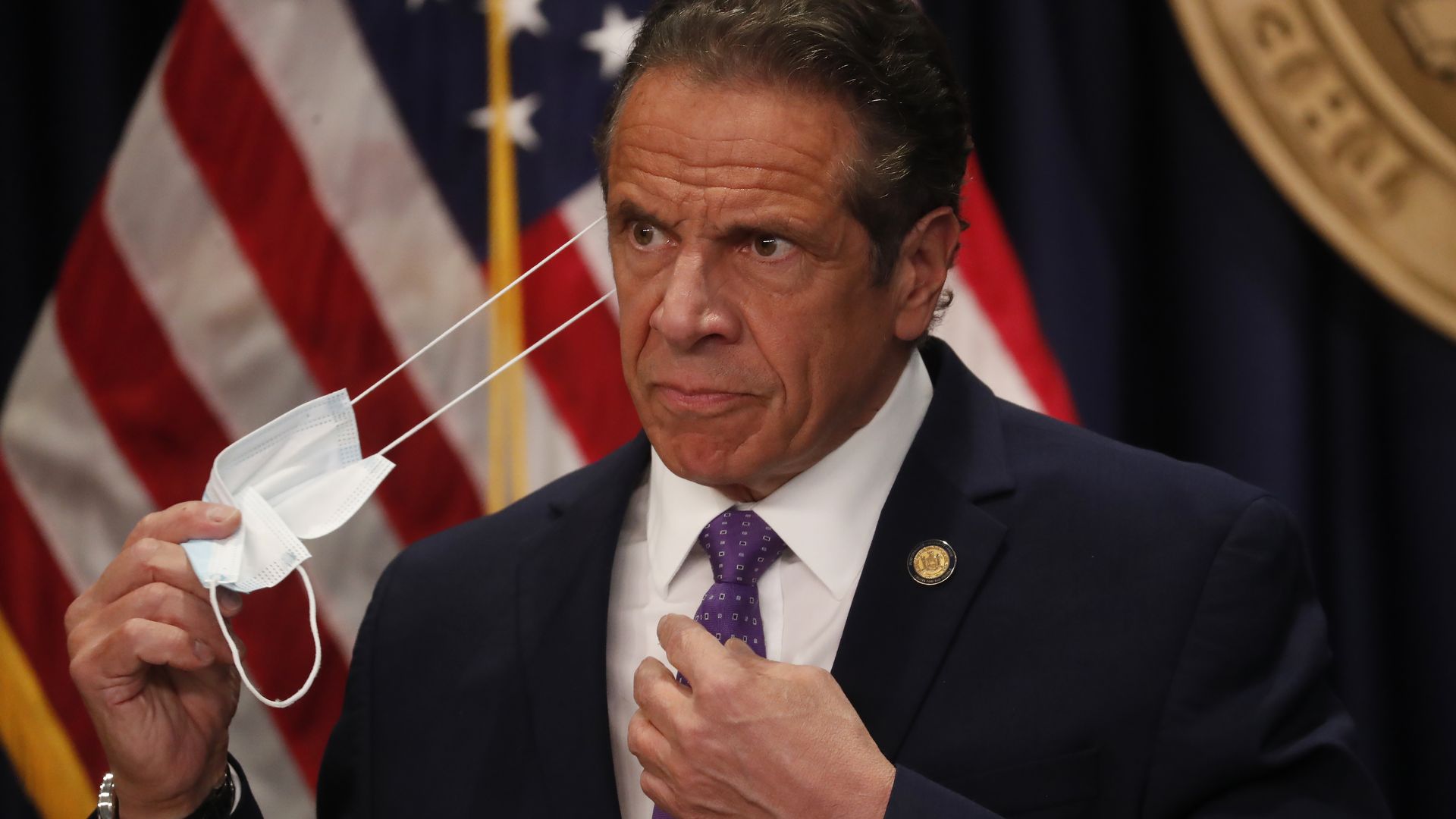
New York will lift its mask mandate for vaccinated people on Wednesday, aligning with CDC guidance announced last week, Gov. Andrew Cuomo said at a press conference.
Why it matters: The announcement marks a significant milestone for the state, which was one of the first to issue a broad mask mandate in April 2020 when it was facing one of the worst coronavirus outbreaks in the world.
The expanded monthly child tax credit introduced in President Biden's $1.9 trillion COVID relief package will begin arriving in parents' bank accounts on July 15, the White House said Monday.
Why it matters: The credit, part of the administration's plan to transform the country's social safety net in the wake of the pandemic, would provide families with $300 monthly cash payments per child up to age 5 and $250 for children ages 6–17.
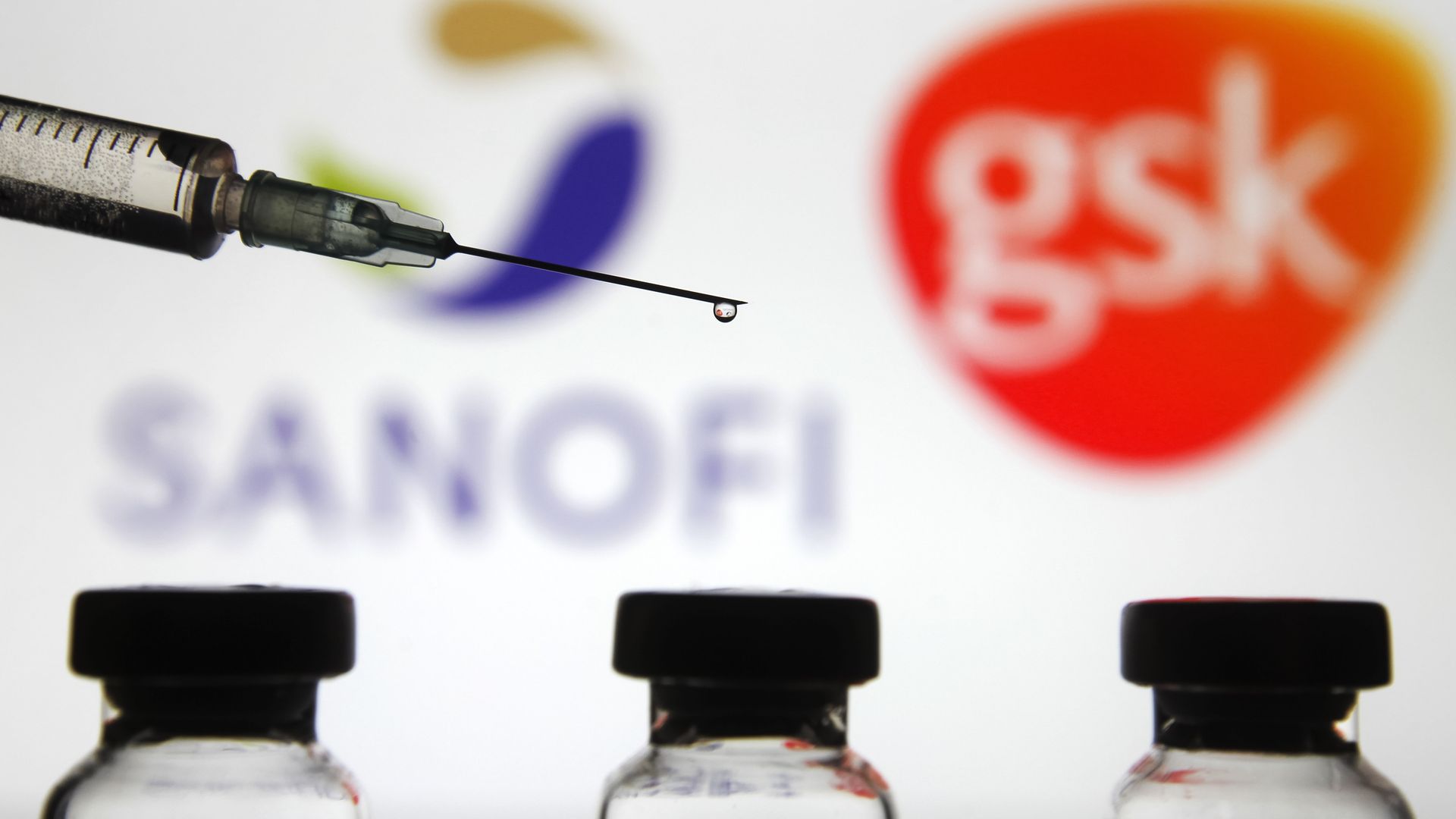
Sanofi and GSK announcedthis morning their COVID-19 vaccine candidate demonstrated a strong immune response in adults in a phase 2 clinical trial.
Why it matters: Sanofi and GSK say their recombinant protein-based vaccine candidate could ultimately serve as a universal COVID-19 vaccine booster, able to boost immunity regardless of the vaccination first received.
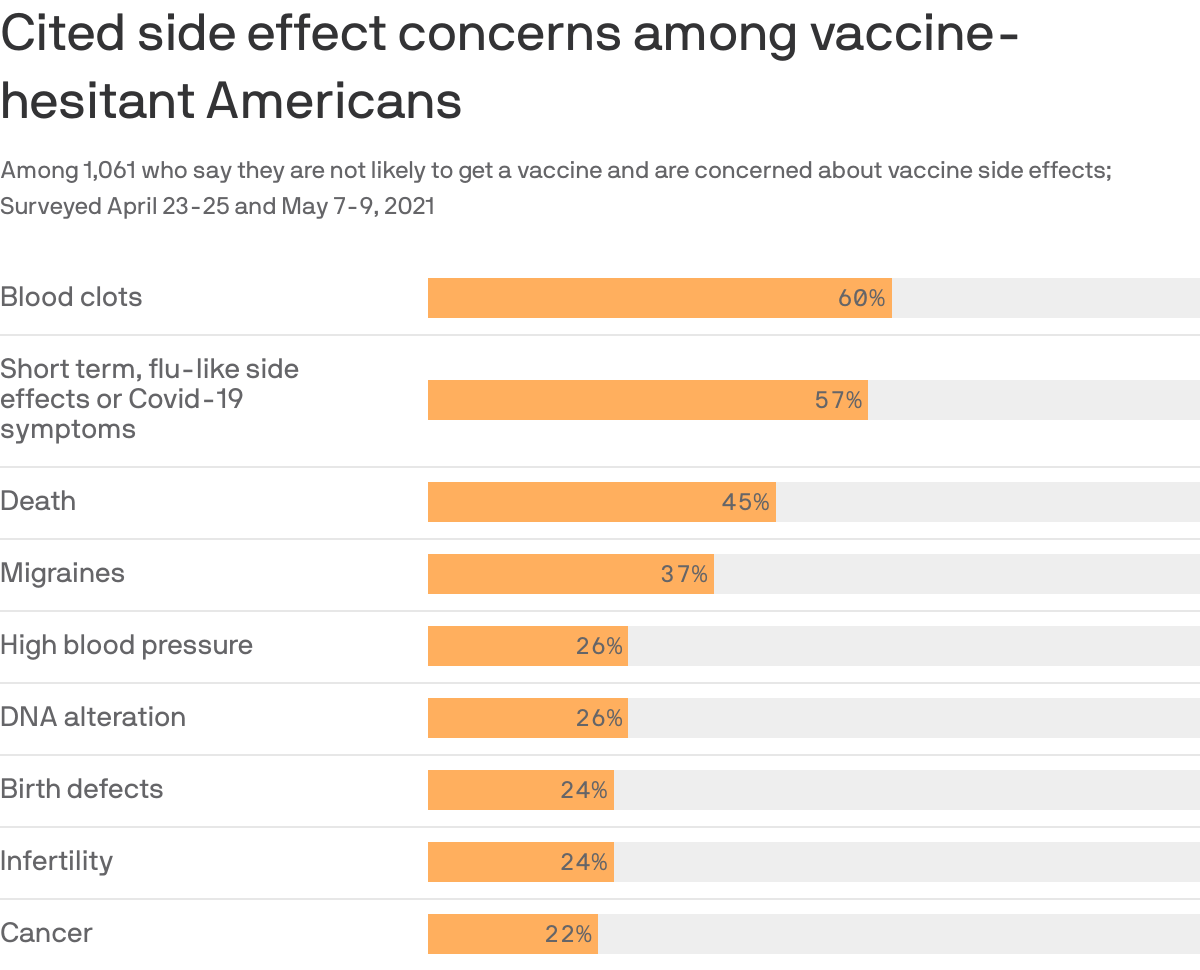
An alarming amount of vaccine-hesitant people who list side effects as a top concern falsely believe the vaccines cause death, DNA alteration, infertility or birth defects, according to recent Harris polling.
Why it matters: Respondents also listed blood clots, which are a real side effect of some coronavirus vaccines, but extremely rare. This survey suggests that misinformation or a skewed understanding of risk may be behind a sizable portion of vaccine hesitancy.
Johns Hopkins University is launching a "pandemic data initiative" to highlight COVID-19 data-collecting and reporting inconsistencies that led to confusion for policymakers and the public, the institution announced Monday.
Why it matters: Lack of granular data on cases, deaths — and now vaccination rates — has been a nationwide hindrance in targeting communities who needed more outreach or resources this past year.
The CDC's surprise guidance last week freeing the fully vaccinated to go maskless sowed plenty of concerns across the country— even earning the "Saturday Night Live" treatment for all the questions it spurred.
Why it matters: With plenty of Americans still unvaccinated — and without any good way to confirm who has been vaccinated — some experts worry this could put many at increased risk.