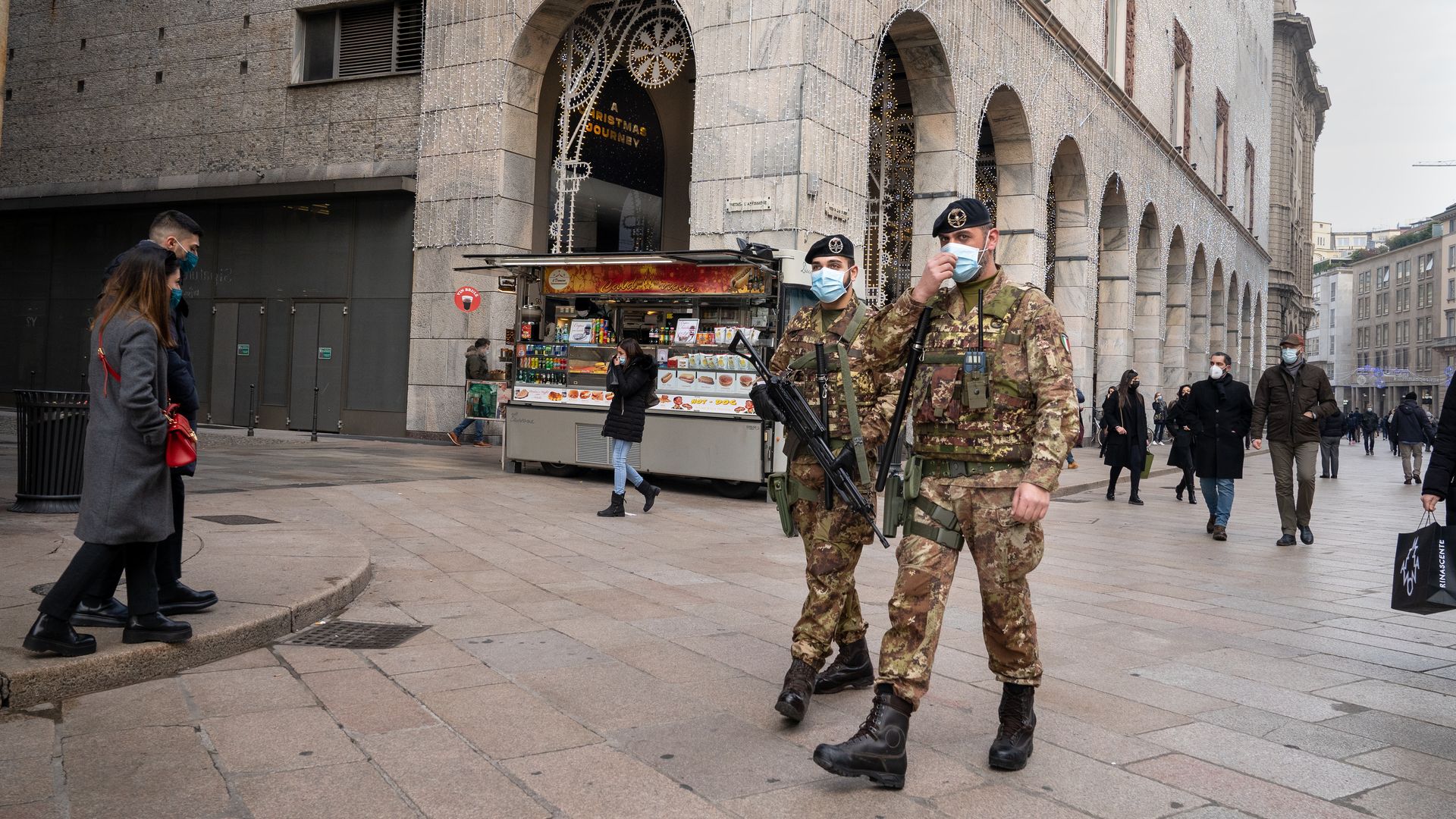
Italy's Prime Minister Giuseppe Conte announced Friday that he has ordered a national lockdown for the Christmas and New Year's holidays as the country continues to see a surge in cases and deaths.
Why it matters: Italy has been one of the hardest-hit Western countries, with 67,894coronavirus-related deaths as of Friday — the most in Europe.
A perfect storm of quarantines, layoffs, retirements and resignations has public schools scrambling to get enough bodies to keep school afloat next semester.
Why it matters: Districts are desperate to keep classes going and are stretched thin by the sometimes competing needs of in-person and distance learning.
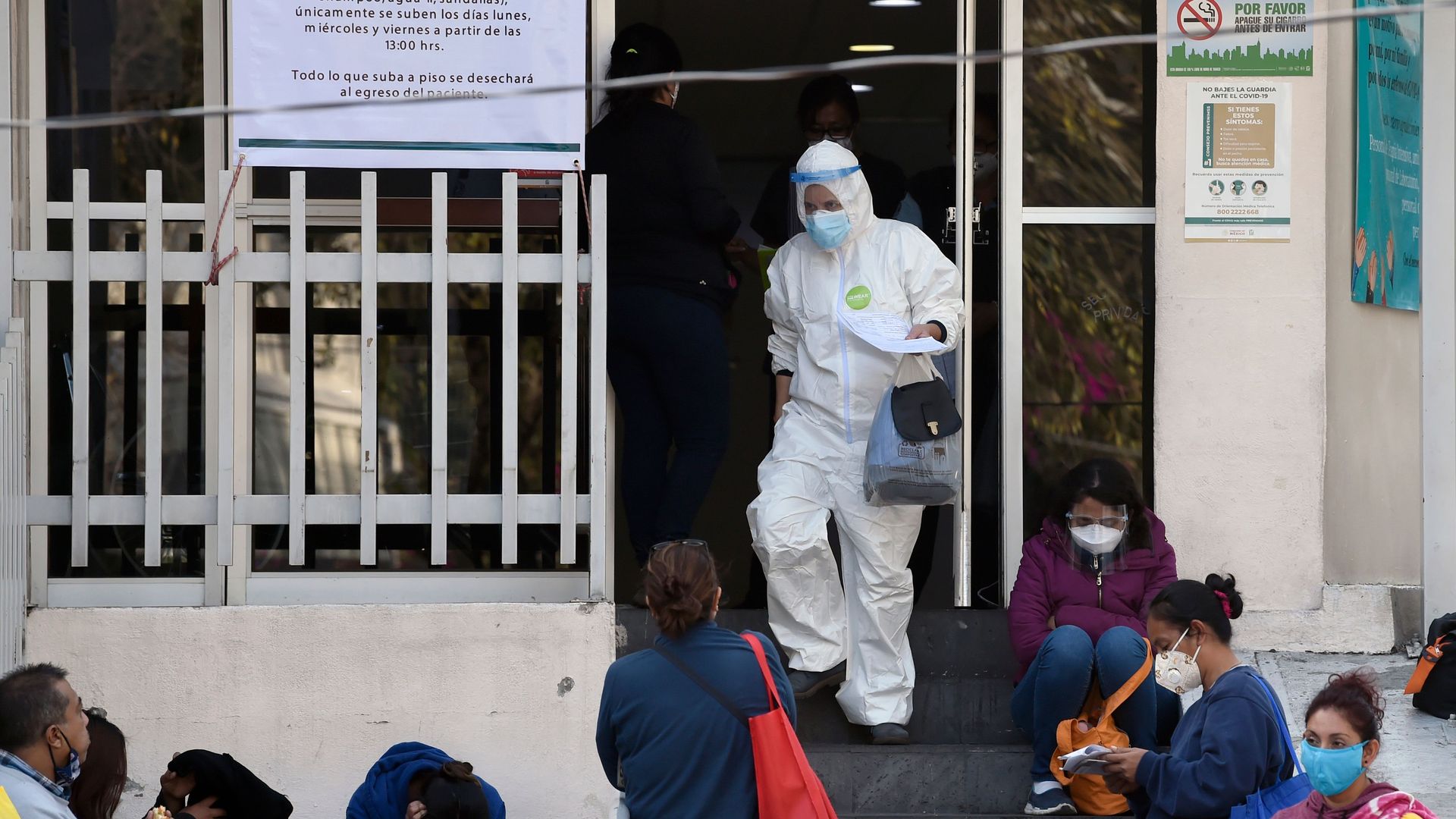
Mexico City and the neighboring State of Mexico will ban nonessential activities in an effort to curb a spike in COVID-19 cases that has overwhelmed hospitals, officials announced Friday.
Driving the news: Mexico City Mayor Claudia Sheinbaum said hospital capacity is at about 75%, but the federal government put the number at 80%, per AP. Families have reported searching for hours to find open hospital beds in the capital.
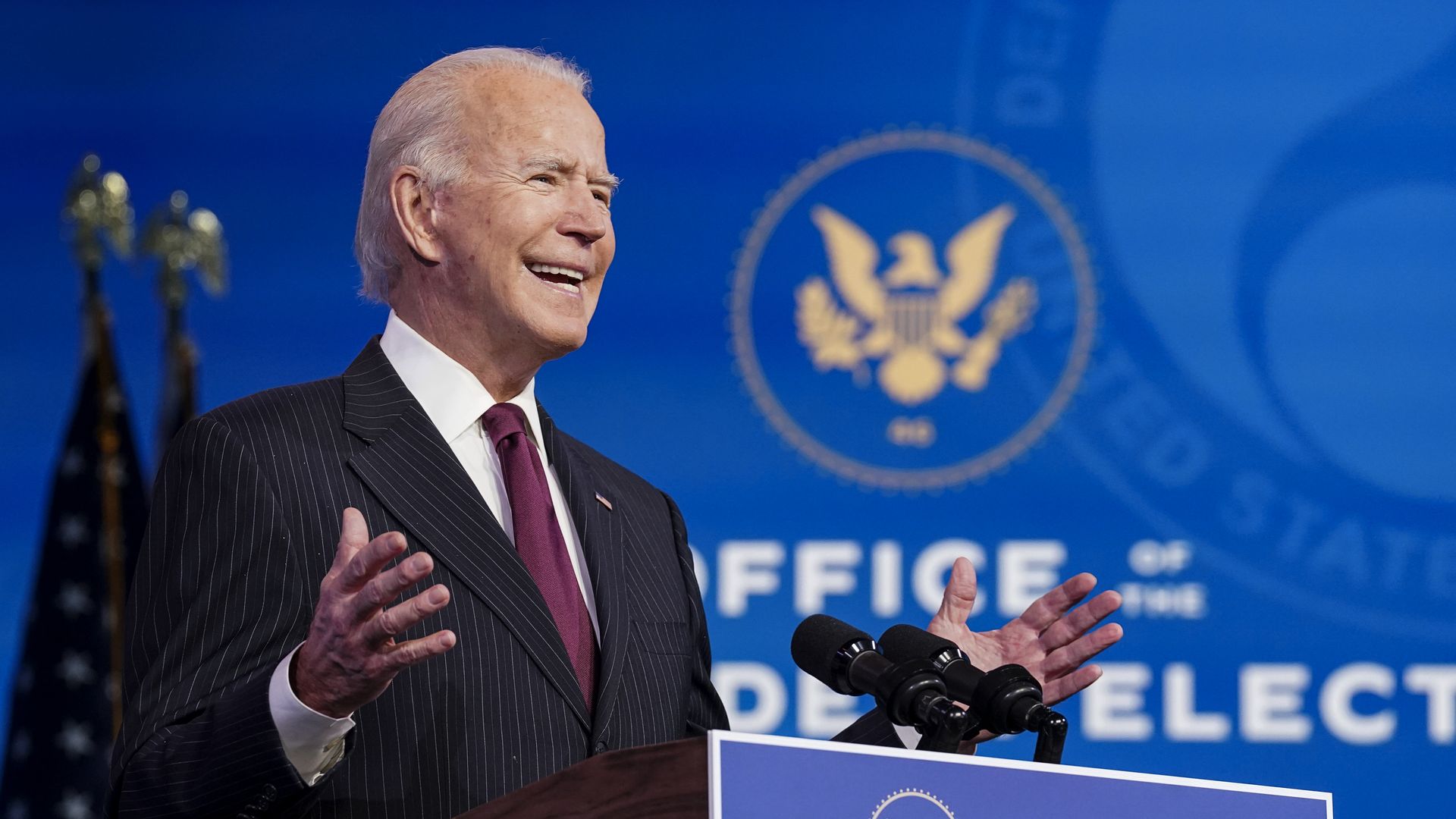
President-elect Joe Biden and Jill Biden will receive their first doses of the coronavirus vaccine in public on Monday in order "to send a clear message to the public, that it's safe and consistent with security and medical protocols," incoming White House press secretary Jen Psaki told reporters Friday.
Why it matters: Biden is 78 years old, meaning he is at-risk for severe coronavirus infection. Dozens of White House staff and members of President Trump's inner circle have tested positive for COVID-19 over the past few months of the pandemic.
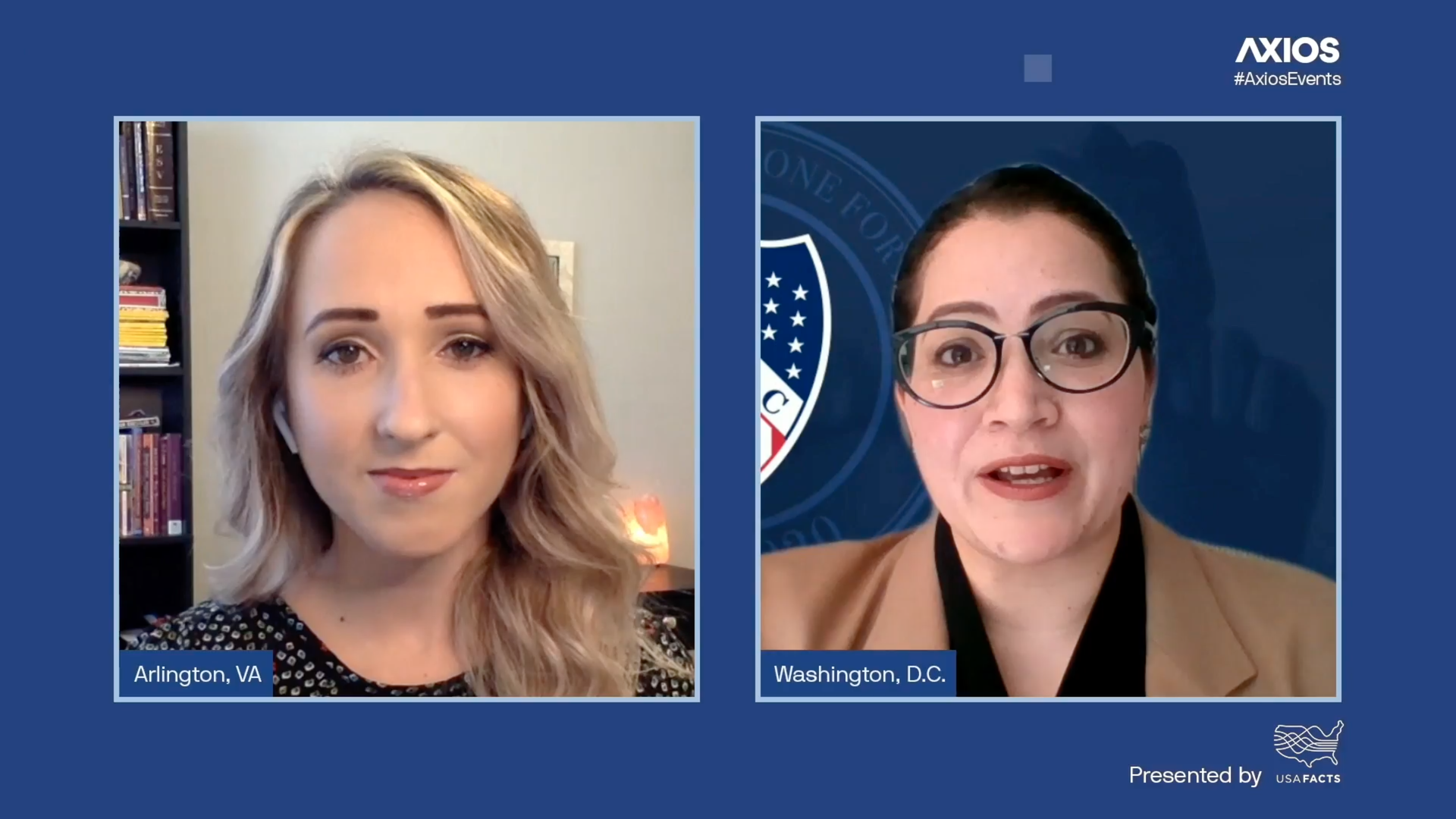
The Centers for Disease Control and Prevention failed to release coronavirus guidance for Spanish speakers when the pandemic started in the spring, said League of United Latin American Citizens CEO Sindy Benavides at an Axios virtual event on Friday.
Vice President Mike Pence, second lady Karen Pence and Surgeon General Jerome Adams received Pfizer's coronavirus vaccine live on television Friday.
Why it matters: The vice president is the highest-ranking U.S. official to be vaccinated — a move intended to boost public confidence about the vaccine's safety. He must still receive the second dose of the vaccine in order for it to be fully effective.
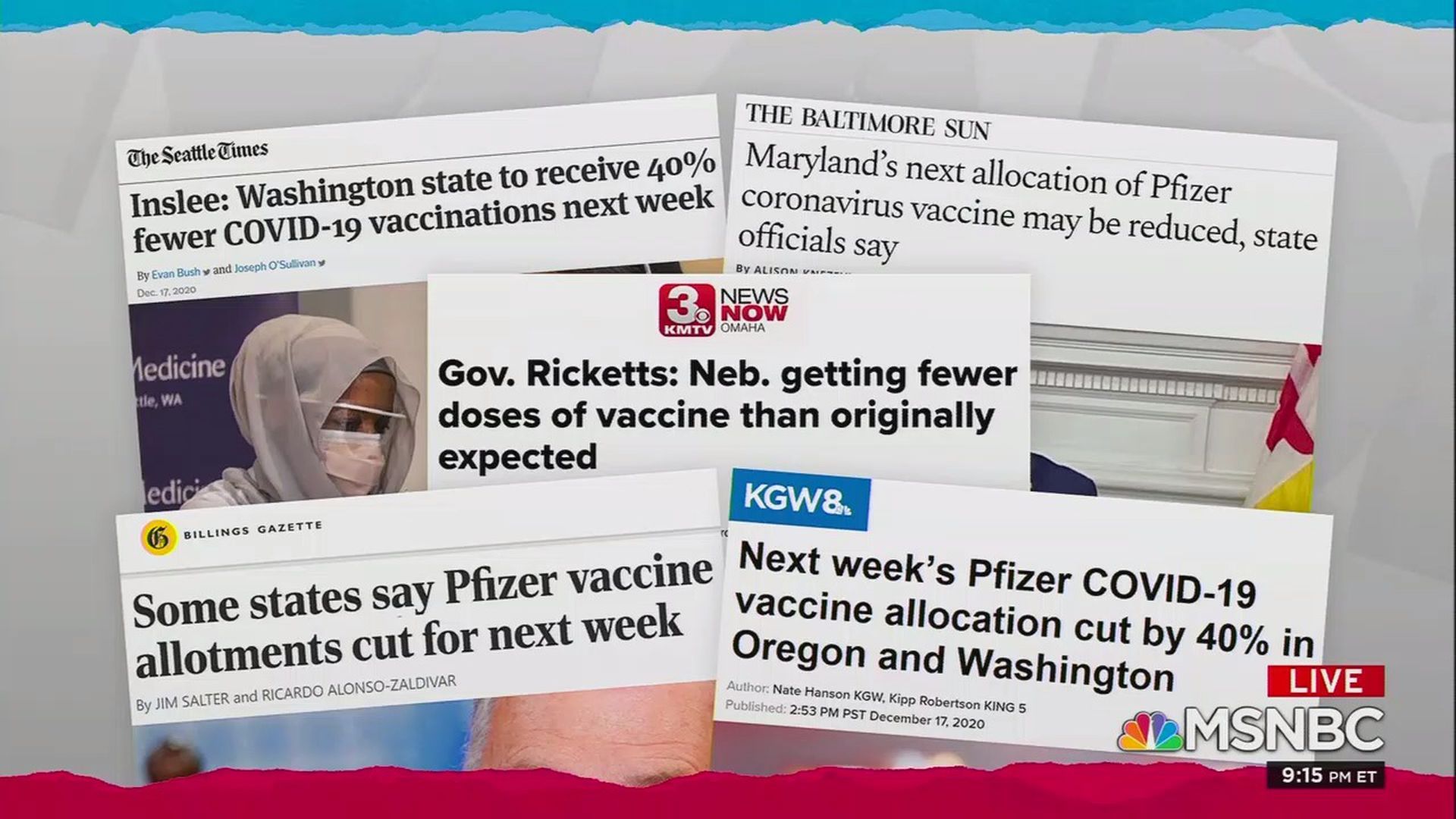
Hospitals around the country have been thrown into confusion after the Trump administration informed state after state that they'll be getting 25%-40% fewer COVID vaccine doses next week than they'd been expecting.
Why it matters: The snafu reveals communication gaps between the Trump administration and Pfizer, and between the administration and the states.
Seven out of 10 college students have experienced anxiety, 53% have experienced depression and 29% have considered dropping out since the pandemic began, according to a new Generation Lab/Axios poll.
The big picture: The end is in sight, but students are still in for a cold, isolated second semester.
In the last week alone, nearly 1 out of every 200 Americans was diagnosed with the coronavirus — an astronomically large portion of the population to be sick at the same time.
Why it matters: This will translate into large numbers of hospitalizations — and eventually deaths — in the coming weeks. It also means the rest of us have a decent chance of interacting with someone who is infected, anywhere we go.
Officials in several states have said the federal government told them to expect fewer doses of Pfizer's COVID-19 vaccine next week than originally anticipated.
The big picture: Some2.9 million doses of the Pfizer-BioNTech vaccine were shipped this week as the U.S. started it's largest vaccination campaign in the nation's history. Health and Human Services Secretary Alex Azar said Wednesday that 2 million more doses of the Pfizer vaccine and 5.9 million doses of the Moderna vaccine could be allocated next week, per CNBC.
The Supreme Court on Thursday refused to block Kentucky Gov. Andy Beshear’s executive order halting in-person instruction at most K-12 schools, including religious schools, through the end of the year, noting that the order "effectively expires this week or shortly thereafter."
Why it matters: The decision follows several cases that examined whether state coronavirus restrictions affecting religious institutions, including places of worship violate, the First Amendment.