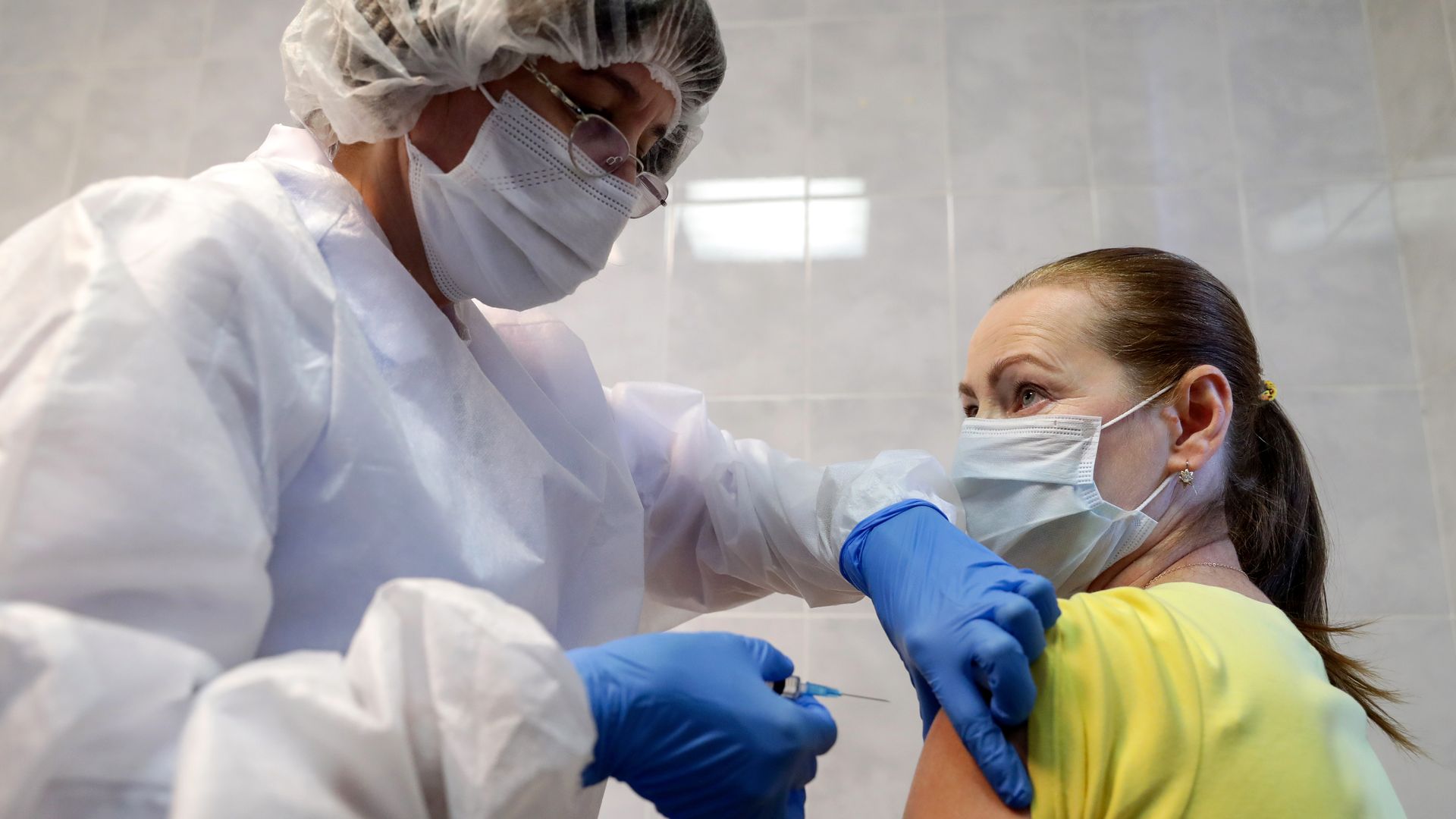
The U.S. Department of Health and Human Services and Department of Defense announced on Friday that they will purchase 100 million additional doses of Moderna's coronavirus vaccine candidate.
Why it matters: The purchase will bring the total doses of Moderna's vaccine owned by the federal government to 200 million, HHS said. The vaccine is still awaiting emergency use approval from the Food and Drug Administration.
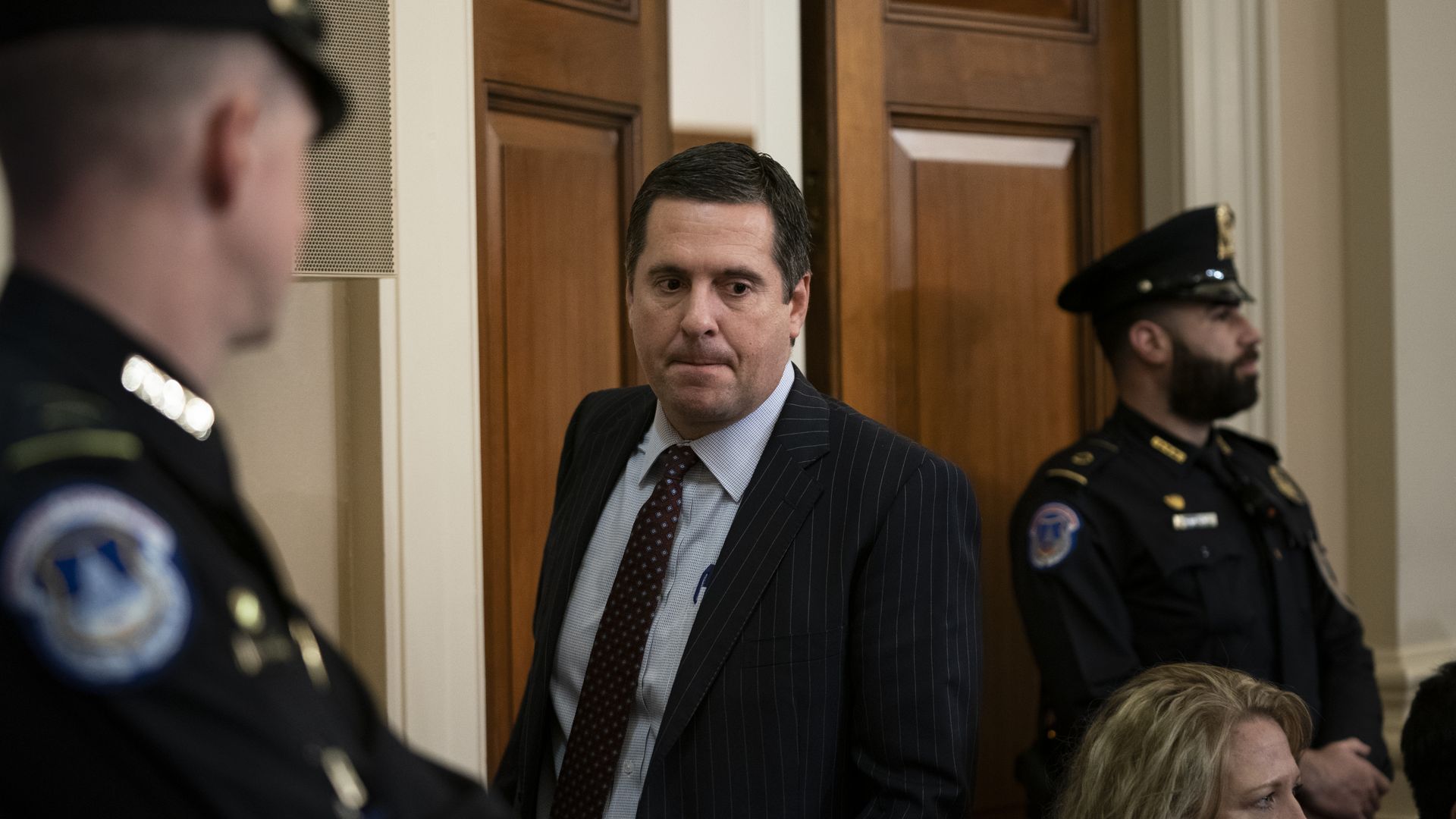
Rep. Devin Nunes (R-Calif.) told California radio station KMJNOW on Friday that he's tested positive for coronavirus antibodies.
The big picture: Nunes has faced criticism for downplaying the seriousness of the virus. In March, he encouraged healthy people to "go out" despite the advice of public health experts for people to stay home.
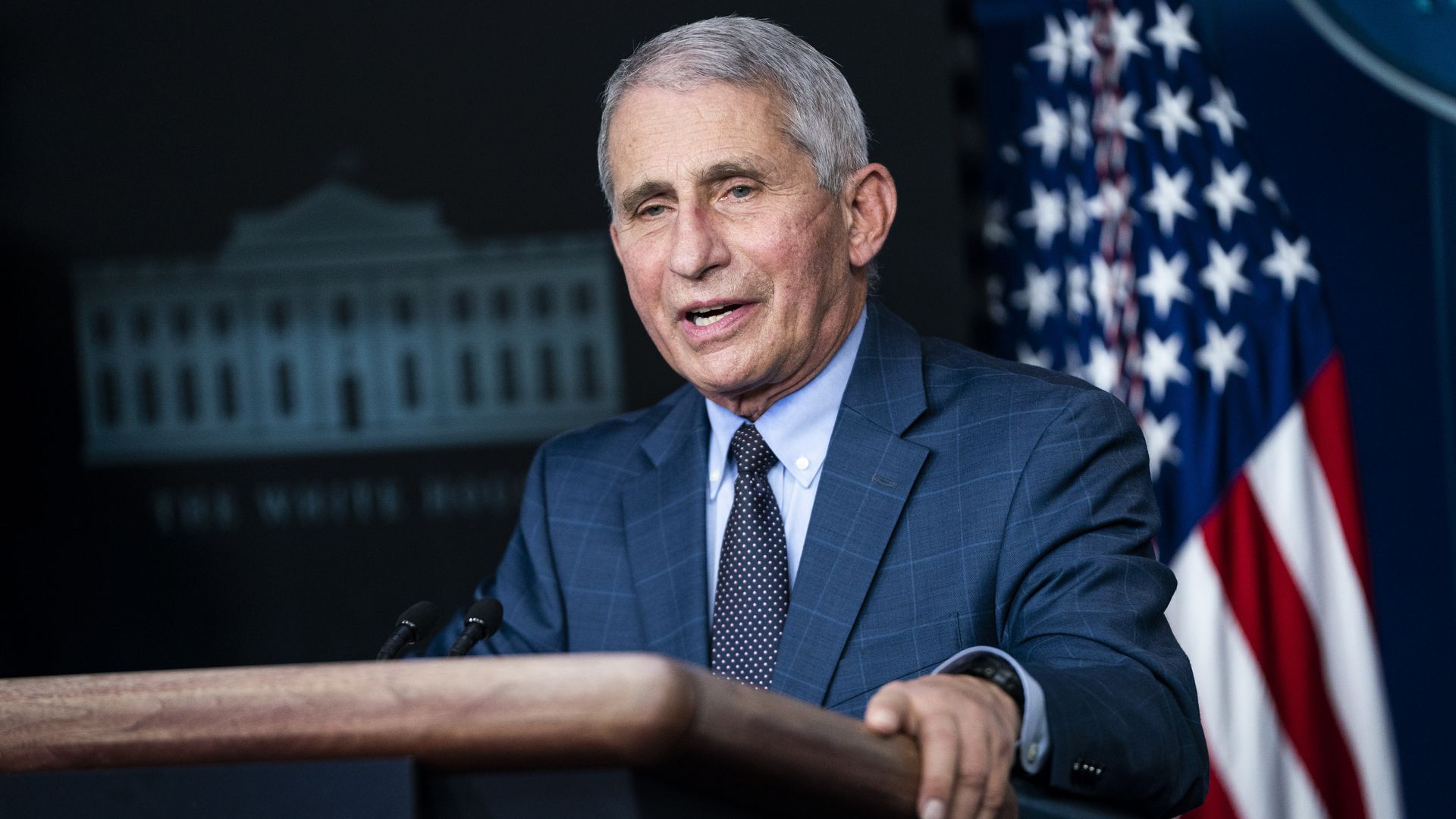
Anthony Fauci, director of the National Institute of Allergy and Infectious Diseases, told the New York Times on Friday that he plans to be vaccinated for the coronavirus in public as soon as a vaccine becomes available to him.
Why it matters: Fauci is one of many governmental officials who have said they expect to be inoculated in public to help build confidence in vaccine, including former Presidents Barack Obama, George W. Bush and Bill Clinton.
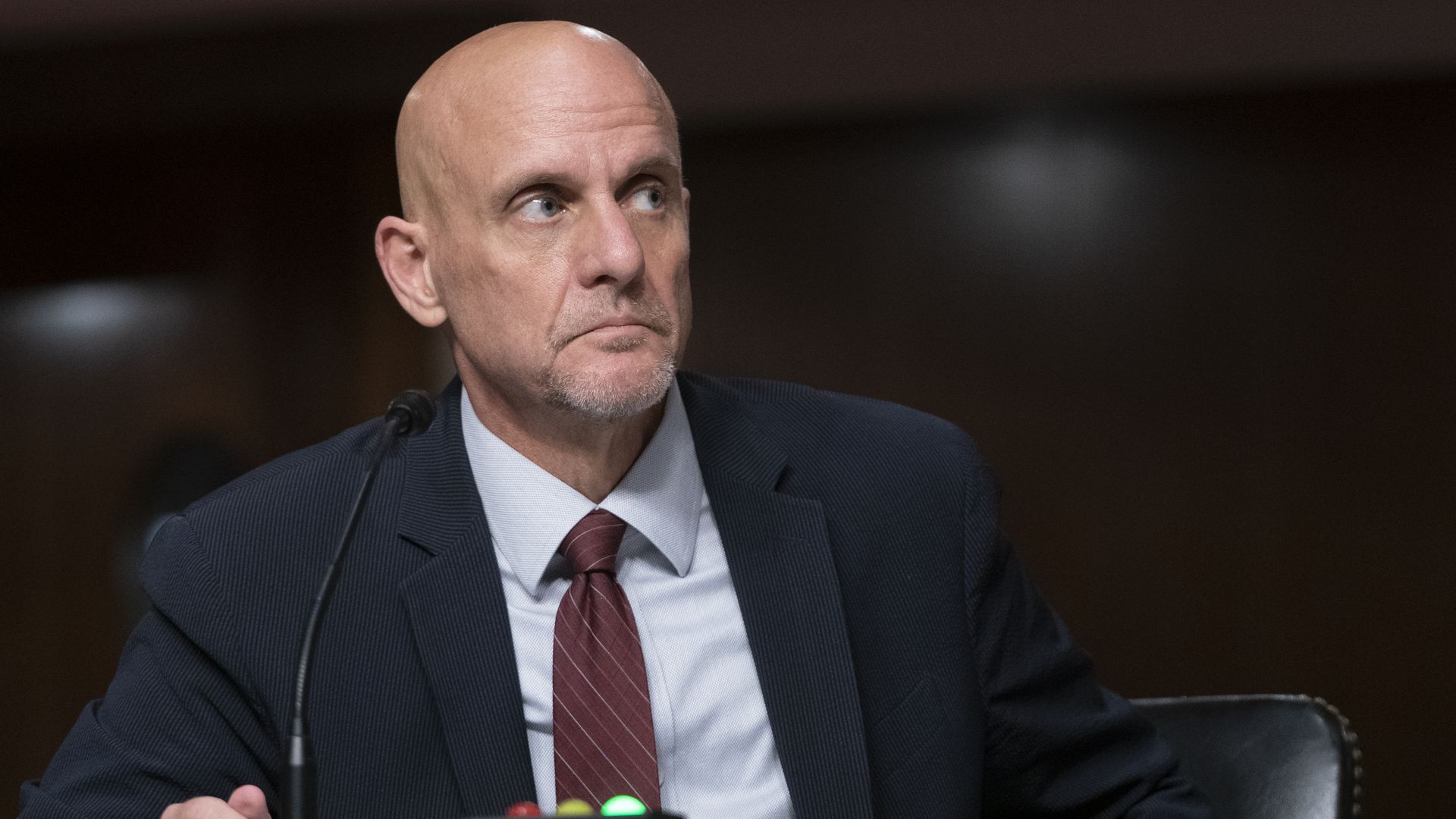
White House chief of staff Mark Meadows hinted to Food and Drug Administration commissioner Stephen Hahn on a phone call Friday that his job security might be in jeopardy as he pushed the FDA chief to approve Pfizer's coronavirus vaccine by the end of the day, according to two sources familiar with the call.
Why it matters: It's one more example of the White House putting political pressure on the FDA to expedite its green light on a coronavirus vaccine.
America is in the grips of the worst COVID-19 outbreak since the pandemic began, in terms of infections, hospitalizations and deaths. That means testing is now more important than ever before, and will continue to be a key public health tool even after vaccinations begin.
Axios Re:Cap digs into the past, present and future of COVID-19 testing with Adam Schechter, CEO of LabCorp, one of the country's two largest testing companies.
New York City will close indoor dining on Monday in an effort to curb the spread of the coronavirus, Gov. Andrew Cuomo said Friday.
Why it matters: Hospitalizations have continued to increase in New York City, a metric that Cuomo said the state would watch to determine whether tighter restrictions would be necessary. Takeout, delivery and outdoor dining will be allowed to continue.
AstraZeneca will begin trials to test whether its experimental coronavirus vaccine can be successfully combined with Russia’s Sputnik V shot, the company announced on Friday.
Why it matters: Both AstraZeneca's and Russia's vaccines have raised questions among experts around their separate trials. Russia has not completed advanced studies on the vaccine to ensure whether it is safe and adheres to scientific protocols. AstraZeneca's vaccine is reported to be about 62% effective, but some patients accidentally received a modified dosing regimen during trials.
Newly published research shows that global CO2 emissions dropped an estimated 7% this year as the pandemic curtailed travel and economic activity.
Why it matters: It's a record decline, according to the Global Carbon Project research consortium, with transportation-related emissions accounting for the largest share of the drop.
GlaxoSmithKline and Sanofi announced on Friday that their coronavirus vaccine program would be delayed until late 2021 in order to improve immune response in older adults.
Why it matters: It's a blow to hopes that the U.S. will have an array of vaccines available for distribution by early 2021. The Trump administration's Operation Warp Speed paid the companies $2.1 billion over the summer to cover some manufacturing costs and purchase an initial batch of 100 million doses.
After the first round of coronavirus vaccines is administered, state and local officials largely will not be able to ensure that the rest of the process puts high-risk people first.
Between the lines: Experts have spent months debating the ins and outs of a complex prioritization system for these vaccines, all in the hopes of saving as many lives as possible. But the actual process will likely rely heavily on the honor system.
Governors in Oklahoma, Pennsylvania and Virginia announced fresh coronavirus restrictions for their states on Thursday as the number of cases across the U.S. climbs.
Driving the news: The U.S. recorded 221,267 COVID-19 cases on Wednesday and a record 3,124 deaths, per Johns Hopkins University data.