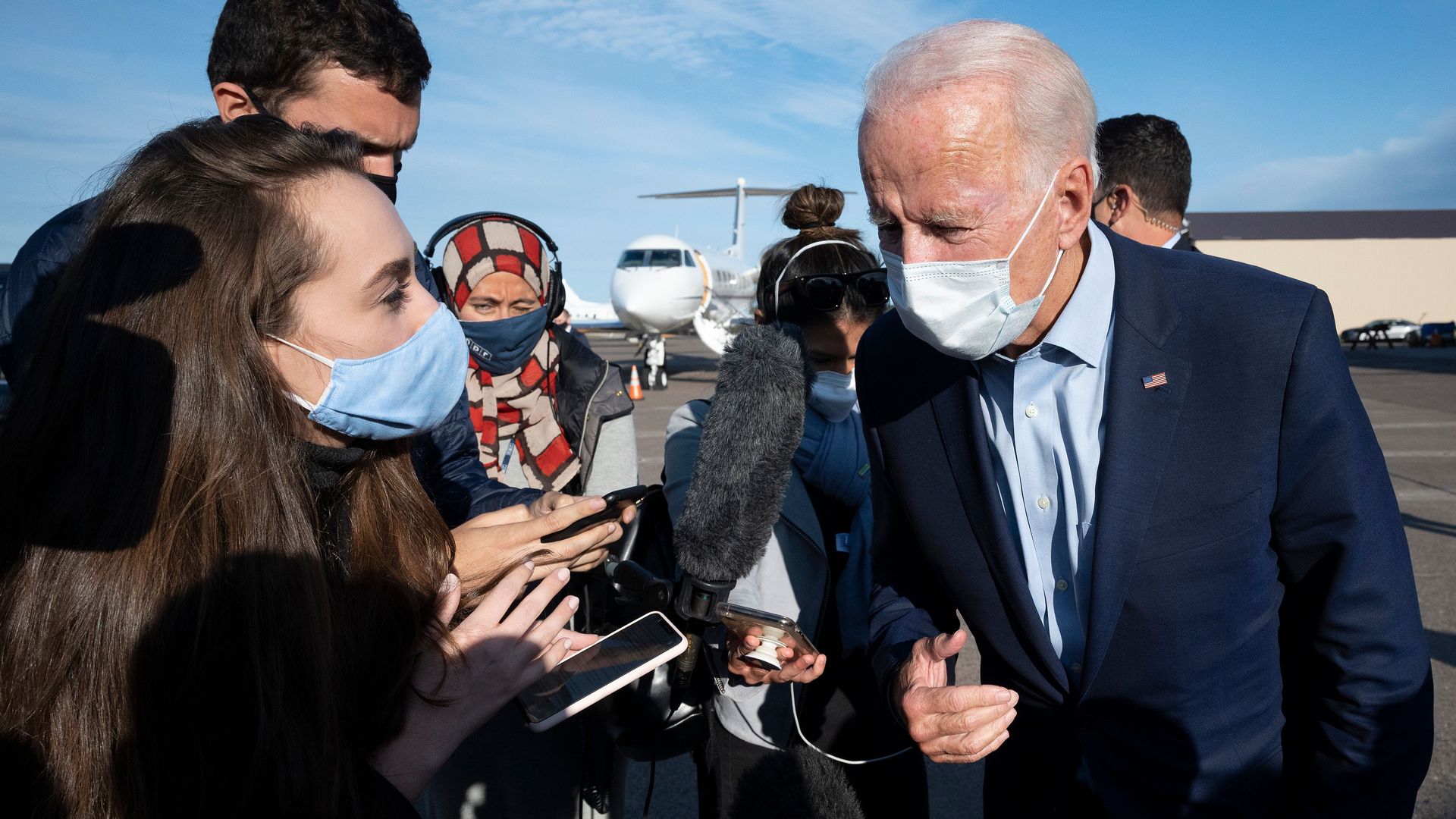
Traveling with Joe Biden's press corps shows how the campaign juggles an intense focus on protecting his health, with an imperative to keep the coronavirus at the top of voters' minds.
Driving the news: I got to see this firsthand on Friday, when it was Axios' turn to serve as the print pooler for his trip to Minnesota. The timing meant I also happened to be in the bubble when Biden learned of and reacted to the death of Ruth Bader Ginsburg.
Joe Biden’s closing argument will shift to a dominant emphasis on health care, turning the looming Supreme Court fight into a referendum on coverage and pre-existing conditions, officials tell Axios.
Why it matters: Biden aides believed they were winning when the race was about the coronavirus pandemic. Now they plan to use the Supreme Court opening as a raucous new field for a health care fight, returning to a theme that gave Democrats big midterm wins in 2018.
The career scientists involved in the approval process will not be swayed by politics, former FDA commissioner Scott Gottlieb said on CBS' "Face the Nation" Sunday.
Why it matters: Gottlieb's comments come amid fears that the Trump administration has politicized the coronavirus response and is seeking rapid approval and distribution of a vaccine.
Coronavirus testing czar Adm. Brett Giroir on CNN's "State of the Union" Sunday tried to reconcile President Trump's claim that there will be enough vaccines for every American by April with the very different timelines of top government doctors.
The state of play: Centers for Disease Control and Prevention director Robert Redfield has claimed that a vaccine will likely be available to everyone late in the second or third quarter of next year. Anthony Fauci, the director of the National Institute of Allergy and Infectious Diseases, has agreed with that timeline.
House Speaker Nancy Pelosi said on ABC's "This Week" on Sunday that President Trump is rushing to replace the late Supreme Court Justice Ruth Bader Ginsburg because he "wants to crush the Affordable Care Act."
Why it matters: Pelosi wants to steer the conversation around the potential Ginsburg replacement to health care, which polls show is a top issue for voters, especially amid the coronavirus pandemic. The Trump administration has urged the courts to strike down the law, and with it, protections for millions with pre-existing conditions.
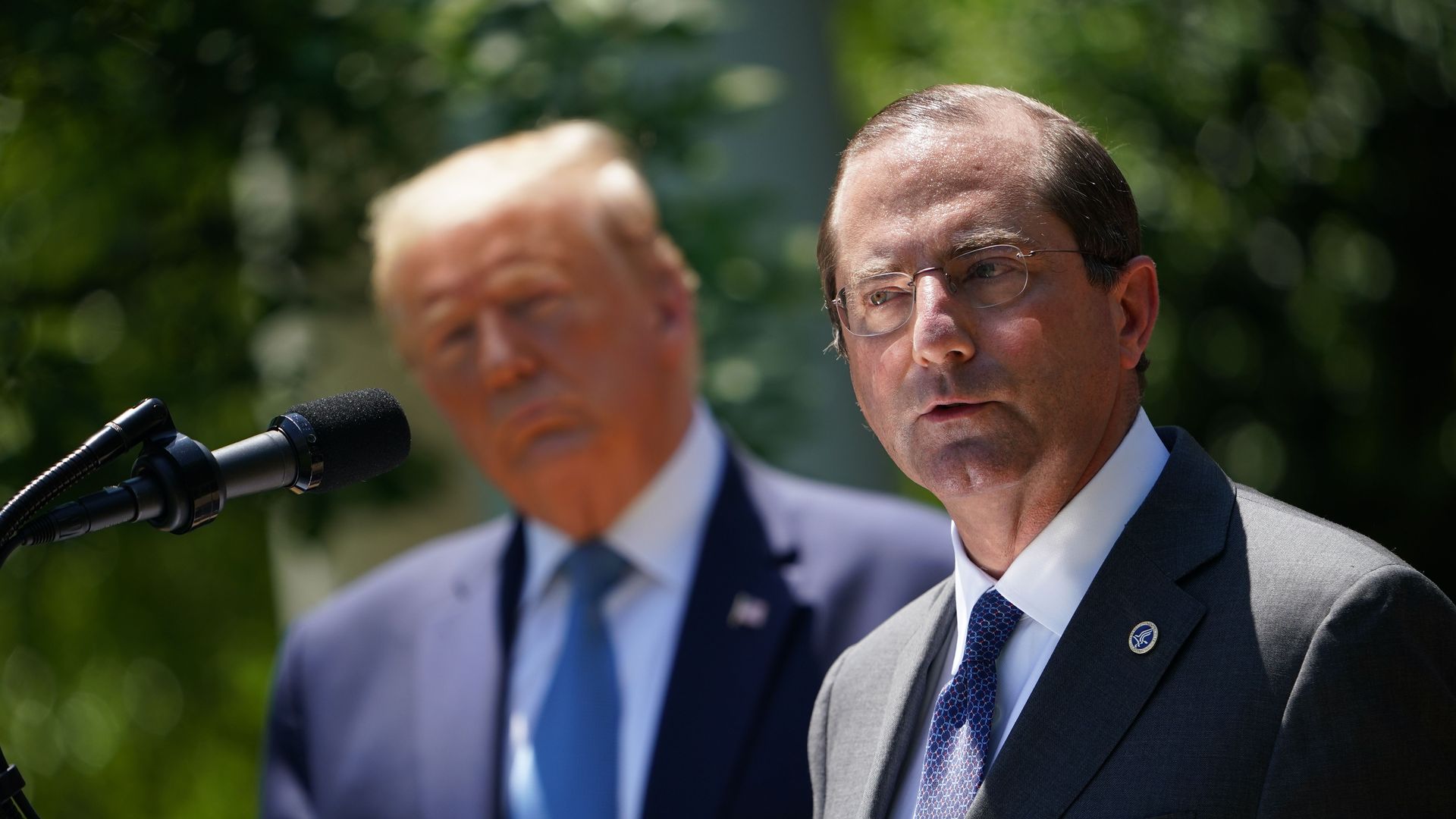
Health and Human Services Secretary Alex Azar wrote a memo this week giving him authority over all new rules and banning any of the health agencies, including the FDA, from signing any new rules "regarding the nation’s foods, medicines, medical devices and other products," the New York Times reports.
Why it matters: The story further underscores reporting that health and scientific agencies are undergoing a deep politicization as the Trump administration races to develop a coronavirus vaccine, as Axios' Caitlin Owens has reported. Peter Lurie, a former associate commissioner of the FDA, told the Times that the Azar memo amounted to a "power grab."
Americans suffer from high levels of obesity — a disease that has made us more vulnerable to the coronavirus.
Why it matters: If the U.S. is going to make itself more resilient to the coronavirus, as well as other deadly health conditions, some experts argue we need to rethink the food system that has helped leave too many people dangerously overweight.
As the coronavirus pandemic drags into its seventh month, it remains an open debate whether the U.S. should aim for the elimination of COVID-19 — and whether we even can at this point.
Why it matters: This is the question underlying all of the political and medical battles over COVID-19. As both the direct effects of the pandemic and the indirect burden of the response continue to add up, we risk ending up with the worst of both worlds if we fail to commit to a course.