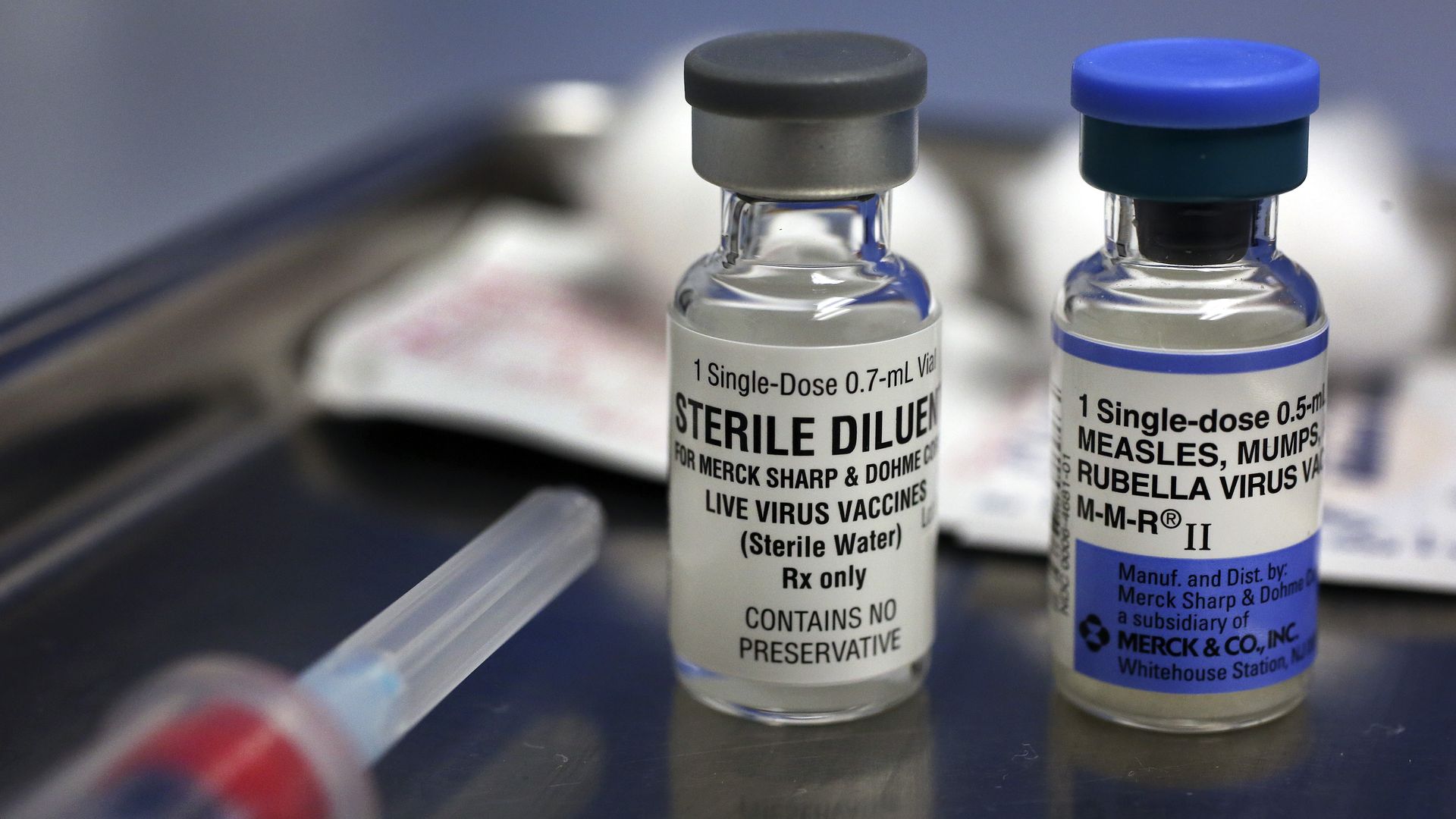
Deaths from measles in the Democratic Republic of the Congo surpassed 6,000, with children over the age of 5 most vulnerable to the infectious disease, new data from the World Health Organization showed Tuesday.
Why it matters: About 310,000 suspected measles cases, one-fourth of which are in kids over age 5, have been reported since the beginning of 2019. Vaccinations for children have made headway in some parts of the country, but public health officials are still trying to keep the disease at bay.
56% of Americans believe the measles vaccine has "very high" preventative care benefits — an 11-point increase since 2016, according to data out Tuesday from the Pew Research Center.
The big picture: While overall approval of the vaccine (88%) has remained unchanged, Pew credits the increase in perceived preventative health benefits to improved awareness of how measles outbreaks have become a public health problem.
The rates charged by hospitals — especially for emergency department care — have skyrocketed over the last two decades, according to a new study in Health Affairs.
Why it matters: While most patients with insurance don't pay these prices for their care — insurers typically negotiate lower rates — those who are uninsured or out-of-network often do.
The California State Senate proposed a ban on all flavored vaping products on Monday, days after the Trump administration unveiled a limited ban on most flavors in cartridge systems.
Why it matters: If the bill is passed and signed into law, the cartridges and e-liquids exempted from the Food and Drug Administration's ban would no longer be sold in California.
The cause of an outbreak of pneumonia in China that's sickened at least 59 people in the city of Wuhan remains a mystery, although Chinese officials say it is not the deadly SARS virus and doesn't appear to spread quickly between people.
Why it matters: There's no reason for Americans to be concerned at this point, but the source needs to be determined to halt its spread, says Anthony Fauci, head of the National Institute of Allergy and Infectious Diseases. Wuhan, which has a population of 19 million, is the capital of Hubei province, home to 58 million people.