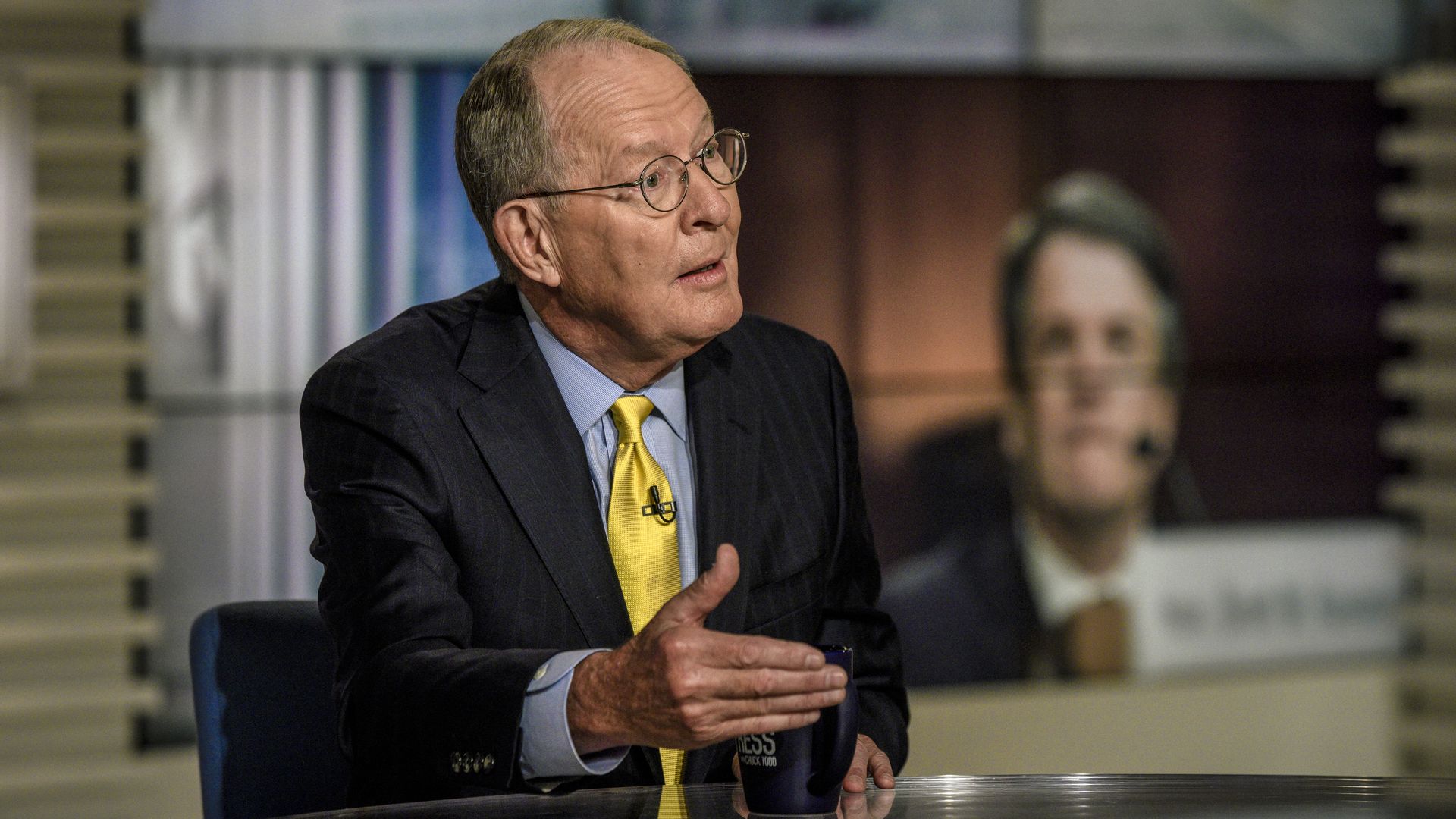
Sen. Lamar Alexander — chairman of the Senate Health, Education, Labor and Pensions Committee — announced his retirement yesterday morning, and so is officially in legacy-making mode.
The backdrop: Earlier this month, he said that a priority for next Congress would be addressing health care costs, a point he reiterated at an Axios event last week. This includes getting rid of wasteful spending, making prices more transparent and addressing surprise medical bills.
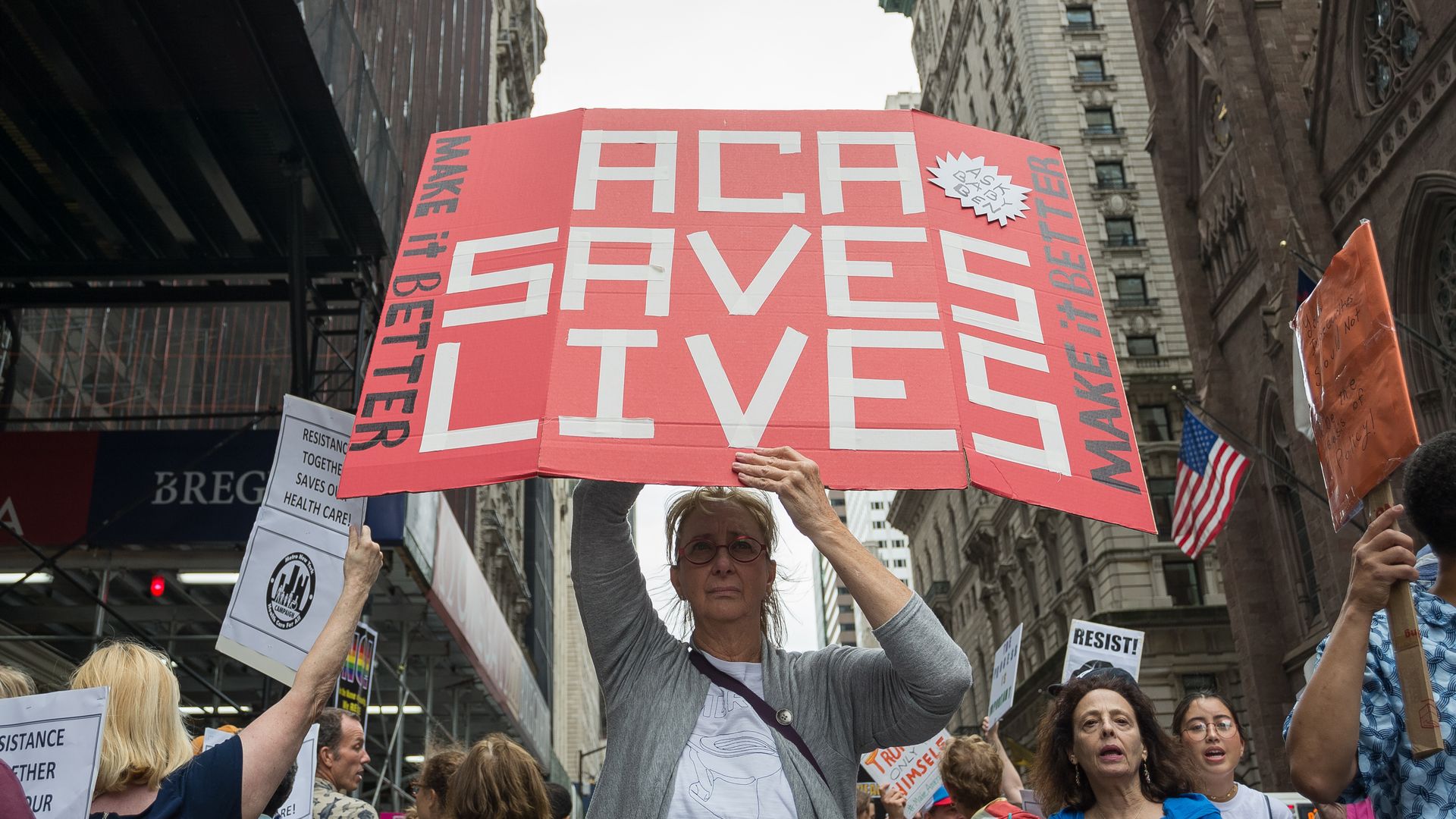
Congress could kill the lawsuit that threatens to wipe out the Affordable Care Act, legal experts say, but the politics of the issue will almost certainly keep it from doing so.
Why it matters: While these same legal experts think it's very likely that this case gets thrown out on appeal, that doesn't mean it definitely will — and a failure to overturn it would wreak havoc on the entire health care system.
Now that a Texas judge has ruled that the entire Affordable Care Act is unconstitutional — all because of its individual mandate — Republicans may find themselves wishing for a different outcome.
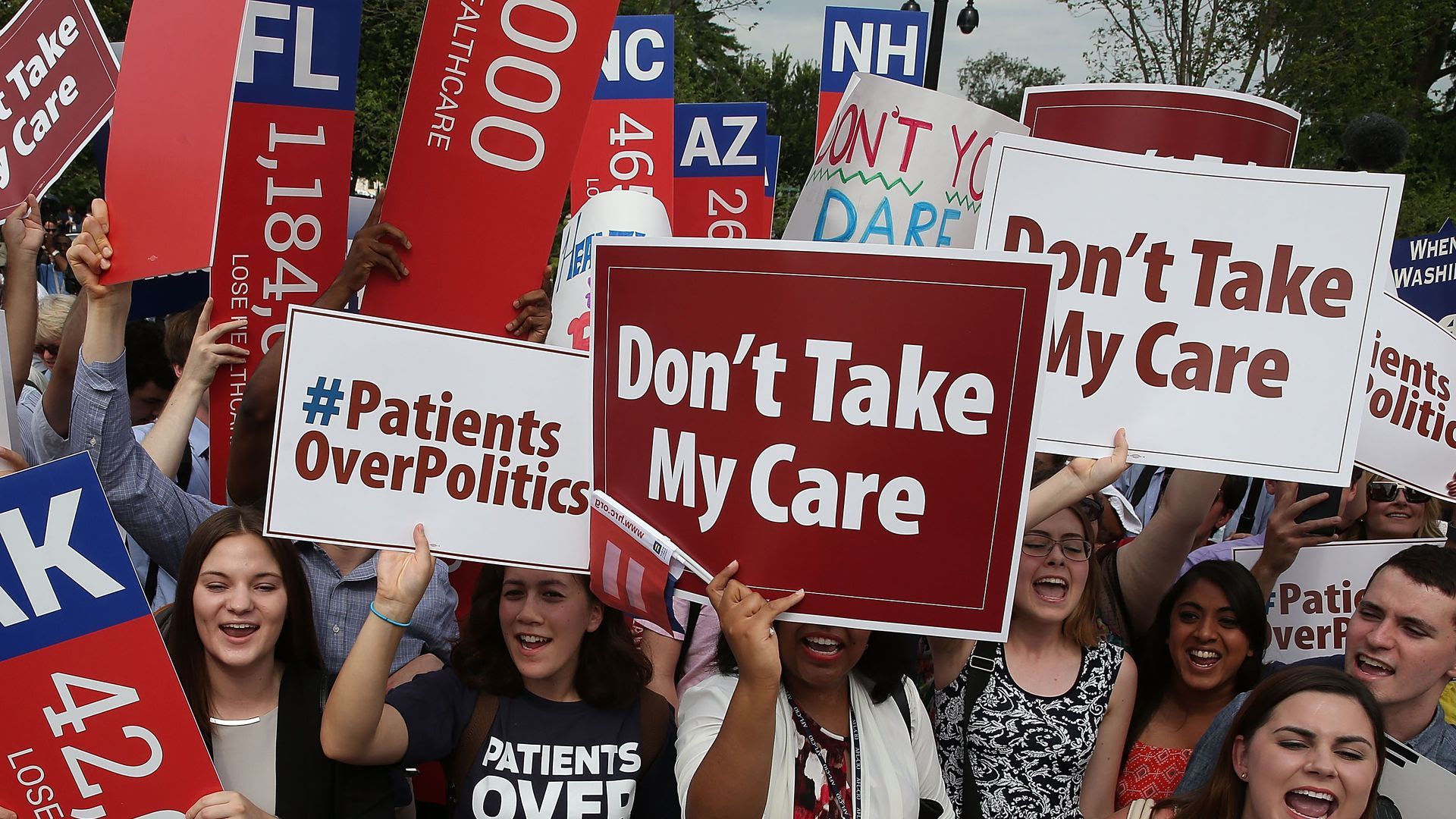
The big picture: There is little hope of a deal with Democrats on health reform in a divided Congress if the decision is upheld. Democrats will now use the 2020 campaign to paint Republicans as threatening a host of popular provisions in the ACA. And here’s the kicker: protections for pre-existing conditions, the provision that played such a big role in the midterms, is not even the most popular one.
California Attorney General Xavier Becerra has responded to Friday's ruling by asking the judge to clarify that the decision does not change the status quo as the case works its way through the legal system, and to either issue a stay on the case or take action that allows the ruling to be appealed.
Between the lines: This is a complicated legal action that's aimed at making sure the decision doesn't take effect while the case plays out, which would throw the health care system into turmoil beginning Jan. 1.
Behavioral health provider Acadia Healthcare has fired CEO and board chairman Joey Jacobs and replaced him with Debbie Osteen, who works at competitor Universal Health Services. Acadia and Reeve Waud, a private equity executive who is now Acadia's board chairman, declined to comment beyond the press release.
Background: Three weeks ago, we covered how Acadia's business, under the watch of Jacobs and Waud, has been filled with red flags. Over the past few years, Acadia saddled itself with huge amounts of debt, and top executive insiders sold off stock in droves.
Now that federal Judge Reed O'Connor has ruled the entire Affordable Care Act is unconstitutional — since Congress zeroed out the penalty tied to the mandate to buy health insurance — the health care law once again has to show it has an extra life in its back pocket.
The big picture: If O'Connor's ruling stands — or takes effect before an appeal — it would kick millions of people off of private insurance and millions more off of Medicaid, and would eliminate protections for people with pre-existing conditions.
"Twice as many high school students used nicotine-tinged electronic cigarettes this year compared with last year, an unprecedented jump in a large annual survey of teen smoking, drinking and drug use," AP's Mike Stobbe reports.
Why it matters: The federally funded University of Michigan survey of 45,000 students in grades 8, 10 and 12 "found 1 in 5 high school seniors reported having vaped nicotine in the previous month. ... It was the largest single-year increase in the survey's 44-year history, far surpassing a mid-1970s surge in marijuana smoking."
Pre-existing conditions are in the news again, now that a federal judge's ruling could wipe out the Affordable Care Act. But there's been a similar issue all along that's drawn less attention: Seniors with pre-existing conditions can be denied coverage in many cases when they apply for Medicare supplemental insurance policies, or Medigap.
The big picture: The Affordable Care Act prohibits most private health plans from denying coverage to individuals based on their medical history. Medicare and Medicaid also cover all eligible individuals regardless of their medical history. But Medigap doesn’t have this protection, at least not fully. The problem could be addressed, but with the expected side effect: premiums would go up.