The Centers for Medicare & Medicaid Services has released new data on accountable care organizations that, on a high level, show the networks of hospitals and doctors saved Medicare money in 2017 and scored high quality marks.
The bottom line: ACOs have reduced federal health care spending more than what skeptics expected. But there are still questions of whether ACOs could have reduced Medicare spending even more if hospitals and doctors were on the hook for paying back losses sooner and if there is a limit to how much they could really save in the future.
Investigative projects from Kaiser Health News/NPR and Vox have exposed pernicious billing practices from hospitals and doctors that have left patients shocked, angered and exasperated.
The bottom line: Hospitals have taken PR hits with the airing of surprise bills, but nothing suggests their practices will change in the short term.
Better screening and increased drug research into new antibiotics and antiviral medications are greatly needed to head off what some health experts say could be a future in which there will be no effective medications to fight common infections like gonorrhea, syphilis, E. coli and staph.
Why it matters: Antimicrobial resistance is currently projected to be the number one killer by 2050 — "outpacing even cancer" — according to Amy Mathers, assistant professor at the University of Virginia School of Medicine.
Government officials in the Democratic Republic of the Congo (DRC) announced this week they will start the school year on time on Sept. 3, as the deadly Ebola outbreak seems to have lessened in intensity (see chart above) but worries linger especially as 3 community deaths were reported today.
What's new: The concern is particularly over the 3 people who apparently died outside of quarantined treatment centers, since the Ebola virus remains highly infectious after death. Plus, in the midst of handling Ebola, health officials continue to deal with an outbreak of a rarer type of polio, and have begun a vaccination campaign in areas not affected by Ebola, per Jessica Ilunga, spokesperson for DRC's Ministry of Health.
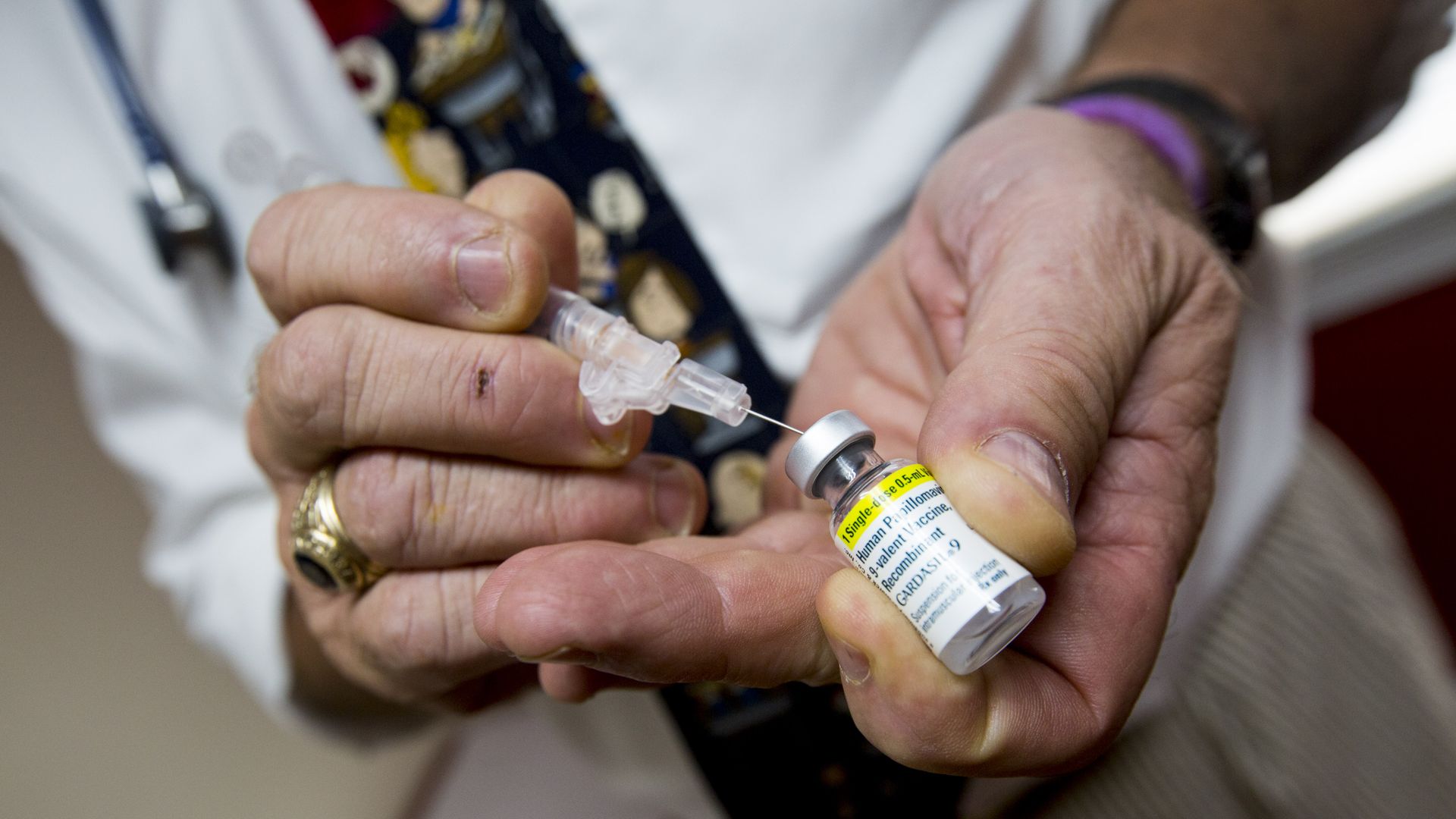
In 2006, a safe and effective human papillomavirus (HPV) vaccine became available to protect against cancers caused by HPV infection. HPV vaccination rates in adolescent boys and girls are rising, though still not fast enough, with HPV-linked cancer cases soaring by nearly 45% between 1999 and 2015. Fewer than half of American adolescents have been fully vaccinated, far short of the 80% goal officials have set for 2020.
Why it matters: The lifetime risk of acquiring an HPV infection is approximately 80%. Each year, 14 million new cases are diagnosed in the U.S., and 79 million Americans are currently infected, putting them at increased risk of cervical cancer as well as throat, vaginal, penile and anal cancers. A more comprehensive campaign is needed to make the world free of HPV infections.
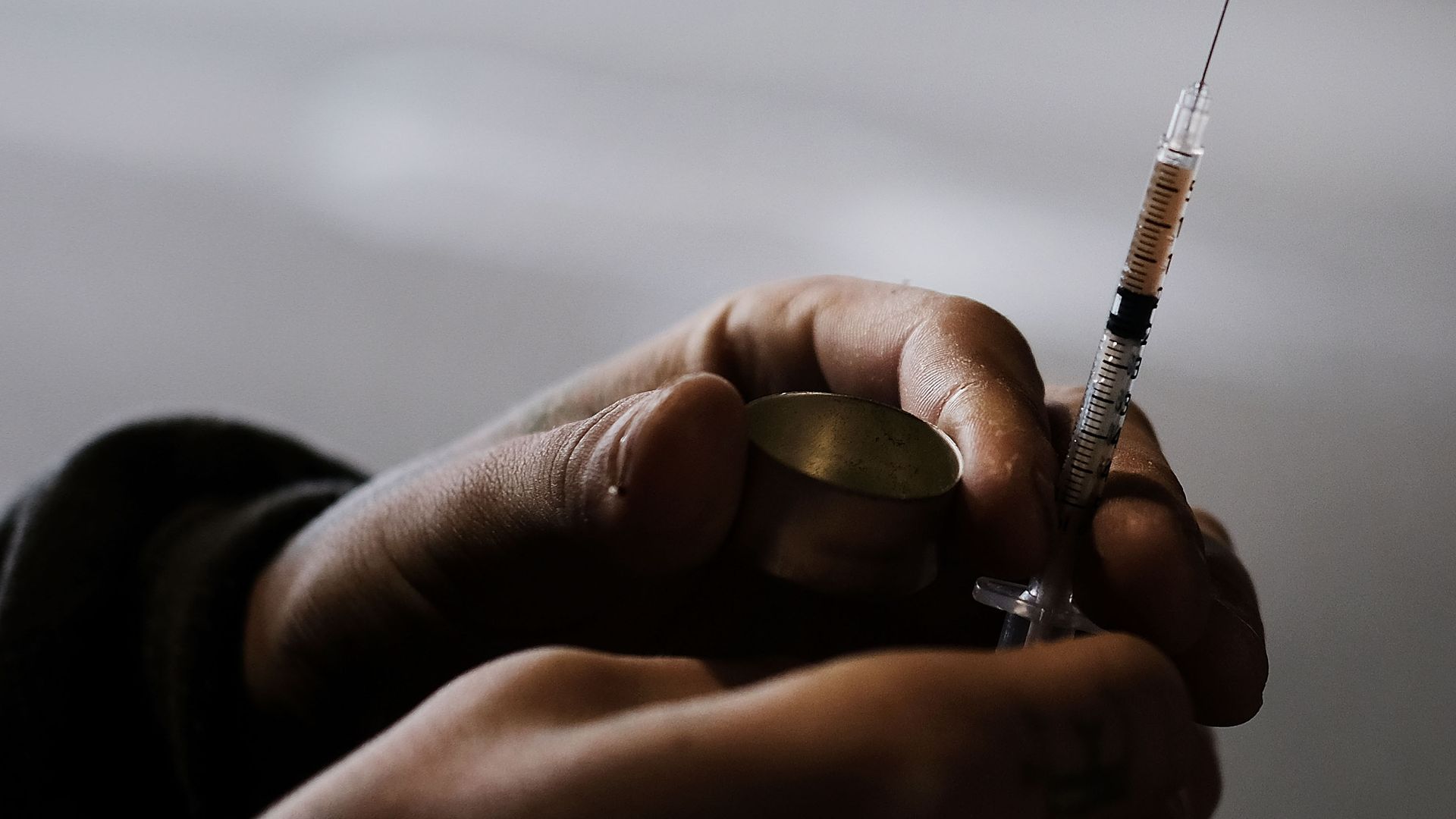
A team of scientists may have developed a new opioid alternative that kills pain while muting the addictive components, according to a new study of animal models in Science Translational Medicine published yesterday.
Why it matters: From 1999 to 2016, more than 200,000 Americans died from overdoses related to prescription opioids, my colleague Eileen Drage O'Reilly reports. Yet, these drugs remain the most effective options for treating many cases of acute or chronic pain.
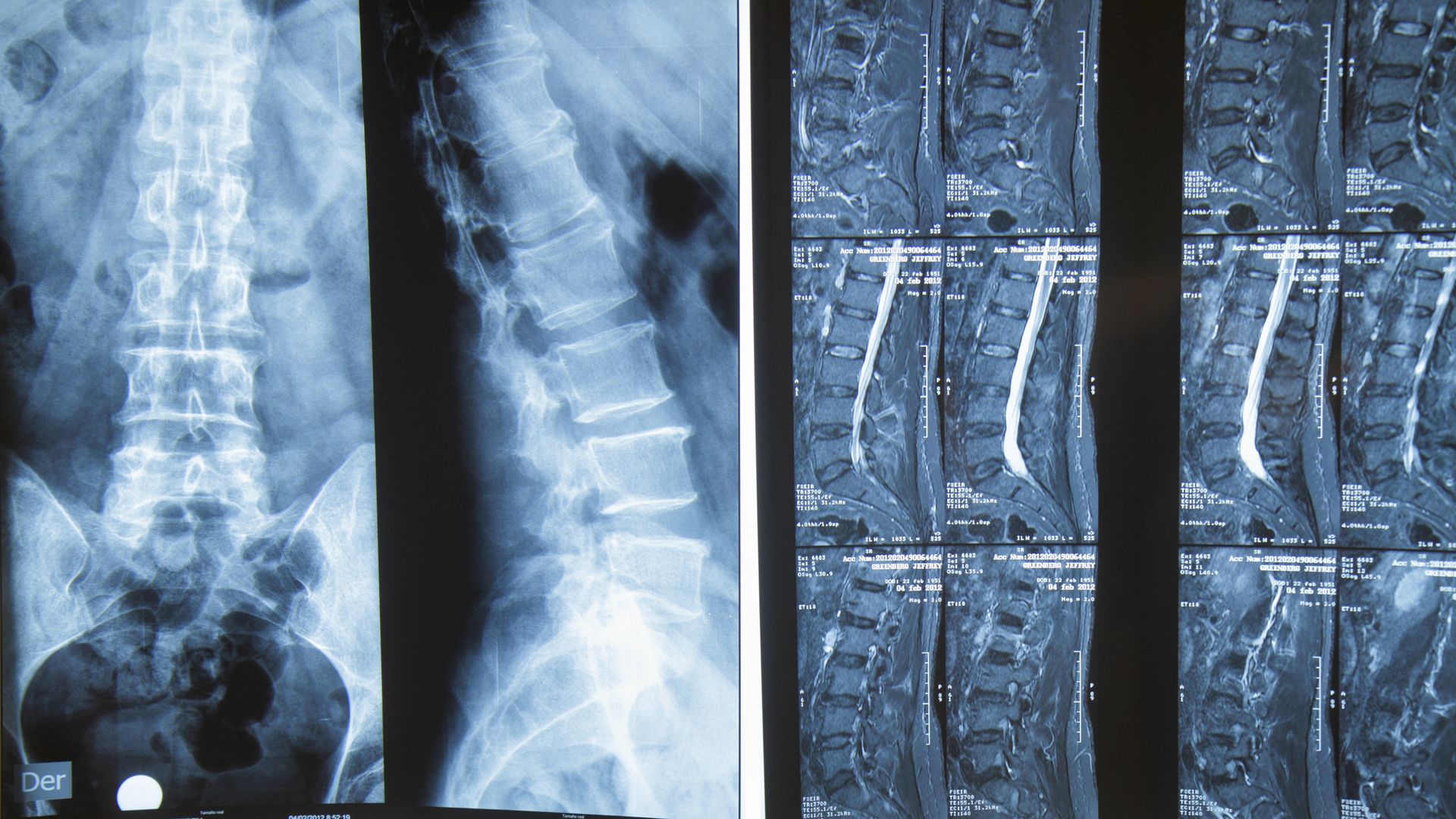
More than nine out of 10 hospitals charge at least $30,000 for joint replacement surgery — one of the most common inpatient procedures — and one out of six hospitals charges $90,000 or more, according to an Axios analysis of 2016 federal health care data.
The bottom line: Hospitals set prices for any test or procedure at whatever level they want, often well above what Medicare pays. While those prices often aren't what patients pay, they still help dictate what society at large pays for health care.
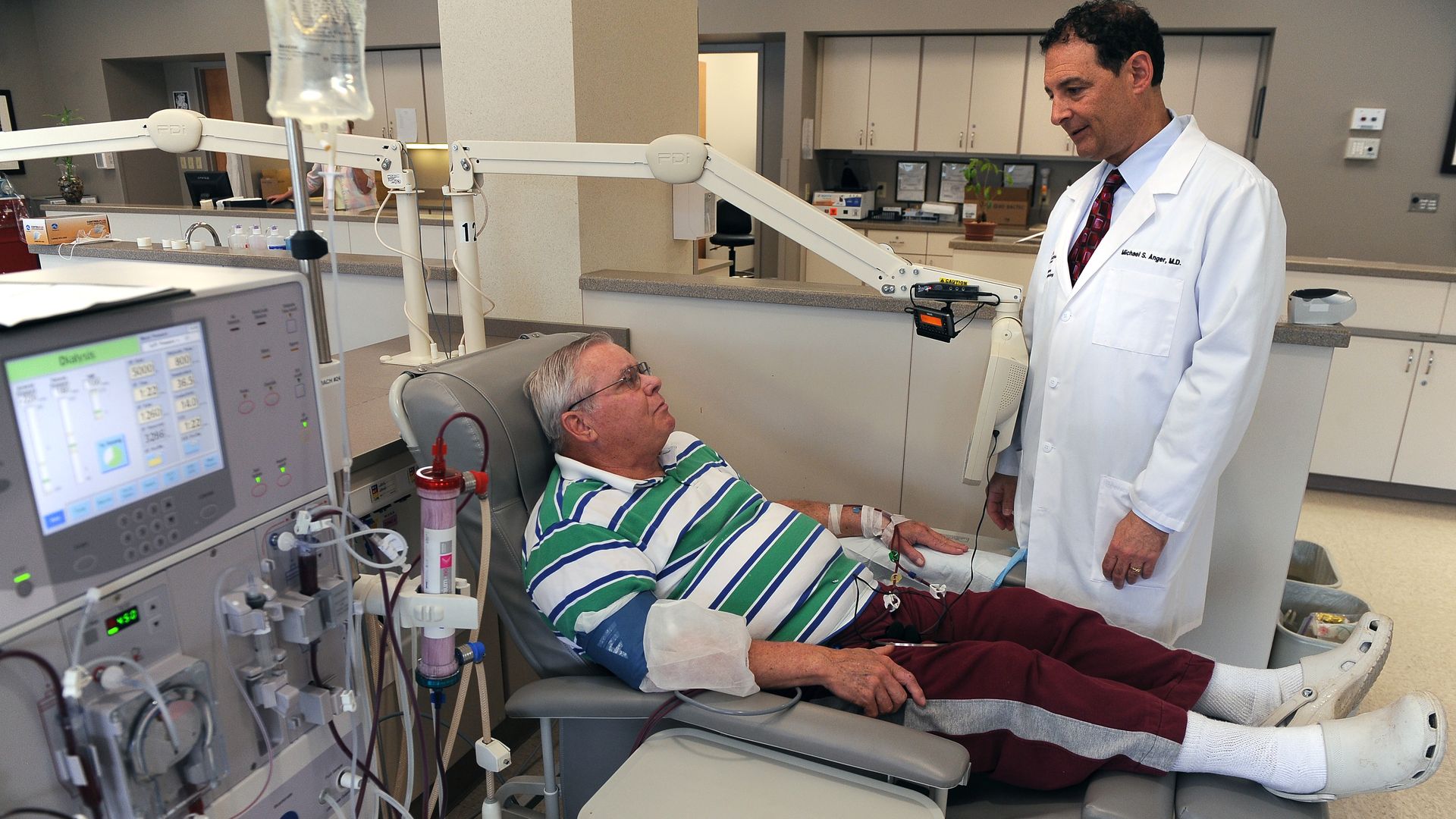
The California Assembly late Wednesday passed dialysis legislation SB 1156 by a 44-19 tally after it originally didn't have the votes. California's Senate still has to vote it through again, but it's "pretty much pro forma at this point" and will head to Gov. Jerry Brown's desk, according to a lobbyist familiar with the bill.
The bottom line: This is a giant win for the SEIU, health insurers and employers and a huge blow to dialysis companies and the American Kidney Fund, but it's a coin flip on what Brown will do. The bill would cap payments at lower Medicare rates for providers that have financial ties to charities that subsidize patients' commercial insurance.


/2018/08/30/1535654707540.gif?w=3840)