Wednesday's health stories

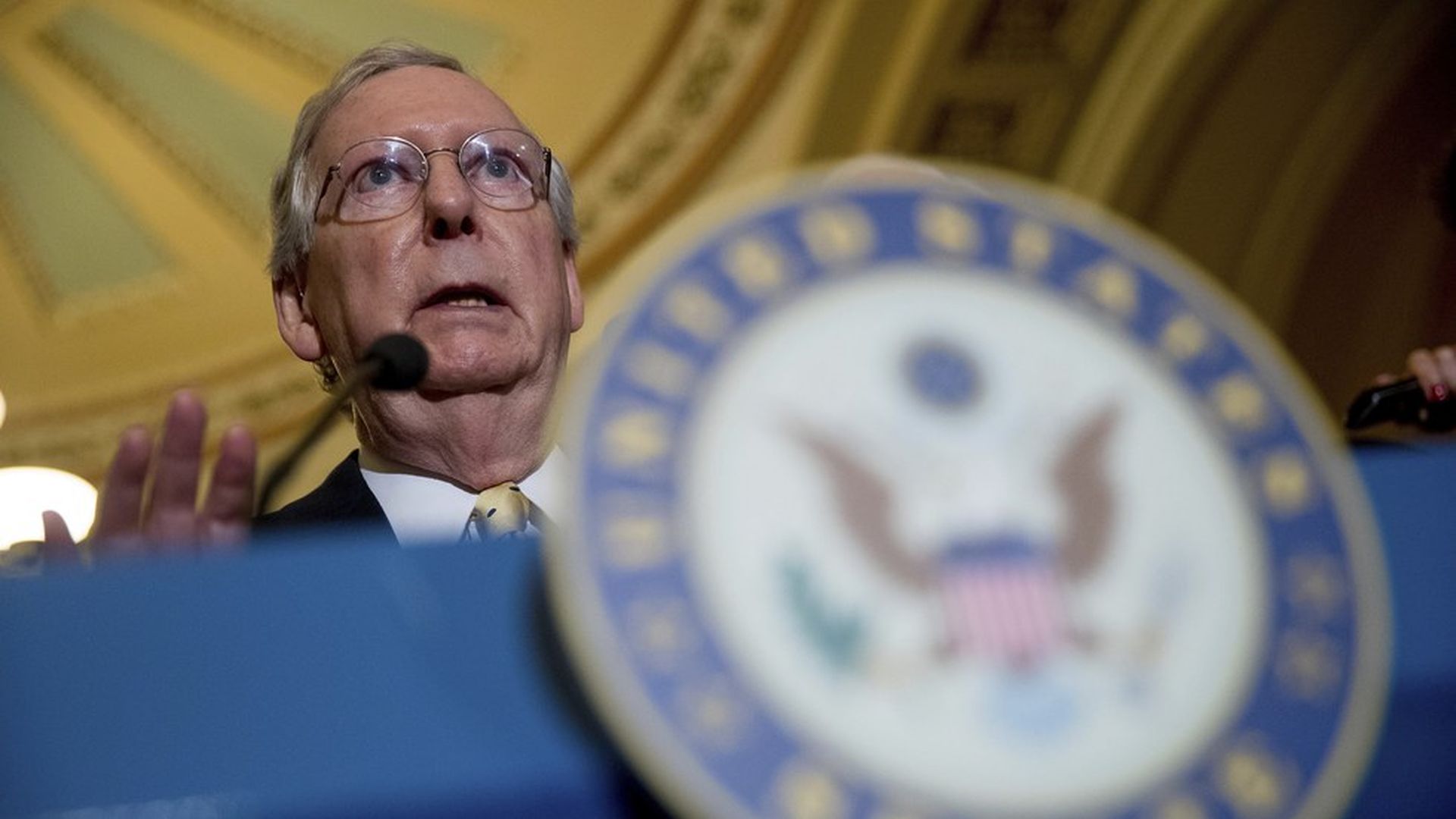
CBO: 32 million more uninsured by 2026 with repeal-then-replace
The Congressional Budget Office has scored the recent repeal-then-replace bill, predicting 17 million more Americans would be uninsured by 2018 and 32 million more uninsured by 2026, compared to current law. The Senate is expected to vote on the plan next week.
Context: This score was similar on the repeal bill that passed both the House and the Senate in 2015, but which Barack Obama vetoed. There's no reason for lawmakers to be surprised by the dramatic coverage losses. Other projections from the report:
- Average premiums would increase by about 25%, and about double by 2026.
- It would decrease deficits by $473 billion over 10 years.
- Three in four Americans wouldn't be able to buy a health care plan in 10 years.

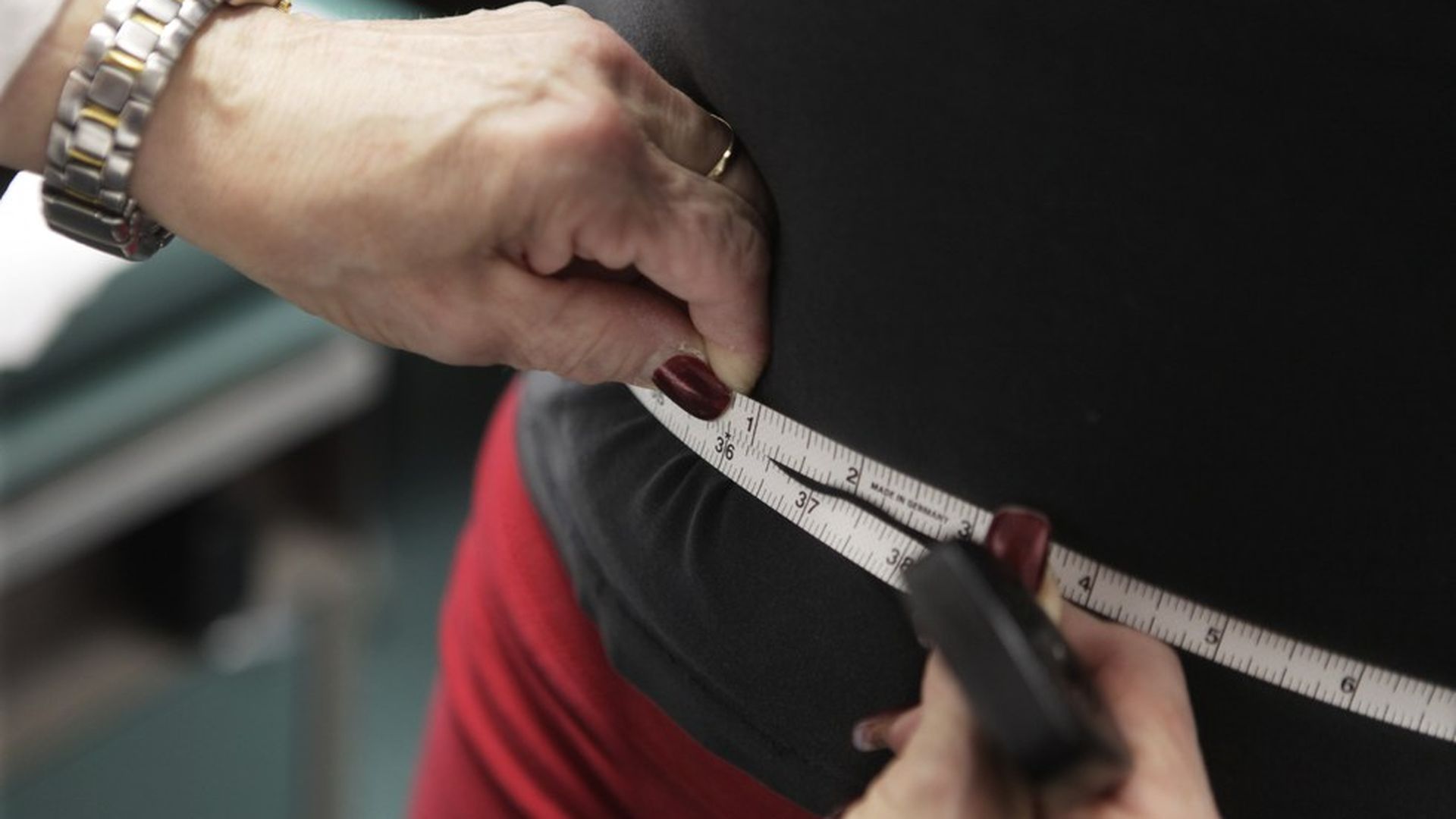
Fat matters: How gaining weight kills
Gaining weight between the age of 18 and 55 leads to a "significantly elevated" risk of developing major chronic diseases, obesity-related cancers, and early non-traumatic death, according to a new Harvard study published in JAMA Tuesday.
How bad is it? For every 11 pounds gained after 18 years old for women and 21 for men, there is:
- a 5% greater chance of dying prematurely (if you've never smoked)
- a 30% increased risk of Type 2 diabetes
- a 14% greater risk of hypertension
- an 8% higher risk of cardiovascular disease
- a 6% increased risk of obesity-related cancer
Study details: The team analyzed health data from 118,140 study participants: 92,837 women (from 1976 to 2012) and 25,303 men (from 1986 and 2012.) People were asked to recall their weight from early adulthood (18 for women and 21 for men) and then report their weight when they turned 55.
After the participants turned 55, the researchers tracked them for incident cases of major chronic disease and mortality. They also tracked "healthy aging," which is the goal of aging without one of the top 11 chronic diseases and showing no major cognitive or physical impairment.
Limitations: One of the study authors, Yan Zheng, told Axios there were three limitations to the study: the participant's weight at the beginning was recalled at a later stage rather than being measured in person at the time; the participants were mostly white professionals; and, the experiment did not include measuring changes in waist circumference.
Outside perspective: William Dietz, director of Sumner M. Redstone Global Center for Prevention and Wellness, told Axios the risk rates from the study could be even higher if the participant pool had been more ethnically diverse.
Dietz, who wrote an editorial on the study, said he would like further research to show the cost benefit of maintaining a stable, healthy weight and to determine the economic consequences for people with obesity. "This may prompt employers to make weight loss a group effort," he said.

More than 100 million Americans have diabetes or pre-diabetes
More than 100 million people in America have either diabetes or a condition called "pre-diabetes" that can lead to type 2 diabetes within five years, the CDC says in a new report out today. That's a huge number, with enormous consequences for the healthcare system.
Data: Centers for Disease Control; Map: Lazaro Gamio / Axios
Key findings:As of 2015, 30.3 million Americans have diabetes and another 84.1 million have pre-diabetes.Diabetes was the seventh leading cause of death in the country in 2015.The rate of new diagnoses hasn't changed much: In 2015, there were about 1.5 million new cases among adults. Importantly, the CDC found 23.8% of adults living with diabetes didn't know they had it — a statistic that has also held steady. A map of the country shows that a higher percentage of diabetes cases are in Rust Belt states, the deep South and the Southeast.The new CDC statistics were pulled from data compiled by four federal agencies, along with published studies in peer-reviewed medical science journals. The report doesn't distinguish between type 1 and type 2 diabetes, but 95% of all diabetes cases are type 2, which can be prevented if people know about it and act on it.
Sound smarter: Diabetes can be managed with nutrition, exercise and insulin use, but it can also lead to serious health complications when people aren't aware of the risks. There are multiple risk factors for diabetes, but the major ones include smoking, obesity, physical inactivity, high blood pressure, high cholesterol and high blood glucose (sugar). A combination of several of these exponentially increases the risk of diabetes for someone.

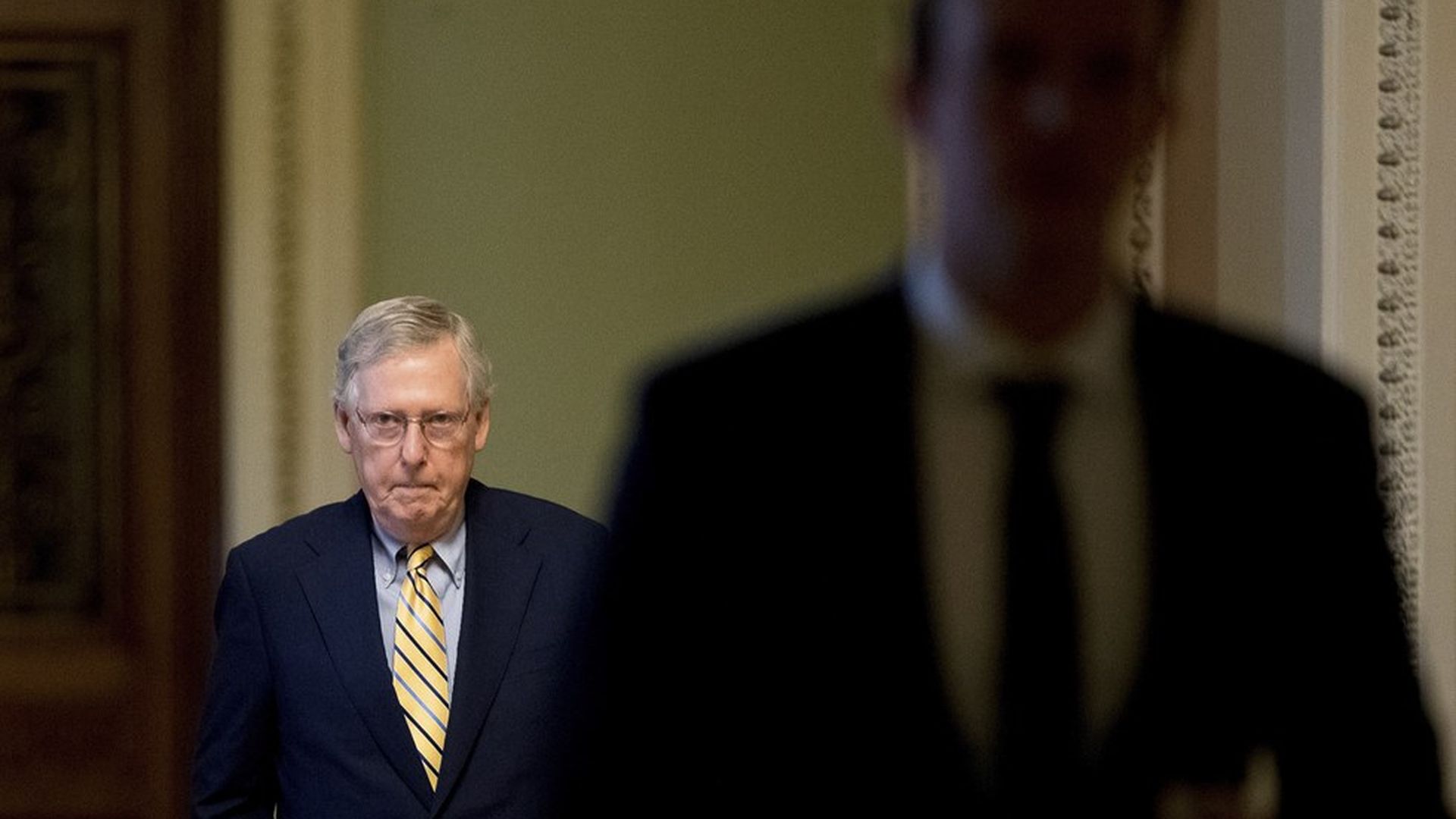
McConnell: expect an ACA repeal vote soon
In the face of crumbling support for the Senate's plan to repeal and replace the Affordable Care Act, Majority Leader Mitch McConnell told reporters this afternoon that he'd instead move to hold a vote on full repeal without a replacement in the "very near future" — even as support for that option is dwindling.
- His explanation for the failure of repeal and replace: "Everybody's given it their best shot, and as of today, we simply do not have 50 senators who agree on what can replace the existing law."
- Rand Paul made a guest appearance: His message to senators voting "no" on full repeal: 'You need to go back home and explain to Republicans why you're no longer for repealing Obamacare."

11 GOP and Dem governors issue joint statement on health care
A bipartisan group of governors issued a joint statement Tuesday urging the Senate to "immediately reject efforts" to repeal the Affordable Care Act and instead have both parties come together and focus on fixing America's unstable insurance markets.
They also argued that governors should play a more important role in the health care process moving forward, and stated that they "stand ready to work with lawmakers in an open, bipartisan way."
The 11 governors: John Kasich of Ohio (R); Steve Bullock of Montana (D); Larry Hogan of Maryland (R); John Bel Edwards of Louisiana (D); Bill Walker of Alaska (I); John Hickenlooper of Colorado (D); Charles Baker of Massachusetts (R); Tom Wolf of Pennsylvania (D); Phil Scott of Vermont (R); Terry McAuliffe of Virginia (D); and Brian Sandoval of Nevada (R).

Trump: "Let Obamacare fail... I'm not going to own it."
In an "impromptu" White House Pool spray during President Trump's lunch with Vice President Pence, National Security Advisor McMaster, Colonel Wawro and four Afghanistan veterans, Trump drove home how "disappointed" he is about health care.
- "Let Obamacare fail, it will be a lot easier. And I think we're probably in that position where we'll just let Obamacare fail. We're not going to own it. I'm not going to own it. I can tell you the Republicans are not going to own it. We'll let Obamacare fail and then the Democrats are going to come to us."
- Why it matters: Trump is acknowledging defeat and now, rather than support Senate Majority Leader Mitch McConnell's push to repeal with out a replacement bill, he's decided to let Barack Obama's Affordable Care Act remain the law of the land.
- Moments ago: McConnell's straight repeal plan collapses with 3 "no votes."

Straight repeal plan is a no go with 3 "no" votes
Three GOP senators — Shelley Moore Capito, Susan Collins, and now Lisa Murkowski — all will vote "no" on the new plan to repeal and then replace the Affordable Care Act.
Why it matters: This guarantees what was already widely expected: that Senate Republicans wouldn't be any more successful with a straight repeal plan, without a replacement, than they were with the repeal-and-replace legislation that stalled yesterday. Republicans could only lose two votes.
What's next: Senate Republicans are still likely to schedule the vote — even if it fails — because they have to prove to conservative groups (and President Trump) that they've tried everything.


McConnell’s “nuclear option” after health care failure
Obamacare remains the law of the land. And the White House didn't even get a courtesy call.
The West Wing was blindsided last night when two Republican senators — Mike Lee of Utah and Jerry Moran of Kansas — came out against repeal-and-replace. Either of them would have killed it.
But there's one more act in this drama: At 10:46 p.m., Senate Republican Leader Mitch McConnell announced that he was calling the bluff of his finicky GOP colleagues and planning a repeal-only vote, putting them on the line to act on the promise they had repeatedly made in their campaigns, with no excuses.