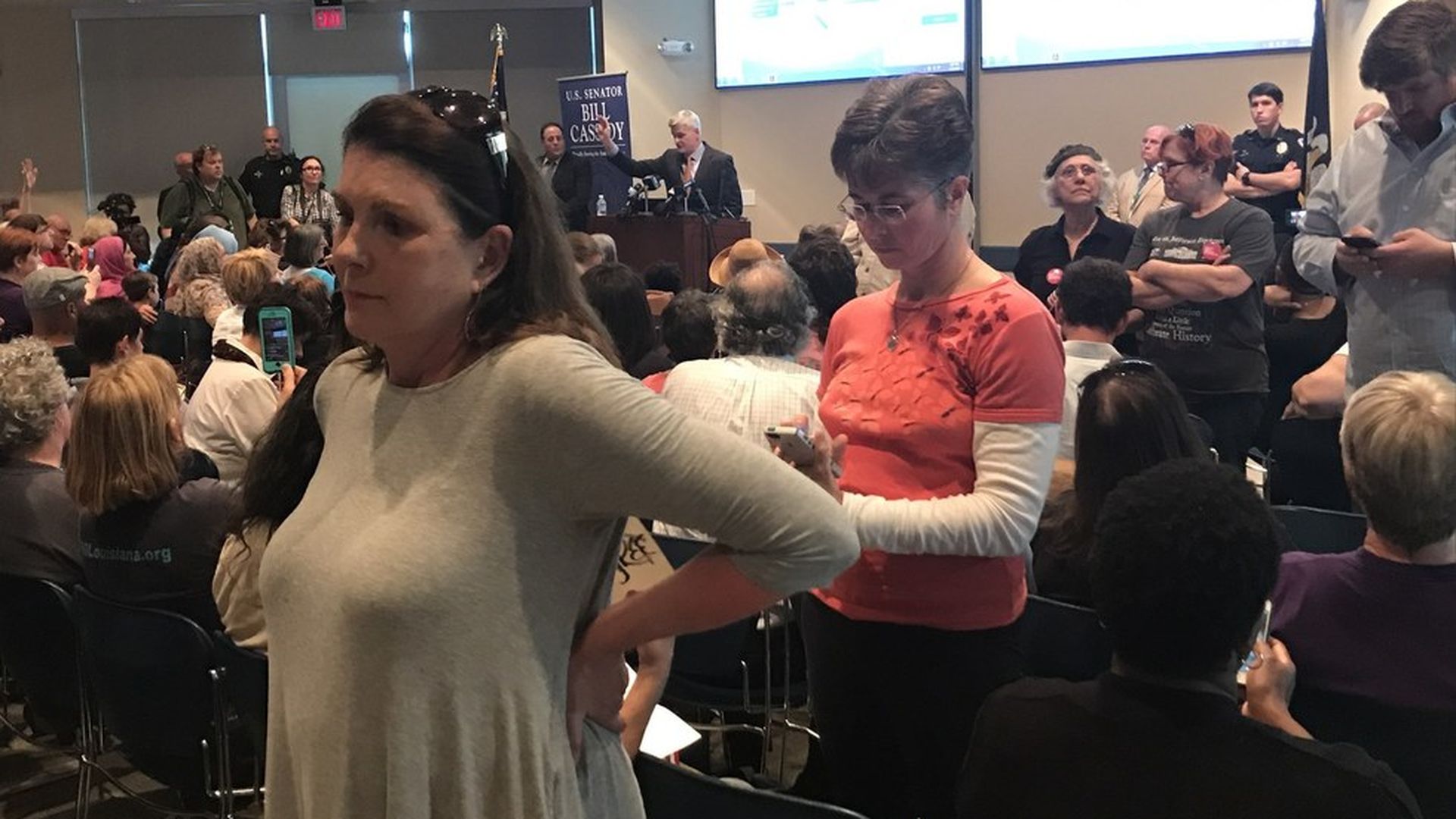
METAIRIE, La. — Sen. Bill Cassidy's town hall meeting this afternoon began with protesters arriving hours beforehand, many with their questions about Obamacare repeal and replacement prepped and ready to go. Then, they turned their backs on him as he tried to explain his Obamacare replacement plan with a PowerPoint.
That's pretty much how the whole meeting went. Read on for the highlights.
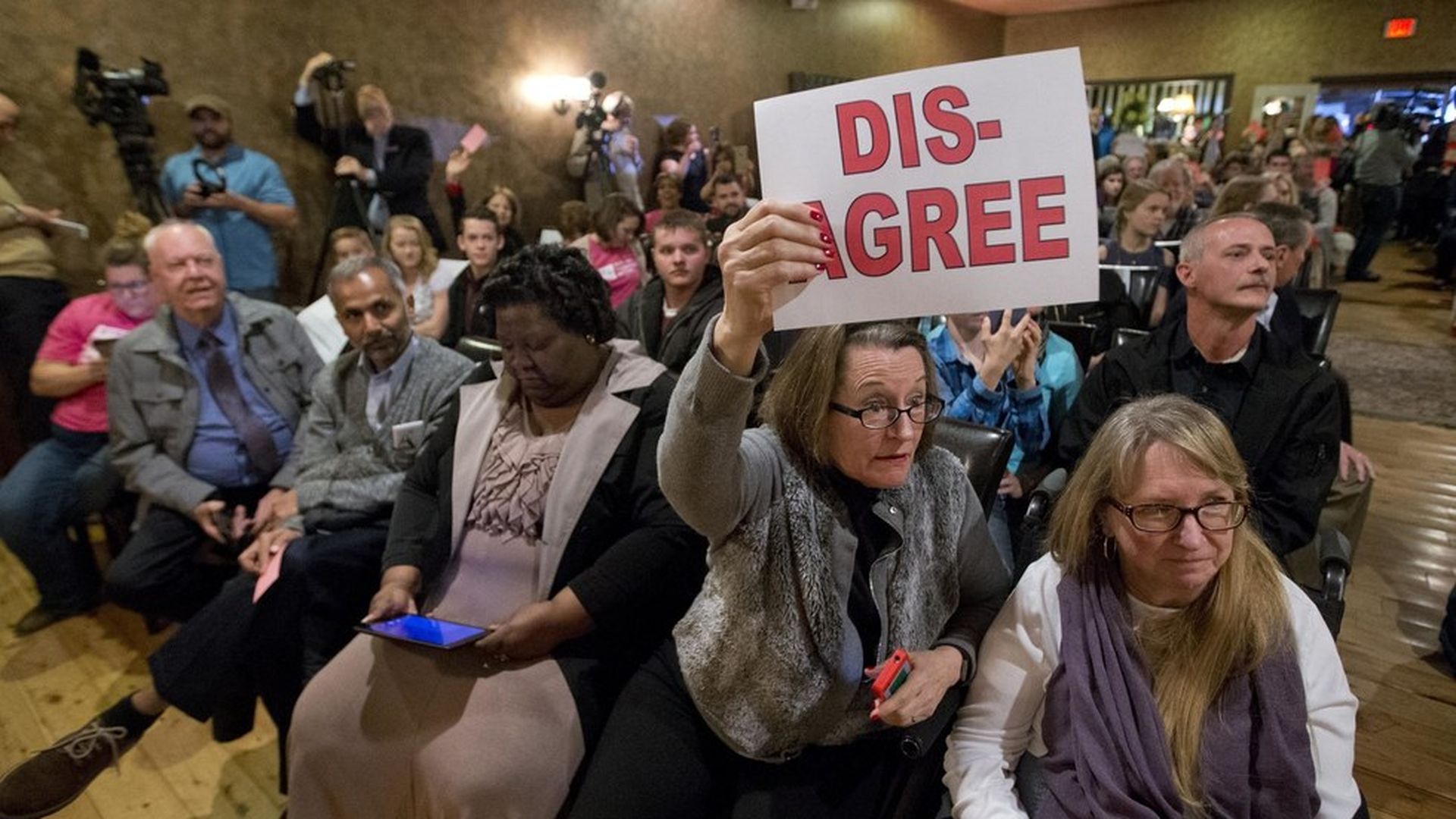
Town halls across the country last night erupted as U.S. citizens expressed their opinions and discontent with the political scene and demanded answers from their Congressman. Here are videos of recent hot moments.
A political advocacy group with ties to Senate Majority Leader Mitch McConnell is sending a message to conservative hardliners: We're repealing and replacing Obamacare, so get used to it.
The group, One Nation, is announcing today the launch of a series of TV ads in nine states that hit the failings of the health care law and promise that Republicans will "repeal and replace" it. Costs of the three week advocacy — which also includes radio, print and digital ads — will exceed $3 million.
Sarepta Therapeutics announced this morning it will sell its rare pediatric disease priority review voucher to Gilead Sciences for $125 million, giving Gilead the rights to have one of its drugs receive fast-track approval from the Food and Drug Administration.
The vouchers let drug companies get a decision on their medicines within six months, rather than the standard 10-plus months. The FDA awarded Sarepta the voucher last year at the same time the agency green-lighted Sarepta's drug that treats Duchenne muscular dystrophy, a move that was controversial at the time because there was disagreement over whether the drug was beneficial. Sarepta still has to conduct a clinical trial to back up the benefits of that drug.
Why this matters: Priority review vouchers have become valuable commodities as drug companies look for ways to jump ahead in the FDA line. There have been a handful of transactions in the decade that vouchers have been around. But Sarepta's $125 million deal fetched a lower price than the two most recent voucher sales of $350 million and $245 million. Analysts at investment bank Leerink Partners thought Sarepta could have gotten at least $200 million, raising questions of whether there is a "broader decline" of interest in the vouchers that command "increasingly astronomical" price tags.