Wednesday's health stories

Outgoing CDC head: Ebola brought us to the brink
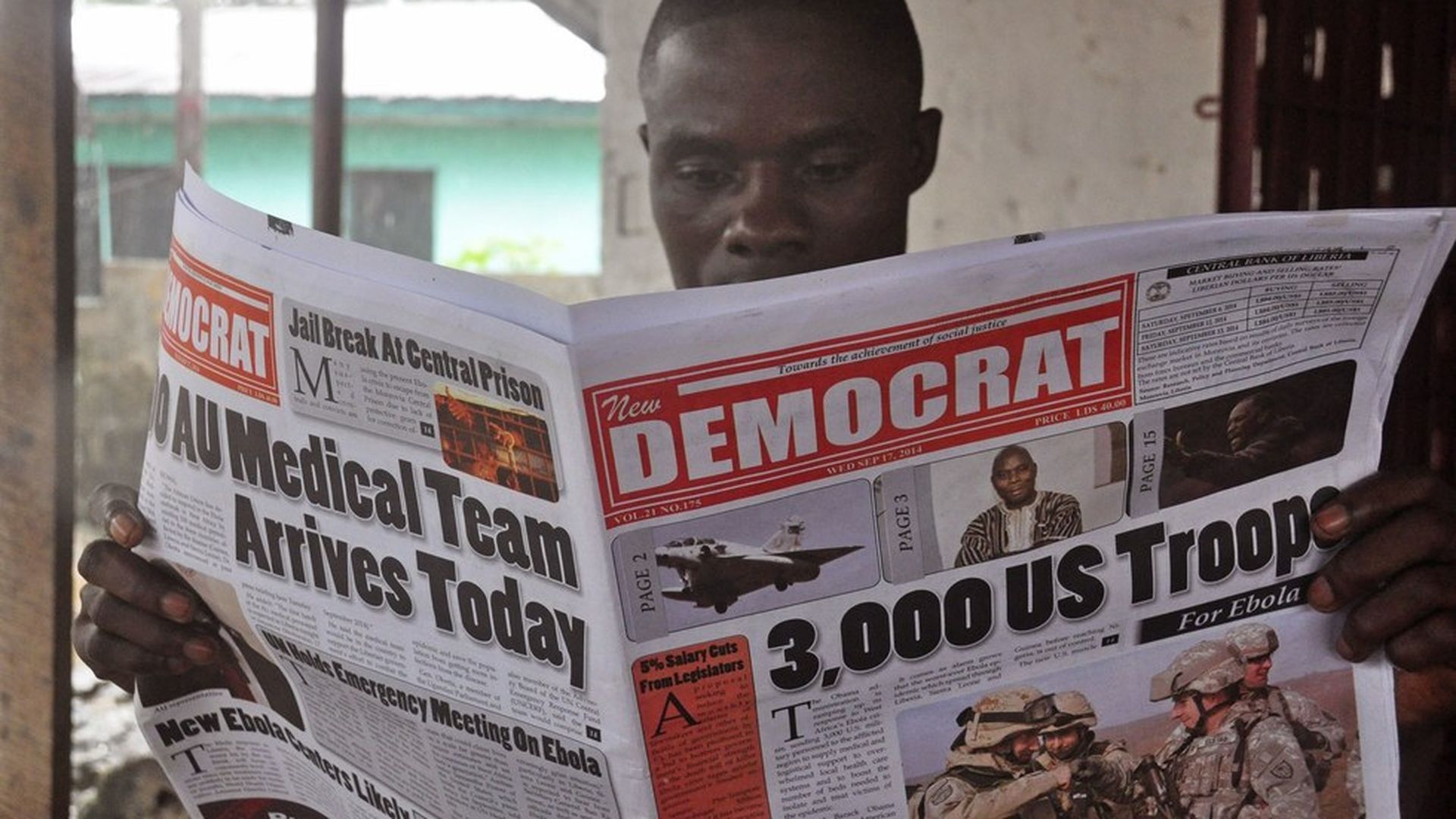
Here's a chilling observation from STAT's exit interview with outgoing Centers for Disease Control and Prevention director Tom Frieden: The Ebola outbreak came closer than anyone knew to running completely out of control.
"[T]ruth be told, we weren't 100 percent sure that we would be able to stop the outbreak," Frieden said. "In Lagos we were days away from Ebola spreading throughout Nigeria, throughout Africa, for months and months and potentially years." If that had happened, he said, the disease itself wouldn't have just killed people — it could have killed more by shutting down health care systems.
"I think that's what's less understood: how close the world was to an abyss," Frieden said.

Here's what Tom Price told the Senate health committee
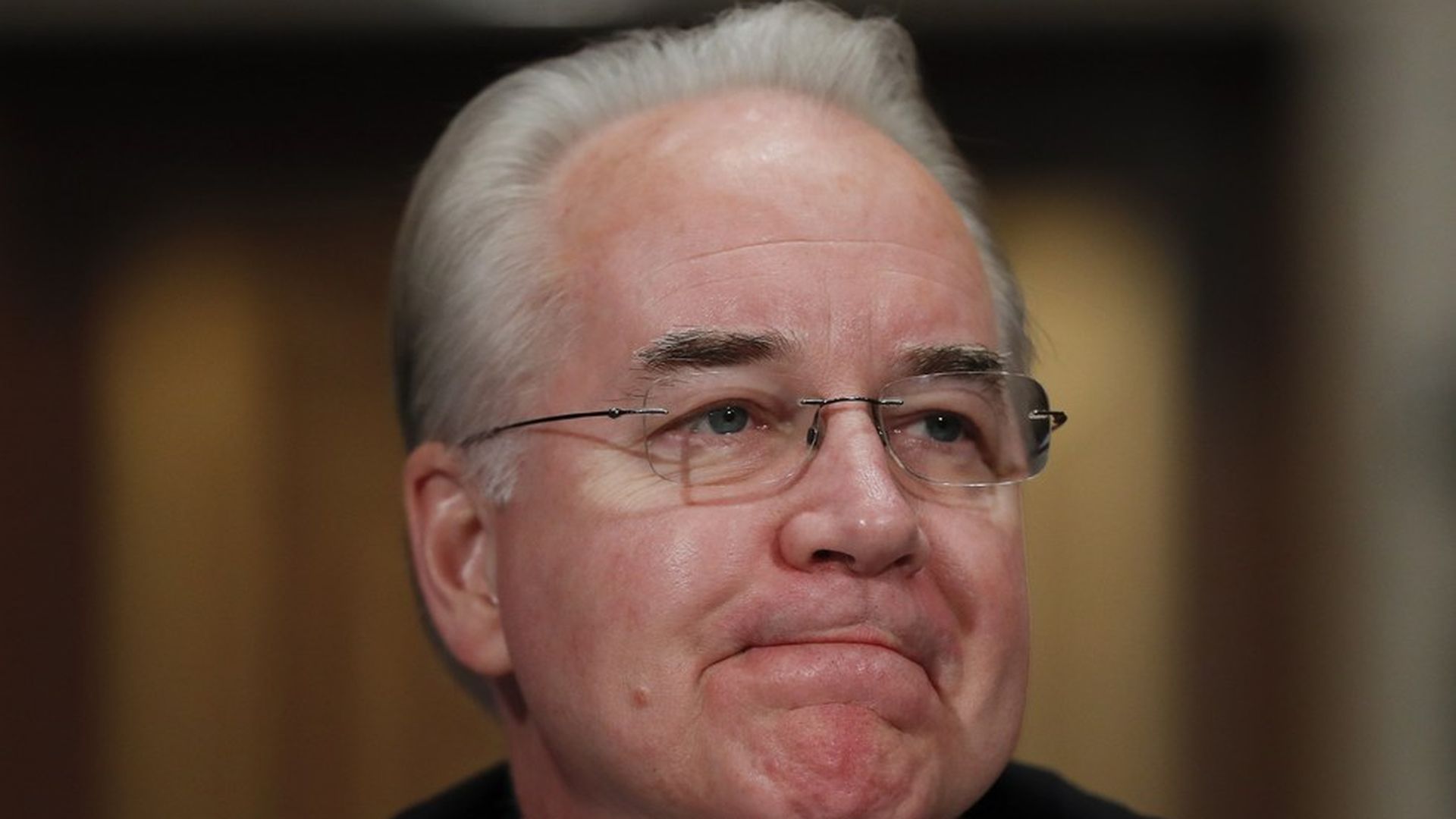
President-elect Trump's nominee for Health and Human Services secretary testified for nearly four hours before the Senate HELP Committee on Wednesday. In that time, he suggested that the Trump administration wants to cover more people than Obamacare, hinted he might drop his opposition to Medicare negotiating drug prices, and tangled with Democrats over whether he was actually in charge of his stock purchases.
While the committee won't vote on his nomination, Price's testimony reveals more about what he'll do if confirmed — and how that might clash with Trump's public comments.
Read on for some of Price's notable answers:

Trump on insurance for everybody: Never mind
President-elect Trump talked to Axios yesterday about his "insurance for everybody" comments — and this time, he was back to talking about Obamacare replacement the same way he did in the campaign.
Well, we want people taken care of .... There will be nobody dying on the streets in a Trump administration.
And where Trump was starting to sound like a single-payer guy a few days ago, now he's back to talking about Medicaid block grants. "Whether it's Medicaid block grants or whatever it may be, we have to make sure that people are taken care of," he said.
Between the lines: Trump's latest comments should help settle the big question Republicans, and many health care wonks, had after Trump's Washington Post interview: Is he talking about a different plan than he laid out in the campaign? The answer, it now appears, is no.

How Tom Price could pull plug on health care savings
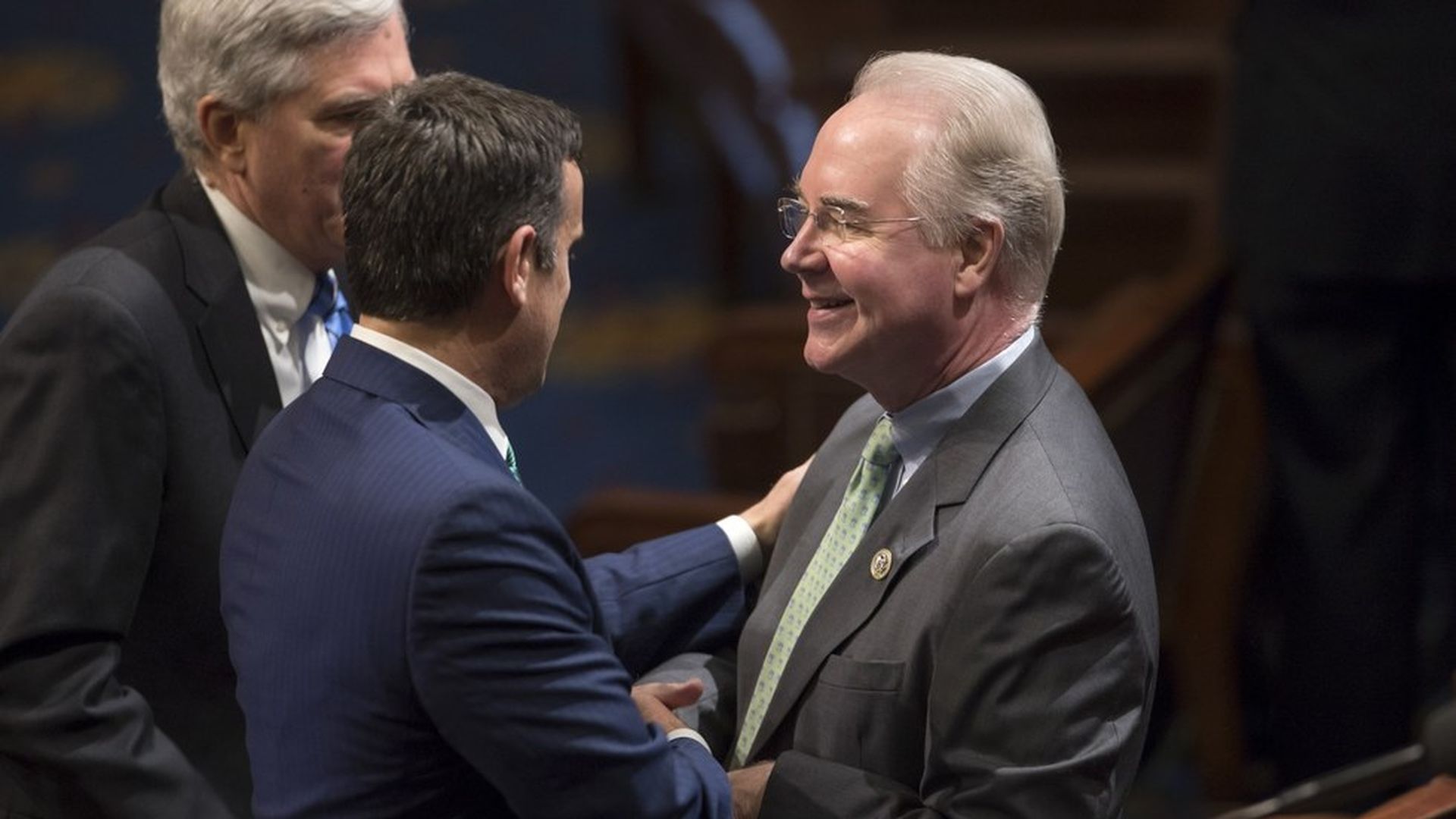
If Health and Human Services nominee Tom Price survives the conflict of interest and insider trading charges swirling around him as his confirmation hearings start today, he will soon have the power to eliminate the Obama administration's cost-savings initiatives that have been bitterly opposed by the most powerful players in the health care industry.
Why this will happen and what it means:
- Price opposed the cost control programs while a member of Congress.
- Killing them wouldn't take legislation — he simply has to cancel the Obama team's experiments under the Affordable Care Act aimed at cutting the fees Medicare pays.
- It would be the ignominious end to a central, if not wholly successful, part of Obamacare's strategy to rein in health-care costs.
Although Price declined through a spokesperson to say whether he will scrap the initiatives, his record as a Republican congressman from Georgia makes it clear that he'll do so quickly. In fact, the Obama administration already ended one program because, according to one administration official, it was obvious Price was going to kill it anyway. More details on the scope of the program and what will end below.
Susan Collins says no to "repeal and delay"
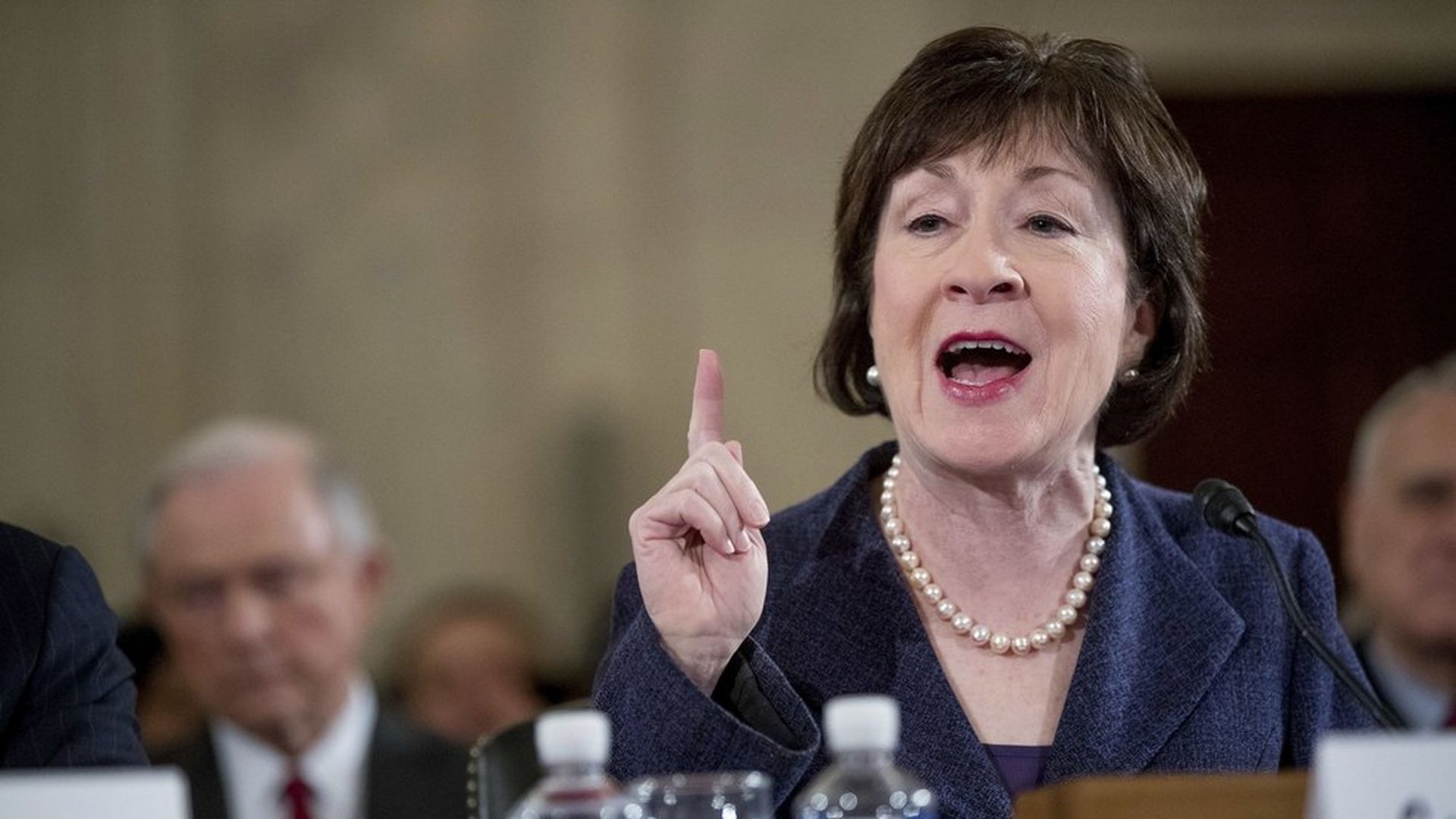
Phil Elliott of TIME tweets that Susan Collins has told colleagues that she cannot support Obamacare repeal without a replacement ready to go.
Open the floodgates?: She becomes the first Republican senator to definitively come out against a "repeal and delay" strategy. Rand Paul and Bob Corker had previously expressed publicly their reticence regarding the plan.
New Obamacare repeal estimate: 18M uninsured, huge rate hikes
The Congressional Budget Office, the official budget scorekeeper for Congress, just handed Democrats two powerful new arguments against Obamacare repeal. In a new estimate of what would happen right away, here's what the budget office said:
- 18 million uninsured in the first year after passage of the repeal bill
- Premiums would increase by 20 to 25 percent
- Both would get worse two years later, after Medicaid expansion and Obamacare subsidies go away
Ripe target for Trump: Pharmaceuticals abusing 'orphan drug' law
Kaiser Health News reports that pharmaceutical companies are taking advantage of the Orphan Drug Act — a law aimed at rare diseases — to maximize profits.
What's the Orphan Drug Act?: It encourages drug manufacturers to develop "orphan drugs" to treat diseases affecting fewer than 200,000 people by providing financial incentives and seven years of exclusive production.
What's happened?: Drugmakers have received orphan status for medicines that were previously approved for mass market use or had received orphan status previously by testing them against new, rare diseases. Seven of the 10 top selling drugs in the United States have orphan status.
Why it matters: President-elect Trump has made it clear that he's going to keep drug prices on the agenda. Stories like this may make it tougher for congressional Republicans to resist, even if they're skeptical of government action.

The Obamacare age mix hasn't changed — at all
The Issue
The Obama administration has been trying to goose the young adult signups so insurers will have more healthy customers.
The Facts
Obamacare signups are definitely outpacing last year, according to the latest enrollment report — 11.5 million signups so far. But if you look at the age mix, it's a different story. Compared to last year's report at this time, the share of customers in each age group is almost exactly the same.
var pymParent = new pym.Parent('av-obamacare-insured20170118', 'https://graphics.axios.com/2017-01-18-obamacare-enrollment/index.html', {});
HHS data showing the percentage of the health insurance market occupied by each age demographic
ANDREW WITHERSPOON, AXIOS
Why It Matters
Experts are split on what this means for the future of the Obamacare marketplace. Supporters had hoped that this would make Obamacare harder to repeal, but making meaningful progress on this would have helped.
The big gap between Trump and Paul Ryan on drug prices
Trump's position: Pharmaceutical companies, which he says are "getting away with murder" on drug prices, are "politically protected, but not anymore."
Ryan's position: The Speaker wouldn't put it quite like that! He told Axios' Mike Allen "there's a lot more we can do to bring down the price of drugs."
Why it matters: It's more evidence that congressional Republicans are not on the same page as Trump on drug prices — and he's going to have a hard time passing anything without them.