
Illustration: Shoshana Gordon/Axios


Illustration: Shoshana Gordon/Axios
The Trump administration is overhauling federal addiction policy and moving away from harm reduction strategies through steps like cutting federal funding for fentanyl test strips.
Why it matters: Many Republicans have long argued these strategies can promote addiction, but clinicians and treatment advocates worry the shifts underway could deter people from getting care.


Photographer Lord Made and Mikael Selassi for Axios
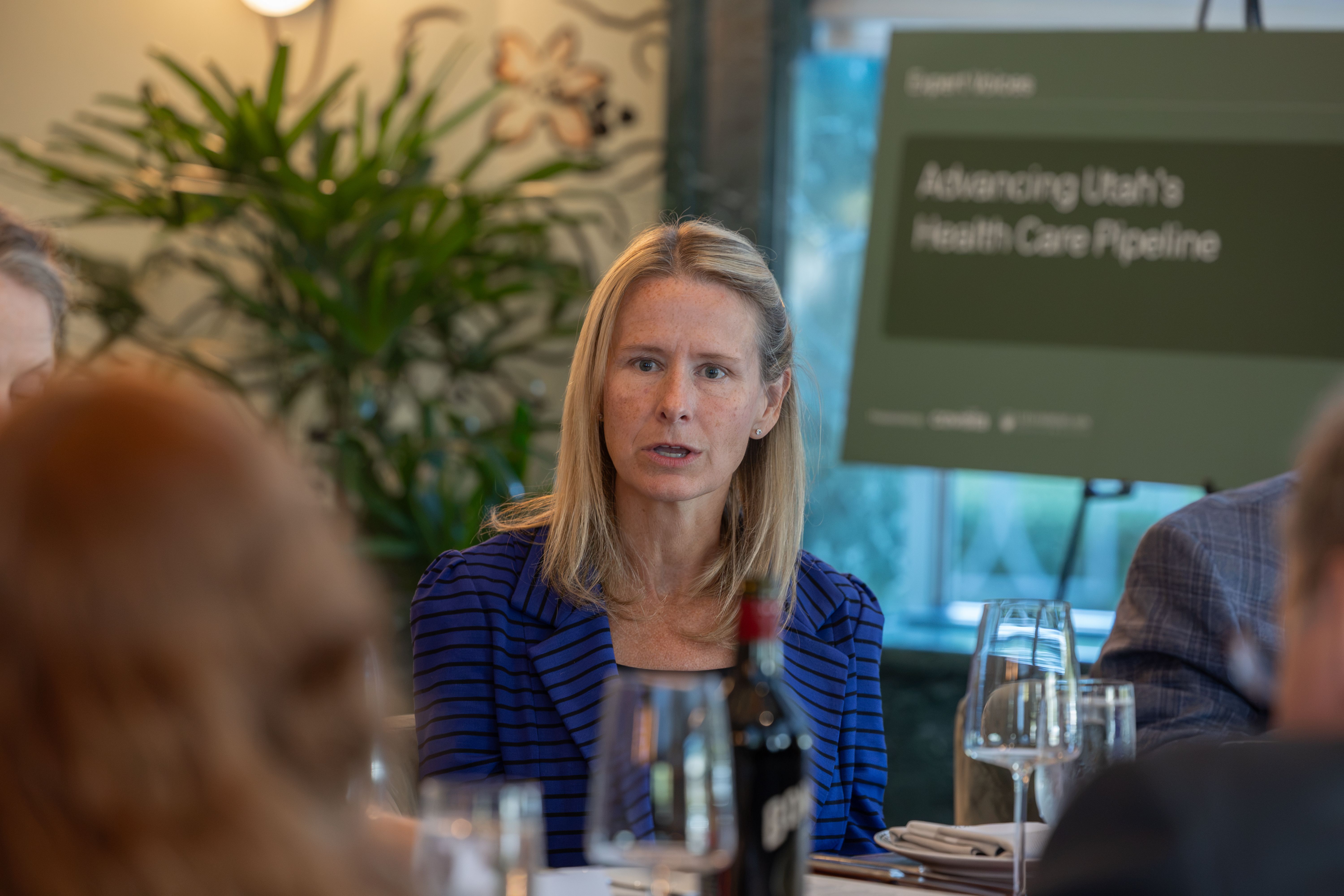
WASHINGTON — High maternal mortality in the U.S. is preventable, according to advocates, physicians, policy leaders and executives at an Axios Future of Health event on May 13.
Why it matters: The United States has the highest maternal mortality rate among wealthy countries, despite most pregnancy-related deaths being preventable.
Axios' Maya Goldman and Caitlin Owens moderated the Expert Voices roundtable, which was sponsored by Heartland Forward.
By the numbers: 649 women died of maternal causes in the U.S. in 2024, according to the Centers for Disease Control and Prevention. Most of these deaths are considered avoidable and the actual numbers may be undercounted.
Case in point: 4Kira4Moms founder Charles Johnson's wife, Kira, died due to preventable internal bleeding shortly after she delivered their son via C-section in 2016.
What they're saying: "It's actually not rocket science," Centene chief health officer Alice Chen said. "We don't need a lot more studies."
Stunning stat: Preeclampsia, the condition of dangerously high blood pressure associated with pregnancy, accounts for "11%–14% of maternal mortality globally and is the second most frequent direct obstetrical cause of death," according to a 2025 study.
State of play: White House officials hope to build on a four-year pilot program involving over 200 hospitals that found a "41.5% reduction in maternal mortality," Health and Human Services chief counselor Chris Klomp said.
What's next: Advocates need to craft and spread a compelling narrative, BirthFund founder Elaine Welteroth said.
Content from the sponsor's remarks:
Olivia Walton, founder of the maternal and child health center for policy and practice at Heartland Forward, and founder and CEO at Ingeborg, said that her bipartisan "Healthy Moms, Healthy Babies America" initiative is part of a five-year sprint to cut the U.S. maternal mortality rate in half.


Photographer Lord Made and Mikael Selassi for Axios
WASHINGTON — Health care costs and how to address them dominated the conversations at Axios' second annual Future of Health Summit this week as the country approaches the 2026 midterm elections.
Why it matters: Prices are top of mind for executives, policymakers and industry leaders as health care bills continue to strain Americans' finances.
By the numbers: A KFF poll released this week revealed more than half of voters said health care costs would influence their votes.
Catch up quick: Here are our top five takeaways from the conversations …
1. Pharmaceutical leaders say high drug costs are being driven by complex legislation, FDA volatility and unfair international policy.
2. Fraud is top of mind, as leaders point to wasteful and inaccurate spending.
3. The health care system itself isn't designed for our modern reality, Sesame co-founder and CEO David Goldhill said.
4. Sen. Peter Welch (D-Vt.) said he would support a proposal from President Trump to reduce health care costs for American families.
5. Oz announced a coalition to address prior authorization delays.
What's next: Republicans must decide whether they want to wade into controversial waters between now and the November election.
Content from the sponsors' segments:
In View From the Top conversations, Covista medical and veterinary president Scott Liles shared that 80% of health care professionals who responded to a joint survey with Gallup reported not having enough of what they need, "including colleagues on the floor."
Olivia Walton, founder of the maternal and child health center for policy and practice at Heartland Forward, and founder and CEO at Ingeborg, said solutions to the maternal mortality crisis aren't unaffordable.
Jon Mahrt, CEO of Optum Rx and chief growth officer of Optum, said the company is focused on addressing costs and transparency.

College-educated fathers are spending less time doing paid work and more time doing things like child care and chores at home, according to a new analysis of Census data.
Why it matters: Millennial and Gen X men are more involved fathers than previous generations, a pattern that appears to have accelerated in the post-pandemic period.


Illustration: Aïda Amer/Axios
The exceptionally high U.S. maternal mortality rate may be a grim topic, but it's also one of health care's solvable problems that can rally widespread bipartisan support.
Why it matters: While health policy is notorious for creating winners and losers, making a dent in maternal mortality stands out for its lack of downsides.
By the numbers: As of December, the Centers for Disease Control and Prevention estimates the maternal mortality rate at 16.6 deaths per 100,000 live births. In 2024, 649 women died during pregnancy or within 42 days of the pregnancy ending.
Where it stands: Heartland Forward's Healthy Moms, Healthy Babies America launched its campaign this week to cut the rate in half over the next five years. (Heartland Forward sponsored the Axios lunch, though it had nothing to do with me writing about this.)
Details: The Perinatal Improvement Collaborative is a network of more than 220 hospitals and health care teams that are trying to improve maternal and infant health and measure the outcomes.
Yes, but: Reducing maternal deaths is one thing, but truly eliminating the preventable ones requires solving some of health care's thorniest systemic problems.
Plus, some experts argue that the Trump administration's actions have actually undercut its stated commitment to reducing maternal mortality.
My thought bubble: Maternal mortality is one of those things everyone agrees is bad and should be worked on — and yet U.S. death rates are still high relative to other nations.
The story has been updated with additional reporting.


Illustration: Aïda Amer/Axios
Two high-profile doctors are urging policymakers to support autonomous vehicle deployment, arguing the technology is already saving lives and should be a public health imperative.
Why it matters: It adds a public health voice to a broader policy push by the AV industry as state legislation stalls and debate over long-delayed federal regulations heats up in Congress.


Dr. Oz speaks at Axios' Future of Health Summit on May 13.
A coalition of 29 major health care players is coming together to simplify the prior authorization process for medical treatments, Mehmet Oz, the administrator of the Centers for Medicare and Medicaid Services, announced at Axios' Future of Health Summit Wednesday.
The big picture: Last summer, several top health insurers voluntary pledged to streamline and improve the prior authorization process across all health insurance markets.


Sen. Welch. Photo: Axios Live screenshot
Sen. Peter Welch (D-Vt.) said Wednesday he'd back President Trump's push to pursue a "most-favored-nation" drug policy at Axios Future of Health summit.
Why it matters: Bipartisan support will be necessary for Congress to codify Trump's plan into law at a time when a majority of Americans are at least somewhat worried about being able to afford prescription drugs.


Ubl speaks at Axios' Future of Health event May 13. Photo: Lord Made for Axios
The CEO of the main pharmaceutical company trade group on Wednesday called for the next Food and Drug Administration commissioner to "calm the waters" and ensure stability as drug companies develop new treatments.
Why it matters: The FDA has faced a tumultuous several months leading up to commissioner Marty Makary's resignation Tuesday, with staff layoffs and top leaders heading out the door.

Illustration: Sarah Grillo/Axios. Stock: Getty Images
The federal government's lagging response to the hantavirus outbreak aboard a cruise ship is fueling concerns about the government's preparedness for a more widespread infectious disease emergency.
Why it matters: Public health experts say the response underscored vulnerabilities tied to the U.S. withdrawal from the World Health Organization, as well as layoffs and leadership turnover at federal agencies like the Centers for Disease Control and Prevention.