Exclusive: Uber tries a different playbook with robotaxi policy push

Add Axios as your preferred source to
see more of our stories on Google.
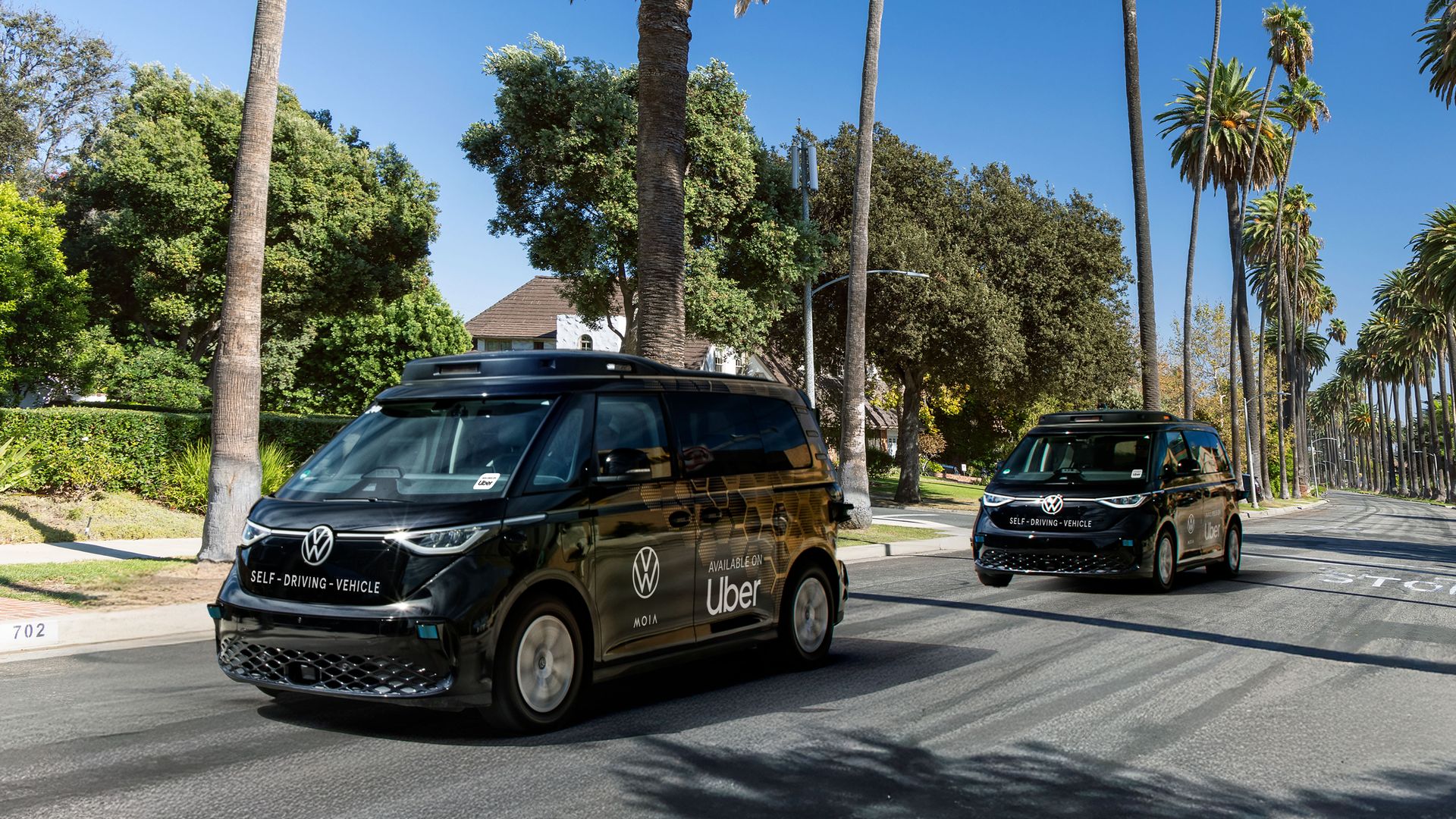
Volkswagen ID. Buzz robotaxis will be available on Uber, starting in Los Angeles. Photo courtesy of VW
Uber is acknowledging the risks of driverless cars — from jobs to congestion to safety — while launching a new public policy push to break the logjams slowing the transition to autonomy.
Why it matters: After years of battling cities and labor groups over ridesharing, Uber — with up to $10 billion in potential autonomous vehicle bets at stake — is trying a new tack.
- "We won't succeed in having AVs in places like Chicago or Boston or New York City — incredibly important markets — if we are not engaging on what we know are the tough issues," Harry Hartfield, Uber's director of autonomous vehicles and AI policy, tells Axios.
Driving the news: Uber is addressing those concerns directly in a new policy paper shared exclusively with Axios.
- It concedes that robotaxi deployments will always be shaped by the realities of infrastructure, regulation and the needs of individual markets, and will require partnerships with officials and workers.
- The paper is also a call to action for lawmakers and governments, arguing the move to autonomy is already under way.
The big picture: Although AVs are allowed in about half the country, legislation has stalled in at least eight states, including New York, Virginia, Oregon and Minnesota.
- Federal legislation has yet to clear Congress, although there's a chance AV rules could be folded into a mandatory highway funding bill later this year.
- The Trump administration, meanwhile, is trying to clear a regulatory path for vehicles that don't have a steering wheel or pedals.
- "There has not been a new AV law in five years," Hartfield said. "We keep trying the same thing, and it hasn't worked."
Friction point: Public trust isn't keeping pace with technological progress on AVs, Andrew Macdonald, Uber's president and chief operating officer, writes on LinkedIn.
- "If we're being honest, that gap exists because many of the hard questions are being sidestepped. Legitimate concerns about job displacement, accessibility, safety, and whether these solutions actually reach everyone can't be an afterthought."
That's ironic, he admits, coming from Uber, given its lack of forethought to how ridesharing would change cities and society a decade ago.
- "The consequences were well-documented: regulatory battles and a corporate crisis that damaged trust for years."
- "That experience changed us," he writes, leading to stronger partnerships with cities and dozens of deals with labor groups for worker protections.
Zoom in: The policy paper outlines how Uber plans to take a different approach with robotaxis, with the company striking more than two dozen partnerships with AV developers as it works toward a hybrid network of AVs and human drivers.
- Be honest about jobs. Some drivers will inevitably be displaced, but Uber favors a long transition to a hybrid model, with drivers and robotaxis sharing the platform for many years.
- Serve all communities. Robotaxis are typically confined to dense urban areas to maximize profits. A hybrid network that includes human drivers ensures anyone can hail a ride from anywhere.
- Partner with cities. Companies need to collaborate with local planners to manage congestion, infrastructure and safety. A poorly managed deployment could strain local systems and create new tensions.
The bottom line: Uber is applying some hard lessons from the past as it tries to innovate for the future.
