Thursday's energy & climate stories

Tesla urges EPA not to smash foundation for climate rules
Tesla is telling the EPA it shouldn't rescind the legal underpinning for carbon emissions rules and scuttle tailpipe CO2 standards.
Why it matters: The newly available comments show how the Trump administration's pullback of climate policies threatens the electric vehicle maker.

Axios House: Corporate leaders weigh in on ESG, reputation and results
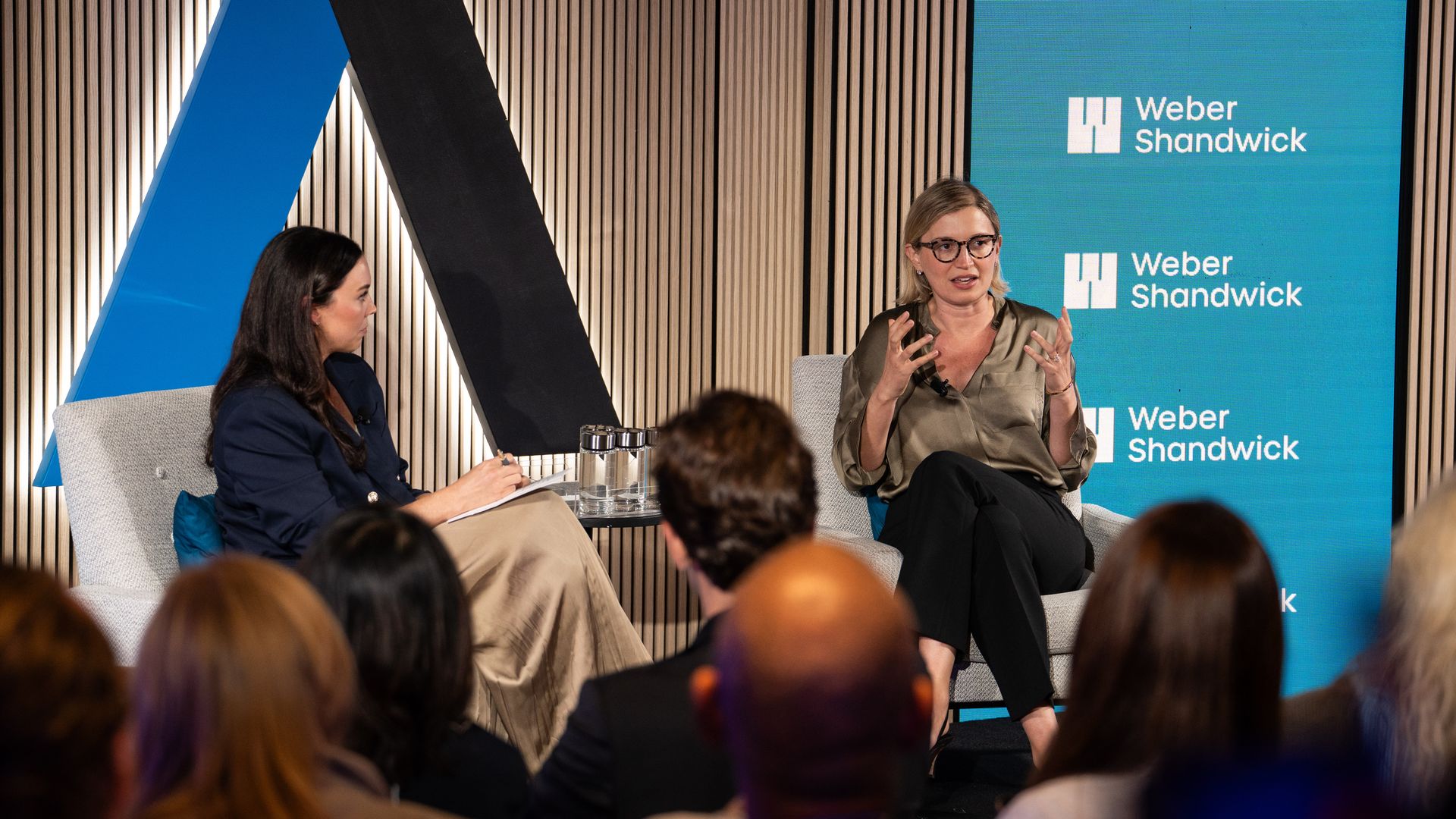
NEW YORK – Private and public companies approach ESG goals differently, Carlyle global head of corporate affairs Megan Starr said Tuesday at Axios House at Climate Week and the UN General Assembly.
Why it matters: As political and reputational risks mount, corporations are rethinking how they communicate environmental and social priorities.
- Axios' Eleanor Hawkins hosted conversations with Starr, Patagonia CEO Ryan Gellert, Patagonia chief impact and communications officer Corley Kenna and Gap Inc. chief communications officer Mame Annan-Brown. The Sept. 23 event was sponsored by Weber Shandwick.
What they're saying: "Privately held companies do a better job on things like decarbonization and frankly job growth. … Publicly held companies are better on diversity…[and] renewable energy purchasing," Starr said.
- Starr added that private companies actually drive faster change.
- "We're actually seeing ESG performance levers really being tied to financial performance and that's kind of the holy grail that we've all been waiting for."
By the numbers: Public companies cut scope 1 emissions by 0.4% from 2023 to 2024, while private equity-backed firms achieved a 2.3% reduction, Starr said.
- On scope 2 emissions, the gap was similar: 1% versus 5.4%.
Navigating corporate pressures can be tough, but when it comes to ESG in particular, Kenna said Patagonia has never used the term.
- "I actually think it's part of the kind of special sauce is [that] we haven't relied on the acronyms, on sort of corporate trends and fads," Kenna said.
- Gellert said navigating those nuances is all about reputation and trust. "There are things that take forever to build and seconds to blow up and…we take it really seriously."
- "I think our community also understands our business literally depends on a healthy planet in these places being protected," Kenna said. "That gives us a bit of permission to engage in it."
Separately, Annan-Brown noted that water is essential to the apparel industry, highlighting that its supply chain uses 20 billion liters of water, equivalent to roughly 11 Olympic-sized swimming pools.
- When it comes to bridging the climate gap, she said the company is recycling and reusing water.
- Gap also works with water conservation organizations to help address the global water crisis. "It's such an important platform to invite other partners in, because we're only as strong as we are as a collaborative."
Sponsored content:
In a View From the Top conversation, Weber Shandwick North America CEO and global president Jim O'Leary said the term "ESG" is dormant but not its substance. He based this on the company's new research, in which it surveyed 250 C-suite executives globally.
- "From a substance perspective, ESG is alive and well," said O'Leary. "And I think you could even argue that there has been a shift away from what was a bit of a performative version of ESG over the past several years to a much more performance-aligned or business-aligned version of the substance of ESG, and so I would argue that's a good thing."

Applegreen bails on big highway deal, opening path for Global Partners

Private equity giant Blackstone won't be running highway rest stops in Massachusetts, after a wild saga of big-money bids, litigation, and political intrigue.
Catch up quick: In early 2024, state officials issued an RFP to operate 18 highway service plazas, many of which haven't been significantly renovated since the 1950s.
China offers sign of climate diplomacy's new landscape


China's long-awaited emissions target is either a nod to realism (and the benefit of under-promising) or a dangerous failure of ambition, depending on who you ask.
Why it matters: The country is the world's largest carbon emitter by a mile. It's also the world's largest energy consumer.
Axios House: Chip factories recycle tiny fraction of water, Ecolab CEO says

NEW YORK – Less than 5% of water used in chip manufacturing is recycled, Ecolab chair and CEO Christophe Beck said Tuesday at Axios House at Climate Week and the UN General Assembly.
Why it matters: Water is used throughout chip production at manufacturing plants that can span a mile or more, so innovations in reducing the amount needed and recycling wastewater are highly sought.
- Axios' Amy Harder and Ben Geman hosted conversations with Beck and Amazon chief sustainability officer Kara Hurst at the Sept. 23 event. The event was sponsored by Salesforce.
What they're saying: "What we've done as a company is to invent technologies where you can reuse water at every step of that process," Beck said.
- The water has to be "1,000 times more pure than the water you use for drugs that you inject in your blood."
Separately, Hurst shared how she thinks emissions cuts enabled by AI can surpass emissions growth from the increase in data centers' energy demand.
- "Right now, people are talking about it as if it won't happen, and I do think it will happen," Hurst said.
- "If we really take the opportunity to think about AI as a tool we can use for good, and we think about all of the use cases for AI – it will increase energy demand," Hurst said. "However, we have to use it as a tool for our benefit and think about all of the possibilities that we can apply it to sustainability use cases."
- "There's a huge possibility when you think about the implications for what we will yet invent, and I'm actually really optimistic about it."
AI has already helped Amazon streamline packaging decisions and create tools like its "customer fit" to help consumers choose clothing sizes, Hurst said.
- "That means less product returned to us, less reverse logistics and of course less environmental" impact, she said. "So it doesn't have to be sustainability out in front to the customer. We know it is, but for the customer, a better experience."
Sponsored content:
In a View From the Top conversation, Salesforce's Sunya Norman, SVP of impact, and Margaret Taylor, VP and head of public affairs and strategic relations, discussed how the future of AI depends on sustainability.
- AI "requires energy and water and natural resources," Norman said. "So, really, the future of AI is sustainable AI. That's how we're going to figure out how to scale AI responsibly." Norman added that the tech sector needs to lead this change, but that it's "a full value chain challenge."

Tesla leads the next wave of EV charging infrastructure
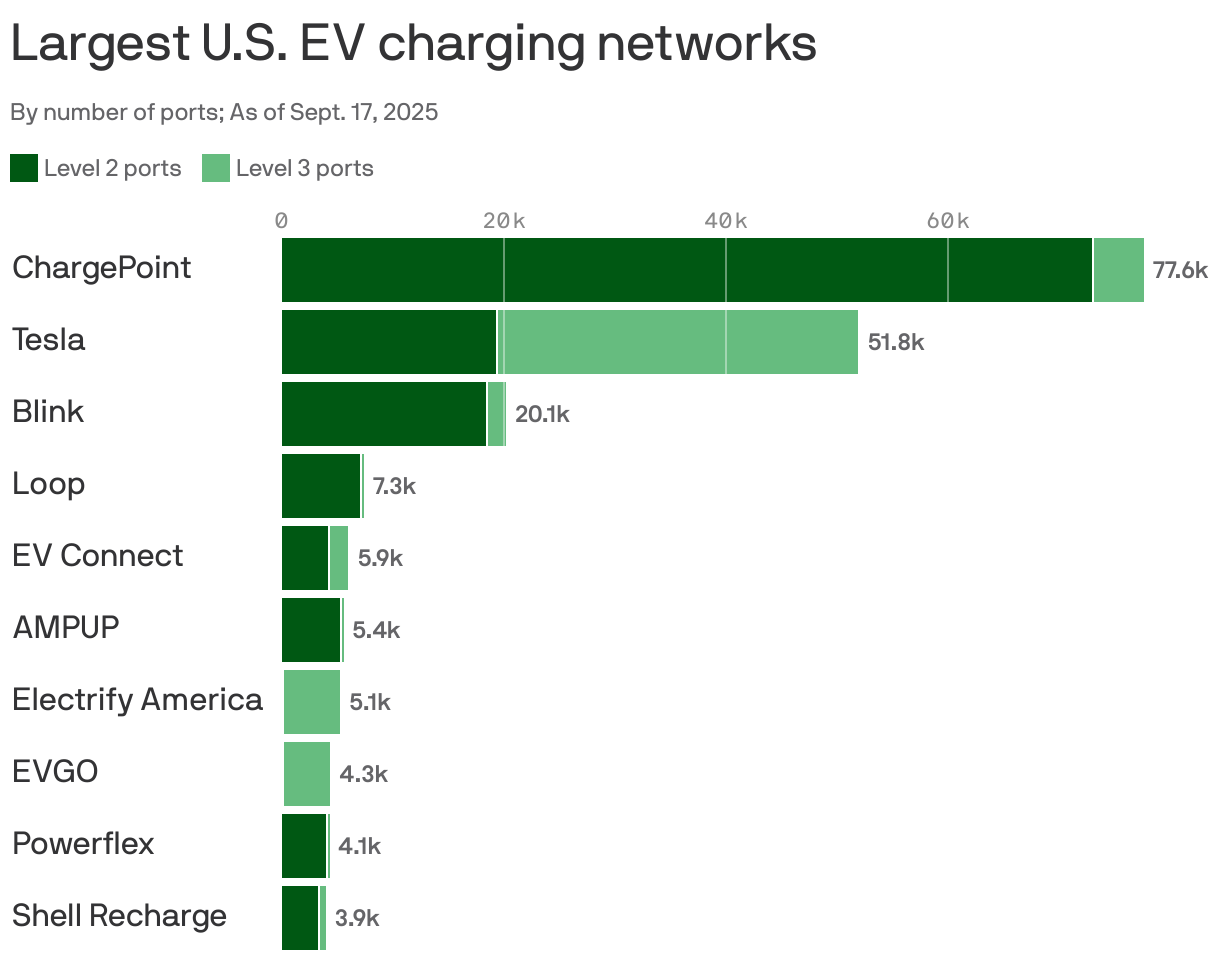
There's a shakeout coming in the EV charging industry as financial challenges mount for some of the early players, according to analysts at Bloomberg Intelligence.
Why it matters: Companies that dominated the charging business to date aren't the ones that will lead the next phase of growth, per their 2026 EV charging outlook.
A lull in EV sales? More time to build charging stations

Electric vehicle sales are expected to plummet after tax credits disappear Sept. 30, but there could be a silver lining: It's an opportunity for charging infrastructure to catch up with demand.
Why it matters: Worries about where to charge have long been a hindrance to EV adoption.

Exclusive: TerraPower CEO says hyperscalers are leading nuclear deals
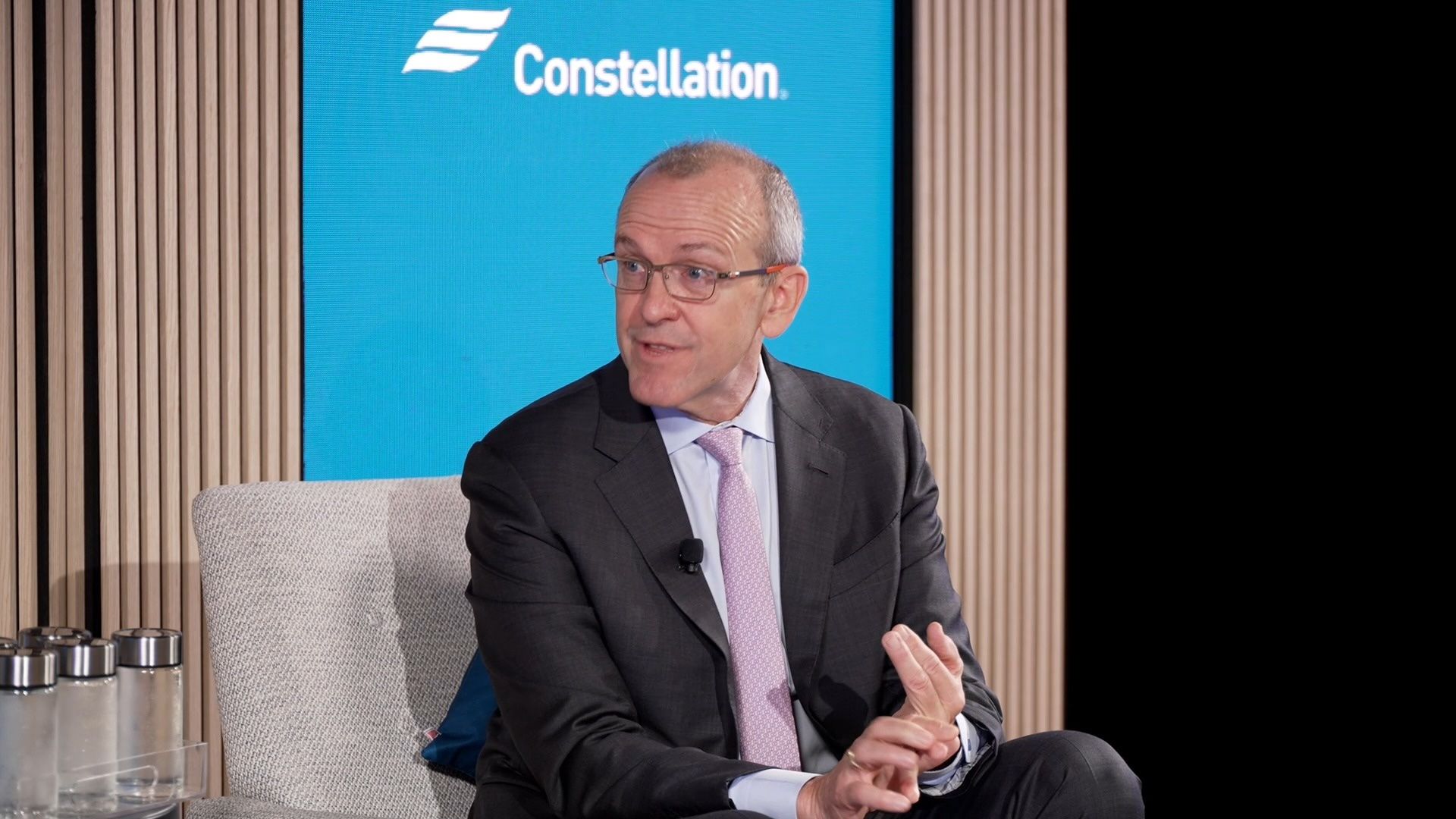
The nuclear renaissance in the U.S. will need to be financed by a combination of the federal government, private investors and hyperscalers paying premiums for power, TerraPower's CEO Chris Levesque said Wednesday at an Axios House event at Climate Week NYC.
Why it matters: The U.S. needs new power for soaring electricity demand, but traditional nuclear plants have been prohibitively expensive.
Zoom in: Levesque said the first U.S. nuclear facilities were paid for by his parent's generation with raised rates, but "we can't do that again."
- In new nuclear deals, hyperscalers — data center companies that deliver large amounts of computing power to customers — will draft a 20 or 25-year power purchase agreement and pay a premium for the first 20 years of plant output, said Levesque.
- That kind of premium "alleviates the burden on the ratepayer. That's going to be the new structure we're looking at in these deals," said Levesque.
- "It's great that nuclear energy is getting so much attention now, but we don't worry about the technology being ready or the demand being there. It's a very capital intensive business to deploy these first plants," said Levesque.
Catch up quick: TerraPower has developed a nuclear reactor design that uses liquid sodium as a coolant instead of water, which the company says lowers costs.
- This summer, the company closed $650 million from investors including Nvidia's VC arm, Bill Gates and HD Hyundai, and before that raised over $1 billion.
Driving the news: On Tuesday, TerraPower announced an agreement with Evergy and the state of Kansas to explore deploying TerraPower's reactors in Evergy's territory.
- "The key part of the story there is an advanced reactor being embraced by traditional nuclear energy companies," said Levesque on stage.
- "More and more mainstream utilities . . . are seeing that if we're going to get back into nuclear energy, we're going to have to get into new technology," said Levesque.
The bottom line: Nuclear is expensive, and advanced reactors need a novel combination of partners to get it deployed.
White House seeks equity stake to close lithium finance deal

The Trump administration wants a small equity stake in Lithium Americas as it renegotiates the company's $2.26 billion Energy Department loan for the Thacker Pass project in Nevada, a White House official said Tuesday.
- Reuters first reported the proposal.
Exclusive: How Voltpost is turning street lights into EV chargers

Voltpost, a startup that specializes in turning street lights into electric vehicle charging stations, is launching a sleeker, more flexible charger Wednesday in Brooklyn during Climate Week.
Why it matters: The new charging platform, Voltpost Air, allows cities to repurpose existing infrastructure to quickly expand EV access without disruptive construction or costly grid upgrades.

Powerful typhoon lashes China after causing deaths in Taiwan, Philippines
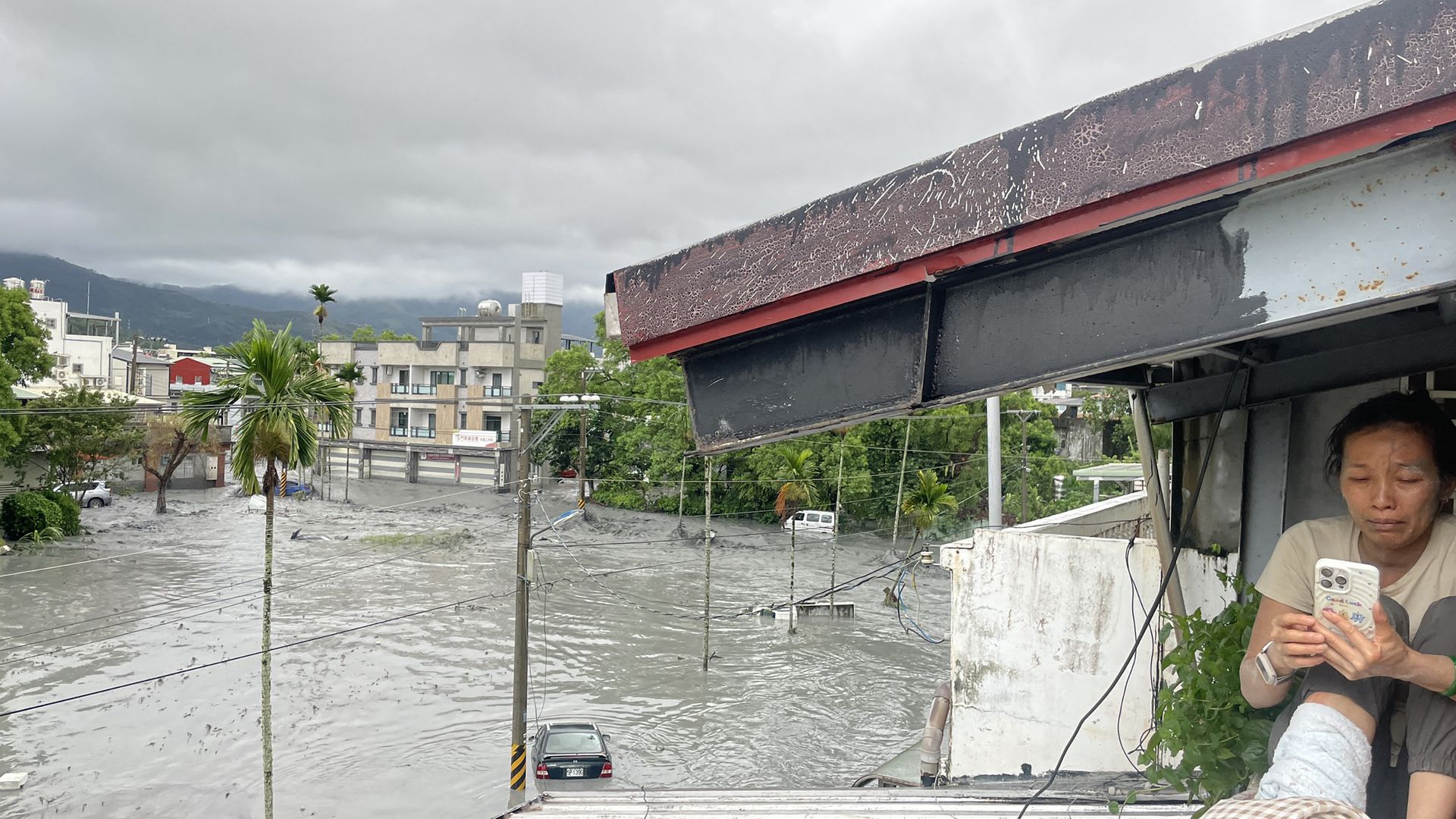
Super Typhoon Ragasa unleashed hurricane-force winds and heavy rains on Hong Kong and southern China on Wednesday morning local time, as officials in Taiwan reported 14 deaths from the strongest storm to hit the planet this year.
The big picture: Officials in Taiwan's Hualien County told media that the deaths were due to a lake barrier bursting during the storm and that 124 people remained missing.